Liberation and Legacy
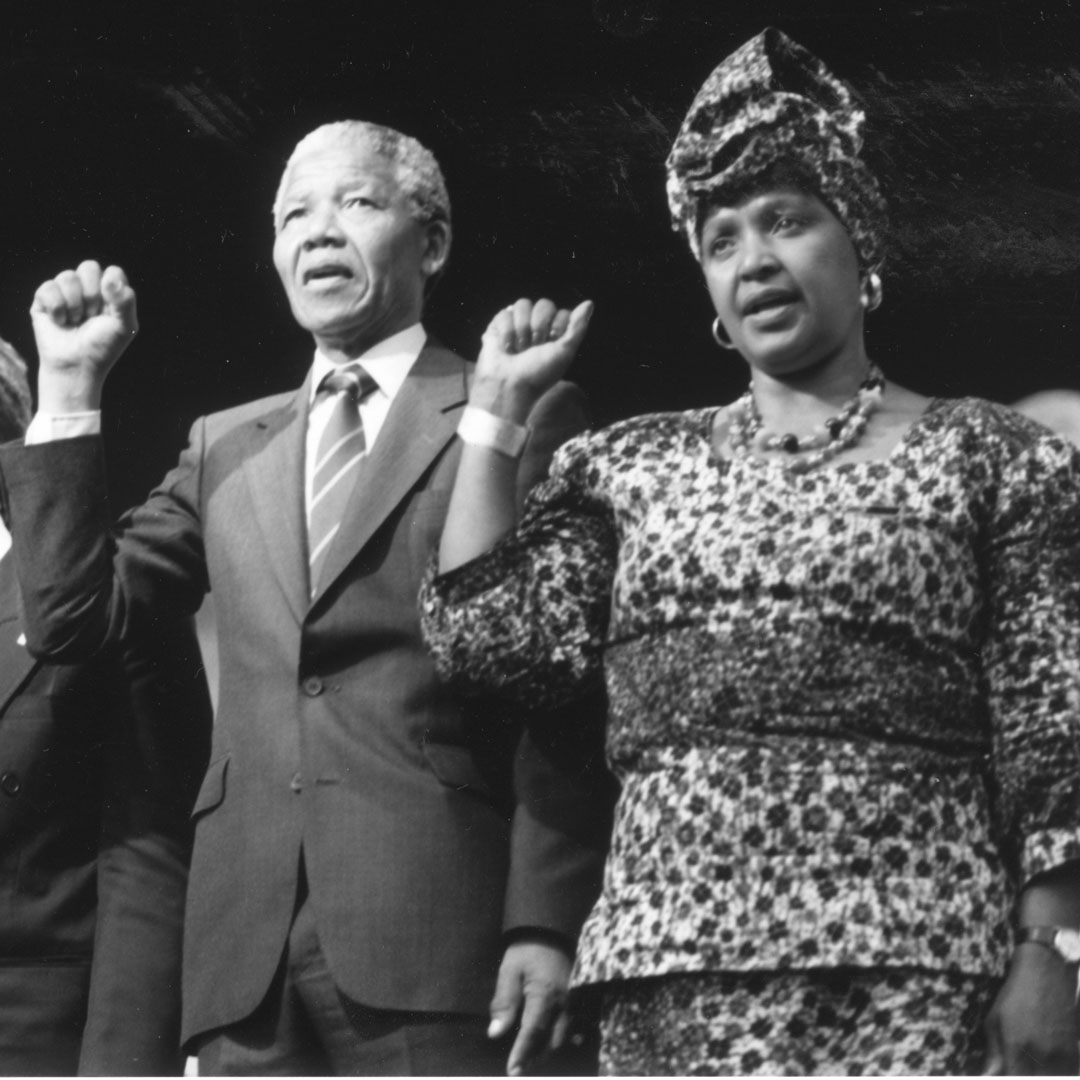
Liberation and Legacy looks at how the movement’s clarion call in the 1980s to make South Africa ungovernable bore fruit. On February 2, 1990, the South African government bowed to pressure from within its borders and beyond, and dropped its ban on the African National Congress, the Pan Africanist Congress, the South African Communist Party and other liberation organizations. From there, the dominoes fell—one after another. Nelson Mandela and other political prisoners were freed, and South Africa’s first ever non-racial elections were called for April 1994. It was a spectacular victory greeted with elation inside South Africa and out. But it was also a time of harrowing violence as the apartheid state sought to blunt the edges of the movement and shore up its power in the dwindling days of white rule, taking the country to the brink of civil war. Activists in Canada responded to the new era with new campaigns. Across the country, events were held to show support for anti-apartheid forces inside the country, and to raise money to ensure free and fair elections. Activists also called for international pressure on the apartheid state to stop its violence in the runup to the first non-racial elections.
Featuring anti-apartheid activists Jane Armstrong, Barb Baer Pillay, David Beer, Marie-Hélène Bonin, Mary Boyd, May Chiu, John Clarke, Stéphane Corriveau, Nigel Crawhall, Aziz Fall, Ole Gjerstad, Martha Gordon, Vince Greason, Glen Gunning, George Hewison, Joanne, Amy Kaler, Jef Keighley, Ameth Lô, Ken Luckhardt, Doug Miller, Dan O'Meara, Andrew Schofield, Gwen Schulman, Stephen Seaborn, Suzanne Smythe, Ken Traynor, Marian White, and Hassan Yussuff.