
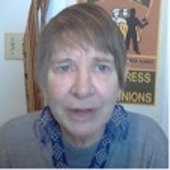
Susan Stout
-
Susan began working at Air Canada in 1972 and soon became active in the Canadian Air Line Employees Association. After the merger with the Canadian Auto Workers in 1986, she was a delegate to the Vancouver Labour Council and active in many social issues along with the SACTU Solidarity Committee in Vancouver.
Doug Miller 00:03
There we go. So I’m Doug Miller here in Montreal. I’m with Susan Stout in North Vancouver, Jane Armstrong in Toronto, and Ken Luckhardt in Toronto. We’re here as part of the Canadian Anti-apartheid Activist History Project, focusing on SACTU solidarity committee and its activities, and so Susan is our interview subject today, and I would ask you, Susan, to acknowledge that you have received, signed, and agree to the whatever was in the consent form that we sent you?
Susan Stout 00:40
Other than the fact that I changed the word in it, but that’s okay.
Doug Miller 00:43
Okay. Well, I’ll take another look at it.
Susan Stout 00:46
You said proceeding, and it should have been preceding, but –
Doug Miller 00:49
okay, okay. And –
Susan Stout 00:52
Sorry, but that’s one of my…
Doug Miller 00:54
I know, I know. Once you write, collect anyway.
Susan Stout 00:56
Yes, I signed it and took a picture of it and sent it to you, and so we’re all –
Doug Miller 01:02
It’s great. This is a public education endeavor that we’re doing here, and it’s going to be open to the public researchers and anyone who’s interested. So that’s why we just want to make sure that everybody understands that this is not a confidential secret thing, and but so with all that, I just like you to, if you would, introduce yourself a little bit about your background, and then how you came to be aware of apartheid, and actually start getting involved in anti-apartheid activities.
Susan Stout 01:37
Huh? Okay. Well, Susan Stout, born and raised in Vancouver, with a couple of years in Victoria, and went to UBC, did some studies in France and Germany, and met several more Africans there, met quite a few at UBC too, so we always got along well. So that was what took us to Ghana in 1970 was to visit people that I met in France, of all places.
Doug Miller 02:15
So you were at university before 1970?
Susan Stout 02:21
Yeah. Born in 1945
Doug Miller 02:24
Oh, okay. We’re the same generation here.
Susan Stout 02:28
We got to be pretty close. I’m 46 Yep.
Doug Miller 02:33
Anyway, so from UBC you ended up graduating, touring through Europe and going to Ghana. How does, how does, how does that expose you to apartheid?
Susan Stout 02:48
Well, actually being in African countries and talking to people there, and the things they had gone through, even in West Africa, because the slave trade came out of there, but having gone to university with several Africans, when I started to hear more about apartheid and getting to know that it was based on Canadian reserves, which was even worse, as it were, I think it was probably Jef Keighley that first told me about it, about the SACTU Solidarity Committee and stuff, because we were in the same union, CAW, at the time, so we were involved in other activities, you know, whatever kind of rallies and things were going on, and we got into the SACTU.
Doug Miller 03:53
So, in fact, your, your awareness and involvement in the apartheid was accelerated by your union activities.
Susan Stout 04:00
Yeah, yeah,
Doug Miller 04:02
Okay, and, and, and you say that was C A W. What year are we? Are you in the union then?
Susan Stout 04:12
What was the year we switched over?
Jane Armstrong 04:15
Is 84, 85.
Susan Stout 04:19
I started working at Air Canada in 73 so and then started going to whatever kind of, well, I was clear at that time, Mary. We were the Airline Employees Association, and we decided that we had to get into a union. We even looked at the postal workers, actually, but ended up in the CAW.
Doug Miller 04:47
Okay. So they’re from 73
Susan Stout 04:49
Somewhere I’ve got an invitation to go to the, to go to the meeting to, as a just as a guest, when we actually declared it was.
Doug Miller 05:01
Okay, to convert to as you converted to the CAW.
Susan Stout 05:05
Well, because we were UAW Canada first of all, and then…
Doug Miller 05:09
Yeah, yeah, cool. Well, so then Jeff and got you involved in the SACTU Solidarity committee, is that what I understand?
Susan Stout 05:23
Yeah, I think it was probably Jef. I don’t know, you know, Virginia Downs and Eric Harms, the bus drivers, they were part of the union, they were part of SACTU. Peter Machlan, who stayed with them. Rest in peace.
Ken Luckhardt 05:44
Historical point, Susan. When Jeff, we interviewed Jeff, we was, we were reminded that he was part of the CCU in those days with Kmart.
Susan Stout 05:52
Oh, yeah, that’s right, Kmart came in later.
Ken Luckhardt 05:56
But for the record, when you first met Jeff, he probably was with the CCU and with Kmart,
Jane Armstrong 06:02
Yes.
Ken Luckhardt 06:03
Because that’s when he did the work for us. What’s when you did the work for us? I can’t remember exactly when I first met you. I think it may have been through Kalia, through the union before, through Jeff.
Susan Stout 06:16
I don’t have all those dates in my head. I guess I could look some of that stuff up. I’m not really sure what, yeah, no, no, quite true. I mean, we all came from different parts of what ended up being –
Jane Armstrong 06:31
Before you move on in years, because Ken’s right, Kmart didn’t merge with CCU until 1992 but in right after Kali emerged with the UAW, then CAW in 1986 there was a concerted effort in unions across the country that we and SACTU was calling for, in terms of a week of action, a boycott week of action. Do you remember the involvement of the airline workers in refusing to handle bookings and calls to South Africa?
Susan Stout 07:21
Yeah, and in fact, there was a, we tried to get Air Canada to stop dealing with connections through on South African Airways, but I’d have to make, any kind of a union problem there was, I was involved in it at the airport, and we had our first strike in 85.
Jane Armstrong 07:54
Yes.
Susan Stout 07:55
Oh boy.
Doug Miller 07:57
And so now we being the Kalea,
Jane Armstrong 08:01
Yes.
Susan Stout 08:02
Yeah.
Doug Miller 08:03
Okay.
Susan Stout 08:04
And yeah, that was so I did a lot of organizing of that,
Doug Miller 08:11
So could you talk a little bit more about the week of action, and how SACTU worked, and you have worked within it?
Susan Stout 08:22
No, I don’t think I can. I don’t think I can. I just got him, just kept doing things, that was all. But I don’t remember the week of action, per se.
Doug Miller 08:39
Okay, and then that, that –
Susan Stout 08:44
It was 85 that we actually founded the Vancouver section of SACTU solidarity committee.
Doug Miller 08:58
Oh okay, and we, being whom?
Susan Stout 09:02
Then, huh well, as I say, there was Jef and Virginia and Eric and –
Ken Luckhardt 09:12
Sylvia –
Susan Stout 09:13
Yeah.
Ken Luckhardt 09:15
Paul McCain.
Doug Miller 09:19
And they represented what, what, what? Unions is at this point, it’s still CCU, different from CAW, is it not?
Ken Luckhardt 09:29
Yeah.
Susan Stout 09:30
Yeah.
Doug Miller 09:30
But SACTU brought –
Susan Stout 09:32
People together. Yeah, I mean –
Ken Luckhardt 09:34
By that time, White Bob White had written a letter to all locals in the CAW, UAW, Canada, then CAW two encouraged the locals to support SACTU through the SACTU solidarity committee. So we did begin doing educational work all across the country, as we’ve said before. I think in those, in that respect, we would have come across Susan early on in the early 80s through. Through the connections that she already had when the labor movement and her activism on that and other issues.
So I’m trying to remember when I first met Susan, I did most of the traveling to BC for the education work, but it was, it would have been in the early 80s. In fact, I remember you were so generous one time, you loaned me your car to go on one of my trips into the interior for meetings I had up in Kamloops or someplace, and I certainly, we certainly appreciated that, because we had no budget for travel.
Susan Stout 10:27
Yeah, it was always.. yeah. I remember taking Peter Mahlangu to the CLC winter school one time, and the CLC was not at all pleased that we were doing this apartheid stuff, but we had all kinds of fun and lots of good meetings and things.
Jane Armstrong 10:56
That would have been in Harrison Hot Springs,
Susan Stout 10:57
Harrison Hot Springs.
Doug Miller 11:01
What was that? Winter school.
Susan Stout 11:04
Oh, they did various classes. I think I was involved in the health and safety course that year, and so I made Peter part of the class, and then we got to talk to everybody.
Doug Miller 11:20
And that was CLC sponsored, and this is SACTU, and we know how,
Susan Stout 11:25
Yeah, but we didn’t really talk SACTU, we just talked apartheid, right? Wonderful, I really had a lot of fun together.
Doug Miller 11:37
That’s great, that’s great.
Jane Armstrong 11:39
Maybe 87-88 I’m guessing, because Peter shifted to be the ANC rep in 88 so I’m guessing it would have been 87 or early 88 with Harrison.
Susan Stout 11:54
Yeah, probably
Jane Armstrong 11:56
Harrison was used by not only the Canadian Labor Congress, but the BC Federation of Labor, it had an education.
Susan Stout 12:05
This was definitely a CLC, yes, a CLC winter school.
Jane Armstrong 12:10
Yep.
Doug Miller 12:13
That’s cool. So, and I’m just trying to find now where to go here.
Susan Stout 12:23
Well, it was 1990 when I mean the SACTU committee here selected me to be a member of the Western Canada tour to Southern Africa. So that’s when I first got involved. We went to, well, the group divided went different ways, but our group went to Zimbabwe, Mozambique, and then South Africa.
Jane Armstrong 12:50
Is that the one that was led by Jef, that had many union representatives?
Susan Stout 12:56
No, Jef wasn’t part of it. So, one that was done by the Saskatchewan
Ken Luckhardt 13:04
Fiona Bishop, Fiona Bishop,
Susan Stout 13:06
Yeah,
Jane Armstrong 13:08
and Barb –
Susan Stout 13:09
Byers.
Jane Armstrong 13:10
Yes. Okay.
Susan Stout 13:11
Art was kind of a… so that was my first time in Southern Africa,
Doug Miller 13:19
1990, so that’s after Nelson Mandela has been released.
Susan Stout 13:24
Yeah, well, having read his book, I guess he was released before that, though he didn’t really know about, because he was, I mean, he was out of the prison, he off the island. But anyway, yeah, yeah, it was the first ANC convention with Nelson Mandela and Barb and Baffle and Goomzi Baffle and Yanga traveling on a Ghanaian passport.
Ken Luckhardt 13:55
Help me remember, who organized that trip? Was that organized by the people on their own in Saskatchewan. Barb?
Susan Stout 14:03
What union was it?
Doug Miller 14:08
SGU.
Susan Stout 14:11
It wasn’t the grain workers. The grain workers were the ones that got me into Mozambique, but –
Ken Luckhardt 14:17
Yeah, and Barbara with the Saskatchewan Government Employees Union.
Susan Stout 14:22
Yeah and I’ve probably got something here for the paperwork, but I mean, but anyway, it was, I mean, that was the one where we, we ended up down in East London for a big rally, and Barb got to speak and introduced Baffle, and this young kid comes flying over the, we were sort of in a separate section, and she comes flying over it into Baffle’s arms. Ottawa didn’t know that he was in the country, and
Doug Miller 15:04
Oh boy.
Susan Stout 15:04
It was, that was really –
Doug Miller 15:08
That must have been truly special,
Susan Stout 15:11
But that was then when we were leaving East London, the idea was that Buffalo and Barb would fly up to Johannesburg and be part of the ANC convention and we got to the airport and off he went with a couple of friends in their car and we had his luggage and checked it in when we checked in Barb’s luggage, and then Afo and his friends arrived, and the cops immediately circled them and grabbed him and took him away.
Doug Miller 15:52
Oh boy,
Susan Stout 15:53
And so we didn’t see him again until we were on the plane, heading home. His idea was he was going to stay there until Christmas, but yeah, he came with us on the flight, and they had, I mean, I know Jef did a lot of work, and probably the rest of you did too, to get him out of prison, but they’d only let him out if he got out of the country, so –
Doug Miller 16:25
That’s the first time I’ve heard that story. Amazing.
Susan Stout 16:29
Yeah, well, he pulled into the parking lot, stepped out of the release, the guys did, stepped out, and they took all the stuff out of the trunk, which was really very minor paperwork. I mean, it wasn’t anything revolutionary or anything, right. And then apparently they, they tear-gassed him in the little cell I had him in, because we were traveling side by side on the flight coming home, and he kept rubbing his ear, what’s going on, and then he showed me, and all the skin was peeled away from the side of his head, where they were their tear gas, right on the on the side of his head, and –
Doug Miller 17:15
Was that because he wasn’t on a South African document, or
Susan Stout 17:20
No, no, they knew he was part of the anti-apartheid movement. I mean, they knew his real name, and they were the cops were around us all the time that we were in Joburg one evening Barb and some of the women from the from SACTU organized an evening in, in one of our hotel rooms, and the head of the SACTU women’s committee and Barb were in a center of the room, as it were, talking, and the rest of us were singing Nkosi Sikelele. And one of the women on our tour, Louise, was Cree, and the cops had not recognized the fact that she was part of this white tour, so the next day in the, in the lunch, you know, the restaurant in the hotel, she had arrived early and was sitting over to one side, and the cops were at the table next to her, and they were complaining bitterly about these damn women that they couldn’t hear anything that was going on, because they were making so much noise singing, which, of course, was why we were making so much noise singing, but then Louise started to, I mean, to laugh, I mean, and so she straightened herself up and got up and walked away, and then found us, and just absolutely burst out laughing. She thought it was hilarious to hear these guys.
But it was interesting, because I did a lot of the driving when we were in South Africa, and so after that meeting I drove the women home into the township, and they said, well, you know, like so and so lives right, right across the little valley from me, but it’ll take you a while to get there, because they had deliberately dug trenches and things at the ends of roads, so that if the cops were chasing them, they could run through, but there was no way the cops could drive through, right, and so the women knew what order to do it in, and they just told me where to go, drop this one first, and then go around. And that one, and then around that one, when I got to the last one, and she said, “Now you just wait here, I’ll get my husband to get his car to lead you out, because you’ll never find it.
Doug Miller 20:11
Wow, wow.
Susan Stout 20:13
But yeah, it was…
Doug Miller 20:17
Well, that was.. that was probably as important time in the anti-apartheid struggle as any, because it was such a vicious reactionary struggle of 1990 to 94 going on there, and so –
Susan Stout 20:32
It was, yeah, it was interesting, I mean, walking in Joburg, and you’d see as you’re going along the street, the cops are up on the on the hill beside you, right, following you along, and the if a young black fellow would be coming along the sidewalk, he’d immediately get off, right, because he could be accused of attacking a white woman, just made me ill.
And then when I went back in 94 I’d be walking along the street and a young black fellow be coming along and he’d say “yay mama” to a high five, and you know I of course I’m inclined to walk anywhere and talk to people, so I wandered around Johannesburg in 94 with no problem, but I was staying in the apartment of an Indian South African who had moved in with his girlfriend, and his sister and husband were involved in the group that I was doing health and safety with, and they lived in the same building, so every once in a while their mother would come, and so she’d stay with me, and we’d go for a walk, and she’d say, “I’m not sure we should go this way. Oh, I’ve been through there before”. She saw parts of Johannesburg she’d never seen and yeah.
Ken Luckhardt 22:06
Susan, do you have any memorabilia in your collection from that trip, photographs, bafu, etc. etc. that maybe you could contribute to the archival project?
Susan Stout 22:16
Yeah, you know what, I sent a lot of them to the 1990 group, so Barb has a lot of them. Barb Byers has a lot of them.
Ken Luckhardt 22:28
I think Fiona also has stuff.
Susan Stout 22:31
Yeah, well, we did a Zoom in 2020 right? Our 30 year anniversary.
Ken Luckhardt 22:38
Okay.
Susan Stout 22:40
So I’ve got the emails for all that group, if you, if you want them, I can send them to you.
Ken Luckhardt 22:45
Was that recorded by any chance to Zoom?
Susan Stout 22:49
I don’t know.
Ken Luckhardt 22:50
Okay.
Susan Stout 22:51
We were just so busy having fun, I wasn’t paying attention. I just –
Ken Luckhardt 22:58
What would be useful, is I’ll try and reach out to Barb about photographs, but if you could send me, email me the list of the people, and if you can remember their unions that were involved in the 1990 trip, that will really help. Also, with the agenda.
Susan Stout 23:22
I can send you the whole email list for them. They’d be perfectly happy to be part of it.
Jane Armstrong 23:28
Great, because it will help also with the identification of people with the photographs. I’ll ask Barb to do that if she could, but that would be useful, because that’s one of the –
Susan Stout 23:44
Got a selection of photographs.
Doug Miller 23:50
Little me with curly hair.
Jane Armstrong 23:56
Oh yes, I remember that.
Susan Stout 23:58
Yeah.
Jane Armstrong 24:00
So where would –
Susan Stout 24:01
I’m not sure whether that was Mozambique or no, I think it probably was South Africa, because obviously that was where I taught a class anyway, because we’ve got everybody’s getting their certificate on, got the whole class, but I don’t have any names on them, and –
Jane Armstrong 24:34
Oh, wow.
Susan Stout 24:35
Good, it’d be great, but I mean, certainly I can send you those pictures. Oh,
Doug Miller 24:40
Please.
Jane Armstrong 24:40
Remember at least whether they were, challenge your memory to at least by whether they were Mozambique or South Africa?
Susan Stout 24:50
Yeah, no, it is South Africa. That’s this is one of the ones that when they used to put the dates on the bottoms of the pictures.
Jane Armstrong 24:57
Oh, okay, excellent.
Susan Stout 24:58
Definitely 94.
Jane Armstrong 25:00
All right, okay.
Susan Stout 25:00
So that was the, that was the class, yeah.
Doug Miller 25:07
And you were there as a CAW educator,
Susan Stout 25:13
Yeah, that one was, yeah, the one in Mozambique was with CUSO, and, but it was health and safety too.
Doug Miller 25:23
Aimed at union people as well.
Susan Stout 25:25
Yeah. I mean, Mozambique was, was quite a different experience, because the Portuguese had been kicked out, right, except that the bastards had done things like destroy elevators in buildings, you know, you’d have a high rise, but they destroyed the through cement down the elevator shaft before they left, and things like that, so it could never be used. I stayed with Ken Hansen when I was in –
Doug Miller 26:00
He was, Ken Hansen, was he another unionist, or –
Susan Stout 26:03
Yeah, he was in Mozambique for years, and yeah.
Ken Luckhardt 26:12
Was Doug Green that Green Services,
Susan Stout 26:15
Sorry, that was the Green Services, yeah, they organized that, and then QC, Tony Walford got me involved in that one.
Jane Armstrong 26:25
All right, I remember we had several schools for COSATU unionists up at Port Elgin in the early 90s that was organized as well around occupational health and safety, that was they didn’t need anything around politics or how to run a union, they could have taught us a big deal. I mean we didn’t get schools with them, but occupational health and safety was one thing they really wanted.
Susan Stout 27:04
Well, yeah, and in South Africa we wrote a health and safety course. In Mozambique it was more hands on in various places, and we were in the Coca Cola plant, and you know, going through the kinds of things that, well, we had been there in 1990 so some of the people recognized me and showed me things that they had changed in the meantime, but in Mozambique the government and the union were the same thing for a lot of people. I mean, so they didn’t want to oppose the government because they kicked the Portuguese out, right, and so they were, they were on side, and so you, you’d go to a workplace and there would be a trailer set up that had the union office in it, and right next to it was party office, and very often the union rep was also a government rep of some kind.
Ken Luckhardt 28:17
Sounds like our senate.
Susan Stout 28:19
I remember the one fellow in the printing union, of course, they had in their health and safety, they had written things up so that you could retire early because you were bound to have lead poisoning, right, and so they had, they had some decent stuff, but it was ergonomics, more than anything, that was the problem. They’d often be doing either bending or trying to reach up to things, or they’d get a high stool, but then they wouldn’t have anywhere to put their feet. They were using, they’d get old telephone books and stack them up, so that because the stools didn’t have any kind of foot rest or anything on them, but those were the kind of things we talked through, and how you were bending and twisting.
Jane Armstrong 29:20
Can I take you, Susan, back to Vancouver, and the SACTU committee that was formed out there that you were part of, along with a number of others. Do you remember organizing benefits at the Maritime Labor Center anniversaries of SAC two and fundraising benefits, you know, with speakers and music, etc. To remunerate that.
Susan Stout 29:52
I wouldn’t have done any of the organizing for that, I’d have attended.
Jane Armstrong 29:56
But okay, I just. 100 of your evolved. There were several, sort of two or three years that they did.
Susan Stout 30:05
Yeah, no, the Maritime Labor Center, the unions working out of there were all onside very much. I mean, I remember Paul and I, Paul McCain and I being down at the wharfs when a Zim ship came in.
Jane Armstrong 30:22
Oh, really?
Susan Stout 30:23
Several, several different times, I guess. But this one particular time we were on foot because you, well, you couldn’t be driving around there and getting into the things that, and a security guy was trying to follow us in his car, but of course we were just ducking behind something and around something else, like in South Africa, right? Yeah, you couldn’t get through there with a vehicle, you could get through on foot, so we did a lot of it, and we’ve done anti-zoom stuff lately too, because, because of Palestine, right, continues on.
Doug Miller 31:11
That’s an interesting link, that the people who were involved then are now still –
Susan Stout 31:17
A lot of us are still involved in the Palestine issue. Yeah, yeah. but there’s lots of young ones involved, which is really encouraging.
Jane Armstrong 31:26
Oh, wow, yes.
Susan Stout 31:28
I mean, even anti-war and stuff, there’s a lot more young ones than that in-between generation there somewhere that kind of fell by the wayside, and there’s so there’s us, and then there’s the 20 somethings.
Jane Armstrong 31:42
Do you know that they have union links, or are they gig workers, or what?
Susan Stout 31:50
Oh, adults, I mean, a lot of them, the original bunch, as Sid Shniad, I’m sure most of you know our unionists, but, but the new ones, it’s not the union that’s brought them in, it’s the, it’s the issue.
Jane Armstrong 32:13
The issue, and –
Ken Luckhardt 32:16
We will be interviewing Sid soon.
Susan Stout 32:19
Sorry?
Ken Luckhardt 32:20
We will be interviewing Sid Schneid soon. We haven’t set a date with him yet.
Susan Stout 32:24
Oh, yeah. Okay.
Ken Luckhardt 32:26
Do you remember anything else about this, the subcommittee in Vancouver, that you could share with us?
Jane Armstrong 32:37
Do you remember where you met?
Susan Stout 32:39
Oh, different people’s houses.
Jane Armstrong 32:42
Okay. All right.
Susan Stout 32:43
Probably Virginia and Eric’s as often as any.
Ken Luckhardt 32:51
What’s Virginia’s last name?
Susan Stout 32:53
I was way out here in Deep Cove, and nobody wanted to go that far.
Jane Armstrong 32:58
Yes.
Ken Luckhardt 32:59
What’s Virginia’s last name?
Susan Stout 33:01
Downs.
Ken Luckhardt 33:02
Downs, right. Okay.
Jane Armstrong 33:03
Okay.
Doug Miller 33:05
And were these meetings frequent?
Susan Stout 33:08
Yeah. Well, you know, if there was something special, or probably we had monthly meetings, and I have more names, but I, they’re not going through. I’ve got them on my list, on another list too. So, but you’ve already talked to Jef, right?
Jane Armstrong 33:32
Yep. Um, were you involved at all with the Vancouver and District Labor Council, because they were always very progressive, as was CUPW? Everett Hooger, was the president.
Susan Stout 33:45
Everett was great, and Marion Pollock is still involved in a lot of stuff.
Jane Armstrong 33:51
Yes, we’re hoping to interview both of them.
Susan Stout 33:53
Oh, good. Yeah.
Jane Armstrong 33:56
Did you go as a delegate, to the delegate?
Susan Stout 34:00
Yeah,
Jane Armstrong 34:02
Yes, memory that you were a delegate for a while at the, from CAW, there. Yes, yes, and do you remember anything about BC Federation of Labor conventions and anti-apartheid debates or discussions or resolutions?
Susan Stout 34:24
Well, I know we used to make a point of singing Nkosi Sikelele at conventions. I don’t think I’ve got any. I’ll go through this stuff again and see what else there is beside these pictures that you might be interested in.
Jane Armstrong 34:44
You used to keep buttons and pins. You were a real collector.
Susan Stout 34:49
Yeah, I guess I do still have some of the buttons. You want me to dig them out too?
Doug Miller 34:53
Oh, absolutely.
Jane Armstrong 34:55
The Library and Archives Canada. Is extremely interested not only in things like the newsletters that we sent them and whatever correspondence we’ve been able to locate, but also in paraphernalia, buttons, posters. There was a calendar that we put out in 1981 and I suspect I probably convinced Tom Saunders to order enough to send them out to various districts, they used to be called districts in Clear at the time, to buy them, because, of course, they were another fundraising tool for us, but we haven’t found one of those yet. I remembered it was photographs that were representative of something that had happened in South Africa in that month, whether it was the Sharpeville massacre or whatever it was, but that’s we haven’t found one of those, but they’re really interested in the whole spectrum, including T-shirts, and we found, remarkably enough, two or three that people have kept over all these decades. So, if you have a chance to go through your collection and find anything from that –
Susan Stout 36:17
I think I’ve still got some buttons, and I’ve got another story I have to tell you.
Doug Miller 36:24
Oh, please.
Susan Stout 36:25
As we’re leading up to leading up to the election, and of course the pro-apartheids are telling all these stories about how you know the tribes are fighting one another, etc. You know, you can’t leave it to the blacks, because they’ll just separate the whole thing anyway. One of the women that was working with me on the health and safety stuff had a five year old son, and they were over one evening, and I didn’t, I didn’t have any note paper or anything lying around, and because I wanted to keep this little guy busy, I gave him pieces of old newspaper and stuff that had just enough edging, you know, that there was room for him to, and he’s so he’s busy drawing things, and I can see you, and he’s got a car on this one, something else, and then he comes over to me, and he says, Susan, you want to see me draw a boat, and so I’ve seen all these cars, and sure, yeah, let’s see it.
Doug Miller 37:40
h yeah,
Susan Stout 37:42
Want to see me draw another one, this or this?. He’s drawing an X, a vote. He’s, a vote.
Doug Miller 37:54
Oh, a vote. Okay. Ah, yes.
Susan Stout 37:59
And I said, “who you going to vote for, Mandela?”. I said, “why are you going to vote for him?”. “Because he’ll build houses, and he’ll build schools”. Five years old, and he had the whole story.
Doug Miller 38:17
Oh boy, that’s powerful.
Susan Stout 38:20
And in both Mozambique and South Africa, anytime you had any kind of a union organizing, whatever kind of a meeting, everybody brought their kids. I mean, they, they were, they heard it all right from the time they were nothing, right. And so, I mean, they would be sitting very quietly next to mom or dad, drawing or just listening, or whatever, and they mean the only time they moved was if they had to go to the washroom, right, and they’d go and whisper in mom’s ear, and she’d have to take them off to the washroom, but aside from that, kids were always involved in everything, and you know, they were just part of it. It was, yeah, it was good times.
Doug Miller 39:09
Wow.
Susan Stout 39:10
Good times.
Doug Miller 39:12
Fantastic. Well, I’d like to just repeat the request that if you have any lists of names or other pieces of memorabilia that are available? The project has started to blossom in so many ways, and, and all of this is good stuff to add. Anybody got other questions?
Ken Luckhardt 39:41
Do we ever do an educational with your unit in Vancouver, the airline unit? I can’t remember. We had support because of activists like you, but the local, but I just can’t remember doing an educational work with your, you know.
Jane Armstrong 40:00
It would have been very difficult for two reasons. They worked 24/7 pretty much shifts. So, in order to get enough people together to do something like that, it had to be on a lost time basis, which means the union would pay their wages, so that they could go to an educational, whether it was occupational health and safety, or whatever. Occasionally, we would have, you know, they did have membership meetings, but they were always a struggle to sometimes they had to do two or three to cover various shifts. Now, maybe 10 or 15 people at one meeting, and then you’d have another meeting three hours later when the shift came off. It was the nature of airline work that was, it was challenging in terms of continually organizing within the union.
Susan Stout 40:55
Yeah, yeah. No, I mean the only time we had a chance to reorganize was when we were on strike,
Jane Armstrong 41:06
Everybody met each other. It was, it was quite remarkable, because people who didn’t know each other, if they worked on an opposite shift, that strike, just one anecdote with it, we had no strike fund, and we were out for three weeks, as I recall. Tom Saunders had a heart attack, was in the hospital, so Bob White stepped in because we were already in negotiations to merge with the CAW, stepped in and said “we’re going to make sure you don’t starve, the company doesn’t starve you out, so we will start as the CAW to pay you strike fund, and we are going to make do a presser to let the company know this is what we’re going to do, this is how we’re going to back up the picket lines”, yada, and I think we settled about two days later.
Susan Stout 42:05
We did get members out, you know, because I was worried that we wouldn’t get members out to strike, but boy they came, and I remember taking them because the reservations office was in the same building as the Board of Trade, and we’re walking, and I said, “Look, we want to walk past the drive over the driveway, across the driveway”. “Why do you want to do that?”. You know, they were just fun to circle around in front. I said, “Cross the driveway”. Teamster truck arrives, turns around, and leaves right, because we’re, we’re on the driveway, and that was the first time that a lot of them recognized the power of a union. That was the first time that they realized that other unions would respect their picket line, and the Board of Trade wasn’t getting any food.
Doug Miller 43:01
Actually. even better.
Susan Stout 43:04
No, I mean it was, and I remember the manager in reservations at the time was a real twerp and a little bit of a guy, and we were picketing on the floor of reservations outside the elevator, but we were outside of Air Canada, right, but we were in front of the elevator right there. People came up with deliveries, and they were unionized. They wouldn’t deliver once it was good, and he called the cops. So I went down to the lobby, and these two cops arrive, so I explained to him what was going on, that we were just wandering around in front of the front of the elevator, we weren’t going into the building, into the offices, and then I rode up the elevator with them, and here’s the manager, he comes out, you know, and they stood one on either side of them, like so close, and they’re looking down on right. I mean, he has to look up to talk to them, and they said they said that they said they’d tell us not to interfere with business, but we were perfectly legal in front of the elevator.
Doug Miller 44:22
Good stuff.
Susan Stout 44:24
Stuff, you get some, you get some good stories.
Doug Miller 44:28
Wow. Well, listen, I want to thank you so much, Susan, and, and we really appreciate getting these stories, and they’re forming a really rich picture of what was going on over that time, and the kind of people that were involved, so I’m, I’m, I’m so glad that we had this chance to pull it together, and I thank you so much for it. So, if everybody’s okay, I’ll turn the recording off now.
Susan Stout 44:57
Yeah, I think we’ve probably –
Jane Armstrong 44:58
One last question?
Doug Miller 45:00
Okay, one last question.
Jane Armstrong 45:02
Do you think you would have ended up going to South Africa in 1990 and later on in 1994 if it wasn’t for all the work that happened in the in the unions and with the SACTU support committee and what was happening at the time in the union movement in BC and across the country, for that matter. Do you think that’s what gave you inspiration to participate?
Susan Stout 45:38
Well, you know, my original inspiration probably came from my mother, who was about as anti-racist as you could be, and so I mean we always had members of the, of the, of different origin in the house, I mean, there was always people coming to visit and stuff, so I’m sure that Mom had something to do with saying that. I mean, her best friend in school was Japanese. Now we’re talking back in 1920 right, or earlier. So, so that’s probably what got me feeling comfortable with talking to people from anywhere.
The union gave me the impetus to do it. I wouldn’t have had the money to go on these trips by myself, but then I was working for Air Canada, and at that time Air Canada actually supplied me with a confirmed ticket as far as London to go on the on the trips, so I paid stand by on whatever other airlines to get me the rest of the way, because I wasn’t going to spend full airline person, you don’t pay full fare for it.
Jane Armstrong 47:04
No, did you approach Air Canada for the project, and you didn’t have a problem? They said they would support.
Susan Stout 47:13
Yeah, yeah,
Jane Armstrong 47:15
It’s after 1990 isn’t it? And the delegates released, all of a sudden, the communist boogeyman things changed, and companies were –
Susan Stout 47:27
Well, I got one more, one more story about the election, too. As I say, the apartment I was staying in, the fellow that actually owned it came around after the election. I got a second story too, and we all had to go to the corner bar or this particular bar to celebrate, and we walk in the door, and this young white guy, it’s 30s, probably comes flying at him, throws his arms around him, and says, “I voted, I voted”. The first time he had ever voted, he had refused to vote until that election.
Doug Miller 48:18
Oh, yeah, that’s wild.
Susan Stout 48:21
Yeah, he had, he had never voted, and he’s telling this to an Indian South African, right? I mean, he’d obviously been in conversation with these people all the time, and he was like this neighbor of mine, he was working against apartheid, and he was just so excited that he finally had had a chance to vote.
But the other story I should tell you is I was helping to set up the polling station in our local area and the woman I was with suddenly said “I forgot the such and such, and this fellow has it”, right, and we’ve got like five minutes, and so we head over there, pounding up the stairs of his apartment, and he almost jumped out the window, because the sound of footsteps, we hadn’t even, never even thought that the sound of footsteps coming up the stairs was bound to be the cops. And he was ready to jump, except that from halfway up she yelled, and he recognized the voice,
Doug Miller 49:41
Oh but so the fear was still palpable as late as that.
Susan Stout 49:47
Oh, well, I mean, you know, the Boers stole a bunch of ballots, so that people were lined up for hours and hours and hours till we tried to get ballots into various areas, but the people that were lined up were from various tribes, and they were all singing together and dancing together as they waited in the line, and, and I had a CAW shirt on something or other, and had it actually said Canada on it, just because I needed it for the particular day, and, and people were trying to find out whether I was there to, as, as a, like Jeff was, you know, Jef was there to, to watch the election, but I was just there because it was fun to be there, talking to the kids, and walking up and down, and singing with them, and whatever. You know, it was quite a day. It was quite a day.
Doug Miller 50:54
Oh, that, that would be an impressive thing. Yeah, wow. Well, thank you again, Susan.
Susan Stout 51:02
I think of all the stuff I’ve forgotten, and I’ll write you some emails.
Doug Miller 51:06
Well, there’s always a possibility of follow up if you have more energy, head and recall, then we can always come back.
Susan Stout 51:17
Okay, well, I’ll get some of this stuff together and send me where you want it to be sent to, because I guess you guys want to look at it first.
Jane Armstrong 51:26
Well, not necessarily, but I’ll send you an email about what to do and how to package it up, because we’re gathering. Jeff is sending me some stuff, you know, others as they find things. Laurel Ritchie, we’ve interviewed, and she’s found some stuff from the 80s, including, you know, old newspaper articles from the chemical and textile workers, which she was battle in Peron about SACTU, and I can’t remember who was that was in the photographs, but everybody’s gathering this up, and we’re hoping to make yet another deposit to the archives in the fall as we gather all these, okay, together. Yeah,
Susan Stout 52:10
You’ve already got this, so yeah –
Doug Miller 52:13
Yes, yeah, yes, that one’s gone in.
Jane Armstrong 52:15
Yes, and the archives is their preference is not to have duplicates because they want to get so much space, so we’re trying to watch that, but in some cases we’ll end up with some duplicates. I’m sure if you run across pamphlets or any of that kind of thing from the 1980s that’s invaluable, that kind of material that’s got a, you know, union logo on it, or an old Kalia newsletter, if you kept any of those. Oh, what’s that? Okay, sure. Yes, yes, anything like that that had to do with unions and the time in South Africa, but particularly the 1980s is what we’re trying to track down, because a lot of it is disappearing or has permanently disappeared.
Susan Stout 53:13
Yeah, yeah.
Jane Armstrong 53:16
But any of that would be great, terrific. There it’s not there in the archives at all. Any of the union involvement, I’ve done a lot of checking, and so that’s why they’re eager to get it. It’s just not there, and yet it was a huge part of the anti-apartheid work in the country.
Doug Miller 53:37
Okay. Well, well, once again, then I’m going to move us along, and I say, thank you again, Susan. Thanks, Jane, and Ken, for being here with me, and we’ll, we’ll be in touch. I’m going to turn the recording off.
Credits
Bio: Susan began working at Air Canada in 1972 and soon became active in the Canadian Air Line Employees Association. After the merger with the Canadian Auto Workers in 1986, she was a delegate to the Vancouver Labour Council and active in many social issues along with the SACTU Solidarity Committee in Vancouver.