
Joe Pillay
-
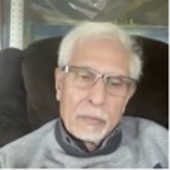
Joe is a retired social worker living in Edmonton. He was born in South Africa and joined the ANC in the 1970s when it was a banned organization, becoming a member of an underground cell. He fled to Swaziland when the South African police discovered his cell. Joe came to Canada as a refugee, joining his wife Barbara Baer Pillay in Edmonton. While working as a teacher for the Tallcree First Nation in northern Alberta, he participated in the building of the ANC’s encrypted communication network. He founded the first alternative school for street-involved youth in Edmonton.
Doug Miller 00:04
Step –
Gwen Schulman 00:06
There we go.
Doug Miller 00:09
So, Joe, you’ve read the consent form that we sent you. Do you agree to sort of what we’re trying to accomplish via this project?
Joe Pillay 00:17
Yes, I agree to whatever you want to accomplish.
Doug Miller 00:22
Thank you very much. Well, Joe, it’s very interesting to meet you, and I’m particularly interested about the fact that, sorry –
Gwen Schulman 00:32
First, first, if you could just, Joe, if you could just state your name and where you’re currently residing.
Joe Pillay 00:40
Okay, my name is Joe Pillay, and presently I’m in Edmonton, Canada, Edmonton, Alberta, Canada.
Gwen Schulman 00:50
Thank you.
Doug Miller 00:51
Well, and I guess where I’m interested is the story of you arriving sometime in the mid 80s in Tallcree, Alberta. How on earth does a fellow from South Africa end up in Tallcree, Alberta?
Joe Pillay 01:09
Okay, I came into Canada on May 5, 1985. At that time, Alberta was in a recession, oil prices were down, and unemployment was at a record level, and I couldn’t get a teaching job. Okay, so I got some qualification from the University of Alberta, allowing me to teach, and I sent in several applications, I think about 50 before I got one favorable one, so I got an employment in Tallcree, northern Alberta.
Gwen Schulman 02:06
Teaching what?
Joe Pillay 02:08
It’s a reserve, and I taught special education to primary school students.
Doug Miller 02:21
Amazing, and so that’s here in Canada, but your South African connection seemed to have been still quite alive.
Joe Pillay 02:32
Yes, once you’ve been involved fighting apartheid, those connections remain for forever, because the struggle was an ongoing struggle to get rid of apartheid.
Gwen Schulman 02:51
So, perhaps we do need to back up a little bit. Would you be able to briefly just tell us what kind of, what your involvement was in the movement before coming to Canada, member, your membership in any organizations, the kind of actions that you were involved in?
Joe Pillay 03:09
Right. Okay, I was born in South Africa, so to be involved in anti-apartheid came easily to me. Okay, so I was involved in the rate payers association in Mia Bank, where I lived to get better amenities for the community there, right? And you know I even started a youth organization talking about apartheid and the discrimination that all people that were not white faced, so I was always against apartheid and racism, and did everything I could to fight it.
Gwen Schulman 04:10
Were you a member of the African National Congress?
Joe Pillay 04:14
I was a member from Umkhonto, later, right? I was, became a member from Umkhonto. I was also a member of the Black People’s Convention, which was fighting against the psychological oppression that people faced, as well as the physical operate oppression that people of color faced. I was their representative of the Mir Bank, went with Brown. Charge of the Black People’s Convention, so yeah, my brother Ivan Pillay was also a member of the Black People’s Convention, so both of us were politically involved.
Gwen Schulman 05:26
Not to get too far off track here, because we do want to get back to the Canadian side of the story, but I’m just curious, what kind of work would you be doing with the Black People’s Convention, in particular, sort of the psychological aspect and violence. What would be some of the concrete initiatives?
Joe Pillay 05:50
Well, the concrete initiative was to try and organize the people. We felt that without the masses becoming conscientized and becoming aware of the oppression that the liberation wouldn’t really succeed unless you have the masses on your side. There was a lull in the struggle, because after the 1960s when the ANC was banned, and when the struggle, when a number of activists were shoved in jail and arrested in Robben Island, there was a 90 day and 180 day act where people could be arrested with no reason given and were just shoved in jail and tortured till they admitted what they were involved in, and this led to massive arrests, because a lot of people broke and gave what they were involved in and implicated others as well. So, masses of people were arrested, they were tortured, sent to Robben Island, and so the struggle came to a lull, right, and so the Black consciousness movements were starting to get new people that were, that had grown up just before this period and were young adults became more and more involved and started once again organizing people to challenge what was happening.
Gwen Schulman 07:50
Fascinating.
Doug Miller 07:51
That’s fascinating. And, of course, the 50th anniversary of Soweto is June 16 this year, right?
Joe Pillay 07:57
Yeah, and you know, the Soweto thing, that really boosted the struggle, right, because there’s a big advantage when you get young adults and students involved in the struggle, because many of them are not working, so for them to get involved didn’t mean that they were losing salaries and wages, and etc. They can put in their heart and soul into a struggle, whereas their parents had to eke out a living on a daily basis to look after their family, and they could not just drop everything and get involved in the struggle. One thing that the Soweto thing did was that a lot of young people left the country and joined the struggle, like the ANC and Umkhonto and others, and I met some of them while I received my training.
Gwen Schulman 09:13
You were already in MK when, when this, when the uprising occurred?
Joe Pillay 09:21
The uprising was a long uprising. It didn’t start from one day and end. So, during that period, I left the country and joined in Umkhonto. I joined Umkhonto even before that. I joined Umkhonto while I was in South Africa, right. And so I left the country and went for training in Angola, where I was trained with a number of people that were involved in the Soweto uprising, a number of young adults, I was much older than most of them, right. So, so the yes, the Soweto uprising boosted the struggle.
Doug Miller 10:23
So at some point you’re, you’re back in South Africa. I read a very good book you wrote about Shadrach Mafumulo. I’m sorry, I said his name, Mapu Mulo.
Joe Pillay 10:36
Yeah,
Doug Miller 10:37
And so he talks a lot about the struggle, and you got his history in Swaziland. We’re getting some connections here. You’ve started to move in and out of the country, is it?
Joe Pillay 10:55
Yeah, we’ll have to go a little back in time. I talked about the Black People’s Convention, somewhere in the middle of 1973 there was a lull in the struggle, because a lot of the activists were imprisoned, etc. etc. and I looked at it and said there’s just no hope of us winning the struggle, and so I decided to leave the country for good and settle somewhere else. I had a friend, and he was talking quite a bit about Canada, and what a beautiful country, and etcetera, etcetera. When the Black People’s Convention got the news that I was going to leave the country, they approached me because I was a member and said, “Why don’t you become our courier and take our reports from SASO and BPC to the International United, United, to the to Geneva and hand over these reports right to the International University Exchange Fund?”.
Doug Miller 12:27
IU, IUEF, yes, yes,
Joe Pillay 12:30
And I said, sure, and I flew to Geneva, and I met the person in charge, last Ghana Erickson, and handed over the reports, right, and then they asked me to give a report of what I was involved in, and so I gave them an extensive report of my involvements in the struggle, right, thinking that I’m not going to go back into South Africa, so it didn’t really matter what my report indicated, so I handed them the handed over that report to them.
But the IUEF was already infiltrated, mm by the South Africans, and the fellow by the name of Craig Williamson, who was a special branch operative, was involved with IUEF, so my information became known to the South Africans, South Africa, right, and so, so I was kind of compromised. I intended to fly to Britain, so from Geneva, I flew to Britain. By the time I reached Britain, and once I landed at the airport, I noticed that my baggage was missing, right? So it took three or four days before I got my baggage back, but while I was in, in Britain, in London, I made contact with various organizations, and I made contact with the ANC. I met a fellow by the name of CDAT, and he said, “Joe, if people like you leave the country, who’s going to help in bringing liberation to South Africa? You know, people like you have to go back and work to liberate South Africa”. I said “that’s all very well, but you know, I’ll have to first, you know, check out things. I want to check different countries”, and so I said “I’ll give it a thought”.
And from Britain I flew to the United States, landed at the Kennedy Airport, and I already had a visa to enter the United States, but when they interrogated me there, they said, “We give you 24 hours to vacate our country, or we’ll arrest you”. So I had to fly. I flew to Canada, right. And when I got to Canada, Toronto, I frequented the ANC offices there, right, made several speeches at trade unions and high schools, talking about the apartheid and the suffering of people, etc.
So I spent about three months in Toronto, became convinced that I should really get back to South Africa and do whatever I could to promote the struggle I so I flew back to Britain, and I’m, and I got my training from Ronnie Kasrils in underground work, and you know all those fine details about how to keep safe, how to make sure that you leave the only fingerprints, etc. So I flew back to South Africa. When I landed at the airport in Durban, my baggage was missing. Okay, when I got to Durban, got home, my home in Mia Bank, Durban, right, people were excited to see me, but the very next day the special branch visited me and they said, “you know, where your baggage is, we have your baggage” right, and so I realized that I needed to be very, very careful.
The other disadvantage I had was that everybody my age in my contacts, and because I was outside of South Africa, I lost most of those contacts, and everybody my age was already married or little families of themselves, so I was not very successful in recruiting people to the cause, and so, and I also had to be very careful. Fortunately for me, my brother was, Ivan Pillay was eight years younger than me, was also involved in the struggle, he was working, he was at an age group that was young enough to get involved in the struggle, so he had an advantage there, but he also worked for Robert Construction, which worked with laborers and others, and he got involved, got interested in the labour movement. So he joined what was called the Black Allied Workers Union and became part of the union and had contacts with the black workers.
My family was getting very worried about my brother. They felt that sooner or later the special branch will pick him up, and once a special branch gets you, you never know whether you were ever going to be alive again, right. Lot of people are broken within 48 hours, a lot have been killed in detention. And so one of the relatives said, I know a person from Robben Island who had spent time there, he was my school friend, and, and they, he’s not the same kind of person that I knew after he had left Robben Island, it had served seriously affected his mental well-being, etc. I’m going to introduce Ivan to him, so that Ivan can know what Robben Island will do to him, so he introduced Ivan, a fellow by the name of Singh Girja, Sonny Singh, who had spent eight years, I think, in Robben Island, and Sunny Singh and Ivan met and Sonny Singh recruited Ivan to Umkhonto.
Doug Miller 21:13
Hear your warning, join Umkhonto.
Gwen Schulman
So much for that strategy.
Doug Miller 21:22
Yeah.
Joe Pillay 21:28
Me and Ivan, because he was out for Black People’s Union, right, was meeting a lot of other people in, in SACTU and other things, and one of the persons he met was an African person by the name of Patrick Patrick Nsomi became my customer because I was running a furniture store selling secondhand furniture and new furniture. I had a good cover because I had African customers as well, and as running a store, you meet a lot of people, so it was very difficult for the special branch to actually keep tabs on who I was meeting, so it was a very good cover. So Patrick Nsomi I even recruited Patrick Nsomi to become part of Umkhonto. Patrick Nsomi came and spoke to me. I was already part of Umkhonto and so Ivan, Patrick Nsomi and I formed a three man Umkhonto cell, right?
One of our first jobs, one of my first jobs was to find a safe house for Umkhonto soldiers, Umkhonto trained people to come into the country where they can find a place, a safe place, without anybody knowing what they were up to, and so I found a nice location, an orchard farm, which I rented for the use of from Umkhonto, so everything was going well.
One of the things we did was circulating pamphlets, ANC pamphlets, to tell people that the ANC is alive and well, and the other thing was we helped to rescue or transport people that were endangered of being arrested or people that the special branch was already aware of to help them get safely out of the country, that’s one of the things that the cell did as well, but all while all this was going on, and while we were active and moving things, we were contacted by Umkhonto to say that “we need transportation to carry Umkhonto ANC members from the borders of Swaziland into South Africa, and so for that we needed to have by vehicles to transport arms and personnel into the country to continue the struggle”, so, so I was approached and said “we need to buy these vehicles, but since then you are running the business, we’d have to use your name to buy these vehicles”, so I gave them my name and my ID card, and all my information of where I was working, and my address of where I was living. These vehicles were supposed to be bought and handed to me as part of the furniture store business, and the person that was, I didn’t know this, but the information was given to Shadrach Mapumulu to buy the vehicles, Shadrach bought the vehicles, but I think it needed some attention, or whatever, instead of handing the vehicles to us, he did not, and so while he was working, the special branch arrested him. He had all my information with it. This story can take a long time, so I don’t want to go into a lot of details, right, but in any case, the so I didn’t know Shadrach was arrested, right, so after work one day, Friday night, I get home and my brother Ivan calls me aside and says “the game is up, you’d have to leave”.
And the game is up, got to leave, he says, well, you know, Shadrach has been arrested. Who is Shadrach? I don’t even know who Shadrach is. Who is Shadrach, is a Robben Island person who had been arrested. Why are we connecting ourselves with the Robben Island person? It doesn’t take a genius to realize that he will be under surveillance by the special branch, right? Yeah, but you know he was supposed to have left the country, but he didn’t, etc. So you would have to leave the country. You’d have to leave right now, because, yeah, because he has all the information, he’s going to break, and you are going to be arrested.
I said, “look, I can’t leave. I’m running a business. This family depends on my earnings. I can’t just leave”. Ivan said, “you won’t be running anything if the special branch gets hold of you. You have no choice”. So I collected whatever money I could and went and spent a night at a relative’s place. The next morning, Patrick Nsomi, my brother Ivan, and I met, and the decision was taken that “Joe, you are definitely going to be arrested, and Patrick Nsomi because Shadrach knows him. He’s also in danger”, so both of us decided to leave the country the next morning, Patrick Nsomi didn’t even know until we told him what had happened, so he had to make a sudden decision, right? He was the best man at the wedding and the driver, so you know, when his wife heard that, he couldn’t have at least waited till after the wedding left, but then we had to leave. There was a big story about how we left and how I nearly get arrested again, right, and how I landed in Swaziland, right, and how I went for training, and how I nearly got killed while I was being trained.
Gwen Schulman 30:32
This would have been, which year, approximately what year, just to situate us?
Joe Pillay 30:36
This is 1977.
Gwen Schulman 30:42
Okay, okay.
Joe Pillay 30:54
So I landed in Swaziland and from Swaziland I made contact with the ANC, and then I was transported from Swaziland to the borders of Swaziland, had to cross over illegally across the border into Maputo into Mozambique where I met Joe Slovo of the ANC and had a meeting there with them.
And in my, in the meeting I was quite angry with the ANC, I said you know, “we had the cell, which was working so well. We’re looking forward to doing a lot of really important things to promote the struggle, but we were put in contact with the person that was already in surveillance by the special branch, which endangered everything we did. We lost everything that we had so far achieved”. But the ANC was angry with me. Nobody likes to be criticized.
And so we had another meeting the next day, and we talked about other things, and I mentioned happened to mention Ivan and contacts he had in in South Africa, they became very interested in that, and they said, “Look, Ivan is in danger of being arrested. He can be arrested at any time. So we’re going to send in a person to get Ivan out of the country, right?”. And so I said, fine, and after the meeting I went back to Swaziland, and remained underground in Swaziland. One week had passed, two weeks had passed, three weeks had passed. They didn’t send a courier to get Ivan out, and so I said, “Hey, what’s happening? This person is in danger of being arrested, or we can’t find a courier?” One of our couriers has been arrested, and I said, “If you can’t find a courier, then I will have to go into the country and get Ivan out. They said “Sure, make sure you want to do this. This is, you are under surveillance yourself, you and the special branch will be after you. You can be arrested”. I said, I’ll take my chances, and I nearly get arrested. I won’t go into that story, because that’s… but I managed to get in and get Ivan out.
Gwen Schulman 35:07
Amazing.
Doug Miller 35:10
So from here now you’re both in Swaziland. This is the late 70s.
Joe Pillay 35:17
Right.
Doug Miller 35:18
I’m still trying to connect us to Canada somehow.
Joe Pillay 35:25
Well, I was in Swaziland, you know, and I went back and got my training right. I came back to Swaziland and the Swazis didn’t know of my affiliation with the ANC or the Umkhonto, so I was underground and because we had no income, and Ivan didn’t have the qualifications that the Swazis needed, and so I had to find a job. I got a teaching job at St. Joseph’s High School, which was a good thing, because it provided housing as well, and so Ivan and I now had a place to stay, and I had an income, right.
So, while I was in Swaziland, I got a call that I had to be in Matola in Mozambique for a meeting. At this meeting I was appointed the political commission of the Natal Regional Command, and so I was probably the only Umkhonto member that worked full time and was also working underground with them, with them gone to which was a pretty difficult thing because everybody knew where I lived, I had hundreds of students that knew where I lived, and among the teaching fraternity, because my students did so well in public exams, that I became known in the teaching fraternity as the teacher that produced excellent results, so I was well known in the community, etc. etc.
But while in Swaziland there was the Matola raid, where a number of ANC people in to, people were killed, and I knew a few of them that were killed, but I was also having a conflict with the ANC because with the Natal regional command was, which operated from Mozambique. There were four of us in this command thing. No, there were five of us in the command thing. One of the persons that was in the command thing was a fellow by the name of Sipho. The way the command was established was that we were not supposed to be infiltrated into the country, we were supposed to be in command, right, but somehow the organization allowed Sipho to get into the country, into South Africa. Sipho knew me very well. He knew where I lived. He had stayed at my house a few times. Once he got into South Africa, he went straight to the South African police and reported that he was at their services.
Gwen Schulman
Whoa.
Doug Miller 40:18
Man.
Joe Pillay 40:27
Which I was worried about, and again I complained to the ANC that this person that was in Mozambique had been there for years and years, and he knew all the houses where ANC people lived. He knew a number of ANC activists. Him now working for the South Africans endangered all of us right again. Any kind of criticism doesn’t bode well, and I didn’t get a reply from there, but not talking long after that, I realized that people had given information about where all the houses were, etc. etc. and the raid took place. A number of people were killed to about two weeks after that. I was kidnapped.
Doug Miller 41:42
Kidnapped by the special branch.
Joe Pillay 41:52
You know, special branch operatives that come into the country, and I will, I was very lucky to be alive. Coming back to Canada, I was kidnapped. I was the only person that was returned after being kidnapped to Swaziland. There are a number of factors that played into it. I won’t go into it because you want to get to Canada at some stage. Yeah, so I was returned after about six weeks, I was detained at Flat Plus, where many activists lost their lives, were tortured to death. Right, I was interrogated by, well, while detained, I was shocked, pierced, punched, kicked and –
Gwen Schulman 43:45
Do you want to take a break? Should we take a break and get back to this a bit later?
Joe Pillay 43:50
No, I think we should finish.
Gwen Schulman 43:52
Okay.
Joe Pillay 43:54
So I was returned to Swaziland and I thought I was safe, but because I was not an informer, because I was still with them, Umkhonto, right, my life was being threatened all the time. Ronnie Castros visited me there and gave me a hand grenade and a Makarov pistol to protect myself. The community I lived in Saint Joseph were very supportive of me and provided me with hiding places for nearly four and a half years after that. Every night before it got dark, I went into hiding.
Doug Miller
Wow.
Joe Pillay
Any case, two of my friends were killed in Swaziland. Patrick, the one that I talked about was booby-trapped with explosives. His car was booby-trapped, killed him and his wife as he turned the ignition on.
Doug Miller
Oh geez.
Joe Pillay 45:45
Three children were orphaned that day. Shadrach was killed. He was the, you know, later, just one year after I left, so life was became very dangerous in 1984 83.
Mozambique, that that faced a lot of dangers, right there was a Renamo movement, movement against Mozambique, do that killed over a million Mozambicans and Samara Machel was forced to sign a peace agreement, the ANC was expelled from Mozambique, and things after that became very, very dangerous. From 1980 the government of the government of Swaziland was trying to get rid of me, right, and so I was arrested and spent almost six weeks in prison in Swaziland, so things were becoming very, very dangerous. The Swazi government admitted that it already had three years prior signed an agreement with South Africa and Swazi police and part of the government officials were all in cahoots with the special South African special branch, so life has become very, very difficult.
Uh, while I was teaching, I transferred to another school, and while I was teaching in that school, my wife Barbara had come in for a short spell of teaching assignment, she had taken a few months off Crossroads. She was with Crossroads, Canadian Crossroads. And then we met in the school, and we both, we both shared a lot in common. She was already part of an anti-apartheid movement in Canada, right? And so we, we got married in 1984 right? And she, once the assignment was over, she returned to Canada. After we got married, we applied. I applied for citizenship, or I applied for refugee status, and I was interviewed by an immigration officer from Canada. And then I was interviewed by CSIS, Canadian Security and Intelligence Agency, and interviewed me in Swaziland, right, and it took one and a half years before I was given refugee status,
Gwen Schulman 49:51
Long time to wait in those conditions.
Joe Pillay 49:53
Yeah, it was a long, long time, and. So I left to Canada and was here in May 5, 1985.
Gwen Schulman 50:08
Okay, so that brings us back to where we had kicked off, where you said that you applied and ultimately ended up getting a job, right?
Gwen Schulman 50:16
Right. So –
Doug Miller 50:20
I remember 1985 the interest rates went up to 20% plus,
Joe Pillay 50:25
Yes.
Doug Miller 50:28
It was terrible.
Joe Pillay 50:29
Yeah.
Doug Miller 50:31
So you’re in Tallcree now.
Joe Pillay 50:37
We lived in Edmonton for about a year, and that’s when I had to go back to, I attended the University of Alberta for about three months to satisfy that I was qualified to teach in Canada job in Tallcree.
Gwen Schulman 51:02
Okay, so when you get the job in Tallcree, working as a teacher, are you still actively involved in the movement or having plans to re-engage with the movement? Where were you at that point?
Joe Pillay 51:17
I was even before I got to Tallcree, right, part of the anti-apartheid movement in, in Edmonton, I think, for a while, a little while, was the chairperson of the anti-apartheid, the Edmonton part of the anti-apartheid movement, and so I was actively involved while in Edmonton. Also made a number of speeches, a number of rallies, etc.
Gwen Schulman 51:56
Were you still a member? Were you actively involved as an ANC member or as an individual, like, were you representing the ANC or speaking on their behalf at that point?
Joe Pillay 52:13
I wasn’t representing the ANC in my speaking engagements, I was speaking against apartheid, I was encouraging people to boycott South African products, the South African wines, etc. and you know, I don’t think if you are in a country as a refugee that you can be representing another country, right. So, though I was in full support of everything that was happening, right, and gave the ANC any help I could while being in the country, yeah, so I think I sent you an article about Garrett Pretorius, who was the first secretary in Canada, representing South Africa in the diplomatic field, and I was the keynote speaker at that rally, which made the front page of the Edmonton Sun.
Doug Miller 53:56
Exactly.
Joe Pillay 53:57
So yeah, we did everything we could to promote the ANC, right, especially the boycotts, because Alberta was one of the places that was continuing to, to look very favorably, at least the government, at the apartheid regime, right, and so, so you know, so we had to do everything possible to boycott South Africa.
We made placards. We went to liquor stores, we blocked the doors and educated people about apartheid.
Gwen Schulman 55:00
Can we, can we now jump to the ECS? Not to undermine how important that work is, because it was tremendously important. We have a lot of people we’ve interviewed who’ve really talked to us about that, and we look forward to talking to Barbara, maybe about her work with that. But can we shift now to the ECS, because this is a particularly unique part of this story that we’re anxious to understand and have a little bit more detail on.
Joe Pillay 55:27
Shall we get back to what you mean by ease?
Gwen Schulman 55:30
Sorry, the whole encrypted communication, your role up in Tallcree and being approached about participating in encrypted communication and all of that.
Joe Pillay 55:42
Okay, yeah, I talked about my brother Ivan, and Ivan was still actively involved in South Africa, and outside South Africa, you know, and in communication, and so forth, and he visited me while I was in Edmonton, taking a break from Tallcree and we spoke about recruiting people, right, recruiting people, and for Vula, and, and so, so I was put in touch with Jenkin, Tim Jenkin, and, and while I was in Tall Cree, we were in communication, and he flew down to High Level.
I didn’t even know how Tim looked or anything, and so I was wondering how I’m going to be able to recognize him when he landed at this plane, but we managed it, I went and picked him up and brought him to Tallcree, where we spent about three days with us, and we talked about the struggle, and we talked about encrypted messaging, and so forth. I already knew that Tim was going to be coming over, so I had purchased a computer. Those days are floppy disks.
Doug Miller 57:48
Oh my goodness.
Joe Pillay 57:51
And I knew very little about computers as well, but Tim Jenkin came in and put in the programs for us and talked about encrypted messaging systems, right, through which we could contact each other, and so we made contact that way, but every year during the summer we spent our summers in Edmonton and got actively involved in anti-apartheid movements, etc. so I put my feelers out to people I knew in the movement to tell them that we needed help and the ANC needed help, they were looking for recruits.
Gwen Schulman 58:58
What kind of help?
Joe Pillay 59:02
I think basically it was left to Tim Jenkins to decide how he was going to use them, right, but my understanding was that they wanted to infiltrate people into South Africa, who could then help in the struggle within South Africa, because South Africa is such a racist country, recruiting people, white people, if I could put it that way, was an advantage because they were not prone to be suspects involved in the struggle, right, and.
My understanding, and I don’t know whether this is true or not, but also arms and ammunition, etc. was needed in the struggle, and one didn’t know what was going to happen during the struggle, whether there was going to be a rebellion, and whether the ANC had to really defend itself, so arms and ammunition was needed in the country as well, and the best way to infiltrate those kinds of things was by using white tourists getting into the country. I cannot say that that was the, that’s what’s how the recruits that I sent them were used, but how they were used was left to Tim Jenkin and the ANC.
Gwen Schulman 1:01:09
Can you tell us about your recruitment activities? How did you –
Joe Pillay 1:01:14
It was a difficult process, because it was difficult for people to drop down everything that they were involved in, and leave the country without any income, and to leave their families or their jobs, etc. to help in someone else’s struggle. I think the takings were few. I think there was about three or four people that I managed to contact and pass on the information to Tim. Thereafter, it was communication between Tim and them as to how they got the documents and how they got the funds, and
Gwen Schulman 1:02:06
Were you conducting this recruitment activity from Tallcree?
Joe Pillay 1:02:15
The recruitments were done while I was in Edmonton during periods of holidays,
Gwen Schulman 1:02:22
Okay.
Joe Pillay 1:02:23
When thereafter the communication sometimes continued via, via the computer encrypted messages that we had worked on.
Doug Miller 1:02:41
Wow, incredible.
Gwen Schulman 1:02:45
Just kind of curious about the encryption. Was it hard for you to learn the encrypted language? Like, what was that a challenge?
Joe Pillay 1:02:53
It wasn’t too much of a challenge, because we used a numbering system, that each number stood for a particular word, so the encrypted messages wasn’t, the system that Tim had engineered was pretty effective. The other thing one has to know is that the Canadian security intelligence agencies knew about me, right, and they were suspicious about me. I knew a few times when I was followed, once when I met some people at the Edmonton library that I was recruiting, and I was followed by two special branch people, I think, and so we had to relocate to another spot where we could see if anybody was approaching, coming towards us.
Gwen Schulman 1:04:26
Did you, were you still in refugee status at this point?
Joe Pillay 1:04:34
I was a refugee until I became a citizen.
Gwen Schulman 1:04:37
Okay, but at that point you had not been granted citizenship, you still had refugee status?
Joe Pillay 1:04:42
Yeah, I was a landed immigrant.
Gwen Schulman 1:04:46
Okay.
Doug Miller 1:04:47
Yeah, wow. What a career, what a history. My goodness gracious.
Gwen Schulman 1:04:56
Were people.. was anybody up in Tallcree First Nation, this is a two-part question. Was anybody up in Tallcree First Nation aware of what you were doing, and were was there any outreach in the nation just to involve Cree people in the movement in general anti-apartheid activities in Canada?
Joe Pillay 1:05:27
In Tall Cree, that was difficult to do, because people were insular, and they had their own, their own problems, right, you know. know, you had, you know, a lot of them didn’t have any running water. A truck had to bring in running water, and educational standards was very low. Lots of them didn’t have any employment. Intoxication was a bit of a problem, so a lot of people had their own kinds of problems, right? And so, yeah, it was difficult.
We did engage in conversations, etc. etc. I think they were sympathetic to the struggle that anti-apartheid posed, but apartheid was a very easy thing to wrap your head around, right. It was a legal system in South Africa, they in Canada, and among the First Nations, the oppression is there, but it’s subtle. There’s no, a First Nations person can go anywhere in Canada, right? Whereas I, when I was in South Africa, if I wanted to go to another province, I had to go and seek permission to do that. First Nations person, if he’s qualified, can seek a job anywhere. That’s still racism, and he may not get the job, but it’s not a formal legal.
Gwen Schulman 1:07:25
Yeah, do you recall any members of Tallcree Nation drawing parallels between the Canadian system and apartheid?
Joe Pillay 1:07:35
Yes, I think a number of chiefs, right, when it came to criticizing, they were saying that in some cases that they were worse off than apartheid people in South Africa, in some instances, right. So there was always some comparison between apartheid in South Africa and oppression in in Canada, but the problem was also in South Africa, we, we the whole nation of people of color. The whole country was affected. Here we have scattered reserves all over the country, and was difficult to get a consensus of fighting oppression all at the same time, and all coordinating their activities, and so that was not, not, not easily done right, and so they had challenges, the challenges was of poverty, of lack of education, of all kinds of things.
While I was in Edmonton, I started a school for students that had dropped out of regular schools, most of them were Aboriginal people, right? It became a charter school that’s still in operation today, and I was founding father of that school.
So, you fight oppression wherever you are. You try to make life better for the people around you.
Doug Miller 1:09:40
What a beautiful way to put some parenthesis around this. Thank you so much for that. It’s an amazing life and amazing accomplishments, and my goodness, I’m at a loss for words.
Gwen Schulman 1:09:54
Well, I want to edgy. Is there any something you’d like to add, maybe that we haven’t covered? In particular, I guess about your experience up in Tallcree, working as you know with encrypted communication. We only spoke briefly about it. Is there anything you’d like to add about it?
Joe Pillay 1:10:15
Yeah, you know, as I said, that the problem with encrypted communication, etc. etc. is that there’s really a, face-to-face things for prolonged, prolonged periods of time. You meet, you put people in charge, in touch with each other, you hope everything goes right, and once you are done, people go on with their own lives, and you made contacts with people that you may not make contact with them again forever. When you, when people come and they lead their own separate lives again, so I hope I knew what happened to the people that I had made contact with. Then, how, how did they fare? How did they contribute, etc?
But in a struggle, it’s, it’s difficult. I was so, I was so lucky, I was so gifted in how many people in their lives helped me when I was abducted, in Tallcree, I mean, not Tallcree, in St. Joseph’s School that whole community, Swazis, Canadian volunteers, American volunteers, every one of them helped. They wrote letters. They went to the police station. They bugged the police. They were suspicious of the police. They prodded them to tell them, “We are watching you. You’d have to get this person back in”. know, there was one report which talked about, where this person says the whole world was crying out because something like Joe Pillay was abducted. If it wasn’t for all those people, I probably would have been in Robben Island, or would have been actually, they meant to kill me.
Doug Miller 1:13:07
We’re very grateful for their, their support, that’s for sure.
Gwen Schulman 1:13:11
Oh, it also clearly speaks to who you are and what you meant to them. I mean, this doesn’t come… I’m not doubting for one moment the integrity of their actions and their compassion as human beings, but it certainly must also be a reflection of the kind of connections and relationships that you built with people there as a teacher and probably a mentor and organizer and all the rest of it. So it’s a bit of a full circle story, I think.
Joe Pillay 1:13:39
I think one of the things, if I may end with this, when I was in Swaziland, there were two of my friends, right, and they were single, and I was single for that time, and I said, you know what, insofar as all cooking during the week, why don’t we make a kind of a supper club? I will cook one day and you will cook next, and we will eat in different people’s houses right during, and these were Swazi, two, two of my Swazi friends, and so after the Matola raid, right, I was having supper at David Manyazzi’s house, and Elsen Korza was there, and the three of us that was there, and I told them about the dangers, the Matola raid, and you know, I’m not sure what could happen. Elson Cosa said, “Joe, why don’t you come and spend the night at my place?”. And I said, “Thanks, Elson, I’ll see you at nine, and I’ll stay at your place. I was approached at 830 at night, that dinner club.
When the police, when the Swazi police heard about it, they realized that I was not a racist, you get all kinds of racists, right? You got racists among Indians, you get racists, you know, all over the place, people intolerant of other sexes, people intolerant of, you know, other religions. We are not, I’m not born Indian because I wanted to be nobody decides what skin color they’re going to be born with. Well, thanks for putting up with me.
Gwen Schulman 1:17:03
It was wonderful. Listen, I wish we had six hours and could have filled in all the details. Completely fascinating.
Doug Miller 1:17:11
I think we’ve just scratched the surface, but I thank you ever so much. That fascinating story, and
Gwen Schulman
Very.
Doug Miller
Very much so, so.
Gwen Schulman 1:17:18
And very eloquently told too. Thank you so much.
Doug Miller 1:17:22
Thank you. Thanks so much. Be in touch again very, very soon.
Joe Pillay 1:17:28
Thanks for being interested in the stories of the struggle, and –
Gwen Schulman 1:17:33
They’re important.
Joe Pillay 1:17:35
And this, these kinds of stories help other struggles.
Gwen Schulman 1:17:40
Absolutely.
Joe Pillay 1:17:42
That it can be done exactly.
Gwen Schulman 1:17:44
That’s exactly our philosophy as well. And we hope that this material, this recorded material, serves well for current and future generations. That’s the thinking behind a lot of this. And we’ll be in touch also with Barbara to follow up with her, because I’d really like to get, get Barbara’s story as well.
Doug Miller 1:18:07
Good. Thank you very much again.
Joe Pillay 1:18:09
Well, thank you for doing this. I really appreciate, you know, your contributions to all struggles.
Gwen Schulman 1:18:17
Okay. Well, we’ll let you know as it proceeds and keep you in the loop with how it’s developing.
Joe Pillay 1:18:24
Okay, thanks again.
Gwen Schulman 1:18:25
Thank you. Take care.
Joe Pillay 1:18:28
Yeah, all the best.
Credits
Bio: Joe is a retired social worker living in Edmonton. He was born in South Africa and joined the ANC in the 1970s when it was a banned organization, becoming a member of an underground cell. He fled to Swaziland when the South African police discovered his cell. Joe came to Canada as a refugee, joining his wife Barbara Baer Pillay in Edmonton. While working as a teacher for the Tallcree First Nation in northern Alberta, he participated in the building of the ANC’s encrypted communication network. He founded the first alternative school for street-involved youth in Edmonton.