
Bob Ages
-
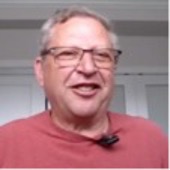
A machinist in the Winnipeg rail yard in the 1980s and a shop steward with the International Association of Machinists (IAM), Bob engaged with the anti-apartheid coalition movement and the Winnipeg Labour Council. Later moving to Toronto, then Vancouver, he continued to be engaged with the union movement, including the BC Federation of Labour and Indigenous struggles in BC.
DOUG MILLER 00:03
Good, good morning, Bob Armstrong in Vancouver, Bob Ages in Vancouver, and Jane Armstrong in Toronto, and I'm Doug Miller here in Montreal, representing the Southern African Southern Africa activist anti-apartheid activist history project, and working with SACTU Solidarity Committee to interview union militants that had been involved in the struggle in the 1970s and 80s and 90s, and today with Bob Ages in Vancouver again. Good morning, and welcome, and I just wanted to make sure that you'd had a chance to go through the consent form, and you understand that this is for public dissemination, that it'll be archived and accessible to researchers and students and educationalists. Do you agree to be interviewed under those terms?
BOB AGES 00:58
Yes, I've seen it, and have no problem with things being public.
DOUG MILLER 01:02
Perfect. Listen, Bob, I usually ask a very general question. It's really interesting to know something of your background. I'm totally, I admit it, central Canadian. I don't know the west past Toronto much, and so, so please could you just introduce yourself, where you're from, a bit about your background, how you actually ran into SACTU, eventually, and anti-apartheid as part of your agenda.
BOB AGES 01:31
Oh, God, I was actually born in Ottawa, and my first involvement, it was very minor, actually, I think was a high school student, as very involved in radical politics, high school politics, Vietnam War, and the South African ambassador was speaking, I think it was at Carleton University, though it might have been Ottawa, you from T-shirt was Carlton, would have been around 1970. So a number of us decided to go and pick at the place, and I mean the change from later on, where people like Maloney and Harper tried to take credit for being anti-racist and anti-apartheid, was, I mean it was typical that we're considered crazy radicals were opposing South African apartheid, and got the cops called on us now. Just one of many things that are issues I was involved in, just a particular incident we thought couldn't go unopposed.
My real involvement came later. I moved out to the prairies in 1974 for work. I didn't want to be a civil servant, so I got involved driving truck, and then wound up in Winnipeg in 1970. About 1976 or 1977, got a job at the railway, and so got involved with the course. It was a unionized workplace. We got involved in the union movement. There was a shop steward, local executive member, so I'd elected to the executive labor council.
I got involved with the MFL Human Rights Committee, so it's really in connection with all that, that this was obviously an issue that was quite prominent, and you could really be involved in that stuff, especially human rights stuff, and it was saying, "Hey, we got to support the movement against apartheid in South Africa”, so that would have been the mid 80s. Now I was involved a lot more with Latin American solidarity. Obviously, we'd had the situation working with Chilean refugees who come over there a lot in Canada, and then, of course, supporting Nicaragua and the FMLN in El Salvador, but obviously South Africa was another issue, you know, international imperialism gives you lots of opportunities to support different movements. So I want to be clear, I mean the work against apartheid wasn't the only or even the most central to the activity I was doing, and I wasn't particularly central to the committee, but it was. I said everything was sort of interlocked.
The key thing that kind of happened, I believe it was 1985 I actually did a little googling to refresh my memory on dates, so long ago, the NDP government, which had been elected several years before, had committed to ending the import of South African wines, which was good. I believe Ontario did it slightly after, but they were in a situation where there, where they had South African wine in inventory, which he didn't want to just dump, and as a wine lover, I kind of actually sympathize with that. So, what they decided the appropriate thing to do was to donate the proceeds. I'm not sure if it was the gross sales or just the profit from that over liquor, whatever it was called, to the anti-apartheid movement in Winnipeg.
So, for the first time, rather than just being a handful of volunteers, they actually had money to rent a little office, get a Xerox machine. I think we even had a staffer, part-time staff, for a little while, when the money lasted, so we're able to actually, you know, you'll do a little more and continue the public education work, and so basically I just helped out with some of the events, got to know we was Dr. Ahmed Grander, he was the ANC rep and streaming ready, he was the head of Frontier College, which did educational outreach, so he had a field, but he helped them work, you know, was a close partner with Dr. Randry, and kind of heading up. And then there were young people and students, and you know, union supporters like me, you know, help with some events and stuff like that. I helped set up the office, you know, some practical stuff, and you know, those were kind of the sort of the framework. Then there were kind of like a couple of fun incidents we got involved in that we reminisced with Jane when she was visiting, and I think that's what she thought might be interesting to include.
DOUG MILLER 06:48
Wow, well, listen, this fascinating story, and I hadn't heard the story of the wine before, that actually quite an interesting anecdote, and an important gesture, I might add.
BOB AGES 07:00
Yeah, it was very cool, because you know, usually these little volunteer groups work on issues. I mean, had no money when we were doing Latin American solidarity. I mean, there's all volunteers and donations, so to actually get, I don't know, 100 grand or more, so it's a lot of money back in the mid 80s. Uh, to kind of put it at least, while the money lasted for a couple years, almost on a professional basis, which was very different from the kind of grassroots activism I was involved in, you know, separate from the union movement, which, of course, has, you know, a dues base,
DOUG MILLER 07:38
And what was, did it have a name that group, and a structure, and you talked about representatives?
BOB AGES 07:46
I can't remember the name, Anti-Apartheid, I think we said Anti-Apartheid Coalition, but I could be wrong, or the Manitoba Coalition Against Apartheid, or something like that, and it had, I think, monthly meetings, just to plan events and stuff, and public outreach. Like I said, it was almost 40 years ago, and I was involved in a number of other things. In fact, I had a meeting almost every night between Labor Council and Union local anti anti-racism stuff, and then there was this, so it becomes a bit of a jungle jumble after almost 40 years.
DOUG MILLER 08:30
Absolutely. And what, what union were you most active in? You said you joined the union in Rose.
BOB AGES 08:39
Well, I was a shopcraft worker, and we had there were when I started there 21 different unions on the railway, seven alone just for shop craft workers, all the American craft unions. I mean, it was actually interesting because I got involved as an apprentice as a chief organizer for a grassroots movement to get rid of the American craft unions and form an independent democratic Canadian union, actually got expelled from the machinists, took them to labor board and forced them, had a labor board hearing and won and was reinstated, so I was in this funny position where the rank and file elected me to the executive as a steward, as whatever. Well, of course, I was kind of a bete noire to the, you know, machinist union. So there's always, so I had good friends in CUPW and CUPE, and you know, the Canadian unions, and among bank and file militants, and well, being kind of a odd man out within, you know, to the American unions, but that's another whole story, so it always kind of weighed, and on the anecdote I want to tell you about the MFL kind of played into that.
DOUG MILLER 10:02
Manitoba Federation of Labor.
BOB AGES 10:04
Yeah.
DOUG MILLER 10:05
And you would have been with AIM?
BOB AGES 10:08
IAM International Association and aerospace workers, but usually shortened to the IAM. So maybe I should tell you that anecdote, because that's the two things that were kind of interesting when I first got involved. Peter Boslangu was the rep, but then I think you know some of the history, and all of a sudden he wasn't there anymore, and Boffle, who I, you know, we all really liked as much, we're down to earth, much more militant, was the rep, and I think, I can't remember what year it might have been 86 or seven. There was an MFL convention in Winnipeg, and Buffalo was in Winnipeg, and can't remember it just happened or it came up because of the convention, and we set up an information table, you know, it's often at our conventions, you know, the lobby, all these groups have tables, and you had stuff, and I had inquired about Boffo being representative of, you know, SACTU and the anti-apartheid movement, speaking, and of course the steel workers controlled the presidency, and you know their right-wing allies controlled the Federation of Labor, not so politely declined the opportunity.
So, me not being quite a person to take no for an answer, I was trying to think how it worked, because I wasn't a delegate, so I must have got one of my supporters. I'm thinking it might have been Dale Clark, who was president of the CUPW local, and they became president of the National Union. He got up under a point of order and got permission for me to address the convention briefly, and I got up and pretended to be naive and not have had this discussion with Will Hudson, the president, and just said how excited I'm sure everyone was to have the representative of SACTU actually here, and wouldn't it be great to have him, hear from him, from the front, and being a motion, which, of course, not being a delegate, I couldn't even do. Maybe someone else picked it up and said “I move” or second, whatever, to have him speak.
And, of course, the vote was almost unanimous. My hand just shot up in the air. You could see the steam coming out of Wolf Hudson's ears, but he was told he overruled. And so Buffo came in from the lobby and gave a barn burner of a speech. They got a big ovation, so you know that was kind of a neat manipulation of the rules, I guess, but it meant that Balfour, representing SACTU, actually got to address the convention instead of just being kept at arm's length.
DOUG MILLER 13:12
So this all plays into the famous CLC anti-communist thing, where ANC and SAC do are communist based, and so we don't have any truck or trade with them.
BOB AGES 13:24
Yeah, yeah, it was actually kind of, a funny couple of hug to that is bumped into Wolf Hudson later in the hallway, and he was very stern. He said, “You know, Bob, that's not the way we operate.” I just smiled and said, "Oh, I'm sorry, Wolf. I didn't realize that the MFL operated like the Communist Party of the Soviet Union”. That was a nice ironic dig. He just huffed and walked away.
DOUG MILLER 13:56
That's fantastic. Now Winnipeg was, was once upon a time a hotbed of labor and progressive issues. You were there, I guess, a little later than then that era of the hotbed times, but nonetheless a lot of issues with indigenous people, the railways, and others were still passing through there, and in a lot of ways, did you ever relate to issues around, for instance, with indigenous people, with workers of color?
BOB AGES 14:30
Yeah, actually is kind of funny. I mean, I should mention that my family's roots are in the north end of Winnipeg, well I thought my grandfather was a teamster, and he went, my mother was born 1913 so I believe my grandfather, just as a rank and file worker, would have been involved peripherally, as you know, because they were socialist Jews in supporting the general strike, and my mother, of course, graduated from university in, I think, 31 or 32 and, like women, lot of people in the Depression, especially educated women, had no job prospects, so she was actually one of the key organizers of the Young Communist League in North End to Winnipeg. In fact, if you looked up the history of the what's sometimes called the battle of the riot at Market Square, my mother was one of the key organizers of that, where they drove the fascist, the Nationalist Party out of Winnipeg. So I grew up on those kind of stories, but she moved on a lot to get work. She was a chemist, that was her degree during the, I think it's 38 or 39. Things, of course, picked up, so it's kind of ironic to many decades after that to wind up back in Winnipeg. So it's like a big circle for my family.
DOUG MILLER 16:00
Red Diaper Baby, goes back to this exactly, that's a fascinating story. So back to my question, then about relations with, for instance, railway, there were people of color famously in the in the as porters, and in the trains, would your union have had any -?
BOB AGES 16:20
Oh yeah, the shops were kind of like the United Nations, we there were many waves, as often happened, industry here companies thought, you know, especially in the 50s, why train people are when we can just import people from all over the world, so there's a wave of people from Northern Ireland, from the shipyards, who were trained people from the Glasgow shipyards, other in English, of course, and then, of course, from the Caribbean, and then after that from the Philippines, we had a whole crew in the Philippines. So that's why the anti-racism work and the human rights stuff was, you know, a big part of what I did in the local, as well as, you know, for gay rights, which was not an easy thing to do in 1980s anywhere, certainly not in a metal shop, going and helping get the first women hired on the railway in the shop.
But yeah, it's actually funny because the work I did, and as a steward taking on management around some racist incidents, I was actually invited. Some rank and file workers of color created a cross union sort of rank and file caucus called the Workers of Color Support Network, and it was funny. A friend of mine, Lance, believe he was Bohemian, came and told me about it and said they wanted me to invite me to join. I pointed out, I put my arm against his and said, “Lance, I don't know if you've noticed, but I'm actually white”. He said, “Oh, we know that, but we figure that's only on the outside. On the inside, you're white, obviously one of us”, so I always joke I was the only honky in the workers of color support network.
But you know, I made a point of leaving most of the stuff to, obviously the workers of color and kind of act as consult when they had questions about how things were, who was who, how you do a resolution, how to move an issue forward. You know, I would explain, because you know, I had experience in Robert's rules, and also being on the Labor Council executive and MFL committees, which they weren't, could tell them, you know, how to do things that might work and move things forward. So that was kind of funny. So, obviously, you know, the anti-racism stuff tied in with the South African anti-apartheid stuff, and that was all kind of mixed up together, because it's really only one issue: you're anti-oppression, you're anti-imperialist, or you're not. And, like I said, anti-imperialism, you know, one of the good things is, you know, there's never any shortage of countries and people there oppressing and invading.
DOUG MILLER 19:26
Wow, I'm fascinated that you're with IAM, known famously as a very conservative union, but at the local level, you're able to lead all these activists and militant kind of struggles.
BOB AGES 19:39
Yeah, I mean, there's a real difference in the local and the national, a certain amount of separation diabetes. I mean, just as an example, the company, at one point, it was big thing that aided these quality of worklife programs, and a lot of companies were doing it. And the Labor Council, as part of its education, you know, labor councils do these weekend workshops, but had actually done a course on quality of worklife, so when they brought it in, or decided to bring it in, I went to what they called the Federated Crafts, because after we lost that closely, lost that attempt to overthrow the unions, and I was back in there, sort of uneasy relationship, because they considered me really smart, I was actually on track to become a Grand Lodge rep until I decided to be principal, and so there was kind of this weird relationship, so I went to and said we have to fight this, explained what it was from the course. Oh my god, this is terrible, because there's that old labor tradition, both from Winnipeg, but also, like, said you've got a lot of guys from the United Kingdom, where the head of the union, mostly the Irish club, they came from that old, you know, British trade union militant tradition, that's how they grew up. They said, “We can't do this. We'll talk to the international and get help and take this on”. Of course, the international I knew, but I didn't say anything at the time. I knew the IAM was up to their assholes in your corporate collaboration and quality work, like they, of course, came back and were like shocked and disappointed, but decided that, David agreed to let me head up a campaign in the shops to kill what the label was total quality TQ, which we did. So you know, there's always that kind of give and take and pull of different traditions for the international based in the states and that labor tradition that permeated our local, so that was kind of fun,
DOUG MILLER 21:56
So that left that space for you to be pushing these issues as you did, yeah, interesting again. Winnipeg, just to keep harping a little bit on it, is famously populated with indigenous people. How were the relations there?
BOB AGES 22:13
Well, there really wasn't any. The word Indigenous people in the shop that I knew, it was, it was kind of funny, because I had done some work and support, I guess. AIM came through and did a tour, and as part of my left stuff, I helped out a bit, and there was something, but they didn't have jobs, you know. There's me, I had arguments with people. There's something would happen in the news, all this stuff that was in the incident around that. I said, "Tell me something, how long would you last if we dropped you in the bush 200 miles north of Kenora? And they go, "Hoo, never thought of that, right?”. Man, the racism was so deep when I got my first job as entry level in the reclaim yard, basically the scrap yard where we cut up old stuff, old box cars, whatever was past his prime before I got my apprenticeship, and nice to work inside after a year and a half, and I couldn't help noticing that one of the forklift drivers was very clearly indigenous, so I got talked to, I think his name was Bill Prince, Bill, and if you know Manitoba, Prince is a very well-known, you know, clearly indigenous name, and he worked there about 30 years, and I just thought it was cool to actually see an indigenous person with a good union job. I mean, this is various hence teeth.
Turns out his son was actually the chief of the reserve, I think was Peguis, or one of them in the South. So that was, that was really cool. So one time, I mean, I went up because, I mean, you know, after hundreds of years of contact, you know, some people who are indigenous is obvious, but he was like the classic, I mean, you take one look, it's like doing, someone's black, you look at him, Billy's indigenous, so again the issue had come up during the lunchroom about, you know, something, and all those Indians never, they don't work like us. I said, “Well, but what about your buddy Bill. Well, what about him? Well, he's indigenous or Indian, whatever”. We use it. Nah, he's not. I said, “Look at him”. He actually went up and asked, like, “Are you?”. Well, he said, “Of course I am”. Like, he says it was so extreme, when someone's that obvious that under the first glance from driving by.
I knew it, but it's like this blind spot, you know? He has a good union job, he works hard, he has a house in Transcona, and a family like everyone else, therefore can't be indigenous because indigenous people don't do that. So that was kind of an eye opener for people. Oh, crap, they'd only work with them for 30 years.
DOUG MILLER 25:04
Holy smokes, it's an amazing.. it was an amazing period. Thankfully, we've passed a lot of that.
BOB AGES 25:12
Yeah.
DOUG MILLER 25:13
And well, look, Jane, how about you pitching in here?
JANE ARMSTRONG 25:19
Well, this is what struck me about Bob's experience in the 1980s. Every place is a little different, every workplace is a little different, but particularly in the context of Winnipeg and working on the railway, where there was more United Nations on the railway than a lot of other places. I mean, you found them more diversity in steel plants, but in the worst jobs in the steel plant –
DOUG MILLER 25:54
And so I think your experience says a lot about what progressive people could do and try to do at the local level, despite what was happening at the national levels, in quite frankly a lot of unions. How much do you think your involvement in those petit anti-imperialist struggles, which were predominant in the 80s, influenced what you went on to do later, because I know you got quite involved with the Wetsu’weten struggle, indigenous struggles on the West Coast, is it just a sort of a straight line, or how did it, that because to put it another way, are there are there lessons you learned then that are not being applied now?
BOB AGES 26:59
Why now?
DOUG MILLER
Yes.
BOB AGES 27:02
I, perhaps something I hadn't really thought about that, because it's kind of a continuation, of course. There's a big gap in between the railways, they were downsizing in the early 90s. I took a buyout because my partner, who is a union rep, wound up moving to Toronto to work with the CAW, which is how we all met Jane. I went back to school and actually got an MBA in finance. I know it's kind of funny, they always wanted, they used to joke, you know, join the dark side, my students, because I'm actually good at this shit. It was kind of odd, and I said, “No, I'm going to go work for a union or a cooperative or something, and screw all you capitalist bastards”. We laughed, but then Susan, after I guess we spent about 13 years back in Toronto, so I did this big circle from Ottawa to the prairie across the prairies and then back to Toronto and then we'd always talked about retiring to the west coast and a position came open, so then we wound up in Vancouver in the west coast and I'm trying to remember how it worked, I was working with, I've been involved with Occupy, and we had some money left over, and a contact I knew were trying to get rid of it, you know. Give out, we had about 10 grand. I always joked that we should have put a press release saying that “We ran Occupy, fed thousands of people, and still came out with a surplus”, you know, and if the government read more like Occupy, but people decided that, maybe it was not good PR to say we actually, you know, made money on Occupy, but I thought it was good.
So anyway, a friend who was working with the student was kind of key organizer and I called him and say, “You'll get the use of a grant, you know, five hundred, a thousand bucks, whatever”. We still had a couple grand to get rid of, the good causes, and she had mentioned that, well, yeah, they were putting on some workshops, but also they needed to get some volunteers up the woods, who didn't territory in February 2014 I think, and I had a pickup truck to pull our camper trailer or 10 trailer, so I said I could do that, so I wound up with Seward in, and then, of course, you know, been working with them, still work with them, and we formed a group called the Unistote and Solidarity Brigade, and you know, we helped with raising money, and you know, run their email list, and all that stuff, and of course help build the healing center, and all that, and of course, I was involved with the, you know, the protest blocks, you know, blockades, all that stuff, and indigenous folks that we've done here, and supporting them at Wetsu’weten.
I guess, I mean, the biggest things are, you know, about lessons I've learned in many things, including the fight against free trade and all the other stuff, just about coalition building and about how you keep those things from blowing up. You know, I was the chair of the Coalition Against the War in Toronto, but I learned a lot after your credit to Tony Clark from the Action Canada Network. Learned so much from him about how to chair a meeting and find consensus and keep people together when they're seen to be pulling in opposite directions, and have used, you know, that as part of the, you know, this movement as well, obviously working with white supporters and a lot of indigenous folks, so those lessons and styles, you know, tend to work everywhere. I mean, I even use those lessons when I worked in the corporate world, to which was kind of funny. It's actually in some ways not that different. You got a whole bunch of people sometimes pulling in opposite directions. I was kind of surprised, because I kind of thought, you know, it'd be like two different things, and I'd have to, you know, it was actually kind of interesting to go from a shop steward to being a department manager, and the same skills work to people or people.
DOUG MILLER 31:30
Wow, what a fascinating story, Bob. I'm so excited to have all of this on tape. I think we've really covered a good bit of territory here, Jane. And, and, and just before I say thank you, if you had any final word about that, more specifically the southern Africa struggle. Other
BOB AGES 31:55
Little anecdote that I always think of, that bit of a lesson, and I was kind of slightly humorous, so at what time they decided to do, you know, like a rally, partly protest, partly celebration, I think we said Victory Park, or whatever, Ed Winter Pan, let everyone know we had a couple speakers, and then right in the middle this big jacked up pickup truck came roaring into the park. A couple guys jumped out in kind of camo type stuff. Couple young guys named Freddie started yelling like “Kaffir!” and all that stuff. So I was standing with Dale Clark, who was a nano cor syndrocus, and as I had mentioned, a union leader, local and national. Well, I don't remember what happened. Within a blink of an eye. I had one of these young guys in a headlock about to pound them. Dale had the other guy in some kind of hold, and he, Reddy's daughter, comes running up, saying, “Stop, stop. They're on our side”. I'm going, “What's your read? Right?”. And she says this was like street theater, guerrilla theater. You know, we're trying to give people a flavor of what it's like for people in South Africa to protest, and I just, you know, sorry, let the kid go. He was like 19 or 20, I guess they're all university students, and said, like, you might have told the union guys about it, because I just about counted this kid. So anyway, that's anyone who's trying to do that stuff, to be a little more strategic about it, because kid would have wound up with the black eye or some broken teeth within like split seconds.
DOUG MILLER 33:49
Great stories, great stories. Well, I personally thank you very, very much, Bob. This is a wonderful contribution, and I don't think it was that painful, fun for me.
BOB AGES 34:06
You don't watch old days, you always love reminiscing about the old days.
DOUG MILLER 34:09
Well, I'd like to hang on after we hang up, but I'm just going to formally thank you on behalf of the Sactor Solidarity Committee and the Southern Africa, this the Canadian Anti-Apartheid Activist History Project, it's a very valuable contribution. I might add that the Library and Archives Canada is very interested in these oral histories, as much as any documents that hard copies that we can get. This is living history that's become very, very popular in academic and archival circles now to get this living history recorded. So, thanks for your contribution.
BOB AGES 34:45
Been a pleasure, and thanks for doing this.
DOUG MILLER 34:48
I'm just going to turn the recording off, because I do have –
Credits
Interviewers: Doug Miller and Jane Armstrong
Location by video call: Bob Ages in Vancouver; Jane Armstrong in Toronto; Doug Miller in Montréal
Bio: A machinist in the Winnipeg rail yard in the 1980s and a shop steward with the International Association of Machinists (IAM), Bob engaged with the anti-apartheid coalition movement and the Winnipeg Labour Council. Later moving to Toronto, then Vancouver, he continued to be engaged with the union movement, including the BC Federation of Labour and Indigenous struggles in BC.