
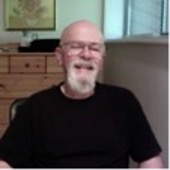
Sid Shniad
-
Sid was born in Los Angeles to left-wing parents who raised him as a “red-diaper baby.” A political economist by training, Sid was hired in 1980 by the BC-based Telecommunications Workers Union (TWU). He advocated for anti-apartheid positions within the TWU and within the Canadian Labour Congress (CLC). He continued to work in international solidarity as a TWU staffer for several decades until he retired.
Doug Miller 00:06
Oh, she’s a nice lady to warn us like that. So this is Doug Miller in Montreal with the Canadian Anti-Apartheid Activist History Project with Jane and Ken, Jane Armstrong, Ken Luckhardt in Toronto from the SACTU solidarity committee, and in Vancouver, Sid Shniad, who was an unionist and involved with the SACTU solidarity committee out there. Pardon?
Sid Shniad 00:36
Shniad.
Doug Miller 00:38
I beg your pardon. Oh, I’m sorry, Sid, Sid Schniad. Okay. Thank you for that. So, Sid, we’re, we’re here on the 15th of June 2022 and we are, we sent you a consent form, which, which indicated that we’re doing this for, for education purposes, and allowing people to do research and reading about this, and producing maybe even podcasts, and so on. We hope you’ve read that and agree to the conditions.
Sid Shniad 01:13
Yes, I have.
Doug Miller 01:19
Okay. Good. That seems to be quite a delay, then, between my, my talking and, and the reaction. So, we’ll just try to be sensitive to the gaps. So, yeah, that’s it. Sid, could you just introduce yourself, like give us your, your full name, a little bit of background about yourself, and how you got involved, probably first in unionism, and then with anti-apartheid work with SACTU?
Sid Shniad 01:50
My name is Sid Shniad. I’m a native of the US. I was born and raised in Los Angeles, to I was a red diaper baby. My folks were active in the Communist Party in the states, where it’s from them that I learned my internalized my values and my political orientation. I’m not a member of the Communist Party, but the basic values, the left-wing values, they instilled in me. My mother was a stalwart union activist, rank and file in New York City. At the same time, she had no illusions about unions, because she always thought that union bosses were among the worst, which I learned to my displeasure on my own experience of working as a union staffer, but all these things sort of knit together to make me who I am and created my orientation toward the world. And putting it all together, I have no regrets about it whatsoever.
I spent the five years from 1968 June of 68 till June of 73 teaching school in the Los Angeles ghetto at John Muir Junior High School, in order to stay out of the Vietnam War. That was another searing educational experience for me. I saw the divide within among the faculty, the young whites who were in the faculty, they either became flaming racists or real radicals, and there wasn’t much in between people in terms of their reaction to the conditions in the schools there, they either blame the kids or sympathize with the kids, and there wasn’t much in between.
And I guess it was June of 73 the draft expired, and my wife and I moved to Bellingham, which is the town just south of the US border from Vancouver, where she went back to school to get a master’s in school psychology. She got hired out of that master’s program by the Surrey schools just north of the border as a school psychologist, and we emigrated in, I guess, it was September 1974 and I then went back and got some background in economics, because I’d been reading the history of the Russian Revolution, and I kept banging up into economics, I couldn’t understand what was going on, and I enrolled first in the local community college to get the background in the basics of economics, which was a shocking experience. I’ve been reading the Russian Revolution, and I don’t know if you’ve had the experience of being exposed to neoclassical economics, but I got the Samuelson textbook, and I opened this thing, and I’m thinking this is going to explain the Russian Revolution to me. It was just mind-boggling. So, I went into economics.
I went, enrolled at Simon Fraser. I ended up getting a bachelor, a master’s degree in economics in 1977 and I had a couple of odds and ends jobs, but my desire was twofold. In going into economics, I wanted to understand the world from a political economic point of view, and I also wanted to acquire some skills and talents that would be useful as somebody who might work for a union.
I had a couple of odds and ends jobs in the ensuing couple of years, and then in 1980 I got hired by the Telecommunications Workers Union in Vancouver, and I thought I’d died and gone to heaven. This was a really militant organization; they had a history of flying squads, so that when they had a confrontation with the phone company, all kinds of allies to the phone company got picketed down, and all this, it was just.. it was an amazing and wonderful time.
And when we came to BC, that that was the high-water mark, I think, of the militancy of the trade union movement. You had to stock up your beer every other summer because you could look on the calendar and know there’s a beer strike coming, and the ferry workers were militant as hell. It was just unbelievable, and it was a real sense of working-class strength and pride and militancy. It was just fantastic.
And in this context, what I brought to it was, and I guess in certain ways, naivete from my, the background I got from my parents, my understanding of trade unionism was that this was collective strength, but that you owed a reciprocity of solidarity to people that you wanted to work with, and I encountered some union bureaucrats at the Federation of Labor in BC, or in Vancouver, who, if you look at me, I was crazy, you know. I suggested working with the retirees and the unemployed members, and the answer I get from one of these bureaucrats is some of our members aren’t interested in working with them, and I’m thinking, what kind of answer is that? Why should anybody give us extend solidarity to us if our view of it is one way you help us? “Thank you very much. We’ll see you some other time”. It was ridiculous.
It was in this context that I don’t, I don’t remember the initial exposure to the SACTU support committee. I don’t know if Keighley introduced me to you, Ken, or I don’t know how I made touch with. Do you have any memory of that?
Ken Luckhardt 07:25
Vaguely, I think it was through Jef, actually. Now that you mentioned that option, yeah. And yeah, I’m just saying that even though Samuelson didn’t want to explain the Russian Revolution, the Russian Revolution may explain Samuelson.
Sid Shniad 07:38
Thank you for that, comrade. Part of my MA program at Simon Fraser was taking Marxist economics with Mike Leibowitz, which had a profound impact on me, because it filled in everything that I had been looking for when I first made the mistake of going into the economics program, so it all worked out in the end, but I did find the economics program, even the neoclassical stuff, very useful, because whenever I encountered any managers at the phone company, they were very rudimentary in their understanding of any managerial point of view, so they’d start spouting something on a very simplistic level, and I could run rings around them with neoclassical economics, and you don’t know it doesn’t work that way. It works. Oh, so after a while they avoid it, to avoid me because they weren’t getting anywhere with me, but I had problems.
Back to the subject, I had problems within the union because there were rank and file would-be politicians who saw me as a threat that you know that I might impede their careers, or I would be suggesting stuff to the union executive that was controversial or too radical for them, and that I had a lot of history with that, and I think you were mentioning this, Ken, in some earlier email exchanges on this.
The TWU was much more militant than its counterpart in Ontario, Quebec, the Communication Workers of Canada, and I, if memory serves, we had a very different approach to the issue of South Africa between the two unions. In the executive of the TWU, was led when I was first hired there by a guy named Bill Clark, who is also the son of communists, and he was erratic and inconsistent many ways, but when it came to something like apartheid, you didn’t have to be a rocket scientist or any kind of phenomenal progressive to understand that this is the kind of thing you take a stand on if you call yourself any kind of progressive or trade unionist with any kind of social or socialist orientation, so there, if there was, or there was some dissatisfaction within the executive of our going off into a political direction, Bill Clark and his allies within the executive were able to handle that, and I think it was on that basis that TWU was, came onside the whole issue of support for the SACTU. I’m waiting to, it’s a lag, so I’m waiting to hear, or you’re, or maybe you’re out altogether, Doug.
Doug Miller 10:29
And then, where would Jef Keighley fit in all this?
Sid Shniad 10:33
Okay, I was before I got hired at the TW, I don’t know how I got it, but I got to know Jef Keighley and Jess Sycamore and John Bowman and a bunch of the people at Kmart and the CCU, even before I got hired at the TWU, and my real desire would have been to go to work for K-MART, but there was a big lineup of young lefties who wanted to do that, and I was too far back in the line, so I had to settle for the TWU. What it – what’s that in the chat? Please, Carrie. Oh, I see. Okay, so I didn’t have to explain or qualify anything with any of the people at K-MART. When it came to politics, I mean, we had full frank discussions the way we’re having here now. I mean, it was just, whereas, as you well know, within the trade union office or environment, you have to be very careful about who you talk to and what you say to them, for fear that they will be ratting on you or trying to entrap you or something like that, but I mean, the CCU people and the K-MART people were great, and that’s how I knew Keighley.
Jane Armstrong 12:00
Do you recall, Sid, whether you or others wrote articles in the TW paper, I’ve forgotten what it was called? The Transmitter, and about South Africa or apartheid, but also whether the issue came up at conventions, local union meetings, that kind of thing?
Sid Shniad 12:28
In terms of the Transmitter, I’ve had a bad experience. I saved all the stuff. I had a monthly column on political labor news, and a couple of pages in the paper where I did clippings from the mainstream press, but I gave it a labor and left-wing sort of orientation, and from the feedback I got from rank and file members, they liked it a lot, unlike most of the stuff that’s in your union paper about so and so officer did this ribbon cutting, and you know that kind of crap, which is boring and stultifying.
I tried to put an edge into it to show people the relevance of even stuff they, if you looked at it right from the daily paper, even from a crappy right-wing daily paper that was very popular, and I wrote an op-ed piece to go along with that. I put it all on discs when I retired, and I have that, but the formatting of that was crap. It’s my understanding that all that stuff is on file somewhere in the archives of UBC, but I’ve never gone out there to take a look at it.
I, when I said originally to, in response to you, Doug, that I’m happy to be interviewed, but I don’t think I did a lot. I don’t have a great deal of memory of that. I mean, it might have been whatever activity I was involved in, vis-a-vis South Africa and the SACTU, would have been integral to my daily work. I didn’t attend SACTU Solidarity Committee meetings in the Lower Mainland, or I mean, so that’s one thing I, when I was talking to them about not having been active, I wasn’t active there. I think it’s likely that I just supported it on a daily basis, on as a gut response, you know, like an issue came up, I promoted it, or if there was a mailing from SACTU, I bring it to the executive and speak to it, and things like that, but that’s the preponderance of my involvement, is that I remember it.
Jane Armstrong 14:30
Were you part of the Vancouver District Labor Council?
Sid Shniad 14:34
I would go to some meetings, but I was an employee of the union, and they zealously guarded the role of politicians versus staff.
Jane Armstrong 14:43
Yep, yep. Understand.
Ken Luckhardt 14:45
I mean, let me just jump in here and try to provide a little context to what I remember. My, our first trip to BC was in 1980 That’s when we met Keith Lee, Angus McPhee, John Jensen, up, Terrace, etc. etc. And then you were just getting hired that year by TWU. You said so. It was when after we knew Keighley, Keighley knew us, that you would have talked to Keighley about some or all of these issues. But what I remember, we remember we’re all based here in Ontario at the time. BC was to us the radical part of the labor movement in Canada, and that we were right in thinking that, yeah, when I met you, I can honestly say this on tape here, that I felt it wasn’t having to go to meet Bill Clark every time I went to Vancouver, I’d meet with Sid Schniad which is the same as meeting with Bill Clark, you know, different in unions like the CAW or UAW, then you know you wanted to meet with Bob White every time you had a chance, but you know, but you know, we met with Ginnen, but in this case we went and used it, and you would take on the initiative, whatever we were proposing to your executive to the membership through convention. I do remember speaking at a fairly large convention of TW. I can see the hotel, but I can’t remember which one it was. It was one of your major events.
Sid Shniad 16:12
On Robson Street?
Ken Luckhardt 16:14
Could have been, could have, could have been a very good response. And out of that, we got response from a number of your locals now, unlike some of the other unions, we didn’t actually go, as far as I recall, to too many local union meetings to make our presentation, but we did get all the support we wanted from TWU, which was then I’m going to say parallel with CWC. We had very good support in CWC and the rest of the country because we had some very good people like yourself supporting us, and so we wanted to make sure that the entire communication sector was part of the support for safety, which was the importance of the TW then, and the importance of having you on tape now.
Sid Shniad 16:57
I also remember you were coming to the shop steward courses that I was teaching to talk about South Africa.
Ken Luckhardt 17:03
That’s right, I’d forgotten that,
Sid Shniad 17:06
And I remember getting red baited for having invited you.
Ken Luckhardt 17:15
Now, another question I would ask, find a question here, because it was a very progressive union, I’m sure that wasn’t only South Africa that drew the attention, got the attention of the leadership and yourself. What other examples of international working-class solidarity would you say PW took on in those days?
Sid Shniad 17:35
I think there was a greater feeling of comfort in working against South Africa, apartheid in South Africa, than there was the other thing that was going on at that time was Central American support, and I think people were a lot more skittish because I think the red baiting on that was really fierce. I went on a union solidarity tour to Nicaragua, I guess in the mid 80s, 85,84 85 but I mean, things were uneven when I came back. I was allowed to make a presentation on what was going on there to the convention, and I got a very good response to it.
So, I mean, you never can tell on these things. Sometimes individuals would have it out for you, and they’d want to derail it, and I think that this largely had to do with the kind of political campaigns that were being waged behind the scenes by the government intelligence agencies and stuff like that. If they had a real bee in their bonnet about something going on, they didn’t want support coming, then funny things would start happening, there’d be more difficulty than you anticipated. Other times, none. So, I’m, I don’t, I can’t tell you what it was specifically. We weren’t party to that, but that was my experience.
Ken Luckhardt 19:01
Okay, go ahead, Doug. Too bad.
Sid Shniad 19:12
No, no sound at all. I had to practice my lip reading,
Ken Luckhardt 19:24
As you, as you recall, we had major –
Doug Miller 19:27
Leaving it to you guys because of this sound lag.
Ken Luckhardt 19:32
Okay, as you recall, say we had major battles with the CLC because of their perception of SACTU, and the association of SACTU with the ANC, and the ANC’s association with the South African Communist Party, et cetera. So, I don’t think it was a problem for the TW leadership with regard to what SACTU was and its affiliations in South Africa.
Sid Shniad 19:57
No, in so far as that went, but depending on certain things, I mean, I remember when I would bring up certain issues that, not even on this vis-a-vis the federal regulator to the CRTC, the TWU was much more activist and interventionist, and I would like to think, thanks largely to me, than the CWC was, and there was this desire on the part of the CWC, not to offend the powers that be, the higher ups in Bell, and that always seemed absurd to me.
I mean, even in terms of business unionism, you want to pin down the boss to the extent that you can, and in this sector you have a federal regulator, so you want to explore the possibilities, you know, and the issue that I found really resonated with the rank and file members and with the public was quality of service, and I mean, I think it’s analogous in every single union I’ve ever encountered.
This is one that I think of the major shortcomings of trade unionism in general is that I think that there’s a natural alliance between the workers and their customers vis-a-vis the managers and the employers. The managers and employers want to scrimp and scrape and cut costs and hem things in and deliver at the bottom line. The workers want to do a good job and want to satisfy people. They want to feel good when they go home at the end of the day, that they haven’t screwed people and stuff like that. I still find that true today. I’m enraged with the telephone company here, they have every manager managerial manipulation and scheme possible, but when I phone a service rep, they invariably do their damnedest to help me. It’s, and this isn’t in a trade union context, and I always thought that the union should build on that and encourage the rank and file to do this, to play a role, to organize such a role.
Then, in a couple of the interventions we did at the CRTC, we actually put together our own quality of service monitoring to demonstrate how the phone company was cutting and scrimping and violating the regulations, and I think that that there’s endless possibilities and potential on that, and whenever we would do that, the CWC. Oh no, but I mean it wasn’t universally embraced. That approach wasn’t universally embraced. Some people that you know, the whole old line about don’t bite the hand that feeds you and all that crap, but I always thought that was ridiculous.
I mean, I guess I never, coming from my family background and all that, I never saw the gulf between trade unionism and social political activism, and I always tried to politicize the unionism as much as I could to overcome that, what I thought was an artificial gap, and in my maturity, and with the readings I’ve done, realize the history of the attempt to make that separation to make a searing off or sealing off of politics from the unionism, bread and butter, dollars and cents, you know, hourly stuff like this versus politics, and which I reject. I don’t have to tell you folks why that’s crazy,
Ken Luckhardt 23:35
And that’s the issue we had to face, because the ICFTU said to unions in South Africa, “we support you as long as you’re not involved in politics”, so the fact that SACTU people were part of the ANC by virtue of membership and life histories, family histories, the idea that they would have to break from the ANC to get money from ICFTU national unions was just absurd, so they told them to get it, go away, and they did go away, and they never do. This is a cold war. I mean, the best of times, the worst of times. It was great time to do this work.
Sid Shniad 24:11
I’ve been reading some stuff on the history of the AFL-CIO. Well, it was then the AFL, and the two weren’t one then yet in the American South. What a disaster. The American working class and the world working class is still paying the price of not tackling the politics of segregation through the unions. It was just, it’s insane, absolutely insane. How could you expect workers in the South not to be political and to have any possibility of success? I mean, right down to the labor laws, you know, Taft Hartley and things like this. I mean, don’t be political. What are you talking about? This is the framework in which you. Work, it’s determined by politics. How can he not be political? It’s nuts.
Jane Armstrong 25:09
Do you recall any interference at all by CLC regional reps with your local members or with your leadership trying to dissuade them from supporting SACTU, or did they just leave you alone figuring that it was a waste of breath on their part?
Sid Shniad 25:31
They didn’t talk to me directly. No, I mean there was a couple of guys that the head staffer at the BC Fed, and I, whenever we get together, we bang heads, I mean, we just like coming from two different worlds, and so after a while, there was no point. I had explored things in my early days with him, and I got nowhere, and he didn’t get anywhere with me, so if he had some dissatisfaction with what I was doing, he would try to go to the top of the house behind my back, and you know, rein him in. Yeah, he’s doing this and that, the other thing. Sometimes that they did that, sometimes they didn’t, you know, just depended on how important it was. And I think probably what the TWU needed from the BC Fed at that time or from the CLC at that time, if they wanted their back scratched over something particular, I would probably get my chain yanked harder than other times. I don’t know,
Ken Luckhardt 26:32
Jane’s question is important because Marion Pollock, when we interviewed her, told us again about how the CLC tried to interfere with the Labor Council’s support for SACTU, so at that level, because the Labor Council, of course, is an affiliate of the CLC, so they could try to do things there that they wouldn’t do with affiliates necessarily.
Sid Shniad 26:53
I remember the president of the CLC, who shall go unnamed, who talked about CUPW being a cancer on the labor movement, and Marion’s response being, may it metastasize. There was a time, I mean, there was a rolling series of repressive moves by the provincial government, BC, in response to the militancy of the labor movement out here, and I remember being at a meeting at the BC Fed office staffers talking about, you know, staffers were convened to get a briefing on some of the terrible things that were coming, and I made the comment, I thought that the response that was being offered or sketched out was completely inadequate, and I made a sarcastic comment that anything our response would be anything up to and including a written brief, if necessary, and that sarcasm.
The head of the Federation went to the subsequent president of the TW to try to get me fired over my disrespect and my insubordination. I didn’t get fired, but I was warned as a result of that. I mean, I had the experience in response to solidarity, when, or as part of solidarity, when this massive wave of repression came down. I said that there’s an effort should be made by the union. This is at a staff meeting at the Federation. An effort should be made by the unions to send a delegation to Britain, which was being ruled by Thatcher at that time, to spend a couple, two, three weeks touring the country, meeting with the rank and file, as well as the officers of the unions, to describe what was being brought down by Thatcher, and to come back with lessons to be learned from them to help us fend off what was coming down in BC, which was pretty severe.
They trend that down to a high school essay contest for people to submit essays on the subject of what was wrong with the repression that was coming down in BC. I mean, you can’t make this stuff up again. My sense is, what are unions for? These are organizations you need to coordinate, co-organize, communicate, you know, make learn from the experiences of others, so you don’t have to do the same extent of bleeding as they did in Britain, it up, and they come up with high school essay program contest, oh. I was not happy.
Jane Armstrong 30:08
Do you remember at all the week of action that we called for nationally, the soccer committee in would have been around March 1986 there were actions in BC at the port. Postal workers refusing to handle any mail going to and from South Africa. I think, as I recall, TW and CWC participated.
Doug Miller 30:39
Are you hearing me now?
Sid Shniad 30:43
I heard that come through, but your lips are, I mean, you’re the lag is huge and inconsistent sometimes. There’s just silence. I, Jane, I actually don’t remember the 1986 days of action. I mean, the TW may have been involved, but I can’t remember myself being involved.
Ken Luckhardt 31:06
You were, I remember very much that you endorsed the actions. Now, I can’t say what any happened at the workplace, but I know you endorsed the campaign.
Sid Shniad 31:14
This is another thing I’m dealing with, the ravages of age, you know.
Jane Armstrong 31:19
So aren’t we all.
Sid Shniad 31:24
Yeah. One thing along those similar lines about this disjunction between the stances that people take in public and what they actually do. I subsequently got, I think, the height of my personal activism was in the fight against free trade, and I got involved in the national organization, and I went to a number of meetings in Ottawa, and stuff like that. The second round was when it was coming down, when the Liberals under Chretien came to office, and Paul Martin and the whole coterie of these right wingers and bankers were part of their, the government that was about to be formed and we were at, what was the post in the organization, not it wasn’t ANC.
Jane Armstrong 32:22
The Council of Canadians?
Sid Shniad 32:25
The Council of Canadians was a member of the umbrella organization Action Canada Network,
Jane Armstrong 32:30
Action Canada Network.
Sid Shniad 32:33
Yes. And we were meeting in the top of one of the hotels in Ottawa, and we’re listening. You have all these actors from across the country, the most active, the most progressive elements of the unions and social organizations, the Council of Canadians, and others, and we’re hearing chapter and verse of what’s about to come down from the Liberal government. So, at the end of this, and this is an experience I’ve had many times in life, it’s all the disasters laid out, and then people start closing up shop, and we’re about going to go home, and I asked the chair’s indulgence, and I said Bob White was there, and others, and from the CLC, and from CAW, or other major organizations, and I said, given what we’ve heard, the massive threat that’s posed to not only organized labor but Canadian civil society as a whole, we are ideally situated to come up with a response, or at least initiate a response at this gathering, and to take it back across the country, because we had representatives from Newfoundland to BC, take it back to our civil society organizations, take it back to labor councils, and all this to mount a national response I If we are to take seriously the description of the disaster that’s about to befall us. I finished talking, and nobody said a word. Nobody challenged me. Nobody agreed with me. Nothing. Thank you very much.
From the chair, bang, meeting is closed, we all go home, nothing happened. And then we saw other cuts that started coming from Paul Martin. I mean, I was just listening on the radio this morning, talking about the homelessness crisis, crisis in this country had its origin in those cuts. There used to be a massive public housing program in this country that’s disappeared, and if you haven’t been to Vancouver lately, to the downtown East Side, you want to see what the fourth world looks like in the first world. It is so horrific, the human devastation. On the street, there, the level I’m at, the number of drug deaths, overdose drug deaths, and stuff like this. I thought at that time we had the opportunity, we wouldn’t necessarily have stopped it, but we could have hindered it, we could have slowed it significantly.
Nothing happened, but it sort of brings to mind the high school essay contest, you know, like, are we serious about responding to this, or are we here to tell each other how terrible things are going to be, and we’re going to be in the vanguard of knowing how bad it’s going to be. I mean, I think there was a tremendous amount of potential squandered there. I mean, and I’m not sympathetic at all to people. I had a big argument with my wife about this two weeks ago. She’s talking about all the adversities that the trade union movement faced. I want to minimize those, but I think that there was nothing of substance done to redress this.
I remember hearing about globalization from the first time in 1995 from the then president of the CWC, who had just attended a major council convened by the Premier of Ontario, and they brought in all the big shots from the, what do they call, the National Business Council or something like, and to start saying, globalization is coming, you know, this is a force of nature, and there’s, and he came out to BC subsequently, and he was still blown away by the impact of the lecture he had been given there, and all the information, and he kept telling us this thing is coming, and there’s nothing we can do about it. Oh, that sounds familiar. Is that like TINA? You know, is that what do you, Thatcher Jr. You’re coming out here, you’re in the trade union movement. There Is Nothing. What is the problem? Let’s start by talking about that and see what kind of resources and possibilities we have, and subsequently I guess it goes to 2005 which was getting toward the end of my time at the TW.
This made this quiescence, this failure to respond made its way into the communication sector, which had been relatively well positioned, relatively militant and progressive, and rather than coming together to come up with a common strategy against this wave of deregulation and the attacks that were coming, every union in the telecom sector zealously guarded its membership list and watched as the wave rolled across the country from east to west, and every single one of the communication unions was disciplined, and I would suggest broken in the case of the TW, when the confrontation took place in 2005 the collective agreement, which had some amazing clauses that had been achieved through struggle over 40 years, was literally rewritten by the phone company. Here’s your new contract signed, and that was it. And due to the failure to plan and come up with a counter response, they signed.
I mean, so I understand what the difficulties were facing the unions, but you know, like when the last confrontation between the phone company and the TW in 2005 in the middle of that, we found out that service rep work was being transferred electronically from BC to India and the Philippines. I implored the members of the executive, put ads in the papers, tell the people of BC that their service is being delivered by non-union workers halfway across the world. That’s not lowering their rates that they’re being charged. It’s not improving their service, but it’s helping to undermine the status of members of their community who work as telephone workers. The executive by that time was so spooked and so disoriented, they wouldn’t even go for the idea of ads in the papers to blow the whistle on this behavior. I mean, that’s how I think once you start getting the reverse momentum away from militancy, there’s no stopping till you hit bottom, and they hit bottom. They literally had their contract rewritten from soup to nuts, here. That’s it. I think there are some painful lessons to be learned from that, and it all goes back, I think, to some fundamental principles that I learned as a kid from my folks.
Ken Luckhardt 39:55
You know, as we scan across that history, we’ve all been – all four of us have been retired. Retired now for quite a few years, and I guess my perception is that the labor movement is not nearly as engaged on international issues today as it was in the period of time we were talking about, and you can measure that in many ways. I mean, the union that I retired from, Unifor, then CAW, you don’t see their name on all the drives that are happening with other organizations, civil society. We used to sign on to everything and try to be involved as much as we could, right? You don’t see that now. I look at the, I look at what’s happening politically, and I don’t see the long list of unions engaged in even supporting rhetorically, and I don’t see, and Sid, I know you and I have been trying to figure out how to do work around Palestine, and that’s another big gap that is so obvious to me, and there are many other issues that they could take on.
Sid Shniad 40:53
Unfortunately, Ken, I don’t think that the criticism that you are accurately levying there is confined to international stuff. I think that organized labor is doing a terrible job domestically. I don’t think they know how to organize very rudimentary stuff. I, they don’t know how to reach out to community to be an ally, rather they bring in an organizer. It’s like the NDP during an election campaign, they bring in an outsider, and they drop them, and you’ll take orders. Hello. No, so, what’s happening? Look at this Starbucks wave that’s organizing across the states. They’re doing that by themselves. They’re not being doing it through the existing unions. It’s amazing. It’s like the whole effort has to be begun anew from the ground, so I mean, if that’s what it takes, that’s what it’ll take. Okay, I mean, for some reason these kids don’t like to have this precarious existence as starvation wages, go figure, you know, and they’re not going to wait for the AFL-CIO to save them. Thank God.
Ken Luckhardt 42:06
You remind me of a question I wanted to ask you. Have you read John Jensen’s book, No Compromise?
Sid Shniad 42:12
No.
Ken Luckhardt 42:13
Tou know John Jensen from Terrace. Well, he was the lefty up in the Northwest from Denmark originally. He was a legend in the areas of the Northwest Community College and the Carpenters Union. I would assume you would have known it anyway. Before he died, he wrote memoirs, you know, two and three page chapters. It’s just a fascinating book of what he had done coming as an immigrant and labor council work, and –
Sid Shniad 42:43
No Compromise?
Ken Luckhardt 42:44
No Compromise. John Jensen,
Sid Shniad 42:47
Jenny?,
Doug Miller 42:48
hear me at all? E and S E N.
Sid Shniad 42:51
I heard that.
Ken Luckhardt 42:52
You got to get it.
Sid Shniad 42:56
I heard that, Doug, but that’s all I heard,
Ken Luckhardt 43:02
I well, since Doug can’t do his proper role here, Jane, how should we?
Jane Armstrong 43:11
I don’t have any more questions, although we could go on all afternoon talking about what’s going on, but it’s probably best that we wrap it up. And thank you for participating, because what we’re trying to do with all of these oral histories is pull together a sense of the breadth of support, not only geographically, but through a range of different unions and at different levels, you know, we’ve, we’ve interviewed the Sam Gindins, but we’re also interviewing, you know, people who were much more also at the rank and file level, so yours is the first that we’ve done within the telecommunications sector, so it’s really important that this history get recorded. So, thanks very much, Sid, for all the work you did back then, and all the work that you continue to do now.
Ken Luckhardt 44:21
Thank you for that daily barrage of great articles you put out/
Sid Shniad 44:27
I have to tell you something, and this is, I retired in 2009 but before that I got involved in organizing creating independent Jewish Voices Canada to finally try to break into or limit or constrain the power of Israel and Zionist organizations in this country. I’m not, I wouldn’t pretend that we’ve had any kind of the level of success that’s needed on this, but I’ve been. Telling people I’ve been reflecting on this, I’ve been an activist all my life, and this I’ve had greater success with greater consistency and harmony and focus among the people involved in IJV than any other effort I’ve made in my life, and I’m trying to figure this out. How and why it is there’s no sectarianism, no backbiting, no doubting. People come up with an idea, they get support or they’ll get positive constructive criticism, and then people will weigh in and do it.
And I want to reach out to Ken to bring him in to help us get a labor committee of IJV going, because that’s been one of our gaps, is the ability to get organized labor involved. Nobody objected, and there’s no red baiting, like, oh, was he with that sack of Guyer? No, I mean, people wanted him there, because he had had that experience, and so I really feel great about this personally, but I’m frustrated at the same time because I love to be able to generalize this, and I think back on my time at the TWU, if I could have done what I’ve been doing in IJV at the TWU, I could have had a hell of a bigger impact there in organized labor, too, but that’s the way the world spins, you know.
Ken Luckhardt 46:24
But I think we all share that frustration, because it just isn’t the organizational strength in the union movement that was there when we did this work. Nobody’s organizing, as you have said, and I so much appreciate your trying to bring this act to experience into the Palestine question, and I will do whatever I can to help those of us who did this act to work get more involved in one way or another, you know. We, this is our project right now, but individually people can do things that we aren’t doing, we should be doing it, and I want to thank you for bringing us into that.
Sid Shniad 46:58
I feel like there is a richness of experience and links and stuff that exist and can be made, and that’s what it’s about. I mean, the expression labor movement is one that I stopped using many years ago, because I haven’t seen any movement in labor, it’s labor bureaucracy, but our task is to create a social slash socialist movement and integrate everybody to the, I don’t need to tell any of you about the plight the world is facing, and God knows so many ways and so many such depth, but my complaint, my problem, I, and my desire is to get people to start to address these things.
And I think what’s prevalent in the success of the powers that be, the red baiters and the bureaucrats, and all that, is just to stop, to get you isolated, to think there is no alternative, or if it’s overwhelming, I don’t want to know about that. I want to start on a rudimentary level. What is our difficulty? What is the problem we’re facing? How can we begin the process of putting together? We had eight people in IJV in 2008 We’ve got over 1000 members now, and the bastards and the Zionist organizations are having to deal with us, and so I’m thinking there’s all kinds of possibilities that it’s up to us to tap and to create.
Ken Luckhardt 48:35
So, thank you so much, Jen. It’s great to see you again, and Doug, I’m sorry you couldn’t participate more.
Sid Shniad 48:42
We’re going to have to come up with a better medium, Doug.
Ken Luckhardt 48:47
Okay.
Jane Armstrong 48:48
All right.
Sid Shniad 48:48
Okay. Thanks, folks. It was a pleasure.
Ken Luckhardt 48:50
Thank you, Sid, did.
Credits
Bio: Sid was born in Los Angeles to left-wing parents who raised him as a “red-diaper baby.” A political economist by training, Sid was hired in 1980 by the BC-based Telecommunications Workers Union (TWU). He advocated for anti-apartheid positions within the TWU and within the Canadian Labour Congress (CLC). He continued to work in international solidarity as a TWU staffer for several decades until he retired.