
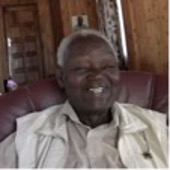
Mtshana Ncube
-
Mtshana was a ZAPU activist in white-ruled Rhodesia before studying Political Science in the US in 1964 and Law at McGill University in 1970. He actively represented Zimbabwe’s struggle and was widely respected in anti-apartheid circles in Québec and across Canada. He returned to Lusaka to join ZAPU full time in 1976 and was assigned to head their UN delegation and serve as their North America representative in 1979 during the final stages of the Zimbabwe struggle. He passed away in 2020.
Doug Miller 0:15
Hello, Mtshana, how are you?
Mtshana 0:18
I could be better could be better. Could be much better if I wasn’t ill.
Doug Miller 0:22
Today is the third of October 2018. We’re in Sigudu Farm near Kadoma, Zimbabwe. I didn’t quite rehearse that as well as I could have. But we’ll edit. Don’t worry.
This is an interview of two parts, which we’ll look at, but first, you are agreeing that we interview you to understand your history and elements of it that that you want to tell us? Is that okay?
Mtshana 1:04
With some some aspects, yes, but the others are subject to an ongoing work. I don’t know how much I should go into that without interfering in the process. However, I will speak on the issues as much as I can.
Doug Miller 1:25
And you agree that we can use these recordings for future public publications, etc.?
Mtshana 1:30
It should be no problem, unless I specifically indicate in the interview that this is confidential.
Doug Miller 1:40
Okay. (I) understand that? Absolutely.
The first part of the interview, I would like to talk about your time in North America, in the States and Canada,and understand just a little bit of how you were active with ZAPU, before you came to North America.
Mtshana 2:02
Do you mean as a prelude to my coming to the States? Why? Are you saying are they linked in some way?
Doug Miller 2:09
No, it’s just as background information. You had already a history as an activist.
Mtshana 2:16
There was absolutely no direct link between my scholarship to the United States of America, in the US, my participation in ZAPU and its predecessors. It is important to note of course, I am the same person in those aspects of my life. So of course, one always came along with the other. So I was very, very active indeed, in ZAPU, particularly, between 1962 with the formation of ZAPU and when I left the country in August of 1964, although, of course, ZAPU as ZAPU had been banned at that time. We were working under the People’s Caretaker Council as an umbrella hold-on organisation.
I was active in the youth and with specific roles of mobilizing and educating, getting the young to understand what it was to be a member of (ZAPU), what it was to work for ZAPU, and what the objectives of the organization were. And these were simply that we wanted the independence for the country from British colonial rule, manifesting itself in Zimbabwe through the local colonial government, local settler government.
And when I applied for the scholarship to go to the States, it was a personal thing although of course, I let the authorities know in the party that I was attempting this. It was not a secret.
Many, many of the future activists in the liberation movement went on scholarships to the United States of America. I was one of the lucky ones, to say the least. Because I don’t think I was any more qualified than hundreds of others that didn’t make it. In the States, my first few years in 1964 to 1966, I tried very hard to concentrate on finding my feet in my studies, basically, trying to make sure that I was going to be able to succeed in my studies.
Doug Miller 5:38
What were you studying?
Mtshana 5:41
I was studying political science.
Doug Miller 5:43
Where was that?
Mtshana 5:46
Harpur College, of the later State University of New York at Binghampton. Of course, when I entered the SUNY Binghampton part hadn’t come into existence yet. It was just an elite, small college, liberal arts college, and very, very exclusive in its admissions. And it took in over 75% of the enrolment were from New York in the area around New York, New York State. And I found that quite interesting, because most of these were reasonably rich young people, both boys and girls. Upstate New York wasn’t as rich an area is the lower state of New York. And I think that kind of colored the nature of the college. The values from Manhattan, the values from Long Island, values from all around that area were brought up into the school and some of these very, very important ones. Hard work was a grouping of young people that were very, very committed to their work. And there was a stiff competition to get ahead. And I often wondered why I couldn’t find a similar spirit elsewhere, as I visited colleges around. But someone told me that it was the nature of New Yorkers, especially from around New York City, or the boroughs and so on that they were stiff competitors.
Doug Miller 8:16
Now, did you have any professors that were particularly impressive or influential in your studies?
Mtshana 8:23
Well, yes, there were and one that comes to mind almost immediately is professor Dekmejian(sp), an Armenian, who came to the States via Egypt, I think he had lived in Egypt for a while and eventually did write a book on Nasser, a book that I enjoyed reading and a book and that I helped with some research on, because he became one of my mentors. I remember him very, very well, because he spoke of the problem that we now confront in Africa and don’t seem to know how to answer it. That is the question of leadership. How do you get leadership for your country? This was his main focus and how do you get leadership to develop. For him it wasn’t just a question of having a leader there, but it was a question also of what does the person do while in office and what does the person achieve while in office?
Doug Miller
So the question of leadership and teaching leadership
Mtshana 0:10
He had a great interest in the issues of – one: who the leaders are and how did they become leaders. Secondly, when do they tend to leave office? And those were very general and centrally linked issues in research. And it turns out, of course that in in the process I was very much drawn to the issue myself. And for my graduate work, I decided to work on what I call the circulation of elites in Africa, circulation in government of elites in Africa, I found it a fascinating study. Because as I’m sitting here now today looking back and I’m saying, “My God, we never got it right, ever since. It continues to be a problem today.”
I used Ghana and Kenya as my study focuses and found out that this problem we have today was there then and repeats as a recycling of the same people in office, from the president down to the last officers in Parliament, in Cabinet and so on. And I’ve often now in retrospect wonder why can’t we and why haven’t we gotten it correct? Maybe correct is not the word. Why haven’t we gotten it so that it works for our countries, so that we can use the talent that is so abundant in the populations of African countries? Now you have a small clique around which the power revolves all the time. And so I was that fascinated way back in 1969.
Doug Miller 02:52
Now this was your master’s that you were working on. Was that also at Harpur?
Mtshana
Yes. At the State University of New York at Binghampton.
Doug Miller
Okay. And what did you see? Did you see a role for yourself as ZAPU, Zimbabwe militant within that student and college and university milieux.
Mtshana
At the time, as I said, I tried to minimize my political activity vis a vis Zimbabwe, or vis a vis Southern Rhodesia as it then was, because I knew I couldn’t carry the task sufficiently well, and do my studies well, as well. But it was towards the end of my work that I picked up my role as an official representative of ZAPU in the States, and I started to discuss with students to get them to know what the issue was. I was already on the shall we say, on the Board at the college, because of UDI, the Unilateral Declaration of Independence by Ian Smith, which was a huge issue across the world. So I was brought in for interviews and so on. So people knew the general problem.
And so later, I picked up on that, let them know how it was going, whether there were any changes in the facile attempts by Britain to reverse the UDI, which of course, everybody knows were really just half-hearted attempts for political purposes, and that they didn’t succeed. It’s no wonder and no one is surprised at that. It was my purpose to let the general public know why it wasn’t succeeding.
And now, I was beginning to explain my undergraduate honors thesis, which was basically on the struggle in Zimbabwe. In which I tried to say that if nothing was done to resolve the issue, we were facing a bloody war. And that’s what we faced in the end. And I was proven correct in the position I took in my thesis. We ended up with a bloody National Liberation War, which lasted until 1979.
Doug Miller 06:06
Wow, that was incredible. So you foresaw that there would be struggle, even as early as your thesis in bachelors level 1968-69. And then, what other outcome could you see? Could you see farther than that?
Mtshana
I am not there yet. Okay.
Doug Miller
I’m sorry. I’m just saying so you’d already foreseen that the next while because of UDI was going to be struggle, violent armed struggle. But what would be the long term would you have dreamed of at that point?
Mtshana
Were there two aspects to that? What I wished to see, as opposed to what was going to unroll itself as a process because of what was going on. And this is what I foresaw in the decisions leading to the armed struggle. But many of us would have wished we didn’t have to go that route, because wars as wars, they are not nice. Wars as wars are bloody and few people that I know would gloriously say “I’m going to war” because they enjoy going to war. I haven’t met one yet. But there may be a few such people around here, I’m sure. A few I know in Zimbabwe would glorify that aspect, but the rational decent human beings that I have known in Zimbabwe, and elsewhere would not have glorified war for war’s sake.
And yet, we were forced to commit ourselves to national liberation, because of the intransigence of the British, the intransigence of the minority, colonial settler colonial regime in Zimbabwe, refusing to meet what were very clear demands at the beginning, they were never complicated. We want the vote, that’s it. And if we got the vote, we knew everything would follow. But they understood clearly that the vote would mean them getting out of power. Of course, one understands that. But if you then fail to read the consequences of a refusal on both sides to come to some medium position you’re basically digging a hole in the ground for a very serious problem to come. And that serious problem to come was that the two sides found themselves in a shooting war for many years,
Doug Miller 09:25
Now you’re still at Binghamton, you, you get your master’s degree?
Mtshana
That’s in 69. I went to McGill in 1970. I started at Law School in 1970.
Doug Miller
And that took you till 1973?
Mtshana
Three, okay. I finished in 72
Doug Miller
in 72, two years? And how long? I mean, did were you able to move into Canada to continue your activism?
Mtshana
Oh that then was much more open and clear. I know that my studies suffered quite often as a result. But by then I was a lot more mature than I was in the States. And I was looking a little more beyond the most immediate horizon. And I’m saying, we are talking of a nation we’re talking of a Zimbabwe, that that needs freedom? So the little bit I thought I could contribute, I tried to contribute and this was by getting the public to know what was happening in Zimbabwe.
Doug Miller 10:43
On that front. Of course, there were still struggles going on in Mozambique, Angola. There were the issues around South African apartheid. Were you able to connect with fellow Africans?
Mtshana
There was no way one could carry out the campaign of information on the struggle in Zimbabwe without connecting to all of those struggles in southern Africa. And fortunately for me, there were people there that I could easily join up with without even thinking. If I’m talking about SWAPO, for example, was already a bosom party with ZAPU from the early days. So when I met up with my team, with my late comrade, Hidipo Hamutenya, it was a wonderful team for carrying out that side of the struggle, while we were also trying to study.
We occasionally met individuals from the Frelimo side, who were passing through Canada on missions to explain their struggle. There were organizations in Canada that were supporting struggle in Mozambique like LSM (ed. Liberation Support Movement, Vancouver). So we were engaged with those in the publicizing of the situation in our respective countries and also in the region.
We took advantage of every visitor that came from Southern Africa at the time to rally around and to further publicize the cause. And there were many, many such visitors from Zimbabwe. I know I can tell you a whole list of Aaron Ndlovu, Edward Ndlovu, Silundika and all that. We were always able to sit down and work out the programs small as it might have been, but a program nevertheless to try and explain the situation. Students were a very, very helpful element in all of these because a good section of the students at McGill and what was it called?
Doug Miller
Loyola at first and Sir George, they became Concordia.
Mtshana
Yes. And then (University of) Montreal and the small colleges all around – Vanier and so on. These were places that we could go and speak to small groups but able to raise the awareness of the communities to what was happening in southern Africa.
Doug Miller 14:20
So student organizations and school institutions were open to your visits. How did you find relating to other kinds of groups, unions, churches?
Mtshana 14:30
We had relations with churches, with unions, with NGOs and CCODP for example, we’re very good at supporting projects that we presented to them. You know yourself, CUSO had been engaged in already in the field, in Zambia and later in Zimbabwe and so on in South Africa. So, there was no shortage of people with whom to engage, of organizations with whom to engage. There were groups in just about every town that you could find, TCLSAC, mainly in Toronto, with the CISO, the CSN grouping of unions in Montreal, very, very active.
And I think of the last meetings that I remember being called to was, chaired by the late Lilian Bolland, a very fiery speaker. When I say fiery, I mean fiery, activist. A believer in what she said, and whenever she said it, she meant it, and carried it out. And this was a meeting at which I had the opportunity to brief unions and representatives, meaning to brief Bolland, who would then spread the word to the unions on what had just happened in their the camps of ZAPU in Zambia. The bombardment by Ian Smith, of schools and clinics and so on, that were set up by ZAPU in Zambia. We were able to, to engage with professors in universities that were clear in their mind that there was oppression in southern Africa.
I cannot forget the strong presentation made by Professor Noumoff in almost all of the activities that we were carrying out concerning Southern Africa. He was a dear soul, and a clear mind, on what oppression meant, and how it ought to be fought. He saw it not as a struggle for people in southern Africa alone, but people of the world in general. And we dearly missed his leadership in that area, and we are so, so sorry that he went when he did….
(Phone call interruption, also interrupted by a technical glitch and failed to start recording properly after restarting).
Doug Miller 0:00
The last button that I had, that was, so sorry, where did we pick up after the phone? It was where we were you finished talking about Sam Noumoff.
Mtshana 0:10
So you mean we lost the last few –
Doug Miller 0:12
But just the last, where we picked up after the phone? I didn’t see the red light.
Mtshana 0:20
You haven’t gone?
Doug Miller 0:21
You didn’t push it now it’s ready. We’re talking now,
Mtshana 0:24
I was saying that you will find that I can’t name all of the individual organizations off the top of my head now, but elsewhere I have listed these organizations and I think I haven’t left out many, if any, who collaborated with us. Who gave of, who gave generously I said, of their time, of their resources, of their minds and their talent. And we are very, very grateful even long after our countries became independent we remember that
Canadians from all walks of life were clear minded about issues of justice, freedom, (and) gave generously as they were convinced that this was the right thing to do. We hope that this will serve as an education to generations to come that the world is indeed interlocked. There is no society that can exist without the interaction with other societies in spite of the stupidities, that one often hears from our own governments thinking that they can live on an island themselves. It’s not possible. That could lead then to a whole discussion on the question of how do you relate so that you don’t step on the toes of the person you claim to be to be supporting – a very important area.
Doug Miller 2:39
Well, and on that score, I’m sure you nonetheless had some concerns about the way that the solidarity was expressed and the limitations of it.
Mtshana 2:50
No, we in the in ZAPU, our concerns and I think I could say from the point of view of my colleague, Hidipo, also, we had concerns about how support should be given in respect to a number of things.
The first one we emphasized was that whoever wanted to help us must first and foremost respect who we were. It was very important for us.
And secondly, we were also concerned that whoever wanted to help us must understand that we must continue to enjoy our independence as organizations.
And thirdly, that our policy was a policy forum for the organization. And that if it went out there, it was, of course, open to be criticized or critiqued by anybody. But the final decision as to what was carried forward as the policy will always remain with the organization.
We were concerned also with people who wanted to get information about liberation movements, but without doing anything to show who they were themselves. That to us was a very, very critical issue at all. We were looking for commitment. If someone came to me and said, “Tell me about ZAPU.” I wanted to know why they wanted to know about ZAPU, for what purpose. Not that they just want to go and to sit and drink discussing ZAPU, if they thought that was a nice thing to get the pints of beer.
We were quite serious about professors who were inclined to want information to publish books, but without ever having to do a single thing to help the struggle itself. This was very, very serious. So we were much against that kind of approach. And there were a number of professors that were inclined to approach the liberation struggle from that angle, look at it as a source for their benefit, regardless of what it was engaged in, and why it was engaged in what it was doing.
Doug Miller 5:54
And even at different times groups might, might sort of go off track from the support that you were asking for, I think?
Mtshana 6:04
We engaged them and told them so. That we were not happy with this aspect of their – and quite often we differed ideologically. And that is common. When we simply told the organization that no, we have a view for how we are conducting our struggle. And this is how we think we should carry it out for the purposes of seeing the struggle through.
Doug Miller 6:40
Can you think of any particular event or action that that serves as a sort of watershed or pivotal moment that you were part of during this period that you were in the States and Canada, more particularly Canada?
Mtshana 6:57
Oh well indeed the Commonwealth Conference was one of them, but I can’t remember the dates.
Doug Miller 7:05
But I’m guessing it’s about 74?
Mtshana 7:09
Where we held a counter conference and that was very, very interesting. In fact, we ended up attracting more attention, because it was our view that what was going on at the official conference wasn’t really relevant to the people’s struggles in southern Africa. And maybe we would have dared to suggest, but we didn’t to the peoples of the countries of the Commonwealth, who didn’t have much power to influence developments within the Commonwealth itself.
Doug Miller 7:58
And what why, why would why would you…. okay, you got a lot of publicity. And then a lot of groups came together?
Mtshana 8:06
Yes. And that was of course, aiding the support for liberation movements. For us, that was a key aspect, why we would have liked to campaign for improvement of the economies of different countries in the world. It wasn’t our task. We understood it is important to those peoples but for us, the first task was to free our countries.
Doug Miller 8:43
So in general, do you think reflecting back that all of these actions or any of these actions had an effect on government policy and attitude towards southern Africa, the struggles and liberation movements?
Mtshana 8:58
Why it’s difficult to assess this process, especially long after it took place? We know that Western governments were very, very, very committed to South Africa to the Government of South Africa at the time. They were committed to Ian Smith. They always wanted to try to find ways to get what they called a solution, if that solution was something that left the apartheid forces in place.
And this is what we thought was objectionable on the part of the policies of Western governments. They pursued this all the way until the end in Namibia. It was really at the very, very end that they kind of gave in. But it wasn’t a giving in that you might say amounted to much, but much in the sense that it allowed elections to be held. That was important.
But they still, Western governments still wanted to have South Africa, close in on hand, in whatever settlement there was, and that’s why they had the Turnhalle Conference to try and draw up a constitution that they claimed would bring in all the groups in Namibia. Why, why that if the leading representatives of the Namibian people recognized by the UN, that is SWAPO itself were not in that Turnhalle Conference? Why pursue it except the one conclusion that is that they wanted to favor the groups that would want to run with apartheid?
And this has remained the historically and important factor that must be recorded and understood. Western governments did not change their positions on the struggles of the peoples of southern Africa. They went fighting side by side with the colonial settler colonial regime in Southern Rhodesia, and they weren’t fighting, they went ahead, helping South Africa right up to the very end, right up to the moment, Mandela was given power. They were still hoping and wishing that it would go a different way.
So for me, what happened in South Africa, what happened in Namibia, what happened in Zimbabwe represented great victories of the people. Because these were not decisions of the Western governments to say give them power they were extracted as a result of the blood of the people of these countries.
Doug Miller 12:37
And the Western powers then had no choice.
Mtshana 12:39
They had no choice indeed.
Doug Miller 12:41
I’m just going to pause it now. I’m done with my questions.
Credits
Bio: Mtshana was a ZAPU activist in white-ruled Rhodesia before studying Political Science in the US in 1964 and Law at McGill University in 1970. He actively represented Zimbabwe’s struggle and was widely respected in anti-apartheid circles in Québec and across Canada. He returned to Lusaka to join ZAPU full time in 1976 and was assigned to head their UN delegation and serve as their North America representative in 1979 during the final stages of the Zimbabwe struggle. He passed away in 2020.