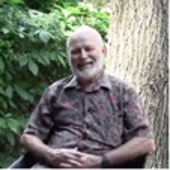
Doug Miller
-
Doug taught English from 1968 to 1972 in Malawi as a co-operant with CUSO, where he became acutely aware of the injustices of apartheid. In Ottawa from 1972 to 1975, he edited and published a newsclipping service for the Southern Africa Information Group. From 1976 to 1979, he coordinated CUSO's Lusaka support for the liberation movements in Southern Africa. Throughout the 1980s, he was the liaison person with Québec-based unions for the SACTU Solidarity Committee. With the end of apartheid, he joined the Amandla! team producing a weekly radio show about African affairs on CKUT, and was a driving force in collecting the testimonials for Small Little Foot Soldiers.
DOUG MILLER 00:00
It’s already 1.30 Yes.
SOPHIE TOUPIN
So hello, Doug.
DOUG MILLER
Hi, Sophie.
SOPHIE TOUPIN
Can you tell me how you became involved in the anti-apartheid movement?
DOUG MILLER
And there’s a fair bit of background to that question. I’d have to go back to I guess, when I started at Carleton University in 1965 I met my first black people. I grew up in the west end of Ottawa, and there were no people of colour. Our exotic folks were a couple of Greek folks and some Jewish folks, and that was about it.
So it was quite a revelation to end up at Carleton in 1965 which we might remember is around the time of independence in many African countries and other Commonwealth countries that were springing themselves free from British colonial rule. And Canada didn’t have a foreign aid. They didn’t have a formal there was no CIDA. It was still part of the external affairs. And all they did at first, because there was such a desperate need in the newly independent countries for trained men and personnel. They brought dozens of young, educated Africans.
The first crops out of the high schools and secondary schools that had been started up late in the British colonial rule were then brought to Canada, and of course, America, well Obama’s dad was part of that, bringing from Kenya aeroplanes full.
And I got involved at I got involved at International House at Carleton University, where they had a program for people to go to the airports and pick up the newly arrived folks and bring them into the International House, get them registered, and then take, find them temporary locations, and then find them, find them, help, find them permanent accommodation and it was there that I started meeting my first African folks. And boy oh boy, did they sweep me off my feet.
I had never, ever met folks like that before, brilliant, for a start. They were almost all very, very smart and fun-loving, but also so committed to what has just happened in their countries. The national struggle is has just finished. They’re full of energy, the Tanzanians, in particular, with Ujamaa. But as well, there were Zimbabweans who were fighting against because 65 I got there, I started Carleton just before UDI, a Unilateral Declaration of Independence by the white regime, Ian Smith and so the young Zimbabweans were sort of caught. Are we Rhodesian Zimbabweans? What are they carrying as passports? But there they were. The British brought them out because they were still a colony. And South Africans, and oh my people, people from all over the Caribbean.
And so I became very close friends with a couple of Tanzanian fellows. It took me a month to learn their names be able to pronounce them. Uli Mabulu and Wadey Masakafuka. Wadey was doing his master’s degree. He’d already done a first degree in California. Uli had just finished high school and was there brand new to do journalism at Carleton. And he was an articulate spokesman of Nyerere’s Ujamaa African socialism, and a fervent proponent of the national struggle. And of course, as UDI happened, I got educated about what was going on in Rhodesia, Zimbabwe and then slowly, that led to what’s going on in South Africa. But at the same time, I wasn’t very political.
I had come home from the west end of Ottawa, the most political thing I’d ever seen was watching our brand new TV in the 50s and the civil rights struggle of the Martin Luther Kings and so on in in the states and so that at least gave me a sensitivity or a sensibility to what’s going on in America. But in Africa, we had no idea. There was no one was at all.
Well, they got me going. And then I signed up for CUSO and applied, and I said, I want to go to Tanzania. I want to learn about this other way of doing things, this African socialism. And CUSO, in her wisdom, sent me to little fascist Malawi, and I had no choice but to learn how to live with apartheid, because Malawi, at the time, it was the only African country that had formal relations with South Africa, and that was because South Africa had agreed to fund the President’s dream capital in Lilongwe, where all the other aid builders said, “No, that’s a waste of money. We’re going to have schools to build and stuff like that”. And so the South Africans agreed to do that. And so they were quite present in the country. They were also still present in the old colonial structures of the civil service, of the commercial life of the country and so there I was face to face with them.
I wrote a blog for one of my trips to Malawi, and eight or nine. I went to the Lilongwe club with a Malawian friend. But the first time I went to the Lilongwe Club was when I was still the country was still full of old colonial officers and filled with filled with South African yuppies and Rhodie boys in the banks. When I got there, Rhodesian graduates from high school were the tellers that handled money. No African handled money. The Africans. They were in a booth that was sealed, and the Africans brought them tea, tea time. But every all the money was handled by the white guys. These were just young, 19-year-old graduates. So it was still a very, very apartheid system, a very colonial system. And you learn fast. You learn fast.
SOPHIE TOUPIN
And which year was that Doug?
DOUG MILLER
I got to Malawi in 68 and they were still very, very present in the country until the mid 70s.
SOPHIE TOUPIN
And what was your mandate at CUSO? And how long did you stay?
I was recruited by CUSO to teach. I went to a rural secondary school. The school wasn’t built, so it was an ideal volunteer circumstance. And after one year of teaching, we finished the four months. Moved up because it was a brand new school. They went to form two, form two. We get a new crop of form ones. We need new teachers. We were three to do the first year. Now we need three more to handle the second crop. So we, first group of new graduates from the Teacher Training College in Atlanta for secondary school sent the three new graduates, all young ladies, and one of those became my wife.
So there’s another aspect that sensitizes me to anti-apartheid, and that’s race. Very clearly, hanging with my wife, hanging with a lot of the young Africans that have just come back from overseas. The Malawians had been trained and just got their first degree and were coming back to teach or to work or do whatever. I was in a very privileged position. These were dynamic jobs. Really keen to get involved, really keen to build a new country, really keen to and intelligent and smart and full of Percy Sledge and Aretha Franklin and pizza. And so we had a good time together. In fact, my Canadian counterparts were often wondering, “Where’s the hermit? You know, Doug the hermit”. He was never at their parties. They all hung together. I didn’t go to Africa to hang with Canadians, to meet Africans, and I had a really good time. And so there I am.
Now I’m married to a black lady. We and apartheid was quite well. I remember any number of instances where you’d hear the comments from the apartheid owners, you know, but, but that didn’t matter. Nelly and I were in love and then married. That was that. So now I’m aware of South Africa. I’m aware of Rhodesia. I’ve been to Zambia. I’ve met freedom fighters from ZAPU and ANC and unity movement in Zambia. But I’m in Malawi. You can’t talk about these things under the Kamuzu Banda dictatorship. So we come home to Canada and Nelly, and I felt that she had to meet family here. She had an experience in Canada before we because I was firmly committed to staying in Africa. I was going to become a Malawian or settle in Zambia or something.
And so we spent three years in Ottawa, and I first got a job with the Miles for Millions, which was then housed in the offices of the CCIC, the Canadian Council for International Cooperation. And it was brand new then, and the
Miles for Millions was just winding down. They had started up in the 67 year as a fundraising gimmick for international cooperation and benefit and about 20 NGOs formed a National Committee, and they had an executive secretary who ran it, and I did that for better part of eight or 10 months before we decided to close it down. There wasn’t needed anymore. The marches had dissipated. They weren’t doing the same things.
But at the same time, I went and I looked up some old friends at CUSO, and I asked them, what’s going on? I’ve got to do something about race relations and issues. And they plugged me into something called the Southern Africa Information Group.
It had been set up in Ottawa by the likes of Clyde Sanger, who had been the Guardian Observer correspondent in East Africa, based in Nairobi throughout the late 50s and into well into the late 60s. And so he knew everybody, because in those days, you could not get from Africa to Europe without passing through Nairobi. And so he knew everybody. They’d all stayed at his house in Como in sitol, Doug. People, ANC people, but mostly Zimbabwe. Rather, he was very, very close. But he also knew Banda, he knew Kaunda. They wanted their story out, and they had a journalist who was sensitive to their struggle, and was reporting as we know, the Guardian has always had a more open-minded view to left causes, and so he was one of the founders. He had just come back as a founding communications director of IDRC, which was just being set up in Ottawa in the early 70s, and people like Doug Anglin, who was the first chancellor of Vice Chancellor of University of Zambia, and who had long-standing relationships with all of Zimbabwe, with Kaunda, and he was now a prof at Carleton.
So he set it up, and they wanted to get a newsletter going, and we, with the CUSO connections, put together links with all of the offices in Africa of CUSO, and they would clip the local newspapers and ship them to us every month. And then we would build this newsletter. I’ve got some here from the old days. This is a that’s a that’s a really fancy one, but some of the older ones have some of the older ones are, are pretty, pretty rustic. We did them on what was known as a Gestetner. And we, we, we would clip and paste and with all of these columns who didn’t look like this when they came in articles, we had to clip and paste them into this and so that. And then it got put on a round machine that burned a stencil. And the stencil got onto the Gestetner. And then they produced these at CCIC under the table, because they wanted to help us. So we had these big piles of these. And by the end of the time, I left in 75 we must have had about 1500 subscribers.
And people loved it, because it was first time that they gave you news from, well, of course, we covered the Canadian papers as well and the others. But we had stuff from the times of Zambia, from the Globe and Mail from, my goodness, the London Observer, it was really, really quite a fun thing.
So we’d have a big blitz every month or two months when we had our stuff together and we would, we would get together at either the CCIC offices or at my place, put out the big table, put them out, then walk around the table, collating and folding and stepping on the labels. It was quite an operation. You learn a lot. You learn a lot from that and also, we were there at the time of the 1976 Commonwealth foreign ministers conference, where the main focus was on Rhodesia, Zimbabwe and the struggle that was going on there, and efforts, lot of pressure on the British government at the time, but also the Canadian government, which was not a particularly forward-looking government.
The Liberals always portrayed themselves as pretty, pretty snazzy, but they were very connected to business. They had no interest in sanctions or putting pressure on South Africa, other than maybe a resolution in the UN Council against racism or something like that. So there was a lot of work to do to cut the corporate, military financial connections to South Africa, to Zimbabwe, and at the time too, we were still, we were still part of NATO with Portugal, which had all its colonies in Africa, the Guinea-Bissau and Angola Mozambique in particular, and Cape Verde, of course, Guinea-Bissau and so, boy that was learning. That was real fast learning. So the Commonwealth conference was a big event, and I missed it because I had early committed to doing a CUSO orientation in Lilongwe, but we were all part of the prep work, and that’s where I started meeting some more of these chaps from ZAPU, for instance, and ZANU.
But ZAPU, we were pretty close to because, because one leader in particular, one leader in particular, who, who he had been in Zambia for a long, long time. He’d gotten out long before the UDI and set up a rear base for ZAPU out in Zambia and knew a CUSO person named Mary crew who became married global, married him and by virtue of that, there was a sort of very fast learning curve for anybody who went near Zambia from CUSO, because we automatically run into Mary and Edward, and then. Was just another one of these guys, like my buddy Uli, who just sing the song and struggle and the need to change and the problems of Zimbabwe and Ian Smith and just so engaging that you had to do something about it.
And of course, we had South Africans as well, and we were working with him, another character who came into our circles at that time, in that period, was a guy named Jacques voir. He had been a CUSO in Botswana, of all things, but somehow in Zambia, had met up with the MPLA and got very close to them to the point that he was in contact with Dr Neto, and he got in and did a film. They took them into the liberated zones, and they did a film and he did a lot of research, and it was, of course, all about the bloody consequences of colonialism, and, of course, the colonial war and about that would have been January of April of 75 we had, obviously no Neto, no 74 January 74 April 74 we had Dr Neto visit, and Doug chalk was very much part of it.
there was a Committee in Toronto called the Toronto Committee for the Liberation of Portuguese African Colonies. TCLPAC, they were part of the hosting of it, but jock considered himself very much the Consul General of MPLA in Canada and we in Ottawa, were the ones who were fronting to try and get representation to government, to foreign affairs, to whoever we could talk to make them delay his case. When we had the president of the MPLA there and literally had just come to Canada when the revolution of the lilies occurred in Portugal, and automatically from absolute shut door, nobody wanted to talk to us. One NDP MP was willing to meet him. From that they wanted him to come to the Foreign Affairs Committee, the standing committee of Foreign Affairs. They wanted to meet him all up and down the External Affairs department and so we became the sort of Secretary blockers to help jock organize the tour of Neto.
And of course, he got to Toronto briefly, and his priority had to go back to Angola to help take over as a government. Because that’s how fast those guys in the army in Portugal said, this is your country, you’re having it back. So it was, it was an exciting time to stand beside the likes of Dr Neto, Eduardo, who meet all those kinds of folks. It was a powerful, powerful experience. Very simple question you asked, very long answer in response. Sorry about that.
SOPHIE TOUPIN 01:38
So when were you? When the Soweto uprising happened in June of 1976?
DOUG MILLER 01:47
I was in Zambia. I had just arrived back to the story. We stayed in Ottawa for three years, and then with our two kids, we moved to Malawi in June of 1975, independence in Mozambique, and that changed the whole dynamic of southern African politics, including Malawi with Kamuzu Banda, who didn’t like socialists and didn’t like communists, who didn’t like all that kind of stuff and then we had just come through the period of struggle between UNITA and MPLA, with Zambia siding with UNITA and China, and of course, MPLA with all of its friends on the other side. And that had been a very hot spot in Zambia. Lionel Cliffe was deported. There was a whole shutting down of the university and all of that.
So I had arrived in Malawi at that moment, and you could feel the politics. You couldn’t talk about it. Malawi was too oppressive. We did not talk liberation politics in Malawi, and that was part of the reason in that course of that year, from 75 June to June 76 we eventually decided to shut down the CUSO Malawi program. They had arrested so many people, educated folks that they had trained to run their civil service and do things in their country that the folks said, “well, we’re having these debates about development, and what is development, but they’re asking us to bring in engineers to replace the Malawian that they put in prison. This just makes no sense”.
So we received decided to close the program down, and because we felt it unsafe for Doug and his Malawian wife to be there, I was, I was offered a job in Zambia, which had already decided to close down for quite different reasons. Zambia was a rich country. Then we had copper, lots of money, and we thought we could go to places like Watson and Mozambique and concentrate on Tanzania, places that had a crying need and more developmental goals. But at the same time, because of the nature of the struggle in southern Africa and the close connection CUSO had evolved with the liberation movements, both mostly in Zambia.
Of course, the East Africa program wanted to focus on support to the liberation movements, and because of my background in Ottawa, it was most appropriate when I was losing my job in Malawi, to offer me one in Zambia, to do that job, to make those links, to build a program around support to liberation movements. Butter not bullets was the slogan. We couldn’t obviously get involved in the liberation struggle as a military thing, but there were refugees galore.
Well, wouldn’t you know it? I arrived June 1 in Lusaka, Charlie Nixon, my predecessor, had already spent time as he closed down the old CUSO Zambia program, building links with the parties and setting up connections so that as soon as I got there, I was taken on the rounds, and I met the national executive of ANC, except for Oliver, but Thomas Nkobi. And I can’t even remember all the names anymore, Flores, and if I sat down, I could do the list. But it was quite a privilege to be with them, older folks, people who have clearly been in the struggle for a long time. I didn’t know any of the history at that point, Wankie or any of that kind of stuff, but I respected them for what they had done and their connection to Nelson and all of that. And that was early June.
June 16 was the uprising, and their reality changed overnight. The young students started coming out in droves through Swaziland, through Mozambique, through Botswana, through Lesotho and they had to be brought out of those vulnerable countries, because the frontline countries surrounded by South Africa were not safe from the South Africans. So they had to be brought up to Zambia.
Now, suddenly, the ANC, which had had some cadre and some refugees that lived in those townships, suddenly, they had camps, and they had to look after the welfare of young babies and mothers and old people and wounded people and students. They needed newsletters and they needed daycares, and they needed to set up agricultural projects to feed themselves. Well, that’s exactly what we could do with our links to the churches and unions and NGOs and the rest of the world.
And so we became for us, it was just like a it fell on us that we were there at that moment, at that time in history, when, when so much needed to be done, and that was just Soweto. We, we also were there just after the Temple experience with ZAPU where, where ZANU was essentially chased out of Zambia, except for a residual presence. But because of Mozambique’s independence and Tanzania is reluctant to do with the Eastern Bloc and so on. So China, Tanzania, Mozambique, all became focused outside Tanzania down ZAPU, on the other hand, was bringing everybody from the western side, and they probably had over a million people in their care at one time.
And the camps suffered greatly as well, because the Rhodesian whites attacked them brutally. They treated the camps as though they were armed and they were just little kids. It was terrible. Several massacres that were very, very upsetting.
And of course, SWAPO was there, and they had a whole other reality. There a large institute called the Institute for Namibia and the United Nations Institute for Namibia, which was set up to train cadres for a future independent government of Namibia, because Namibia was a trust territory of the United Nations, even though it had no control over it, because South Africa ran it. Nonetheless, United Nations, nonetheless treated their trusts as though they had to prepare for independence, and they started this institute. Hage Geingob, the current president of Namibia, was the first director at the time and a very dear friend of ours. He wasn’t at the time. We didn’t know him until we got there in 76.
Sean and to be had been recruited by SWAPO because high swap out there had been his classmate at McGill circles and circles, he was recruited to lecture in political science and administration because he had done, he had done law at McGill and Political Science and administration, and so he had been brought there to lecture. He was a ZAPU cadre, but ZAPU that lent him out to SWAPO to set up the Institute, and he, in the end, stayed a very long time there, with only a short break for the last two years of the war, from 78,79,80 until about 81 and then he went back as the as the United Nations, as the situation, for example, in Zimbabwe got bad. He went back to the UN Institute and lectured there until independence in the mid 90s. Anyway, he became a very dear friend, especially with his Canadian connections, and I’ve interviewed him for this project that we’re working on together already in Zimbabwe about these things.
So that’s where I was when there’s Soweto uprising began, and boy, were those kids charged? Were they ever hot? And it was a real, real learning curve for the ANC. At so many levels, and it was hard for them. They couldn’t just let an NGO into their life like that, just because you’re a nice guy to a black lady. They had too many bad experiences with infiltration. So there was always problems for them. It was a very difficult situation, but over time, we built very close links with ANC, ZAPU and SWAPO less so with ZANU, because they just weren’t present in Zambia. As we got our Mozambique program going, there were links built from that side, but it was very difficult. We knew them. We knew who were there. We were, formal friendship and shaking hands and greeting.
SOPHIE TOUPIN 10:48
And once you said that your kids would were taken to ANC school. Can you remember?
DOUG MILLER 10:54
The oldest was about four or five, then five six, and by then, we had become very close with a number of the cadres. Mary Janssen. Kai Janssen was a Danish communist who was very close to the ANC. He was a link for some other things. We didn’t know a lot of those things either, but Mary and Kai and Nelly and I are very, very close friends. We had kids. We, there were so many mixed couples in Zambia, we called it the zebra club. So we got together on Sundays at a local watering hole where the kids could run around and play on the swings and stuff, and then families could do different family things. And so we got to know them very well. And those kids were going to the ANC school. So Kai would just pick up his memory and take him with him, with him. So he was full of the stuff. It was interesting. He was very politicized.
I can remember him at the table at one point looking around, because there we were, the four kids, Nelly. They were black. I’m white. He looked, “I’m gonna start calling you Smith. You’re a white minority ruler here”. That’s how sharp he was about these things. And he could sing the songs scorpion and stuff. But of course, that all goes very fast as you leave the milieu, and you’re not involved. When you left in 79 that was really the end of those connections.
SOPHIE TOUPIN 12:21
And do you, or did you have criticism of the of the struggle?
DOUG MILLER 12:28
Well, you know, that’s a very, very significant question, a very important question, because the whole nature of solidarity is buried in there. And as I came into it, I was under two different influences, one from essentially TCLSAC, York University or whatever, wherever Saul had taught and, and, and those kinds of pro-ZANU, anti-communist academics that were pushing the line, who said, “We have to be critical”.
And in some ways they were, they were totally right about the nature of their criticism, but it was also based very much on the fact that ANC and ZAPU in particular got a lot of support from the Eastern Bloc, and that that just anti communism was so embedded in North America that even our left wing lived a lot of it, and at the same time, working with the likes of John and Doug, who had lived here and who’d worked with groups to help teach them solidarity. And you know, “our struggle in Zimbabwe is our struggle. We’ll define it. If you want to help us, come to us as equals. Come based on what you’re doing in Canada as well. If you want to pretend you got solidarity with us, don’t come as academics and suck information from us and disappear. That’s not solidarity and but at the same time, it’s our struggle, we’ll be different. We’ll do it this way. If you have comments and you’d like to bring up things about gender or whatever, that’s fine. We’ll have those discussions. We’ll address them. But in our struggle, we’re leading it. We don’t need that”.
And in fact, it got to the point because I was so close to what was happening in Lusaka, so close to the ANC in ZAPU, that by the time 79 came the TCLSAC tickle sack, people would be coming, and the cadres that they wanted to meet, Jack Simons and Ray Alexander and senior people like Edward, would say, “Doug, I’ve heard they’re coming. Just tell them we’re in Angola”, and be put in a very compromised position, because they’re going to come straight to me to find out what’s going on. And we want to see these people and what. Were during Angola, you know, when I know that Miller just woodlands, you know, so it was, in fact I got caught out because they were seen and the TCLSAC folks, Paul Puritt and Susan Hurlich were very, very connected. They had other roots around and they, they, they. It was, you know, the ANC would say things like, “we don’t understand why they need to take down the driver’s name when we when we’re going somewhere, you know, we tell them not to take pictures, but they’re taking pictures”.
So there was, it wasn’t just politics and the nature of solidarity, but it was some stuff that just should not have been going on in the middle of a hot struggle, because Zambia paid a very dear price for its support for the solidarity struggle. The economy was hit by the copper price falling and the mines not making the money they were making.
But B, they cut all their, their, their, their most essential flying routes to the south when they when they obeyed the sanctions order. So where everything used to go out through Rhodesia and into South Africa, ports, that was it. They had to rebuild out to the West and sorry to the east, to the north and the east. So that’s why they went to Tanzania and Zambia, went to the Chinese to get a railway in. And it had just got started when I had two rides on it. It was marvellous, because they otherwise, they had this massive operation bringing in diesel and petrol on these huge trucks, and then they would load the copper under the cylindrical tanks there were the flat base. They’d load the copper in there, and they’d take it out. Well, you can imagine that’s not economical, and the road was not what it is today. It was a dirt road. Almost the whole distance from Lusaka to Dar es Salaam, probably 2000 kilometres, if any, at least.
And so Zambia paid an awful price. And then with the raids, as the Zimbabwe war ramped up. Mozambique paid its price too, not denigrating them. But I was in Zambia, and bridges were bombed. Infrastructure was bombed. The Rhodesian Zimbabwe refugees were slaughtered like, like, it was awful. It was worse than what we would do to animals and it really made life difficult in Zambia for so many people in so many ways. And so it was. It was a very interesting time.
Sorry, what was the question? Um, I was asking about some of the criticism? Well, the criticisms are, are people look at places like Zambia and they’ll criticize it for its nature of development. It’s watered down humanist philosophy of Kaunda that doesn’t go as far enough to create real revolutionary change and stuff and, of course, revolution training is all wonderful, but the nature of the liberation movement is where people have come together from a variety of backgrounds. That’s why it’s a movement, not a party.
And the liberation movements had had Christians in it, had communists in it, and radical trade unionists in it, had students in it, had business people in it, and they all had one goal, to liberate their country, the national liberation struggle. The next level was another level, but at that moment, we were working to help them get independence in their countries. And so the same kind of criticism being launched against Zambia being a bourgeois country and the middle classes taking over and only building high rises and not developing the capacities of the rest of the country, it’s true, but it then they still stuck to their principles of national struggle and did a huge, paid a huge price for it.
And then, of course, when, when Zimbabwe got its independence, they couldn’t harbour ANC at first, because it was still very delicate. So ANC was still in Zambia, and still there was the destruction and the consequences of harbouring liberation. And so I had criticism, of course, but I learned that my criticisms can be talked to with the comrades, but we don’t have to write about it to the world. We want to teach the world what’s going on. So that’s why we would produce things like this.
We worked with Hugh Nangle, was a Zimbabwe white journalist who’d come to Canada as a refugee, and we worked with him, and we did Canadian businesses on Southern Africa, we put together this as the internal settlement was being going on in in in Lancaster House in England, in Lusaka, with the friends there, we put together documents on the Rhodesian constitutional agreement, internal settlement, March 78 so this was like a year before they got to Lancaster House, even, and so we were educating, and that was way more important. Yes, 1976 was the International Year of the Woman. They said, made sure they had women’s sections. They had women’s newsletters. Women were executives, but were they equal? They were also in battle, lot of trained cadre women, but it certainly hadn’t reached the point of total equality that one would aspire to. And of course, as we saw in South Africa, less ones in Bubba but more in South Africa. Obviously, when they got home to South Africa, some very bad habits persisted South Africa’s capital, sexual abuse.
SOPHIE TOUPIN 00:00
Doug, can you tell us how your work as a CUSO employee connects to Canada?
DOUG MILLER 00:12
Oh, well, actually, that was that was essential to the work was Canada because we saw it as development education. It was all part of a broad movement in Canada to raise issues of development and, and, in fact, the government had supported a lot of things across Canada.
There were these development education centres in very, very many, almost every community that had a university had a development education centre and, and we were feeding them information, and they, in turn, when we sent liberation representative, movement representatives to Canada, would be the host that would bring them into town to meet people, to do presentations, to go to The local representative, for instance, of businesses in South Africa. So we, we, our link was very tight with Canada. In fact, those documents I showed you were all about educating Canadians about what was going on in southern Africa.
My links, of course, were still strongest with Ottawa, because I was CUSO and I lived in Ottawa, my old buddy, David Beer, and I sort of changed jobs and shared houses, and as we went from one place to another, and he, he, he had been in Zambia long before me, and had long, deep connections with the various movements. But he was setting up CUSO’s development education offices as I went to Africa in 75 and that was exactly what that was, was making connections across Canada with CUSO committees that were working in the universities and with the development education centres that were working outside the universities in the communities.
It was a very different time, and there was a lot of emphasis on educating Canadians about the world that has disappeared since the Paul Martin era, when they shut those down again, that was the Liberals and so for instance, in Lusaka, we would greet and host and introduce Canadians and others too, Dutch and Germans, but particularly Canadians, people from churches, people from trade unions. Just here in Montreal, there was CCODP, the Canadian Catholic Organization for Development and Peace. We had two sets of representatives come from them at different times, Gascon and oops names are slipping. That was 40 years ago. Came to our Lusaka.
If we didn’t host them in our house, we certainly made sure they had good accommodation, and then we would do the circuit and meet all of the various liberation movements and help them get the information they needed for their constituency, Oxfam, Quebec, Lucia Bar came through. We had we had Lillian and Pat Bowling from the CSN Central Committee, Montreal Central Committee, Conseil central de Montréal come through. Peter Bakvis from CSN, the economist, came through. So we had a, it was a rare week, in fact, we often when we hosted people, Nelly and I would get them to babysit for a night when we went out for supper, because it was just sometimes it was just too intense. You needed a break, you know.
So our connections to Canada were, yes, we lived there, but we facilitated those learning experiences, and it could be very rocky, too. I mean, there were people like the senior CUSO guy that replaced Murray Thompson, who was a very, Murray Thompson was a pacifist Quaker anti-war, understood the struggle out of those principles of Quakerism. And he was replaced by a business guru that they wanted. And he was a Scottish anti communist who just came and he heard the word comrade, and he just went berserk. You know, we were, we were obviously all Marxists, and we were unfit to be members of CUSO. So, so we were educating quite a variety of people.
But, you know, people like Jim Kirkwood from the church came through. Now, he had lived in Zambia. I didn’t have to introduce him to anybody, but it was very clear that he and I could get very going on a lot of common issues, and support his work in Canada through the United Church. I listened to his interview for the Canadian Centre for Human Rights, and a lot of it touches on exactly the kind of things we were doing together, even getting nicer work there. Of course, he’d send people to me if somebody would need an overseas book centre. We’re sending books to the camps. So their guy would come through. Or when I came to Canada on leave, then I would spend half my day doing work by going to visit all the NGOs and wherever I was tiptoe Sakina in Toronto, the development education centres in Kitchener in Ottawa.
So no, Canada was a very essential part of it. Development education, for sure, fundraising and project work, but also within the Canadian constituency of CUSO. Moving CUSO out of the government’s ugly wing and getting more progressive on issues in Latin America and Southern Africa. We were the two progressive sides of CUSO taking the within CUSO, the division was bureaucrat, bureaucratic careerists versus people with a commitment to social struggle and the bureaucratic careers were happy to take see the money and fill up Nigeria with Canadian smiling faces, whereas there’d be no political component to it at all. Southern Africa, no, no.
It had to have a development component. It had to fit into a structure that was liberating, and of course, the struggle of the Southern African countries was a central part of that as well. So within CUSO, we were pushing the boundaries of what was acceptable in Canadian political life. And had huge debates within CUSO, and we fed that debate from our little corner of Africa.
I never rose up the bureaucracy. Never wanted to but, but I was my leadership was based on what I was doing Lusaka to move that debate forward. So yeah, no, I think our connections with the anti-apartheid struggle were tight.
I had worked with Southern Africa Information Group, I might add, there was a small incident that shows how the Africans respected that. And that was after we did a presentation to the Standing Committee on Foreign Affairs of the house. The Tanzanian High Commissioner had been present. He was attending as ambassadorial responsibility all those hearings, because it was of interest to him what they were Canadian policy and groups were doing, and that Eddie directed him to send five or six delegates from the people who gave presentations. Most of them were like TCLSAC and myself and so on. And so I was hosted in Tanzania for the national independence celebrations in 1975 if you like, as a guest of the Tanzania government, because they wanted to encourage us in that, in that work. And of course, guess what happens when I come back and I start talking about Tanzania and struggle, of course, and it’s all part of the issue going on. We did workshops, we did we had simulations that we did around racism and colonialism and even the system of sugar. Who controls the sugar markets. Petrol hadn’t become quite the same issue at that time, but sugar was big because of our domination and that kind of stuff.
So yeah, the Canadian connection was there, grounded in Canada. We were very close to the Dutch and the Germans as well, and the British, of course, they were always coming and going, and the Americans, my goodness. So I think our anti-apartheid connections were deep and quite widespread through that route. Then we came back to Canada in 1979 at that time, you left your post. You were no longer a member of CUSO. They didn’t have the union by then. They didn’t have job transfers and stuff like that.
And it was also a time in 79 when the NGO world was starting to feel compression that had about 20 years of expansion from the early 60s till then. But at that time, the whole neoliberal philosophy was coming into the Trudeau Government, and had its largest impact later on in the 90s with Chrétien and so on. But started then with compressions in the NGO world and so and they were watching closely the kind of activities of Oxfam and CUSO and CCODP supporting projects with liberation movements. They didn’t, didn’t put us down when they weren’t excited about it, and they got a lot of bad press.
There was a Commonwealth conference in Lusaka the year I left in 79 and David Beer had come back by then and taken over the project. Doug, and he was hosting journalists and everybody who had come from Canada to that conference. And the next thing you know, we got a Toronto Star article where we’re supporting red commies, and Joshua Nkomo is portrayed as a street musician, black, very stereotypically Negroid type and taking advantage of foreign agencies like our softies, who are helping them, you know, with their communist cause. So it was still a rough time to be on that side of the struggle. So we were still battling that in our struggles. So 79 we came back to Canada, and I no longer had a job with CUSO, so I had to.
SOPHIE TOUPIN 10:47
But then, did you continue your involvement with anti-apartheid at two or three levels?
DOUG MILLER 10:53
Of course, I had to look for work. But we were part. I got back just as we set up something called the Mouvement québécois contre l’apartheid. It was set up very much with the support of the CEQ, which is now the CSQ, the teachers union central of Quebec had very close affiliations with the Canadian Peace Council. In this case, it was the Quebec Peace Council and Ed Sloan name, which you might remember, CP, whole Communist Party line. And they mobilized a large number of unionists and personalities to set up the Mouvement québécois contre l’apartheid and I got back just as we got going, and a couple of members of executive and I were quite tight, and so we hosted ZAPU, SWAPO, ANC for about two years.
We were very active, but as so often happens when the party is involved in things fell apart. It was hard to keep all of the forces that don’t get along well together. But in the meantime, I got a job, and so I was active at my union local, and we had a social justice committee there. We had campaigns to do posters for fighting apartheid in South Africa, and this beautiful T-shirt, the poster that was involved.
And then on the third level, about the same time, my friends and comrades from Toronto, Ken Luckhardt and Brenda Wall, well, actually they were in Edmonton at the time that they were moving to Toronto. They had finished writing a book. They had been with us in Lusaka for a couple of months writing a book about Organize or Starve, but they’re the SACTU South African Congress of Trade Unions. They had privileged access to the ANC and SACTU archives and old members and cadres and so on. They were way more, knew way more about what was going on inside the ANC than we ever did. So they just finished their book and had a mandate to come back to Canada and set up a SACTU Solidarity Committee in Canada, because SACTU trusted them so much.
And so there they were in Toronto with working very closely with postal workers, with Canadian auto workers and senior union people and that I had my links with the CEQ because I was a member of an activist, but also with CSN because of Peter Bakvis visited us And so I was helping them with their Quebec based activities. They finally found a Quebecer who spoke much better French than I did to actually get out and do more full time work, because I had a job and I just couldn’t do it as actively as they wanted. But we hosted visits, and we guided trade union leaders from Africa all over the place, and translated for the found translators for so I kept busy.
SOPHIE TOUPIN 14:02
And how was the response from the Quebec public?
DOUG MILLER 14:07
The Quebec public was, I would say, on the whole, Quebec was very open right away through the churches, particularly the Catholic Church, and had historically long roots into Africa by way of the missionaries. The old Quebec families, especially under the church, when families would be 12 and 15 kids, inevitably, there would be a number of those kids get put in the church as nuns for the girls and as fathers or brothers for the guys, and Often they ran local institutions, but there was almost inevitably one that was a missionary.
And you could hardly find a Quebec family that didn’t know where Malawi was, or Benin was, or Lesotho, because the school of Lesotho was run by the Quebec worker, the Marist brothers, and the fair mayor is in Africa. And so the Quebecers were everywhere. When I got to Malawi, there were so many in the churches everywhere, running schools, running the churches, of course, but also running hospitals and clinics. Batteries are.