
Anne Mitchell
-
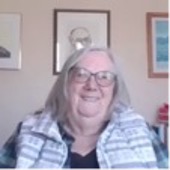
Anne was born in Scotland and grew up hearing about the injustices of apartheid in South Africa and going to protests. She emigrated to Canada as a young adult and became a social worker in Ottawa. After visiting the Frontline States as part of a group organized by the Ottawa-Hull Learner Centre (later World Inter-Action Mondiale), she helped start the Canadian committee of the International Defence and Aid Fund for South Africa.
Doug Miller 0:00
Future. There we go. Well, good morning. Anne Mitchell in Toronto.
Anne Mitchell 0:07
Good morning Doug Miller in Montreal.
Doug Miller 0:11
Yes, nice to see you again after a long time. So and you, you’ve you understand that we’re doing this as part of an anti apartheid history project about Canadian activists and, and you’ve read the consent form where we inform let you know that we’re really trying to produce these things for the archival purposes, for a start, but also for education and getting out the message that something was being done during that period. There hasn’t been a lot of written about it. So have you read that consent form?
Anne Mitchell 0:49
And I read that consent form, and that’s okay with me. I agree that whatever I say can be recorded.
Doug Miller 0:58
Perfect. Thank you so much. Well, can you just, instead of me trying to tell everybody who you are, can you sort of give us a little background about who you are, where you came from, and sort of what, what got you When? When did you first come aware of apartheid and the racism of southern Africa and those issues?
Anne Mitchell 1:18
Well, my name is Anne Mitchell, and I was born in Edinburgh, Scotland, which is where I grew up. I guess I first became aware when people like my family and my mother, when we were going shopping, we’d boycott South African goods in the grocery store and that kind of thing, and we’d find out why, and that was in the that was in the 50s, I guess. And then in the 60s, I became aware of reading about or hearing about the Sharpeville massacre. I was still in Scotland at that time and wondering, you know that they had been protesting against having to carry a pass, and this all seemed very ridiculous, and so trying to figure out what would happen then.
Then I came in the late 60s. I came to Canada to work just north of Montreal, actually, in Shawbridge, Quebec, in a delinquency institution. And that was when I got in the 70s, I got involved. When I left there, I came to Ottawa. I was working with the Ottawa Hull Learner Center, or World Interaction. It was called, and one of the one of the things they were doing was they invited a young South African woman who had been part of the Soweto crisis in the 70s to come to Canada. I don’t actually know who were the who invited her, whether it was the churches or the ANC or who it was. But anyway, she came and then Ottawa, the World Interaction, maybe it was CUSO that was involved with it. I don’t know. The World Interaction Center were organizing the Ottawa portion, and I was one of those people, and we got her a stint or to go and visit a school in Ottawa, a class of, I think they were great, the 16,17, year olds, or something, which was the same age as she was. And that was fascinating to hear, these kids talking to her, and the conversation that they had about the different lives so and we got Barbara Frum to interview her on CBC, and one of the things that well amazed me was the way Barbara Frum sort of said that she has a daughter the same age as this young girl who came from Soweto, and if she knew that her daughter was going through the kind of stuff that the Soweto girl was going through, she would be shocked, and she wouldn’t know what to do. So I thought that was interesting.
So that was when I sort of thought, well, is there something that we can be doing here? I mean, it was really the getting across the information to Canadians about what was going on in South Africa. Then, in the late 70s, I went to Swaziland, partly to find out what I didn’t want to go to South Africa. And I don’t know why I chose Swaziland and not Botswana or Lesotho, because I know that CUSO was boycotting Botswana and Swazi and Lesotho because, well, no, sorry, Lesotho and Swaziland, because it was still very much hooked into South Africa, which is true, it was. But a lot of the, a lot of people from South Africa the sort of refugees. Or the some of the activists who were in Soweto in Swaziland, and that was kind of interesting to be there for a couple of years. Then I came back, and I would visit South Africa from time to time, going on the bus thing that goes from Swaziland into, well, I can’t remember where, but into South Africa.
Then I came back to Canada, and I was in the situation where there’d been a number of people, my friends, like the Sangers and who had been talking about, could Canada support a committee of the International Defense and Aid Fund for Southern Africa, and they were wondering, would there be, would it be able to survive? Would we be able to do anything? So we talked about that. And Penny,
Doug Miller 5:51
Excuse me, Anne, and just you slipped by the Sangers, because you and I know them well, but maybe you could just give it a small aside about who they were?
Anne Mitchell 6:00
I can, yeah, I can get onto him. They were, they were a couple of activists, and in Ottawa, she was, they were both journalists, so they did a lot of their communication through writing. He was a very well known writer on African they’d spent a lot of time in Kenya and in Africa, and so had she and I met her, I was working with her at World Interaction, the Ottawa Hull Learner Center, so that’s how I got to know them and other people that they had brought in or that they were working with on whether we could set up our Canadian committee of IDAFSA in Canada. There were the Anglins, Doug Anglin, who was a political science professor at Carleton, and his wife Mary, who was a very active United Church person in Ottawa. So to cut that long story short, and the other two people were John Harker. And I have no idea where John Harker went, but at that time, he was working with the Canadian Labor Congress, and Andrew Bruin was asked, the NDP Minister of Justice was asked to be the chair.
So that little group of five people, I think it was decided that, yes, we could take the risk of setting up a Canadian committee of IDAFSA. And of course, we talked with Yousef Saluci, who was the ANC representative in Canada at the time, and he had supported the idea. IDAFSA was an organization that started in South Africa in the 50s, and was banned by the government of South Africa in the 60s, and went into exile in London, England. And it was mostly involved in providing legal defense for lawyers and legal fees. It had been involved in the treason trials in the 50s, and then all of the other major, major trials over the course of the next 3040, years, including a lot of the minor trials. So it. and it was headquartered in London, England,
Doug Miller 8:12
And its name is even International Defense and Aid fund. Yes.
Anne Mitchell 8:18
Yes, yes. So it was in the basement. Its headquarters were in the basement of St Paul’s Cathedral, because at that point, Canon Collins, who was at St Paul’s Cathedral, became its chair, international chair. So our little Canadian committee started off, and we were anomaly to the international body, because all of them just had contacts with their governments, like Sweden, Norway, Australia, Holland, I know what else. And to get money, they just went to those governments and said, we need money, and they usually got some.
But Canada didn’t work like that, and it wasn’t doing that. And IDAFSA hadn’t been able to get money from Canada, and they’d had long discussions with Mitchell Sharp in the 70s and the late 70s, and we decided, well, the only way we’re going to be able to get money is if we can show Canada, the Canadian government, that Canadians are interested in supporting this, so that’s what we decided to start to do.
And by the end of the first year, we set up in 1980 in my I had just come back from Soweto, from God, from Swaziland, and I was living with a friend of mine in in Ottawa, and we set up a little office in her living room. And by the end of the first year, we had 100 donors in Canada who were supporting the organization. And one of the he, wasn’t the first.
I can’t remember who the first was, but the third one was Mark McGuigan, who was then the Minister of External Affairs and then by the end of the second year, we had about 300 and the end of the fourth year we had about 500 and so we slowly started building it that way, and how we built it. We built it out through the contacts that we had, through the churches, through the academics, through the NGOs, through the CUSOs. David Beer was one of the original first ones that we talked that we had. So that’s how we started to work. And initially it was just to talk about the third IDAFSA had three clauses. The first one was to raise funds for the legal defense of political prisoners in South Africa. The second clause was to raise funds for the humanitarian support of the families of those prisoners. And the third one was to raise funds for they called it to keep the conscience of the world alive to the issues at stake. But we called it to educate Canadians about apartheid. So that’s what we did. And in the second, third, fourth year, or whatever, we managed to get, and we had to get the permission of IDAFSA in London, they were very scared of this little upstart in Canada that was wanting to do things like sending money to the families in South Africa, and wanted to get more involved in those programs than just distributing the idafsa International materials, which is what We were doing at the beginning, but we eventually persuaded them, I think it was Clyde and I, who were at one of their annual meetings in London, that, you know, we’re actually quite we’re quite responsible people, and we know that there’s a risk and all the rest of it, and we’re not going to broadcast from the hill dots that were sending money to A, B and C in South Africa from Idaho. So they eventually said, okay, so what we did was we had, am I going on? Too much on this?
Doug Miller 12:12
Well, this is fascinating. Saved me a whole bunch of questions.
Anne Mitchell 12:17
We started by one of my staff in the Ottawa by this time, we had an office in Ottawa. And it was actually on, well, we had several. The final one was on, was on, God, I can’t remember Ottawa now. It’s been a long time since I’ve lived there in Toronto. It was up at the just, just south of the parliament buildings. And one of my staff there had, her husband was very had just retired and was very interested in computers.
So we talked about, well, this is what we’re wanting to try to do. We’re trying to set up a network in Canada. We’re going to have two faces. We’re going to have a public face, which is IDAFSA, and we’re going to talk about what IDAFSA is doing, generally, in supporting providing legal defense and humanitarian aid and providing information on what’s happening in South Africa.
But we’re going to have a private face as well, and that face is not going to be IDAFSA, and it’s going to be identifying people across Canada that we can trust, who will not ask, who will take on a task for us. They didn’t know who it was for, because I wasn’t asking them. It was other people that were asking to send money to people in South Africa. And we got those people through an IDAFSA International, who got them through the ANC, the African National Congress and the PAC. There we were supporting some of the people from the PAC as well, but the lists of people who needed support were coming from those channels, and then London would send some of them to us. And it wasn’t to IDAFSA’s address or anything like that. It was to another address that we set up for this work. And then we would identify people, either through the churches or through the NGOs in different parts of the country.
We had some people in Fredericton, some people in Montreal, some people in Ottawa, obviously, some people in Toronto, some people out in Calgary and Edmonton and Vancouver, who were just asked, you know, we’re working for the anti apartheid movement, and we have this project that we’d like your help. We’re wanting to send money to people who are political prisoners, they’re in jail, and we want to send money to their families. Will you do this? But will you do it without talking about it and without broadcasting it within the anti apartheid movement and that and without and without, sort of saying who these people are, and they would agree.
Some would, some wouldn’t. So we chose the ones that agreed. And then we started. We had a coordinator in each city who we would send the names and the information and the money. Because we sent the money, it was money that came from IDAFSA and in our case, it came from money that was raised in Canada that we were able to send out to these different cities across Canada with the names and addresses of the people that we wanted people to write to.
And we’d say, you’d always start off with a with a general, “Oh, hello, I’ve heard that your My name is whatever, and I live Wherever, and I’ve heard that you’re in trouble. I’d like to see if I can help. Can you tell me? Do you have kids? How old are they? What is your address? Good? Can I?”, and when they responded, if they didn’t respond, then I’m afraid they were just cut off. But you know, we’d say we’d like to hear back from you, and then we can work out how we can take it to the next step and send you some money.
So the ones that replied, we sent, I mean, it was all it was little bits of money. It might have been 50 bucks, or 70 bucks, or 100 bucks at the most a month that would go to them, and it would be based on how many kids they’ve got. Are they in school? What is their situation anyway? That’s what happened. And then they would send a reply. And once we got a reply from them saying that they received the money, then we could go on. And the money, by the way, was not sent by checks or in an envelope. It was sent by postal money order, because it was reckoned that was the safest way to do it, and that and that the South Africans were monitoring bank accounts. We already knew that, but they weren’t. And not a lot of people, not a lot of the people that we were wanting to support.
We’d have bank accounts anyway. So they were sent by money orders or postal orders, and they would be told, you know, where the nearest post office, and they would be able to get there. If they couldn’t, then we’d try to arrange something else. But that’s how it started.
And probably by the end of the 5, 6, 7, years, we had about, we had about 250, or 300 people in Canada that we were sending money to on a regular basis, and we were getting letters back from them telling them how they were doing. And there were about 2530 people in Canada who were doing the writing.
So it wasn’t a big scale thing, but it was a very meaningful thing for both, certainly for the people in South Africa, but also to the people in Canada who were doing the writing. And we’d get the letters, would come back to our address in Ottawa, which was not the IDAFSA Canada address, and then we would send them over to London, because they kept the whole shebang of the records of it all. And at one point, when I think it was, I think it was the Sharpeville Six, I’m not sure when it was. It must have been in the 80s or early 90s, or Sharpleville PAC was complaining that IDAFSA wasn’t supporting them, wasn’t supporting any PAC members. And in fact, it was a, it was a writer in Ottawa that was writing to the Sharpeville Six people, including Teresa Ramashomola, who had been sentenced to death. And we eventually she got her death sentence was remitted, but they wanted, so IDAFSA had to brought them over here, or two people from the PAC, or the representative the PAC, to meet with the correspondents in Ottawa and to just show them. trace out where the money was coming from to that person, going over to Theresa, and the answers that were coming back so but they were quite PSE was quite upset, and they had raised this issue with the unit, with the United Nations, that IDAFSA was being one sided, was only supporting one side of the struggle. Anyway. We got out of that one.
We could convince them that, in fact, we were supporting and one person that they said, well, you’re not supporting this person who was a PAC member. And it was traced back to London that PAC had never asked IDAFSA to support that person. So it was all a little confusing.
Some of the letters that we got from the innovation, from the individuals in Canada, from that South Africans who arranged individuals in Canada, they were incredibly moving because, you know, they’d be saying things like, well, thank you very much for your letter. With your money, I was able to buy. A chicken, or get a chicken, or have a Christmas dinner, or I was able to buy clothes for my daughter who was going to school, or I was able to get I was able to go by bus to visit my partner, who was in jail forever, but and sometimes they were extremely sad, because you’d get one letter saying, oh, thank you for this. I was able to go and visit my husband, who was in jail, and then the next one, two minutes, two months later, or whatever it would be. Well, thank you. My husband has been, his trial is on, and then another few months later it would be, my husband has been sentenced, and it was sentenced to death. And a few months later it would be, my husband has died, has been executed. And then a few months after that, it would be, and they wouldn’t give me his body to bury. And, I mean, these were incredibly hard stories.
Doug Miller
Terrible.
Anne Mitchell
For the particularly for the Canadian writer to listen to, let alone the family in South Africa network.
Doug Miller 21:20
Yeah, I say it’s an amazing network that you set up.
Anne Mitchell 21:23
It was an amazing network, and it should have been. I mean, if, well, we did it, because we did it, we have, we have paid the Hadassah and the liberation movement’s way of doing it, because it was the lives of people in South Africa that were at stake. Wasn’t us, but it was their lives that, because they could be picked up, they could anything so, but it was a very and we’ve got fascinating, I had some articles. There was one article in this Ottawa Citizen about that time from one of the Well, this must have been after, must be after 1990 when the when Mandela had been released, and the various laws had been listed. And we didn’t, we a Canadian, a Canadian writer in Ottawa. We, we had, we used excerpts, at least the Ottawa Citizen used excerpts from their letters, but they didn’t use the names, so we still were maintaining that kind of we’ve got to keep some kind of security over all this stuff. But they were,
Doug Miller 22:32
Fascinating. Even by 1990 the struggle wasn’t really over. It was, that’s right, years in South Africa,
Anne Mitchell 22:38
Yeah, yeah.
Doug Miller 22:42
Just take, can I just take you back? Because you moved into the classic clandestine side of IDAFSA. Yeah, be interesting as well. To get a little more you told me the goals of IDAFSA, but it would be interesting. What was a day in the life of IDAFSA?
Anne Mitchell 22:57
Well, we organized. We had a newsletter.
Doug Miller 23:01
Sorry, they’re very professional. You must have had a whole network there to pull together that information. What information for the newsletters? The IDAFSA newsletter?
Anne Mitchell 23:10
Well, there were people like Joan Fairweather, David Beer, well, David Beer was, he was in Africa by this time again, I think he’d gone back to Africa then. Keith Rimstad, Oh, yeah. And, of course, the Sangers, I mean, Penny and Clyde Sanger, were professional writers, and they wanted to do this stuff. So
Doug Miller 23:31
Yhey had contacts all over Africa, and they had contacts all over the place, Amnesty International.
Anne Mitchell 23:40
At that time, Penny was involved with Amnesty International. I don’t know if Doug was or not, if Clyde was or not. No, I’m talking Keith, Keith Rimstad. Keith Rimstad, he was working with IDAFSA at that time. Oh, he’s working with, was folding up. He went to Amnesty International, yeah, okay, yeah. And Joan Fairweather, she was there for a year, and she left, but she was, she was our contact with the National Archives at that time, and with and one of the educational things we did was put on films that was mostly in Ottawa or Toronto, or if we could get, I think we, one time, got our contact in Vancouver to put one on in Vancouver or something. And these were usually newly released movies.
The one we did in Ottawa was about Donald woods, and it was produced by what’s the big film producer? Anyway, it was produced by him,
Doug Miller 24:51
and Donald Woods was whom?
Anne Mitchell 24:54
Woods was a South African journalist?
Doug Miller 24:57
Okay.
Anne Mitchell 25:02
Who had been at Soweto, and the film was about Soweto and about the uprising at Soweto. And he was at our, our program in Ottawa, where we released this we released the Ottawa release of this movie, and Donald was did a little, little speech, a little talk after it, and one of the things that he said was in the movie the police, when the police were going to fire on the kids who were being demonstrating, they said they announced over their loudspeaker that you’d have a five minutes to disperse.
And Donald Wood said to us and to the audience in that Ottawa theater that that’s not true. They didn’t give them any warning. They just shot at them. And that was when, I don’t know, was it 17, 18, I don’t know how many people were shot, but that really, you know, made people think you know what is going on.
So we did things like that. And we did well. We did it. We did demonstrations every I think it was every week outside the South African Embassy in Ottawa. And these had been started by the church, Mary Anglin and Penny and Clyde Sanger had been involved, but we just supported it and supported it with the contacts that we were bringing in and the public through our newsletters and stuff.
And that was interesting too, because each time, each week we did it, you saw something change in the way the South African Embassy dealt with us. You know, at one point there was no gates in front of the embassy. But then gates were put up, and then the wall was heightened. There were sparked, there was a fence put on top of the wall. So they did everything you could to try and keep you away from it. And I don’t know how long we kept doing that, but certainly it was into the 90s. Then in 1990 was the last, well other public things that we were involved with, the meetings of the anti apartheid movement, and sometimes we would be providing the speakers.
And if we were going, if we had a speaker, we would go across Canada with the speaker. Where would the speakers come from, from South Africa, or from, mostly from South Africa, and if they were, if we what am I trying to say? Yeah, we knew that if it was Tuesday, it would be Winnipeg, and if it was Wednesday, it would be Calgary, and we’d go across like this, staying with people in their homes, being billeted and being but, but the speaker, whoever it was, who was the white? Who was the, it was a white guy who was in, who was in, in prison for life, for 25 years, or whatever, and took his release when it was offered. And he was, he was criticized by most of the anti apartheid movement, but not by, not by the ANC, who said, “We understand why you’re, you know”, but anyway, he was one of the people that we brought to Canada. Came to Canada, and he visited and talked to people public meetings across the country, and we would try to have media in the morning, the public meeting in the evening, and maybe meetings with government types, provincial government types, or city types, or the anti apartheid movement types, like in a smaller group in the afternoons. And that’s how we would organize that.
Doug Miller 28:58
I did a little homework, and I came across your name and IDAFSA as the channel for some Canadian funds for Oliver Tambo’s visit in 1987 it looks like you were a part of a coordinating committee for all.
Anne Mitchell 29:19
Yeah. And there was a great, there was great concern as to how anybody was going to cover that, because we were all told that we, oh, we’re all told that we can’t provide money to the liberation movement. But this time or other, we did, and I don’t know, I can’t remember that. I know we did, and I know there was a big issue. When he was, he was in Ottawa, and we had picked him up at the airport, and Saloojee was there as well, and we had checked him in, and Mary Anglin was there, and we had checked him in, we were checking him into a hotel for the night, and nobody would come up. I mean, I thought, I can’t come up with IDAFSA’s credit card, but so I don’t know how that was paid for, but it was paid for. Maybe I did come up without his credit card. I don’t know. These things are a muddle.
Doug Miller 30:06
Well, it’s getting to be a few years, isn’t it, I can understand that. And so, so, but it was a quite a controversial visit, as I understand.
Anne Mitchell 30:16
Yeah, well, he, he met with Mulroney. We weren’t we weren’t there, and I think Mulroney gave him a dressing down, but I think he stood his ground, and then he spoke in a church basement afterwards. And I think, I think David Beer was on that panel. I don’t know who else was part of that panel, but I don’t think, the Canadian people were very annoyed with Mulroney and very supportive of, at least the Canadian people that were there, of Oliver Tambo.
Doug Miller 30:52
They were annoyed at Mulroney,
Anne Mitchell 30:54
Mulroney for the way he behaved, kind of like Trump and Zelensky.
Doug Miller 30:59
Okay, okay. And that would have been because, of course, the this is probably the time of communist terrorist accusations from South Africa, etc.
Anne Miller 31:10
Right, right, right, right. And we were all, I mean, there was always that kind of slant, well, IDAFA was just a communist organization. I mean, one of the questions, which I think is, I mean, we were right in the middle of that we were criticized by and we were supported, but we were criticized from the right and from the left. The right would consider us communists, and that the money that was being sent in, they knew vaguely that IDAFSA was sending money into South Africa, and that it was supporting, it was supporting the terrorists and the necklaces and all that kind of stuff. And the left were criticizing us because we were just holding up the apartheid economy by sending money into South Africa.
Doug Miller 32:00
Okay, yep. So who were your allies and who weren’t? So it sounds like you were mostly with the churches, NGOs.
Anne Mitchell 32:09
It’s mostly churches, NGOs, but the Canadian public as well. And we were with the I mean, we had we had money from labor unions, we had money from governments. The Ontario provincial government gave us some money at one point. And I don’t know where else the money came from. I mean, the government gave us a chunk of money once it did, once it started. And 95 was when Joe Clark got up in the House of Commons and said that Canada was going to put money into supporting the victims of apartheid and 9595
Doug Miller 32:50
that’s like
Anne Mitchell 32:53
85, 85 probably yes, 85 and it would go through organizations like Oxfam and the churches and IDAFSA.
Doug Miller 33:05
Ao, so there was a, they were clearly third party contributions, from, from, from the government. They were going to be great. It was going to be through you well. And so that’s, that’s an evolution, that’s a movement forward in terms of influencing government policy. I mean, you must have had an impact on government if you got that far.
Anne Mitchell 33:29
Oh yeah, but, but the, at one point we were, we were trying to get money out of CIDA for years, like from probably when we were first set up, really in 81 or 82 or whatever, or 80 and we would, at one point, I had documented the kind of responses we’d get from CIDA, who would say, “Well, this is a political issue. You’ve got to deal with External”. So we’d go and deal with External, and External would send back and say, “Well, you can put CIDA for this”. So this went back and forwards for ages, until somehow or other we got, we got them to move.
And I think one of the moves was I had, a I had a friend. Became a friend that time she was working at the on the task force for southern Africa. And I had met her when she came back from London, where she’d done her PhD, and she had been a whisk. She had been part of WUSC in London, service, University Service of Canada. And I had just come back from being a volunteer with wask in southern Africa, in Swaziland, and I guess she had gone out to the WUSC office to find out who she should talk to about the NGOs in Canada, and they’d send her to me. So that was kind of interesting. And so we talked a bit about South Africa, and by that time, I wasn’t with IDAFSA. I was working with, the I’m getting confused. I was working with the Learner Center. I think still, anyway, when she decided she started off on her career, and she’s a person that I never, I’ve never known people who have been so systematic and knowing where they wanted to go in terms of career, career path and what their job was going to be. And she so she was in CIDA then she was in External, then she went wherever. But anyway, she worked her way through it. So at one point, she was the contact person on the southern Africa Task Force at External Affairs.
Doug Miller 35:47
Well I was going to say, because South African task force was a governmental body, are you going to tell us the name of that person? or is that?
Anne Mitchell 35:56
it wasn’t Lucy Edwards, so it’s confidential.
Doug Miller 35:59
That’s confidential. That’s fine, but at least you had your insights and your inroads.
Anne Mitchell 36:04
My insights into it. And she not that she was, I mean, she didn’t tell me what was going on, but she was an ally on that platform in there. She was an ally to us and to the work that we were doing. And I think there were, there were a number of people like that in different parts that you had to garnish.
Doug Miller 36:30
And if you’ve painted a picture of your personal voyage through the understanding of this, that was a quite, how do you feel? You changed through the process,
Anne Mitchell 36:41
My process, yes, what process?
Doug Miller 36:44
Of getting involved and then becoming an activist.
Anne Mitchell 36:49
well, it became clear to me that it was, it was policy had to change. I mean, you have to work at different levels, but not everybody can work at different levels, and there’s not time to work at different levels. So as long as you know who’s on the ground, working as an activist and organizing the protests and organizing this that the next thing, and who’s working with the media, because you’ve gotta have these people who can get stuff out and easily understandable language through the at that time, it was through the press. I mean, now it would be through social media. And I don’t know anything about social media. Oh, it’s evolved.
Doug Miller 37:31
It has so much evolved. Yes, yeah.
Anne Mitchell 37:33
And then our task adapters. The task was to keep in touch with the government types and the people that were giving us are likely to give us money like organizational people. There was, we got money once from the Ontario government, and we got money from CIDA about for five different years. I think it was in the late, must be in the late 80s. I 90s, we didn’t get money from any other governments, or we didn’t get any other big money.
Doug Miller 38:08
But that money would have been permitted to send to the defense funds?
Anne Mitchell 38:15
we had to send it to the Defense Fund in London and then, and then to the lawyers, to the lawyers, the lawyers, the to the fact well, to the through lawyers, to the lawyers in South Africa, who then distributed to families if, because it was that was big money. So the way IDAFSA International did it was they worked with lawyers. There was a law, a group of lawyers in London who worked with a group of lawyers, they were South African lawyers, who worked with a group of lawyers in South Africa, who were South African lawyers, and they, in turn, would distribute it to families. According to the instructions from-
Doug Miller 38:55
-that way the government felt everything was going on clean and safe.
Anne Mitchell 38:59
Yeah, and I mean, it was, even South Africa hadn’t made it illegal for a lawyer to distribute some money to a lawyer, the thing they didn’t know. Or people say, of course they knew. How would you think they didn’t know that the money was coming from an organized source, but it wasn’t said that way. And I don’t know if they knew or not. Who knows? The lawyer in London was George Bizos, who was, at that point, he was Mandela’s lawyer until, I guess Mandela got I don’t know when George went back to South Africa or whatever. But there was a network that the people in IDAFSA in London were new and worked with.
Doug Miller 39:51
Of course, and the South African connection is clear. And in England, there were so many South African exiles, yeah. Well. Fascinating. You’ve talked a little bit about the opposition and the criticism, and you seem to have walked through that pretty, pretty effectively in your work.
Anne Mitchell 40:15
Well, there was one. I mean, there were a few. I How can I say there was one? There was one event in Ottawa. Lucy Edwards was speaking at, um, I don’t know how it was organized by, the I think it was organized by the anti apartheid movement. It wasn’t or maybe, I know I was one of the co chairs, and so was Srini ready from Winnipeg. So we were the NGO chairs of this thing, and then the other, the other, the academics from the anti apartheid movement were there. But I never really knew where they stood on any of this stuff. They were academics, and they were putting forward their academic view.
And this, the purpose of this meeting was to get people on the grassroots of the anti apartheid movement to put forward what we should do about sanctions. And you know, how we can move forward with sanctions? Anyway, I had, I had a terrible cold that day. I was as sick as a dog, and I didn’t want to go to this thing, but I thought, I can’t leave Streamy anyway. It was awful. I think people hated me, but that’s okay. They can hate me. I was doing what I had to do.
Doug Miller 41:37
Which? What was the cause of the upset? I don’t get it. What was the cause of what the upset? Why were they upset at you?
Anne Mitchell 41:42
Oh, because I didn’t want the academics who were there. We had discussed this ahead of time the organizing committee that the academics were there as resources to provide knowledge and information and help us sort through this conundrum on sanctions. They weren’t there, they weren’t there to promote their view on sanctions. If you can get the dissent,
Doug Miller 42:15
Yes, no, the academics tended to pontify and rather-
Anne Mitchell 42:19
And they wouldn’t give the others a chance. They were, they were, they were stating their views before others had a chance to put forward their views.
Doug Miller 42:29
Okay, so that’s interesting. The academics were actually an impediment to some of the work, and I thought, but not necessarily, and like you say, not necessarily involved in action. We did not see all of that all the time
Anne Mitchell
And they certainly didn’t, they certainly didn’t see, or didn’t want to see, the sort of stuff that Ida so was doing okay. And they were, they were, some of them were quite critical of IDAFSA.
Doug Miller 42:57
You had a good picture of the different kinds of groups, the way you laid it out, there’s people on the ground doing this, and people on the doing that, and so on. So IDAFSA was, was with government and influencing policy, fundraising.
Anne Mitchell
Yeah, and working with the people who were working on the ground, if they were providing money to the South Africans, working with the lawyers, because they were doing that. We did that.
There was a legal conference in South Africa on fact, I got a t shirt. You asked about T shirts. There was 1 t shirt there on the children’s conference in Harare in 1987 where lawyers. We had a couple of lawyers. Not one lawyer from Canada. We had a group of four that went from Canada. One was a lawyer from the Ottawa U, another one was from the Canadian Teachers Federation, or the Ontario Teachers Federation. And it was all on, on working on talking about students, talking about kids.
But it was fascinating to know that the people who came to that conference, some of them came from outside of South Africa. They just found out about it, and they just came and it was being held in Zimbabwe, and others came from inside South Africa.
And again, they just came, and some people hadn’t met each other since before apartheid. I mean, they had been in exile or in the country and hadn’t met. And it was amazing to see these people meeting each other after all those years. I don’t know what the result of that conference was. I’m sure there was a result, because Trevor Huddleston was there, different governments were there, lots of of anti apartheid types were there. And I’m sure I’ve got something written up about it somewhere, but I couldn’t lay my hands on it. You were there? Were you? I was there? Yeah. I. Yeah.
Doug Miller 45:01
But if you, if you sat back and you looked at the like, I’m guessing it’s about 10 years 80 to 90, you were-
Anne Mitchell 45:07
I was with IDAFSA from 80, yeah, 80 to 90 to into the 90s. We laid it down in the in the 90s, the last annual conference where it was decided that IDAFSA would be laid down because its work had been done, not that the problem had been solved, but that we could now transfer the programs of IDAFSA back to South African based groups, which is what we did. But that decision was taken at the annual meeting, which was held in Ottawa.
Doug Miller 45:39
What year?
Anne Mitchell 45:40
1990, 1980, okay, yeah, and then there was another meeting in 1991 in London, which was actually the legally wrapping up the organization.
Doug Miller 45:54
So do you have a high point for all of that? Is there one that really strikes you. There’s something that was good to do, and you felt good about doing it?
Anne Mitchell 46:09
Having Bishop Tutu in Canada. I felt good about that.
Doug Miller
Wow, um, can you tell me?
Anne Mitchell
I didn’t, we didn’t, I don’t think we invited him. I don’t think we could have, I don’t think he would have come. I don’t know. I think the government must have invited him, but we had got, we, we managed to persuade the government that somebody like Bishop Tutu or the United Church had invited him, would be the churches. That’s who would be.
So when he was coming, Mary Anglin and I, Mary Anglin was with the United Church. At that point, we were going to go out and meet him at the airport, and we had already, I think Mary had already set up a meeting, or we’d set up a meeting forum with external affairs, and that was to be his first meeting when he came into town, and External Affairs had decided to send a car out to the airport to pick him up. We didn’t know that until we got to the airport and there was External Affairs in their car. So we said to, I said to the external affairs guy, it was, it was, can’t remember his name either. But anyway, I said to them, well, Jim Kirkwood would like to travel into Ottawa with Bishop Tutu.
Doug Miller 47:29
Jim Kirkwood was a United Church, United Church of Canada.
Anne Mitchell 47:33
He was the United Church office, he was United Church Canada, and he was a South Africa, he’d been involved in the southern Africa struggle most of his professional life with the United Church. Mary was a volunteer who was very much involved with it. But anyway, so I said, would we’d like Jim Kirkwood if to ride with Bishop Tutu into Ottawa so that he can give his, we can, we can give him some bishop to some information about what’s going on in Canada. And External Affairs wouldn’t agree to that, at least the person that had been sent out to meet him.
So what we then did was said, Okay, Bishop Tutu, you’re going to come in Mary Anglin’s car, and we’ll drive in together to external affairs, so that Jim and Mary and we can all talk to you about what’s going on in Canada. So that’s what we did, and that was very good. And he had a good meeting. I think I don’t know if he had a good meeting or not, but he did meet with Joe Clark. So that was a kind of a high point. Toivo was a high point. Toivo, ya Toivo, I’m from Namibia. Um, that was before, because IDAFSA had been involved with supporting political prisoners and families in Namibia as well,
Doug Miller 48:55
because it was under South African rule until 1990. Yeah.
Anne Mitchell 48:58
Yeah, yeah, yeah. So he came to, he was in Ottawa, and we got him to meet with Clark and meet with external affairs tights. And by that time, or not long after it, we did get a little bit of money out of external, out of the government, for Namibia. So that was kind of interesting. So there are lots of, there are lots of high points. I mean, it was, it was a fascinating time to be involved with the struggle and with IDAFSA, because, I mean, IDAFSA knew everybody in South Africa, all the activists, all the you know, and was involved with, most people they were at one point, there were some bad stories, like when Craig Williamson decided to try to infiltrate IDAFSA. I don’t know what Williamson was.
Doug Miller 49:55
A South African Special Branch, yeah.
Anne Mitchell 49:59
Yeah, yeah. By So IDAFSA had a, as we did too, but we were never approached by these kind of people. But IDAFSA in London, if they were approached by somebody that they remotely felt suspicious about, they wouldn’t meet with them at IDAFSA. They’d meet with them in a pub or a coffee shop or something or other So, but they found out about, I don’t know how they found out about Craig Williams, but they did meet, and it was the person that’s in charge of the program, one which was the legal defense, one, I think she’s dead now, in London, who met with them, and she could see through him, like you know, so she just said to everybody, don’t touch this guy with a 10 foot pole.
Doug Miller 50:48
True confession, in 76 late 76 he came into our office in Lusaka with the International University Exchange Fund in Lusaka, and they were the ones that were sponsoring him, and he worked with them, and through them, he got to know all the contacts they had with the anti apartheid movement. So but like you say, as soon as he walked out of there, we said, “That’s it. We don’t want to see him”. It was too obvious, but Well, that’s that there, there that, boy that was close to it, wasn’t it? My goodness, just reflecting back on it. Now, what do you think?
Anne Mitchell 51:34
Well, what I think now is there’s so many lessons from that struggle, which was an international, global struggle for us to learn not just on how we did or didn’t manage it with the South Africa thing, but how we can how we can manage now with the struggles that we’re currently facing, because they’re international And they’re global, and there’s the same sort of capitalist folks that have that can make decisions, and those that have to use grassroots to make decisions, we’re working in the same way, I think. And I think there must be things that we can learn as to how, as to how we got through that, that struggle, or how the South Africans, how the South Africans handle themselves through that struggle. Um, because it’s their struggle, we were just supporting them.
But there’s lessons that we can learn from how they, I mean, one of the things that that I thought was this would not have worked if it had not been, if it had not been Mandela and de Klerk, who are the last two that were trying to negotiate the final outcome. If it had still been the guy before de Klerk, I don’t think they’d have ever got there, yeah, because he had a completely different view. I mean, he was not De Klerk. I think I may be wrong, but I think he was actually more interested in seeing his country get through this than seeing his party get through this. And I mean, Mandela, of course, we know Mandela was, but the fact that Mandela was able to work with de Klerk, I thought was kind of interesting.
Doug Miller 53:31
Wow, good. Well, this is tremendous. I don’t know if that was your final last word, or if you have another thing to say about this, but it’s quite a –
Anne Mitchell 53:46
One of the one of the things that I found amazing was one of the times I was in South Africa. This was after, this was after the end of, after the ANC had been unbanned, and after IDAFSA was closing down. I don’t know that it formally closed, and I wasn’t working with IDAFSA anymore, but I was in South Africa somehow or other. I guess it was my last, my last trip, and to see in downtown Johannesburg, and one of the big hotels there was the, the, this meeting, that meeting, and the ANC, I mean, that was just so good. And it was a meeting on the ANC talking about, I think it was the developing the constitution. So people from the Canadian government seemingly helped with that. So there were some Canadian lawyers who’d been involved in the Constitution development, and people like Albie Sachs were there, and the lawyers were there, I’ll get South African lawyers. And it was, I felt like a fish out of water because I’m not a lawyer. But it was fascinating to be there.
Doug Miller 54:59
Okay, well. Was a whole other process, the 90s, getting through that to the final elections.
Anne Mitchell 55:06
Yeah, yeah. And then in the final elections, again, I wasn’t with IDAFSA. IDAFSA was gone, at least the title, the organization structure, but we still were involved. There was, of course, the Voters Education Fund in Canada, the voters education program.
Doug Miller 55:28
And who sponsored that, I don’t know that’s in this period, 90s, the early 90s,
Anne Mitchell 55:35
Yeah, or maybe later, yeah, before the election, yeah. Okay, 90 to 94. Yeah, yeah, yeah. And they’d got money from somewhere, voters, Education Fund, I don’t know where they got the money. Maybe it was with was Partnership Africa, Canada, still around? Or-
Doug Miller 55:50
<y goodness, that’s another story. Yes.
Anne Mitchell 55:56
So they were providing, I think they were providing materials. So they were working with South African groups. I don’t know who providing materials for them to distribute to the voters in South Africa, but-
Doug Miller 56:11
I’ve heard about that movement, of that campaign, and yet I haven’t heard much about it, really, in these interviews that we’ve done over the last few years. Well, and thank you so much. What a fascinating story.
Anne Mitchell 56:26
It is a fascinating story. And it’s, it’s never well. It’s been written up by, in fact, I Googled something just the other day. It wasn’t Wikipedia, was Encyclopedia Britannica or something. And Horst. Horst Kleinschmidt, who was the executive director from, he was the head staff person from London after the clause one and clause two people retired and died because they’d been there since the 50s or whatever. But Horst was a Namibian from Namibia who and he’s added to the history of IDAFSA, taking it up to the 20s. So it’s kind of interesting to look at, but it doesn’t mention, of course, Canada. This is the International Organization he’s
Doug Miller 57:17
Operating out of England. Yes, yeah. Oh, wow.
Anne Mitchell 57:21
He’s back in Namibia now. No, he’s back in South Africa. He’s not in Namibia.
Doug Miller 57:27
Fascinating. Fascinating. It’s, boy do you did you know the people at the time, eh?
Anne Mitchell 57:33
But I’ve obviously forgotten a lot of them, or forgotten their names anyway. But yeah.
Doug Miller 57:38
that’s why we’re doing this recording, because it, what we do have we don’t. We do want to remember,
Anne Mitchell 57:44
before it all, this was our last annual report in 1990.
Doug Miller 57:52
straight, and still for two seconds. So we get a record of it, IDAFSA Canada 10th Anniversary annual report for 1989.
Anne Mitchell 57:58
Yeah. And it, actually, it’s quite interesting. Even covers some of the financial stuff, which I always could never remember what the finances were. But you know, for the once we got government money, CIDA money, the first tranche came in 1986 and then there was some 86, 87, 88, 89 and it was over a million each year. So that was significant. Million, yeah.
Doug Miller 58:25
Not, not to IDAFSA alone.
Anne Mitchell 58:27
Yeah to IDAFSA alone. Wow. And Oxfam presumably got the same and the churches, I think the church has got more. But because, I think it was a, it was a 5 million grant, or whatever, that that Joe Clark announced in 1985.
Doug Miller 58:44
Wow, that’s that was. Well, you so you made quite an, and you had quite an impact then on government policy, if you manage that.
Anne Mitchell 58:50
Oh, yeah, I think so. I think so.
Doug Miller 58:53
Well, absolutely, in those days, a million dollars was, it was still pretty big stuff.
Anne Mitchell 58:58
But of course, people didn’t think that was, I think Linda Freeman made a comment in one of the books that she contributed to on the anti apartheid movement, something about us and our charitable status. That’s the only way we got the money. Which is true, we had charitable status, therefore we got the money. But,
Doug Miller 59:19
Oh, I suppose that now, for people who are listening to this charitable status is granted to Canadian, Canada Revenue, yes, and it’s based on the fact that you are fulfilling the rules and regulations that make you legitimate within the eyes of the government, so you clearly pass through hoops that went beyond this. We’re directly dealing with the liberation movements and would have been hence, tainted with the old color code that we know.
Anne Mitchell 59:49
I hope the, I mean, the liberation movement still certainly sees us as an ally. I hope the anti apartheid movement did, does, yeah.
Doug Miller 1:00:01
Well, like you say, we all played a role in our own way, in our different ways, and that’s for sure. So and I’m going to thank you at this point, okay, for a lot of a lot of very interesting thoughts and background and information. And of course, if, if you have a flash and you think of something else, we can always have a quick call and add to this. And if you, if you, if you have anything like that, report that you think might be of interest, and we can always submit this to the Archives Canada later, doesn’t it? Right?
Anne Mitchell 1:00:35
Let’s go. I don’t know what these are. This was a publication, thing that we did for the 10th Anniversary that we distributed all over the place,
Doug Miller 1:00:46
That would be 1990 or
Anne Mitchell 1:00:49
It’s a free South Africa, yeah, and I don’t know what else is here. Oh, there were some interesting money ads. This one was in The Globe and Mail,
Doug Miller 1:00:59
Spending money wisely behind bars. John Cruickshank, yeah, interesting. Because 1991-
Anne Mitchell 1:01:08
April, 1991-
Doug Miller 1:01:10
Because the Globe and Mail correspondent in 1979 went to South to Zambia for the Commonwealth Heads of State Conference, that was when Joe Clark had that short period as head of state, Flora McDonald as his foreign secretary, right, right, right. And, and they interviewed the CUSO rep there, who was this David Beer.
Anne Mitchell 1:01:36
David Beer, this David Beer, his name comes up all over the place, and
Doug Miller 1:01:42
He was working directly with the liberation movements. And CUSO was, in fact, supporting projects that carried the names of the Zimbabwe movement, the South Africa movement, the Namibia movement. And the reporting back to Canada was, well, they were supporting terrorists and doing that. So it was a constant, constant hanging over the work we were doing.
Anne Mitchell 1:02:05
David wanted to sit in on this, but I wouldn’t let him. He’s had this time too. The other one was, that was an, the Ottawa Citizen, local letters go far in aid to South Africa.
Doug Miller 1:02:19
Power of the pen, yeah.
Anne Mitchell 1:02:22
Power of the pen, yeah.
Doug Miller 1:02:24
Well, that’s, that’s all great stuff. If you wish to share it for the archives, we’d be very happy.
Anne Mitchell 1:02:30
Well, I suppose they, I mean, they, I guess the archives, archives, I guess they had all this. This is the letter. This is this? Ah, what’s this? Oh, the Ottawa Citizen. This is another one. It’s another letters from South Africa. It’s a whole page. It’s amazing that that was in October 1919, I if you’re interested in some of this stuff, I can see what we can do.
Doug Miller 1:02:59
Okay, well, we’ll, we’ll talk about that later, yeah, just, just for now. As far as the recording goes, I’ll say thanks once again. Okay, really appreciate this really informative and lots of information I didn’t know about for the years. Thanks again.
Anne Mitchell 1:03:15
How many tails? Okay,
Doug Miller 1:03:18
we will be in touch, thanks, okay, thanks. Doug, bye, bye. Then you.