
Garry Worth
-
Garry was active in the Pulp and Paper Workers union (PPWC), and later the Private and Public Workers Union of Canada in the late 1970s. He encouraged PPWC to sponsor tours by SACTU Solidarity Committee members around the resource towns of British Columbia, and helped SACTU identify the pulp mills in British Columbia that were sending pulp to South Africa. Garry was elected president of the Kamloops Local 10 in the 1980s, and in 1995 he was elected national President of PPWC.
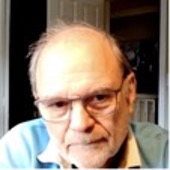
Garry Worth 00:00
Yeah.
Doug Miller 00:02
There you are. We're on. So I'm Doug Miller, here in Montreal with Jane Armstrong and Ken Luke Art in Toronto, and Garry Worth. I believe you're in Kamloops, British Columbia, and Garry has agreed to be interviewed with the two colleagues from SACTU Solidarity Committee, and contribute to the collection that is generally known as the Canadian Anti-Apartheid Activist History Project. So, welcome, Garry. Good to meet you, and, and I would like to just, before we start, you, you read my little note about what was the motive behind all this, and the letter of consent, and the kind of this is going to be made public, this stuff, it'll be accessible for researchers, students, and, and for that matter, PR, not PR, but public radio or TV, so, so you've read that consent form, and you agreed that they would be recorded and interviewed for that purpose.
Garry Worth 00:59
Yes, that's fine.
Doug Miller 01:00
Okay. Good stuff. Well, I usually throw out the dumb questions, you know. So, I don't really know you very well, Garry, as much as the others do. So, maybe you could just give us some background, where you're from, and how you got involved with what you might have known about apartheid before, and how you got involved with the solidarity committee?
Garry Worth 01:24
Okay, well, I was active in the Pulp and Paper Workers of Canada, Pulp Paper and Woodworkers of Canada, which is now changed their name to the Public and Private Workers of Canada, so, but it's still called the PPWC. So I was active. I moved to Kamloops from Port Alberni in 1971 and I became active in the local union in the late 70s, and then I was president of the local 10 PB WC for about seven or eight years during the mid middle 80s, late 80s, and then I actually was president of the National PPWC from 95 until 2000 and what years I was also Western Vice President of the Confederation of Canadian Unions for four years, I think, and then I was president for four years, I think. Can't remember
those years. So I was active in the CCU and the PPWC. So in the early 80s we had a very progressive fellow in the PBWC by the name of Angus McPhee, and Angus was the one that arranged all the SACTU tours, I think. Ken, you went around the province, and –
Ken Luckhardt 02:54
Yeah, we'll get to that. Sure.
Garry Worth 02:56
I barely remember you in the … you came to Kamloops, I'm sure, and attended a membership meeting.
Ken Luckhardt 03:04
Yes.
Garry Worth 03:04
I remember that. But anyway, that was my introduction to the SAC to work through Angus McPhee. And then, when I was president of the local, and I remember also during some CCU meetings that came up at our executive board meetings and stuff, I remember some of that. As far as files, I've contacted the PPWC office. Now I should say that, you know I'm not in the really into the like, the history, also a little bit more history of PP WC Local 10 and Kamloops. We left the PPWC and went into the CEPWU. When was that, about 2001 or 2002
Doug Miller 04:04
Can you, what's the CEPWU, please?
Garry Worth 04:06
Oh, the Communication Energy and Paper Workers Union.
Doug Miller 04:09
Okay.
Garry Worth 04:10
That was the other half of the BC pulp industry. Half of it was PPWC, other half was CEPWU. We broke, both broke away from the International Union way back in the late 60s, early 70s. Kamloops was actually the last international local union that broke away from the International Brotherhood of Pulps, Holfite, and Paper Mill workers, and then shortly after that the International Union in Canada became the CPU, Canadian Paper Workers Union, and then that eventually they emerged with the energy and chemical workers and communication energy and paper workers because of the CEPWU long history there. So anyway, PPWC Local 10 left the PPWC, and they went into the CEP, and then eventually, of course, the CEP and the CAW merged to become Unifor.
So I guess what I'm getting at is I don't really have a lot of connections in the PPWC anymore, but I did phone their office. I phoned them last week, and then I phoned again this morning to see if they could dig up any of their old files they might have in the basement that relative to SACTU, to now, when I was president of the PPWC, we had a lot of files in our offices that were just kind of disorganized and not very well, couldn't find very much, so we hired a professional archivist from UBC to come in PWC office and organize all the files and put them in storage boxes down in a room down downstairs in the PPWC office.
So I talked to the secretary this morning and she says, “well, we haven't been down there, I have to climb up on a ladder and I'm not too fussy about doing that, so I haven't really looked”, but I said, I meant mentioned to her, that somewhere there's an index, because you don't hire a professional archivist without getting an index of what they've done, so I don't think they've looked very hard for in the files, or even looked for it. I remember there was a big three ring binder with an index of what all, where is all these files.
So, anyway, they haven't found anything, and I don't get the Vancouver very often. So, if anybody can, or Doug, or Jane, if you're in Vancouver, it might be worthwhile to go drop into the PPWC office and ask them if they can have a look a little better. Now they're right in the middle of changing officers. The office, the president has finished his term, I think, at the end of this month, and then he's, I don't know if he's going back to the mill. He was from Crofton, so I don't know if he's going back or not, so but anyway, that's I'm if Angus filed any of the SACTU material, it'll be downstairs in those archives, and they just haven't gone down there to find it. Now, the other thing, and I think you've talked to John Lang about this as well. The CCU files there are in the Labor at Library and Archives Canada, and I think those are available to the public, as I understand it.
Doug Miller 08:00
Yes.
Garry Worth 08:00
So you could probably look in those archives to see if you can find anything about SAC two in those CCU files that are in Ottawa, so that's another possibility.
Doug Miller 08:18
Well, can I take us back to the early 80s, and, your role at that moment, what were you doing around 1980, 82?
Garry Worth 08:30
I was president of Local 10 in 1981 for just the one year, and then I became president again later of the local, I think, around 86 or 85 but anyway, I was also active on the National Executive Board of the PPWC from about 1979 until 1988 or something like that, so I remember Angus McPhee organizing this, these tour of Ken around the province. I think all the pulp locals, both CPBWC, and I guess it would have been the CPU at the time.
Ken Luckhardt 09:14
Yeah, CPU,
Speaker 2 09:15
Yeah. I remember Angus kind of is instrumental in organizing that, and I would have been active on the executive board of the PBWC National, so that was why I was aware of what was going on with SACTU.
Doug Miller 09:33
That sounds like a rather interesting collaboration to two unions that are not necessarily on the same wavelength, coming together over this kind of issue. Did you read that?
Garry Worth 09:45
That was interesting. You know, I mean, there was a bit of rivalry between the two unions. All the PPWC locals actually broke away from the international union, and then, which eventually. Became the CPU, so it was good that I think Angus could get both unions working together on that. Angus was one of the original PPWC guys, so Angus probably had to swallow pretty hard to be talking a lot to the CPU, I think, at the time, but it was good that that he organized that, and we did that. So,
Doug Miller 10:24
Ken, do you have a question?
Ken Lickhardt 10:26
Yeah, I just like to echo and add to what Garry has said. This is quite nostalgic for me.
Ken Luckhardt 10:35
I remember going to Prince Rupert in 1972 and actually, Angus McPhee is a person who introduced me to trade unionism. I got to know him very well personally at the pubs in Prince Rupert on many occasions. I mean, literally. And then I was at that time doing research for a PhD that never got completed because of South Africa interfering in my life, which is great, and then in the early 80s, when we had tour by Zola Zembe, who was an executive member of SACTU, based in Britain, it came for a two-month tour to Canada, and we did the BC trip up to Prince Rupert, and at that point in time Zola met Angus and other local activists, and that established the relationship kind of formally between sector committee and BPWC. Then this ability to go on tour in British Columbia to visit every pulp local in the province was an incredible opportunity for us, because it echoed the research that Ken Traynor had been doing on all the trade back and forth between Canada and South Africa. So, it was very important for us to be able to identify the particular plants that were sending pulp to South Africa. So, it was a bit of a major coup, I think, for Angus and Gideon Dickman,
Garry Worth 12:02
Right? Right,
Ken Luckhardt 12:03
Gideon, yeah, Gideon Dickman with CPU, yeah, they put this together, and they, you know, they overcame their differences, which were, as Garry said, quite real, politically, and they said, “okay, we'll sponsor you, Luckhardt, go around the province, and we'll, we'll put you up in every town where we have pulp mills, help meal locals”, so that was probably 84, 85 I think, probably 85 and that was all part of our sanctions campaign work as a committee. So I remember coming to Kamloops Local 10, and you were quite hospitable and put me up overnight in a hotel motel, and it was good. And I actually went up to Prince George. I got all the way up to Mackenzie, which had just kind of opened up a new mill not too long before that. That was a PPWC local, wasn't it, Garry?
Garry Worth 12:56
There was a PPWC local in the sawmill, but the pulp mill would have been CPU.
Ken Luckhardt 13:01
Okay. Well, wait, we … I was fortunate because there was a recently exiled South African family who had moved to McKenzie. He had been active in the movement in South Africa, so they hosted me at their home. It was quite an opportunity to get to know them better. I can't remember their names, but it was a very successful tour, and the result of it was, we were able to identify, I think, two mills in the Lower Mainland that were responsible for sending both to South Africa.
Ken Luckhardt 13:29
One was the Canfor operation in Port Mellon –
Garry Worth 13:33
Port Mellon, that'll be newsprint, probably.
Ken Luckhardt 13:35
The other one, I'm not, I'd have to go back and look at Ken Traynor’s research, but it's very helpful, because we could then identify not just the quantities and the values, but also the actual relationships between given companies and apartheid. PPWC was very important in all that research and mobilization around sanctions, and Angus, as you said, was the key person to put it all together initially. Yeah, I must say, after that initial connection was people like yourself who made it work. Yeah,
Garry Worth 14:09
Cool. Good. You don't remember the other mill in the coast that was shipping paper.
Ken Luckhardt 14:16
Go ahead, I'd have to think about that. I will tell you, and I think I can find out where it is.
Ken Luckhardt 14:23
Yeah, it was in the Lower Mainland.
Garry Worth 14:25
Yeah, yeah.
Doug Miller 14:27
How would the workers know where their stuff is going?
Garry Worth 14:32
Well, really, we didn't have much to do with that end of the business, of course. They were just kind of generalized. Well, we ship it, we ship our pulp to the, eastern China, or the Philippines or wherever, and we never really knew exactly where they were shipping all their products. It's hard to tell
Doug Miller 14:59
And what kind of activities, events, incidents do you remember where factor was part of your energy?
Garry Worth 15:11
Well, you're taxing my memory. That little story that I told about in that email that I sent everyone was the only kind of real direct thing that I remember about my involvement in SACTU.
Doug Miller 15:24
Could you retell it now?
Garry Worth 15:26
Sure, I think it was that I was, I think I was Western Vice of the CCU at the time, and we had an office in Western Canada and Vancouver, and she was, Sue Vohanka, was working in that office, and somehow or other, she found out that there was a fellow in Kamloops that was importing some kind of thin plywood to make guitars out of, so she told me about this, and she says, "See if you can go and find this guy and do some research or talk to him”, so I did that. I found where his business was, and I went to visit him. It was kind of a … I used a big line of bullshit to get into and talk to him. I think I was either asking him if, if I wanted to buy a guitar, maybe, or maybe it was that I was, could get him some better Canadian plywood to build his guitars.
Doug Miller 16:25
Oh, the plywood, the plywood he was using was from South Africa.
Garry Worth 16:29
The plywood he was using was from South Africa. I don't know how Sue Vohanka found out about this, but the guy I did go talk to him, and sure enough, he was, and I tried to. I think I remember saying, “well, you know, isn't there any Canadian plywood that you could be using?”. Because there is another guitar manufacturer, not the same guy now, but there's another guy that builds guitars in Kamloops right now, and he's getting quite famous for his guitars, or selling very well. Anyway, I talked to him, and I don't know whether it was because I wanted to buy a guitar or wanted to sell him supply what I can't remember, but and then I just kept track of his business for a while, and I don't, I can't really remember anything that really came out of this little operation, but –
Ken Luckhardt 17:18
Yeah, whatever happened to Sue?
Garry Worth 17:20
You know, Sue is actually living on. She ended up living with Stan Shawag, her, yeah, her and Stan Shawag, a became an issue. Oh, partners. Well, Stan left the PPWC. He was the president. It was before me. I was, I started in 95 so he would have been the president up until 1995 and I think him and Sue started living together about then, and they live over on Gabriola Island, just off Nanaimo.
Ken Luckhardt 17:56
Okay, because she was very helpful when she was still in Toronto, she was, she was quite supportive of our work when it first started in 1980. I looked up the mill, it was the Western Forest products in Squamish.
Garry Worth 18:09
Squamish, that would have been pulp, that would have been pulp.
Ken Luckhardt 18:13
Then, yeah, and that's the other mill, in addition to the Canfor operation, that was sending pulp to South Africa.
Garry Worth 18:21
Well, that wouldn't have been canned for that, would have been Western Forest Products or –
Ken Luckhardt 18:29
Canadian Forest Products.
Garry Worth 18:30
No, it wasn't Canadian. No, that would, that's Canfor, it was it was wood fiber, potent paper, I think. So, what was –
Ken Luckhardt 18:39
Yes, wood.
Garry Worth 18:41
Yeah, but that would have been pulp, Northern Bleach softwood craft, whereas Port Melon could have been newsprint. I think they had a pulp mill, a pulp machine there as well. So, anyway, that's interesting. Yeah, wood fiber shut down one of the first, well, quite a few years ago now.
Ken Luckhardt 19:01
Yeah, at the peak of the trade act, I just looked at the figures, 449,000 tons of craft bleach pulp.
Garry Worth 19:09
Yeah, Northern Bleach software craft, MBA, MBSK is a very prime pulp around the world. Yeah, because –
Ken Luckhardt 19:16
Also an answer to your question, how do you get this information? We were able, in many cases, because the office workers were the organized sector, where you can go talk to the people who work in the office who have access to information about exports and imports and you can say “okay help us find out where this, which you know, where it's going”, and we've got that from a number of different sectors not just pulp and paper, and shipping the longshoreman, great, yeah,
Garry Worth 19:46
Yeah, the longshoremen would be probably knowing where the product was going, more than –
Ken Luckhardt 19:51
Oh yeah, that they were great,
Garry Worth 19:54
Yeah, they were always good, yeah, so.
Doug Miller 20:00
I'm just wondering, so your involvement with the union was your involvement with SACTU Solidarity, then, and, and, and I think you've got some really good ideas about where we can go and pursue the documentation. Have you any other incidents or other events that you can think of, but about the visit with Zola Zembe, did he make it to your place?
Ken Luckhardt 20:25
No, he didn't get to Kamloops.
Ken Luckhardt 20:27
No, I can answer that. No, we only got to Vancouver and Rupert and Terrace up in the north.
Garry Worth 20:34
Oh, okay, yeah, but you were in Kamloops, Ken.
Ken Luckhardt 20:37
Yes, I came to Kent, that was the tour. But I guess my question, I have a question for you, Garry, and I know Angus was very much involved in Nicaragua. I presume that your local, and PPWC was also very much involved in that type of international solidarity.
Garry Worth 20:53
That's right, Angus organized a tour of, I think it was a woman, was there one or two people from Nicaragua, around similar kind of tour around the province, maybe it was only with PPWC locals, I can't remember.
But I do remember these people coming to a membership meeting, and lo and behold, out in the audience at the membership, it was a public meeting, right, it wasn't just for the for the union members, and out in the audience, there were two hired guns. They were following these people from Nicaragua around the whole province. Yeah, I wasn't AI, but I kind of think they were CIA plants, right? So, yeah.
Ken Luckhardt 21:39
And of course, Angus went to Nicaragua after he retired, I think. Yeah, seriously injured, surgery.
Garry Worth 21:46
Yeah, he got sick down there or something.
Ken Luckhardt 21:48
That's where his health issues started to come to the fore.
Garry Worth 21:52
That's right. Yeah, I remember him, and we went to visit him in the hospital after he got home from there.
Ken Luckhardt 21:57
Yeah, me too.
Garry Worth 21:58
Yeah.
Ken Luckhardt 21:59
So how would you, how would you describe your memberships and interest in international issues? Did you have to twist arms to let people know this is –
Garry Worth 22:09
I don't say we had to twist arms. I think the workers were a lot more progressive in those days. They had a bigger vision of the world and what the workers do today. I'm disappointed in some of the union unions and the union leaders, I guess. I mean, you got to give Angus McPhee a lot of credit for doing a lot of that organizing all that kind of stuff with SACTU, with Nicaragua, but I don't remember having to twist a lot of arms, there were there were, I think, we were accepted. That was the PPWC, I think, was pretty progressive in our outlook on what was going on worldwide, and that was because of some of the leadership, you know, Angus McPhee and Reginn and Jimmy Sloan, good people, so, so,
Ken Luckhardt 23:05
Jimmy Sloan's still alive.
Garry Worth 23:07
No, no, Jimmy, Jimmy passed away a few years ago. He was out of Castlegar, yeah, yeah.
Doug Miller 23:14
So, your union had a vision beyond the collective agreement. At some point, was, was there any talk about issues at the bargaining table or in discussions with management?
Garry Worth 23:28
No, I can't remember anything ever coming up with the collective bargaining about international issues. That was a pretty narrow kind of, I guess we were kind of looking out for our own selves more than the world when we were at the bargaining table, so yeah.
Ken Luckhardt 23:47
But I think it should be said for the record here that PPWC was one of the contributors financially to this active strike fund.
Garry Worth 23:54
Oh yeah, I remember
Ken Luckhardt 23:56
All these CCU affiliates, yeah,
Garry Worth 23:59
I think it was a donation. In fact, I looked on your list, and there was on the website there that you said, and there was a donation from local tenant count. Quite a few PPG locals donated money. Yeah,
Doug Miller 24:13
Now to get that donation approved within your local, what kind of what kind of work did you have to do to get, get that pie –
Garry Worth 24:20
It probably would have been a notice of motion posted on the on the meeting agenda before, before the meeting, and I don't think it was, I don't think it was very controversial at all. It came up at the general meeting, and it was moved, second, and carried to do that, to make that donation.
Doug Miller 24:40
I guess you're right about them being a lot more progressive back then.
Garry Worth 24:46
Yeah, okay. Oh yeah, no, I don't think it was controversial. I mean, there wasn't a lot of money, but it was, it was significant. A good enough, I guess.
Doug Miller 25:02
Have you followed what's happened in Southern Africa since, since those days?
Garry Worth 25:08
Just through the general news media, I watched something on South Africa a little while ago. I watch a lot of Knowledge Network now, and there was something on Knowledge Network about one of the kind of shows around the world that they go, and they went to South Africa. There's still, there's still problems in South Africa, they're major. It wasn't that everything wasn't cured overnight, for sure.
Doug Miller 25:38
A long ways to go.
Garry Worth 25:40
Yeah, I remember this was a one hour show on Knowledge Network, and it showed all the what do you call the townships and stuff that were still, still there, and yeah, yeah, it's too bad,
Doug Miller 25:55
Jane.
Jane Armstrong 25:57
Well, just following up on a couple of things, first of all, Ken Traynor, who did some of the research work and education work with Ken Luckhardt is now living on Vancouver Island.
Garry Worth 26:16
Oh yeah.
Jane Armstrong 26:16
So I think, and he's participating in this project of trying to gather as much as we can to put into the Library and Archives Canada. I think I said one of my earlier emails, we made our first deposit in December of last year, and we're hoping to make another one this fall, so we're trying to gather again material, so he may be available to go to Vancouver, so I think after we're done our call, I will hook you and can trainer up via email, because he'll need some kind of introduction to PBWC. The current people won't know any of us, so something like that, to see if it's possible for him to come over and see what there is. Also, do you remember what the newspaper that you had was called
Garry Worth 27:17
The Leaflet.
Jane Armstrong 27:18
The Leaflet. And the same thing with the CCU paper. What was it called? Do you remember it?
Garry Worth 27:30
The CCU didn't really have a newspaper. They put out updates once in a while, but they didn't really have an official newspaper. No.
Jane Armstrong 27:40
Okay, because I have been digitally on the internet to the archives and taken just a quick scan of CCU, and you know, found some old resolutions that were passed in the 1980s in favor of SACTU and the African National Congress, so I know there's some things up there, and they don't list the index in detail on the internet. You really have to kind of do a little guesswork, and then you have to request a time to go see those archives, and you have to request the boxes that you want, so I'll continue to look with that, but Sue Vohanka may be somebody else that might be really good for us to get in touch with. I have, I'm not on social media, so if you have any email for her, or no,
Garry Worth 28:37
I haven't talked to Sue for years. I don't have her phone or email or anything.
Jane Armstrong 28:45
Well, we've been able to find her, on somebody can find her on Facebook or something, but what we are finding a little bit is that often after some of these tours or meetings there'll be an article or a photograph, and a local union newspaper.
Garry Wort 29:05
Yeah.
Jane Armstrong 29:05
So I don't know. Did many of your locals even have their own publication?
Garry Worth 29:12
Yeah, quite a few of the locals had a fairly regular little newspaper back in the 80s, I'm thinking Local Nine and Prince George would have been, would have had one, I think. Kamloops had one, but I don't remember any articles in it.
Garry Worth 29:32
Local four, Rupert might have had some communication to the membership. Who else,
Jane Armstrong 29:42
Usually the larger ones,
Garry Worth 29:45
Crofton was another larger local.
Jane Armstrong 29:48
Do you remember the number of Crofton's local union number?
Garry Worth 29:55
Local two.
Jane Armstrong 29:56
Local two, that's one of the hard things for all of us. Yes, yeah, yes, we see the list of all of the locals of the various unions that gave donations, but do you think you can remember which local is in which city?
Garry Worth 30:10
Well, I still remember, part of my blood for me.
Doug Miller 30:15
That was intimate for you for sure.
Garry Worth 30:17
Yeah,
Jane Armstrong 30:18
Okay, so Rupert was four, Crofton was two, Kamloops was 10, any of the other bigger locals that –
Garry Worth 30:27
Prince George was nine, Local Nine; Local One was Castlegar to Crofton; three was Wood Fiber; four was Prince Rupert; five was the multi-unit local in Vancouver area; several of the paper or not even paper industries in local five; eight was Nanaimo; nine was Prince George; 10 Kamloops; 11 was Gold River. I don't know if Gold River had much, had a look, newspaper, and they were one of the first mills to shut down was Gold River, actually. And then 15 was –
Jane Armstrong 31:18
Port Alberti, must have stayed with the CPU.
Garry Worth 31:22
They stayed in the CPU. Yeah.
Ken Luckhardt 31:26
I'm pretty sure Angus put out something in Local Four.
Garry Worth 31:28
Yeah, he would.
Ken Luckhardt 31:30
Had he got help from Terry and Camilla?
Garry Worth 31:32
Yeah.
Jane Armstrong 31:33
well, you know, there's some parts of our.. .it's like remembering phone numbers. There's some parts of our past that just don't disappear, like remembering local union numbers, and like, that were so much a part of the law.
Do you remember anything about the blocking of the ships in Vancouver? I know you were up in Kamloops, but I would guess PP WC probably in Vancouver may have participated in some of those demonstrations and blockades.
Garry Worth 32:03
Yeah, I can't remember any of that. It probably would have been in the news, unless Angus or maybe Reg Ginn, who lived in the Burnaby, would have organized something that would have been done probably with Local Five, if there was that sometimes there was some activists in Local Five that maybe would have been part of that.
Jane Armstrong 32:29
Yeah.
Ken Luckhardt 32:30
Mary, there was a woman, her name is Linda, who was very. I think she maybe came from that Vancouver local, Linda, yeah, and she used to … she and her partner used to put me up when I was traveling.
Garry Worth 32:43
Oh, yeah.
Ken Luckhardt 32:44
She was an activist in local, oh, that next local you talked about in the Vancouver –
Garry Worth 32:49
Was Linda or was it Sharon?
Ken Luckhardt 32:52
I have Linda in my head, but as Jane said, you know these things.
Garry Worth 32:55
There was a, there was a woman by the name of Sharon Lambert who was active in Local Five, okay, for quite a few years, I don't remember a Linda –
Garry Worth 33:04
And Linda Long in my head.
Doug Miller 33:05
Linda Long. Oh, that kind of rings a bell too.
Well, folks, I think in terms of SACTU, we've probably covered the ground a bit, and what is good is all the sharing of what are the potentials here, and where we could go. Do you have any sort of final things that we could wrap it up with?
Garry Worth 33:32
I don't have, I don't have any contact with Sue, oh Hank, I presume you've already talked to a lot of the K-mov folks, Jesse, more, Jef Keighley, Roger Crowther, Kathy Walker, maybe all those people, they came out was a little bit better organized than the PBWC, because they had a central office that the PBWC was structured around locals and local autonomies and local offices, so you've talked to the K-mock people, that's good. I can't think of much more, really.
Doug Miller 34:08
Well, thanks so much, Garry and Jane, and Ken, unless you have something more to say.
Jane Armstrong 34:15
This is great. This is…
Garry Worth 34:18
We're going to try and contact Sue Vohanka, would probably go through Stan Shawag, his name, but Stan's not on social media either. I'm thinking, but he would have, they would have a phone, and they live on Gabriel Island, just out in Nanaimo.
Jane Armstrong 34:33
Jeff Keighley, who's kind of kept in touch with a lot of activists out west, there may have a contact for her.
Garry Worth 34:42
You might have, yeah, yeah.
Doug Miller 34:45
Okay, well, if I, if I could say, thank you very much, Garry. What a pleasure. And, and, well, I think it's all to the greater good, because it's building quite a case for involvement for the SACTU Solidarity Committee and the union movement for their work during the anti-apartheid struggle, and this is, I think, a side of the history that's relatively untold, and if it is told, it's often told with clouded vision from academia or other places, so getting it from the guys on the ground is really, I think, been an important contribution for us. So, I'll say thank you again.
Garry Worth 35:28
Okay, well, thanks for doing all this work. It’s good. I appreciate somebody digging into the history, and it's important.
Doug Miller 35:37
Absolutely.
Ken Luckhardt 35:38
Stay healthy, okay?
Doug Miller 35:40
And enjoy the rest of the day.
Garry Worth 35:42
All right. Thanks for, very much.
Ken Luckhardt 35:44
Okay.
Credits
Bio: Garry was active in the Pulp and Paper Workers union (PPWC), and later the Private and Public Workers Union of Canada in the late 1970s. He encouraged PPWC to sponsor tours by SACTU Solidarity Committee members around the resource towns of British Columbia, and helped SACTU identify the pulp mills in British Columbia that were sending pulp to South Africa. Garry was elected president of the Kamloops Local 10 in the 1980s, and in 1995 he was elected national President of PPWC.