
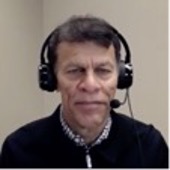
Hassan Yussuff
-
Hassan emigrated from Guyana to Canada, where he worked in an auto parts factory, and experienced Canadian racism firsthand as a young immigrant worker of colour. He was elected plant chairman and later became Director of the Canadian Auto Workers Human Rights Department, then President of the Canadian Labour Congress. He was a member of the SACTU Solidarity Committee and promoted Canadian union support of SACTU in many union fora. Hassan was named to the Canadian Senate in 2021.
Doug Miller 00:00
So I'll ask you once more to repeat that you understand that we are doing this for public access. And you will send me a signed form….
Hassan Yussuff 00:07
… fully aware that this is for public, of course distribution, and I will send you the consent form. So it will correspond with that for the interviews.
Doug Miller 00:16
Fortunately, my editing skills will allow me to cut this bit and put it back at the beginning where it belongs.
Hassan Yussuff 00:22
Alright. Quite often the short ‘riffs’ [comments] and people don't really understand. I mean, I think that what Canada has benefited from in terms of the richness of the anti apartheid struggle, and the subsequent ending of apartheid came through working-people sacrifice. It wasn't that our government led this struggle; it was working people who made the decision; they were going to do the heroic thing, you know, boycott, you know, all of the things that led to get the world to recognize this was an evil regime; and that we had to do something; and we weren't going to, of course, be silent.
This is one struggle, but there are so many other struggles in which workers in this country played such a rich and important role in shaping, you know, the debate that subsequently led to the kind of changes that, you know, we did subsequently see happen.
And I think you know what you're doing here, and thank Jane and Brenda, and Ken, and all the comrades for their contribution. It is important for people to really appreciate, again, that, you know, working people can make a difference in this very important battle around the world, and especially in
a context for those of us who are internationalist. We always recognize that our success lies with the success of workers in other parts of the world. It's not simply what we do here, and how comfortable life we can build for ourselves, but how we fight for others to ensure they can achieve the same thing.
Doug Miller 01:52
So that's great, and what a history you've had yourself. You are emblematic of a lot of that labor movement that you talk about. You came here as a very young person. Could you just give us a little bit of background of, you know, where you came from, how you got here, what you ended up doing, and then eventually, how you got involved in anti-apartheid, anti-racist, and for that matter the SACTU Solidarity Committee?
Hassan Yussuff 02:18
I arrived in Canada, when I was 16 years of age. A large part of that was my parents made the incredible decision for me to go to Canada. I had an older brother that was living here at the time, and they thought, you know, maybe it's a way for me to have a future. And my brother said, you know, Canada's a good place, and I should come. Of course, what my parents didn't tell me is that if you're 16 years old, you're gonna have no friends. One, you're not gonna have your family and, two, you're gonna go to another country, “we're gonna have to figure out a lot of stuff. And I hope your good sense and good judgement will guide you”.
Anyway, long and short, I arrived in Canada, in the middle of winter, towards the end – it was March, and I didn't really know anybody here. The first six months, actually, I was of the view that why would my parents do something so horrible? And after kind of just struggling with a lot of things for six months, I realized, well, no, this is home, I gotta get used to it. And I needed to figure out what I was going to do with my life. I registered, I went to Humber College for a while. And then after finishing that, I decided, well, if I need to get a job, I need to figure out how to have some real skills, so I stayed in Humber College for another year or something and became a welder. And then soon as I finished it, I realized I didn't really like welding. Except I thought it could get me employment, and I could make good money. And anyway, I did welding for a short time.
And, of course, my decision that I didn't like it, this was true. I thought, okay, this is not very good. It's a lot of smoke and blah, blah, blah, and it's not good for your health. So I left that workplace and
ended up going to work at a trailer factory for a while. I wasn't making much money, like $4 an hour at the time. And at first, I wasn't too excited about the fact it wasn't paid a lot.
But after I was there for a while, I decided I was going to ask the supervisor for a raise. I was quite aware of my own consciousness. And the supervisor, a very decent guy, said,” Okay, I'll go talk to management.” There was no union in this workplace. And anyway, he came back several weeks later, he said, “Hey, Hassan, you're gonna get a raise.” I was totally excited to hear what this good news was. He said, “You're gonna get 35 cents an hour increase in your pay.” And I looked at him. I was just disgusted. And he was looking at me and he said, “What's the matter?” I said, “Don't even put it on my paycheck.” I was still mad. And he said, “Why are you so upset this way? Hang on, what did you have in mind?” I said, “I thought I was gonna get $1 or something like that, not 35 cents an hour.” So, anyway, I told him to listen, to go back to the front office and tell them not to put on my paycheck. And he was just like, looking at me shaking his head.
I bought a newspaper the next day and started to look through the job advertisement section. And I saw a job that was advertised for exactly the same thing I was doing, because I'm reading it. And I said, “That's what I do right now.” Except that paid $7.35. And then in the small print, it said you had to join a union and it had benefits, back then it was OHIP, whatever. So that same day, I told the supervisor that I was gonna get on the bus and go to this workplace to make an application. So I said, “Listen, I have to leave at lunchtime.” And he says, “When are you going to be back as well?” I said, “I don't know. I'll tell you when I'm back. You'll find out, maybe tomorrow, maybe not.” So I went there and made an application and lo and behold, the management said, “Okay, yeah, we're gonna hire you. When can you start?” I said, “right now.” He said, “Don't you have to give notice to your employer? I said, “Not really.” I said, “Okay, what about next week? “and the guy said, “Fine.” I started in that workplace. My salary went from $4 to $7.35 an hour.
I knew it was a union because people started to come up to me and said, “Hey, Kid, you need to keep your nose clean until you finish your probation.” And I didn't really know what that meant, except I shouldn't get myself in trouble. And a lot of older men, most the age of my parents, actually my father, would come up and kind of counsel me and tell me different things in my break and lunch hour. And they were fascinating. Most of these men had fought during the Second World War. And I used to sit with them at lunchtime, or at least listen to their stories. They were talking about the war and the horror of it. And I was telling myself, as a kid, saying, “Hassan, whatever you do, never go to war. It's
horrible. There's no glamour in war. It's just horror.” And I was just fascinated by them and by what I didn't know.
Then I didn't know anything about unions. My parents didn't belong to unions. My father essentially was a member of the Communist Party in Guyana. I knew about that, but he never talked to me about politics. But the key was that there was a sense of working class consciousness in the family. But there was no debate about politics at the dinner table. It was after, you know, the horrible period in Guyana, in 1964. And my father just kind of didn't want to talk about that, because he lost two brothers during that period who were killed, and he was bitter about it. But was bitter for the reason of how politics could consume families and destroy them at the same time. So I was very much not aware of unions, except I knew there was a union and I was getting $7.35 Only because it was union.
Anyway, shortly after I finished my probation, this guy came to me and said, “We’re having a union meeting,” and told me when it was, one o'clock on Sunday, at Runnymede and St Clair. I didn't go to the meeting, I just said, “Thank you very much.” A month later, he came to me again and said, “Hey, Hassan, we're having a union meeting.” I said, “Sunday at one o'clock, the same place?” He said, “Yes.” I looked at him kind of strangely, he looked at me and said, “Why wouldn't you come?” I said, “Well, I shouldn't tell you this, but it's a bit embarrassing. I get paid Friday and I get drunk on Friday night, I get drunk on Saturday, and I get sober Sunday to come back to work. I’m in no condition to come to a meeting on Sunday.” And he looked at me and he said, “Really.” And he didn't say a word. He didn't judge me. He didn't criticize me. He was just totally aboveboard.
So the third time, a month later, he came again and said, “Hey, Haasan, we're having a meeting.” I said, “I know, one o'clock at Runnymede and St Clair.” He said, “You should think about coming.” I said, “My habits haven't changed much.” And he left. To my surprise, actually, that weekend, I decided to stay sober. And I went to the union meeting, I sat in the back of the hall. And I think. “What the hell could these people be talking about on a Sunday afternoon?” And I was just fascinated by the debate about health and safety, about issues with the collective agreement, and how we could be stronger if we had solidarity and stood up to management. I was just hooked. I was just like, oh my god, this is right up my alley. I could get into this and what have you.
And that was my involvement from that day. I never looked back. I got involved in the union. To a large extent. I was very young. By then I was turning 19. And my friend who encouraged me to come to the meeting, a guy named Bill Merlyn [unsure of spelling], I know, I still remember today. And he
came up to me one day, and he said, “I'm quitting. I have a better job than I'm going to and I wanted to tell you about it.” And I said, “No, that's too bad.” He said, “But no, that's not the reason I'm here. I'm here to tell you that you should think of running for my job.” And I said, “Why would I run for your job?”
“Well”, he said, “you know those guys you hang around with at lunchtime would support you.” And I looked at him and I said, “Bill, I'm a bit of a hothead. The supervisor comes up, he says something I don't like I just say fuck off. That's the end of it”. And he says, “Well, the older guys kind of like that. Because they figure, you know, that's the kind of a union rep they want. Somebody can stand up to the manager. I said to them that this guy – you [Hassan] – is not very responsible.” He said, “Well, you think about it, you should run from my job. And I said, “Well, who the hell's gonna vote for me?”He said, “Well, those same guys, you hang around at lunchtime.” I said, “Why would they vote for me?” “Well,” he said, “this is not very complimentary, but if somebody’s gonna get fired for telling the supervisor off muscle, they figure it might as well be you.”
I said, “Really.”
He said, “Take it for what it is. But here's your decision, make up your mind. But if you run, you will get elected.” I did run; and I did get elected; and I became the chairperson of the plant.
I've never been so scared in my life because all of a sudden, I was responsible for these men, and had to deal with their problems at work. And most of them are immigrants who don't speak English very well. They were very competent, the tradespeople. But they couldn't pass the exam to get their certification. And what I was struck with is that if you were certified, you got $3 an hour more than the person who was not certified.
So I went to see the manager one day after I became the plant chairperson and said, “Why can't we find a way to get these guys certified? And the manager said, “Well, because there was a law that said, unless you're certified, you can’t have this certificate. You're not a tradesman. So I have nothing to do with it. It's to do with the Ministry of Colleges and Universities. You go talk to them and figure it out. And I can't do anything about it.”
So one day, I asked the Local union if I could get some time off to go to the Ministry of Colleges and Universities, so I went down there. Talk to the guy, I remember his name today. This is , like 40 years later. His name was Ted Jeffries. I met him. I told him the story. And he looked at me and he said,
“Oh, you got a problem. We used to have a system to help those men, but we don't have it anymore. It's called grandfathering, “he says. “Well, why does this system not exist?” I asked. He says, “Well, it's a bit of history of, you know, we're trying to make the system more professional.” And I said, “Well, what can I do to get these men certified?” He says, “Well, not too much right now.” And I said, “You're not going to help me?” He said, “No, no, I'm not saying that. I want to help you, but I’m saying I can't do anything to get them certified. Because that system doesn't exist.”
And I said, “Well, okay,” I said, “I'll tell you what, I'm going to go back to my workplace. And I'm going to gather those men, and we're going to come down here and take it to your friggin office. Do you think that's going to help get them certified?” He said, “You're not going to do that, are you?” I said, “Yes. Well, I don't have any other choice.” And he said, “Well, let me think about it.”
So finally, he called me and said, “Listen, if you can get your management to set up a back then it was a trailer, we will send an inspector and they will have to do things to this vehicle and ensure that these guys could diagnose the problem and fix the problem. And they will give them a practical test.” So to my surprise, within months, they spoke to the management; and they had this whole thing set up; and one after another a couple of weeks, each one of these guys did their practical tests, and they became certified.
To me, it was truly an incredible moment, because, one, these were working men and, two, they deserve to be paid better, and more importantly, they were as qualified as anybody else. I worked there for about, I think, three years. I became certified as a mechanic because I had to go through the same process and write my exam.
The minute I became certified, I left that workplace and moved on subsequently to work in General Motors as a mechanic. I started a new apprenticeship program And that's where I went to the paid education leave program. I was able to attend the union’s [UAW – later CAW] program in Port Elgin.
Doug Miller 15:16
Also there you were already UAW?
Hassan Yussuff 15:19
Yeah, I was UAW when I became a member. And subsequently, by the time I arrived at General Motors, we were in the process of changing unions. Okay, we became the CAW. And when I went to the Port Elgin course, it was a four- week- long program. And it was a truly amazing moment for me, because there were about 100 or so activists who were taking this four-week program, and we were exposed to a lot of different conversations with people coming up and making presentations.
And I remember, I think, Ken [Luckhardt] and two comrades came up to make a presentation to the paid education leave program about apartheid, and about, you know, what was going on in South Africa. How the SACTU Solidarity Committee can get involved, you know, in playing a role, and , how people could build support for this in their local union, how they can get involved in SACTU but also how a local union can get involved in this work. And I was just fascinated.
I was very much a human rights activist in the movement, very much conscious of racism, because when I came to Canada, racism was still very prevalent in Toronto. If you ride the subway, people just call you names. If you look like a brown-skinned person, they didn't care where it came from, you know, you're one of them. And I was very much aware and got very involved in the anti-racism work in Toronto to a large extent and, I think, after their presentation, I was very fascinated about how I should get involved in the SACTU Solidarity Committee. And, I think, immediately I kind of figured out how I could become involved subsequently.
Of course, my Local was supportive. They were making a monthly donation to the SACTU Solidarity Committee work, but, equally, there were newsletters and stuff. We were doing the Local [education] and what have you. And that was my basically, my orientation into SACTU work was through the paid education leave program and Port Elgin.
Doug Miller 17:23
Wow, that's amazing. And what a quick trajectory, three years at one plant, and then your GM Oshawa,
Hassan Yussuff 17:30
Which obviously there was in Toronto, I apologize. There was a [GM] truck center, I was working at that place in Toronto.
Doug Miller 17:36
Oh, you know, in Toronto. Okay. Okay. Still an amazing trajectory for a young person, just in your early 20s.
Hassan Yussuff 17:50
Well, I think, you know, again, like many of us, you find your niche, and, you know, being in Canada at a young age without family and some kind of grounding. What the union, I think, afforded me was kind of like an extended family and some grounding, as I was trying to figure out what my own politics was, I didn't really know what my politics was but , I think, I was trying to learn and grow. At the same time, somehow, of course, I was gravitating to a large extent to my working-class family background without being conscious of what was happening to me at the same time. But I think what the union family did was provide an extension for that.
At the same time, I was also learning many things that I didn't have, the skills as to, you know, I didn't have the privilege of coming out of a union family. I didn't have the privilege of growing up in Canada, and I'm trying to figure out where do I fit into this society. Where do I fit into the union movement – and the union movement was rough and tough. I mean, again, there weren't a lot of people of colour in leadership positions. And my background, to a large extent, and I don't know where I got this from, maybe I got it through my genes or my own determination. I didn't take a lot of shit from anybody. I was very much conscious of, if I did like something I just kind of told people.
And I mean, I think I haven't changed much in this regard. Even though I, in this position here in the (Canadian Labour) Congress, you know, if I don't like something, I just tell people, you know, they can do whatever they want. I think I got the position as a president because I didn't accept it as the judgement of the movement when they said, you know, they had a guy who was going to remain president. I said, “Well, that's good, but we'll have a fight over it and we'll figure it out, you know, and ultimately, the delegates will make that decision.” So I was very much a bit of a rebel in that sense. I didn't accept anything, and I think when I got involved in SACTU, it was sort of like, okay, this fits into my own belief about sense of equality and social justice, but also it kind of fits into my orientation as an internationalist.
I read lots about what was going wrong in the world. But also at the same time what was going on in Central and South America and the violence coups in Latin America. All of this was prevalent in that period. I was also very active in the Latin American work: El Salvador, which was a bloody conflict, and Nicaragua. Another bloody conflict, Guatemala, of course, coups in Argentina, and Chile, all of this was in that period. As a young person, I was sucking it up, I was reading lots of Marxist literature. And then I got involved with a partner at the time, who was very much in university studying sociology and a lot of reading, which kind of helped build my understanding. But the SACTU work became a central part of my activity, in a sense that I figured I fit into this.
And as I got into General Motors, my union rep, who I didn't know at the time [when I was first hired], was my guiding path, (Pat) Clancy, who very much encouraged me a lot about what I was doing. He recognized me much earlier, in the work I was doing at GM. He heard about me, and I gave him an extremely hard time. At one time, I think it was 1982, he came to ratify our collective agreement which the union had negotiated. It was full of concessions. We’d given up some things that were in the collective agreement. It was a terrible time for the auto industry. And the leadership felt, you know, this was the best way forward. And Pat was trying to do his best to convince us we should ratify the collective agreement, even though there were concessions.
And I kept just pestering the (bargaining) committee, “Can they tell me what happened to our paid personal days off that we were getting at the time?” And, Pat, you know, he sat there, and he wouldn't get involved in the debate. Finally, I said, “Listen, if you can tell me what happened, I'd be glad to vote for this collective agreement. I just need you to tell me we gave concessions to General Motors. Of course, the line from the national office was “No, we didn't give any concession.”
Finally, Pat said, “Listen, you know exactly what happened. We gave up the PPH days. So we got a collective agreement, you know, as part of the sacrifice we're making to save this industry.” And I said, “I can accept that, you know, it's honest, but don't lie to us. We're not stupid as workers.” Anyway, immediately after that Pat and I became friends because I've made his life miserable. And he's like, “Who the hell is this kid, you know, just wouldn't shut up?” And he used to call me. We used to go out quite often, you know, have drinks. And when I told him I was, you know, again, I was in General Motors. And he was very much involved in the SACTU work.
And at the time, as I think many others have said, the labour movement, the CLC (Canadian Labour Congress), was not onside with the SACTU work. As a matter of fact, the CLC did everything to undermine the SACTU Solidarity Committees work. And for me, I didn't care, I could care less about the CLC.
I mean, I was more interested in what we were doing and the support we were providing for workers. But, at the same time, recognizing until the system came to an end, we had a lot of work to do. And, I think, you know, the people who really gave a lot of sacrifice were Ken (Traynor), Brenda, Ken Luckhardt, and a whole lot of others who were doing this full time with very little compensation for any of it. But they were doing that, you know, the commitment to saying we've got a role to play here. And, you know, I saw incredible consciousness of workers about how we in Canada could do our bit to support this work. And there would be the debate that we would have at the Ontario Federation of Labour and that we would have in our own union back then, the CAW.
And I have to give it to Bob (White), you know. Bob was truly an enlightened leader who recognized this was really important work. And he was, for the most part, given a lot of political space to support that work but, equally, to encourage us to keep doing what we were doing. He was always there to kind of, you know, to be part of, I think, to a large extent to be part of the work that all of us were doing. I felt that was a small part of what we did back then, except that I didn't know it was going to shape to a large extent my own orientation. Because in ‘91, Bob, I remember calling me up or (it)wasn't him actually, his assistant called me up and she said, “Bob wants you to drive into Oshawa. I was on staff as an organizer working in the (CAW) Organizing Department”.
And that morning, when I got the call, I was really pissed about this whole idea that this guy thinks I'm a chauffeur. I'm gonna drive him to Oshawa, and I was, like, so fucking mad. I was just mad, absolutely mad about this. But I was fuming about it like what? Who does he think he is? I'm going to drive into Oshawa. So finally, you know, I called her back and I said, like, “Why do I have to drive him? Can you not find somebody else to do this shit?” And she said, “You stupid ass he doesn't want you to drive him to Oshawa. He wants to talk to you, you idiot.” Oh, okay, I missed that. Anyway, as we were driving to Oshawa, he said, they were in bargaining. And they were staying down in the Westbury Hotel.
And he said Hassan, the CLC is sending a delegation to South Africa. Bob said, “And I really want you to be on our delegation to represent the organisation.” And I said,” Thank you, but no, thanks.” And he says, “What do you mean, no, thanks.” I said, “I can't go to South Africa. The country is still an apartheid regime, how could I justify that?” And he says, “Well, we have to make a decision.
There's a CLC delegation going, and you can come back and tell our union, not the CLC, what you think is the best path for our union. The CAW very much wants you to go on this delegation. And I said, “I don't think so.” Anyway, we went to the opening then at Local 222’s new union hall, and he did his thing, made a speech, and whatever. And then on the way back, he said,” Okay, what's your decision?” I said, “I told you, I'm going to think about it.” He said,” Yeah, well, all this time you had, have you not thought about it?” I said, “Yeah, but I haven't changed my mind.” “So,” Bob said, “let me tell you straight up, I'm not asking anymore, you're going to South Africa, so get over it. And stop thinking about it. You're going to South Africa.” And I said, you know, “I don't think this is a good idea.” He said, “I don't care what you think anymore, you're going to South Africa, because that's the decision we've made as a union. And, you know, you'll have your say,” but he said “but you're not just going there for the CLC delegation. There are several things we want you to do. When you go there, you're gonna have to meet with Moses Mayekiso who was just released from jail.
The International Metalworkers Federation [IMF] had a campaign – he was sentenced to be hanged, as a matter of fact – and the metal workers had a campaign to get his sentence commuted. And they did succeed, he was just released from jail. Bob said, “You're going to have to meet with him and convince him you need him to come to Canada to speak at our convention, which is going to happen in Halifax.” And I said, “Okay.” And he said, “In addition to that, there is going to be a big meeting in the Eastern Cape, so that you're gonna have to leave the CLC delegation and get on a plane and go there to talk to these shop stewards. So that's part of your responsibility when you go on this trip.” And I said, “Okay.”
There were a number of other things he told me I had to do, and I said, “How am I going to do all this stuff within an apartheid country? I'm brown-skin, and you know, don't you think I'm gonna get myself in trouble?” He said, “Yeah, you might, but we'll figure it out. I don't care. But you got to go and do these things.”
So I told the CLC delegation, when I got there, I have to leave them at certain points. And they were pissed at me, like, where are you going? I said, “It’s not your business, I got stuff to do. And when we get to this location, I'm gonna leave for a couple of days. And I'll come back.” I went off and did my thing. I met with Moses convincing him to come to Canada. And, you know, he said, absolutely, he was going to come and speak at the convention. I went on to Eastern Cape and each place that I went on behalf of the union, it opened my eyes about being in South Africa, first of all, what workers are going through, the passion, the determination, but also the consciousness, they knew who SACTU was, they were very aware of the work that was going on internationally in solidarity of their struggles, and more importantly, that we are going to persevere in regard to your effort, despite Mandela being released from prison until apartheid came to an end. You know, we need to stick with the effort to maintain sanctions and to support these workers.
It was truly, for me, monumental, but also, again, one of the greatest opportunities in one's life to get to do these things on behalf of the union. But it reinforced again, despite what the CLC was saying; that is, that SACTU didn't have any base in the country among workers and the trade union movement. That was completely the opposite of what, you know, I learned as I was there, which I knew (the CLC position) was a lie. Anyway, I did finish my trip.
The CLC delegation was very interesting. The last place we went to was in Cape Town. This was the last part of the delegation and so the trip ended. And we were talking about the report and what have you. And it was unanimous that we were going to recommend that at least Canada, and the labour movement, maintain the sanctions until apartheid came to an end. And so that morning, as we were ready to go, we had some free time. So we thought we're gonna go to a market in Cape Town. So we got into a cab to go to this market.
And the driver who didn't know us started asking a lot of questions. “What are you guys doing here?”. “We're, on a fact finding mission, what have you.” And he said, “Oh,” he said, “you know, I'm a coloured person.” And I'm looking at him from the back seat. He looks very black to me. I said, “You are?” He said, “Yeah, you know, I live in a different area.” And he started talking, you know, by saying those black people and those communists and whatever, I'm sitting there scratching my head, and, you know, this guy is going on. I said, “Well,” I finally interrupted and said, “excuse me. I'm a big ANC (African National Congress) supporter. And I don't want to be rude,” I said, “but from where I'm sitting, wherever you're telling me about your being a colored person, you look fucking pretty black from back here. And I would prefer not to listen to your conversation and you just get us to the location.” So we did.
I was there actually with Ken Newman from the Steelworkers, he was representing the Steelworkers and were in the cab together. And he says, “Oh, my God, would you just shut up? We're gonna get killed here today.” So we got to this market. And what we discovered was that the market was closed because it was raining. And then we had to come back, of course. What I didn't know was that the guy was the only cab driver working that Sunday.
So he called, and he came to pick us up. I didn't say a single word as we got back to the hotel. So then I said to Ken we should go for a drink. And I said, “My God, could you imagine that person believing he's different than his other comrades are struggling to end apartheid? He thinks he's different.
Because the regime, again, told him is coloured, you know, he'll have a different set of rights versus black people. And he actually believed it. And he actually is peddling the propaganda.”
Yeah, anyway, long and short, I came back, and we had a staff meeting at Port Elgin. And Bob asked me to talk about the trip. And I was very emotional about it, to be honest, coming back from there,
recognizing, of course, all of the years of the anti- apartheid work. We had moved this work along, we were that close now, you know, to this battle. But now we are this close to the end.
Doug Miller
Now when is this?
Hassan Yussuff
I think this is around, close to “91. I remember whenever it was that the convention was in Halifax. And I thought, “Oh, my God, this thing is so close.” But I never believed, even though I went to South Africa, I didn't think that I would live long enough to see the regime come to an end. But, anyway, our union position was strong, Bob was clear that that's the position of the union. And he will, of course, do his best at the CLC level to convince them they need to support it. That little did I know. Again, I was asked to go back to South Africa in 1994, for the first democratic election of the country, and it was truly a monumental moment.
But you know, in reflecting on all of this, it was the perseverance and sheer determination of the SACTU Solidarity Committee to stay with this work. It also reveals, of course, all the contradictions you can find in the labour movement that the CLC spent decades undermining the solidarity work that SACTU was doing, trying to deny it had any legitimacy. We were just a bunch of left-wing, you know, activists trying to delegitimize the role of the CLC in this role. And of course, history, of course, proved us right. but equally, of course, what I also learned is that COSATU (Congress of South African Trade Unions), which of course is what became the above ground organisation to take up the cause of working people in South Africa, didn't see any contradictions with the SACTU work and COSATU’s work. I mean, I got to know Jay Naidoo (COSATU General Secretary) and I met with him when I went in ‘91. He told me point blank, he said, “There is no contradiction here. I'm not here to counsel you, to tell you what you guys are doing, what we're doing is not separate but part of the same struggle. And it was an amazing conversation, you know, having that with him in South Africa, but equally his determination and support. He said, you know, “Obviously this is one and the same movement, they're not separate. But equally, you guys need to continue your efforts.
And by the way, Jay and I became close friends. He subsequently married a Canadian, he became a minister in Mandela's government and we maintained that friendship. Every time he comes to Canada, he calls me and we connect, and if he's in Ottawa, we have a drink or visit Montreal. Or he's coming to Toronto. Up to today, I still stay in touch with him, and we became very close friends. When he wrote his book while he was in Canada, I said, “Well, come to the CLC, which is having an executive meeting.” I invited him to come. And he spoke about his book and again, got a chance to say “Hi” to some friends and equally remind us again of the work and the effort we put in to help them in their effort in the apartheid regime in South Africa.
But again, it revealed to a large extent how international work can be so conflicted again, and you know, here I am, as the president of CLC, representing all the contradictions. The CLC was against the work that we were doing at the time, and, having to go in ‘94, or [later] leading the CLC, you know, then as part of the CLC delegation in' 94. And then, subsequent to that I led many other delegations to South Africa on behalf of the Congress as an officer for the Congress. So again, I think it's humbling to have been part of this work, the relationship you've built among friends, but equally, I think more than that, in addition to you know, what we learn in our efforts as activists supporting our comrades in South Africa.
It also helped us, I think, develop our own politics, and grounding about the work we were doing for working people in other parts of the world. Of course, what we were doing to assist and support the efforts of South Africans who are in the forefront of this battle, I think reinforced, to a large extent, our own class struggle: how we can build a better world for working people here, but, equally, how we can build a better world for workers in South Africa.
Doug Miller 37:20
Do you? Do you think that all our efforts, unions and others, had an impact on the Canadian government and its reluctance to take action on South Africa?
37:29
I think it gave them the courage and determination to fight when Margaret Thatcher and Ronald Reagan were not on side. I think Mulroney knew that we had reason, a reason for the consciousness among Canadians, not just on workers consciousness, but Canadian consciousness: that there was a morally right thing for the Canadian government to do to push those two right-wing neocons to say, “Hey, you got to get on board to support isolating this regime, so we can bring an end to apartheid.” But the Canadian government didn't arrive at that position through their own effort. They arrived at that position because Canadians as a whole – and workers in that process – of raising the consciousness of Canadians to say this is morally unacceptable, that the Canadian government had a role to play. And that role is to be on side with Canadians, which was recognizing we had to end apartheid in South Africa.
Doug Miller 38:28
And the local unions were a very big part of that. It seems like the education there led to even local union actions that represented the thrust of that education.
Hassan Yussuff 38:39
Well, the education came to a large extent with the (SACTU) Solidarity Committee, the presentation to local unions about why they needed to support that work. But, equally, if they could find activists, they get assigned to be part of the solidarity committee, the SACTU Solidarity Committee. We know all of us have a role to play. Like we would go back to our local union and make motions to say we need to pass a motion to make a donation on a monthly basis to the SACTU Solidarity Committees to support that work, to make sure they have the resources to continue that work, but, equally, to send back to the folks who are in the struggle, so they can have resources to carry on their fight in South Africa and in other parts of the world.
Doug Miller 39:20
And some of the old comrades are no longer with us. You mentioned both Pat Clancy and Bob White, and they were key players in this work.
Hassan Yussuff 39:34
I think of Bob as the president of the union, but also when he was a (UAW)Canadian director, he was very much on side from the get go. And I think he felt a natural affinity to the work that we were doing and accepted that and his role in supporting the network. I remember, very consciously, there was a huge debate at the OFL (Ontario Federation of Labour) convention in Toronto [1986] when Bob had to, once and for all, tell the CLC enough is enough, including John Harker and all of those individuals who were trying to isolate the work, who were telling us we had no basis for continuing our efforts as a SACTU Solidarity Committee.
He took a stand at the OFL convention and made it very clear, this is unacceptable. Yeah, despite the fact that SACTU and COSATU were emerging as an above ground movement, you do not have the right to tell workers who are doing the SACTU Solidarity Committee work that they don't have a role to play here anymore. And I think that was a really defining moment in our effort, but, equally, was critical at that point, because this is where, of course, changes were starting to happen incrementally. Even Mandela was going to be released from prison. Countries around the world were figuring out how they can get on board to support isolating South Africa. And of course, what these (CLC) guys were doing was waging a war with us rather than waging a war against a regime in South Africa. And I think Bob’s position at that convention was very, first of all, he was very conscious as to what he was seeing at that convention, equally giving support to the activists who have been doing that work to make sure they know they were not isolated, but, more equally, that the CLC was not going to play stupid games anymore in trying to somehow tell us we didn't have legitimacy in the work we were doing.
Doug Miller 41:22
And Pat Clancy, a fascinating character, very grassroots, and yet it's too bad there's nobody around to tell those stories for them. I wish I had those chaps around the interview? Do you want to add something, Jane [Armstrong]? Brenda [Wall]? Yes.
Brenda Wall 41:43
Yeah, I just wanted to ask you about the workers of colour leaders back at that time, especially in the ‘80s. And you were one of the very few local leaders who was a worker of colour, who were active in the sector work. I mean, obviously, we had OB [ OBrian] Hyman who sadly has passed away too.
And, you know, it was OB who was very active in getting the apartheid products out of the workplace, at the Don, Jail, and so on. And certainly, there were many black workers in the health care unions and hotels and restaurants and so on, but very few workers of colour who are leaders and who were part of that anti-apartheid struggle. Can you talk a bit about that? I mean, I know it was different times, but maybe what – I'd love to hear from you.
Hassan Yussuff 42:34
Yeah, for me at the time, again, the SACTU work fits very much into my own, I think, commitment about fighting racism in Canada. And at the same time, we were having all these battles with, you know, in the labour movement about how do we fight, you know, racism, but equally, how do we take on the efforts around apartheid, with that as part of our commitment in that regard, and the two things fit very nicely, with my own belief, but, equally, my consciousness in that and recognizing that
this was no different. In my day to day battles about equality in the labour movement, there was huge contradiction in the labour movement about, you know, there was a really a sense among lots of white comrades, you know, the fight in South Africa is one we should support.
But yet, in my own union, when we became a Canadian union in 1985, I was livid, you know, I saw it as an opening for the union to take on the efforts around racism. And I said here it is, we're doing all this great work on South Africa and apartheid, but yet on racism in our own union. I remember it was at an OFL convention, equally again, that we were having a raging debate – because they had their anti-racism campaign. And they had fired an individual and some of us felt incensed.. So we spent six months plotting how we're going to get back at the leadership in the OFL at that convention, and we had this resolution to really, you know, take them to task. We stack the convention floor and the microphones to make sure you're going to win the battle, and in the minute we won that debate and that resolution. I had this empty feeling in my stomach and I said t”his is great. You know here I am, I am ranting and raving about the OFL, how horrible they are and Cliff Pilkey at the time. And what about my own union?”. It was like I felt empty.
And I remember dragging Bob Nickerson that evening, who came – he was not at convention for the day when this resolution was on the floor. And it passed. But he came, he saw me in the hallways at the Sheraton Hotel. He said, “Hey, Kid, I want to talk to you. Let's go for a beer in a bar.” He said “I heard he was rude to somebody today”. I said “I was rude to who? And there was a guy who came to the microphone, tried to tell me he was going to take my spot because he was a Vice-President of the OFL and I told him to go ‘f….’ off”. And Bob didn't think that was a good thing. And I said, “Well, if you had done that, I would have totally done the same thing.” And I said, “You know, but , I got a point you need to hear,” I said, “I was giving the OFL shit today about racism, and what it can do and what it should do. But what about our own union? We're in our Canadian union, we don't have any excuse. The Americans don't have to give us permission. This is our own responsibility.”
And Bob, to his credit, the next day convened a meeting with some of us actually, outside the OFL in the hallway in the convention. And we started to talk about what we could do. I think George Ehring was then our communications director, and he was responsible for this file called the Civil Rights file. I don't know what he's talking about civil rights, I know about anti-racism. Anyway, that led to Nick DeCarlo, a number of us, starting to talk about how we are going to push an agenda in our new union CAW around the whole question of racism and human rights. That work evolves, subsequently, over many years to where we ended up starting to do some very incredible good work and organisation that not only were dealing with apartheid, but we're also dealing with racism within our own union.
So I mean, yeah, as a person of colour. I mean, certainly, I was very conscious about who I am, what I experienced, but, equally, at that time, it really was a lack of leadership. And, you know, Clancy, I have to say, Pat, was one of those amazing human beings. He was an incredible mentor for me, but, equally, somebody who allowed me to discover my own politics is: What is your motivation? What drives you? You know, what gets you out of bed in the morning? Where's your consciousness about all these things? And, you know, he would always sit with me, you know, sometimes and talk and give me encouragement and support. And I don't think if it had not been for Pat, first of all, I'd never have gone working for the union and had it not been for Pat, I don't think my involvement in the
anti-apartheid work – because he was always there, kind of willing to listen.
And when he became my rep, you know, he was always saying, “You know, Kid, a marathon is a very long distance.” It's not like a sprint, you gotta remind yourself that, you know, you need to pace yourself. He said, “You're in a big rush to get to someplace. And maybe you will, but you have to remind yourself that it's going to take some time.”
And Pat, you know, became a rep for us there. When I negotiated my first collective agreement, General Motors, 1987, he was a strong advocate for me to come on staff, and he taught me a lot as a white brother, his leadership was incredible. But I think his resourcefulness to get the union engaged, the role he played with leadership of Bob (White) and others at a time to work, get them to recognize the work we were doing around the SACTU Solidarity Committee, the work that needed to be grounded in the local union, the work that needed to happen at the (CAW Canadian) Council meeting, the work that needed to transpire into the federation of labour and the CLC at the same time. And we took all of that on, by the way, against the greater, you know, grain of the labour movement, because we were always rubbing people the wrong way. But we saw it as a badge of honour that we had to take on this fight. That's how we changed the movement, and that's how we changed the orientation among their own members. But the point that Brenda is making, there weren't very many workers of colour in the leadership in our movement. And I was fortunate, I learned lots and I'm still learning today as a leader. The value of people with experience who were grounded in class struggle and recognize that, you know, we can't let ourselves get too far away from that orientation otherwise we miss why we're here doing this work.
Jane Armstrong 49:12
I'm just a quick add in. Hassan really led the charge to establish a human rights director within the CAW. And he went on to become the staff, the director, but he also did enormous work following on from this in terms of building the confidence of black workers and other workers of colour throughout coast to coast in the union to take on the challenge of running for positions in the local union, whether it was shop steward or plant chairperson and build a workers of colour caucus within the union that really pushed forward all across the country on issues of racism in their local plants and in the union itself.
Hassan Yussuff 50:16
Oh the, you know, that work that Jane talked about was, it was hard work, it was difficult work. Because creating space for people, it's never an easy thing, as you know, nobody gives up privilege without a fight. And if you want to change, you know, the consciousness of workers about their right to belong and to be in leadership, you've got to take the time to show them the pathway. And we were fortunate that the union gave us some space and then resources and what have you.
But creating programs to help people, I remember when the union, right after ‘91 convention, said you could, you know, you would have an opportunity to create some programs in Port Elgin to bring people from across the country to develop their skills. And, you know, figure out how we could change the culture of the union, and our members. So, if you had a chance to develop a program, what kind of a program would you develop and adopt? You know, I'm gonna go back to my orientation, my grounding, you got to build programs that build their own class consciousness as to how they can see themselves as leaders, not just about their individual success, but how they can see themselves as workers of colour representing the interests of other workers of colour.
And we used to teach him [them?], you know, to do costing, as part of that two-week program, and people say, “Why do you spend your time teaching people costing?” Well, if you don't know costing, how could you go to the bargaining table to take on your boss in collective bargaining? And I teach them about, you know, the fact that, you know, that men, our privilege and our biases are ingrained. And how do we change, you know, if, one, to be a person of colour to talk about your discrimination, but if you're a man that, you know, is paternalistic, and sexist, and homophobic, and people are saying, “You're never gonna get workers of colour to accept that they have to change their behaviour.” I used to go through with a lot of people, like, they said, “You know, we agree with you on the racism stuff, don't talk to me about sexual orientation. Don't talk to me about how I treat women.” I said, “Well, hey, you're not going to graduate from this program unless you unlearn some of that shit you have learned over the years.”
And it was fascinating, because it was two weeks, and the union gave me a lot of freedom to run the program, but also to select the people that come to do that program. But over time, people slowly got to develop. But part of that also, too, was again, coming back to the bigger question, you know, how do you build equality in the labour movement? How do you change culture? And how do you give people an opportunity to aspire to things that sometimes they don't see themselves?
And I didn't see myself as a leader. Until a guy named Bill Merlin asked me to go to a union meeting one day, I showed up and recognized, oh, this is interesting, but the reality had he not asked me and persistently. Even today, when I speak to a large audience and smaller audience, I said, “You know, I tell that story and what is the moral of that story, that Bill never judges me. He took me as to who I was, a young kid who was getting paid on Friday and getting drunk. And he felt if I just get him to the meeting, he'll figure it out for himself. And I said, “There's a moral in that story. Sometimes don't be so quick to judge people, you have to work with what you have. If you can convince them over time to see them themselves into the struggle, they will get there”.
But I think, you know, coming back to the anti-apartheid work, what it did for me, it gave me a ground in my own politics. I learned a lot with the work around anti-apartheid and the SACTU Solidarity Committee. I think it made me a better person, it gave me a sense of the world, and our role in that world, not to be so isolated and thinking of our self interest, you know, how do I improve my life? How do I get to do other things, and to whatever build a-middle-class life? That was not the role of SACTU Solidarity Committee as to say, “Hey, you Canadians have a role to play in trying to change the course of history, and you can support these workers or you can be totally unconscious about it.”
But I think it helped me in my own politics and developing that relationship. I think I said to you, just Sunday, as a matter of fact Styx [aka Bengumzi Sifingo, Bafu Nyanga] called me to tell me that Peter Mahlangu (former SACTU, later ANC Canada Rep) had just passed away. And we're chatting on the phone and he is retired now, and he used to be the SACTU rep in Canada, and we were having a chat and I told him that I was doing this interview. I said, “Oh my god, talk about coincidence. It'd be great were, you know, for Doug (Miller) you and set up an interview.” And he was, like, we were just reminiscing about all this stuff. And he said, “Oh my god, I remember Pat (Clancy) and I remember Bob (White) and we were talking about all of that moment because he was here and in the work we were doing. But he recognized, he said, you know, very much, “We Africans forgot about the people in many parts of the world who took this on, as part of their responsibility to us”.
And he was reminiscing about Ken and Brenda.. And he said,” You know, I'm going to talk to my government, again, that the South African government should really recognize those two individuals. And I'll leave that up to you to figure out in terms of how your government deals with that.” But he's very much aware, even today, as he's just, you know, his last stint was the ambassador for the African nations in dealing with whatever. And he said, “I'm finally retired, I'm out of the bureaucracy, I'm out of government, and I can do whatever I want.” And I said, “Well, to some degree, but it's good that, you know, we were able to chat and reminisce about this.”
But I think for me, and I say this in retrospect, but the sense of humility, my own consciousness and vision around the world about the work I do in international solidarity, I think was shaped and honed and learned by the SACTU Solidarity Community, it gave me a grounding. And today I wear it proudly on my arm, I have no hesitation, if somebody asked me, “What do you remember this SACTU Solidarity Committee” I say it with proud and say with honour, as the president of the (Canadian Labour) Congress, because I think it really taught me a lot about the need for workers to struggle against the odds, and we can win. I was there to witness their first democratic election. I was there a couple of times later, in a number of conferences I attended in South Africa and recognizing fundamentally, you know, the workers were in the forefront of that battle. But you know, we played a small but important role in supporting them in that effort.
Doug Miller 57:08
Hassan, I'm conscious as well of the hour you gave us, and, and that you're a man in demand. Any last words before we thank you for a really wonderful interview?
Hassan Yussuff 57:23
Well, let me thank you, Doug, and others for, you know, trying to put this together, I think, as history have taught us, we don't do justice to the history of the work that we do in this country in the world of working people if you don't tell it, because it remains hidden. It can be anecdotal stories, we all individually tell when reminiscing over a beer or a drink. or conversation at a dinner table somewhere.
I think Canadians as a whole need to know about the rich and encompassing role we played in the anti-apartheid fight. But, equally, the important role that a lot of working people played was a small part of this in the SACTU Solidarity Committee.
There were thousands of others across this country, who gave hours on end and contribution to the fight. And regarding to anti-apartheid, they need to be recognized. And all of this is because it's their heroic efforts and leadership that made it possible for the SACTU Solidarity Committee to continue doing this work, but, equally, for subsequently the victory that came because we were not going to concede until the apartheid regime was destroyed.
And I think the enduring message in this is that working people can and have throughout history played an incredible role in making the world a better place. And we were one tiny part of all of that. But it was an important part. I'm fortunate that I was blessed to be part of that journey. And I thank my comrades for involving me in that process. And thank you for reaching out. Because I think again, we need to learn from each other.
Doug Miller 59:01
Well, thanks so much, what a wonderful interview, and I appreciate your participation. Thanks, Jane. Thanks, Brenda, for making this possible. And I think we can be happy that things have moved where they have thanks again.
59:18
And I'd be happy to share with you if you wish for Styx (see above for aka) numbers.
Brenda Wall
Yeah,
Doug Miller 59:23
Yes, I would like that. And I was also thinking, I don't know what, what kind of collector you are. But if you have any memorabilia from the period, please take a picture or whatever. And we can include that in the archives. The wonders of new technology allow us to build something beyond books with webpages and sound items and so on. So
Hassan Yussuff 59:45
I look at home. I have some stuff in the basement somewhere.
Doug Miller 59:50
Like most of us, thanks again. Have a good day. Thanks. See you Jane. Thank you kindly. Okay, bye bye.
Credits
Bio: Hassan emigrated from Guyana to Canada, where he worked in an auto parts factory, and experienced Canadian racism firsthand as a young immigrant worker of colour. He was elected plant chairman and later became Director of the Canadian Auto Workers Human Rights Department, then President of the Canadian Labour Congress. He was a member of the SACTU Solidarity Committee and promoted Canadian union support of SACTU in many union fora. Hassan was named to the Canadian Senate in 2021.