
Glen Gunning
-
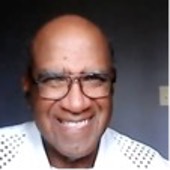
Glen was born in Jamaica and emigrated to Montréal in 1970 after graduating from the Jamaica School of Agriculture. He became a chartered insurance broker and worked in life and casualty insurance. He is past President of the Montreal Association of Black Business-persons and Professionals (MABBP). In that capacity, he raised funds for the ANC by selling their merchandise in Canada and the US. When South Africa’s first democratic election was announced, Glen raised funds for voter support and electoral literacy.
Doug Miller 0:00
Recording. So I’m here with Sophie Toupin, Doug Miller, and we have with us Glen Gunning. Glen, we are part of what’s known as the Canadian Anti-apartheid Activist History Project. And we’re, we’re, we’re, collecting all this information to help Canadians in the future understand the kind of activities, struggles, whatever went on, to try to help South Africa and other racially oppressed colonies of southern Africa get their freedom. So we sent you a consent form. I hope you’ve had a chance to look it over. Do you? Do you? Have you seen it? Are you okay with it?
Glen Gunning 0:44
Yes, I have it here. And I said I — I’m going to read it. “I, Glen Gunning, hereby declare that I consent to participate in the Canadian Anti-Apartheid Activist History Project.”
Doug Miller 0:57
Okay, so at this point, what that includes is an interview with the with us here, we’ll be joined by our third person later on, our colleague, Gwen Schulman and do so you understand as well that the interview will be archived and used by for educational purposes, for research purposes, whatever in the future. Okay, good. It’s coming on. There she is. Gwen hi.
Gwen Schulman 1:26
My apologies. I’m sorry about that.
Doug Miller 1:30
No, it’s PEI Telecom, you know, we understand.
Gwen Schulman 1:36
Nice to meet you. Glen, something tells me somewhere along the line, without even knowing it, we were at the same demonstration or action.
Doug Miller 1:48
Yeah.
Gwen Schulman
Hi, Sophie,
Sophie Toupin
Hello, Gwen.
Doug Miller
So we’ve already done the consent form, Gwen, and we’re ready to proceed. And in fact, I thought I would just lead off with the obvious ballpark question, Glen, if you could just hold on, we’re having a sound quality issue. Are you guys hearing that, that huge static sound? Again, not at all.
Doug Miller 2:10
We don’t
Sophie Toupin 2:11
Hear no, I don’t hear it either.
Gwen Schulman 2:14
It’s only when Doug talks I hear, oh, and I’m hearing it now, when I’m talking.
Doug Miller 2:19
I don’t hear anything myself and the others aren’t hearing me with that. So if I’m –
Gwen Schulman 2:25
It’s recording. So that’s fine. Sorry, go ahead.
Doug Miller 2:29
Okay, so here we are. So I’m going to do the ballpark question there, Glen, if I can, and just briefly introduce yourself, your name, where you live, a little bit of, little bit of background. We don’t need the whole life story, but just let us know that let people who get to see you in the future know a little bit more about you than what’s going to be in the integral part of the interview.
Glen Gunning 2:52
So I said the name is Glen Gunning I’m living I live in Saint-Bruno in Montreal, in South Shore of Montreal. I have been living in Canada for over 50 years. I became involved because I was the president of the Black and Black Business Professional Association of Montreal for a lot of years, and we had an invitation with Mayor Doré, had invited Mayor Dinkins to Montreal, and when he came up, we sat and we talked, and then he started. He explained to me that he was working with South Africa and on the apartheid, anti-apartheid work jobs. I then met with Mr. Moshe –
Doug Miller 3:49
Oops, a little freeze there. We seem to have a bit of freeze. Hi Glen,
Doug Miller 4:05
Okay. We’ll pick this up in a second. Hi Glen.
Gwen Schulman 4:16
I thought I was the one.
Doug Miller 4:19
Oh no, no, with it, with this software, there these things happen. It has to do with broadband width and the server you’ve got access to, and a whole bunch of variables that can – Oh, he’s gone. Oh, that’s good. That’s so, he did that. So let him click back in if he can. Yeah, okay.
Gwen Schulman 4:55
Do you want to pause the recording?
Doug Miller 4:57
I guess so we’re going point just I. Yeah, okay, yeah. So Glen Gunning, welcome to the Canadian Anti-Apartheid Activist History Project. And if you could just give us your own background, yeah, just a brief history.
Glen Gunning 5:14
I am from Jamaica originally. I’ve been living in Montreal for over 50 years. I was the president of the Black Business Professional Association of Montreal for a lot, many years. And my involvement, I got involved with the ANC when Mayor Dinkins had visited here with Mayor Doré, and we had a breakfast for him, the association, Black Business Professional Association of Montreal. And he we discussed, and he was saying he was working with Mr. Mandela at the time, or working trying to get Mr. Mandela out. And he asked if I could be, I said, I could be willing to help if I can. And he said, “No problem”. So then I got involved with Mr. Moshe.
Doug Miller 6:02
Sorry, sorry to interrupt President Glen. Sorry to interrupt Glen. When was that visit by Mayor Dinkins to Montreal?
Glen Gunning 6:11
When was it?
Doug Miller
Yes.
Glen Gunning
I think it’s the year of the meeting. I think it was in — I have it here, so one second.
Doug Miller 6:22
Oh. Do I have it here?
Glen Gunning 6:25
Yeah, I have, I have it somewhere, yeah, no problem.
Glen Gunning 6:37
It could have been, it’s one second, one second.
Gwen Schulman 6:46
You know, we can also come back to it, if you if you were then hooked up with –
Glen Gunning 6:49
Yeah, I get the exact time. Oh, yeah. I have it. Here. It was in.
Doug Miller 7:02
I have the documents you left me.
Glen Gunning 7:04
Yeah, it didn’t just, it was in 19 —
Doug Miller 7:09
They start with ’92, but this must — your meeting with Mr. Dinkins must have been before that, before that.
Sophie Toupin 7:19
And, and maybe, for those who are less well, know a bit less about South African history and South African actors. And maybe you could also tell us who was this, Mr. Dinkins.
Glen Gunning 7:34
Okay, it was Mayor Dinkins from New York, the mayor of New York at the time, the mayor of City of New York. And he had come to visit with Mayor Doré here.
Doug Miller 7:45
He was the first black mayor of New York City.
Glen Gunning 7:48
Black mayor of New York, and he had come to visit with Mayor Doré in Montreal. They had a mayor’s meeting, and I met him, and we just were just chatting in general, and he introduced me to Victor Moshe, who at the time, what had happened at the time is that Mr. Mbeki, who became the vice president of South Africa, who mentioned Mr. Mandela, he had set up a system all over the — of shadow cabinet, cabinet, or shadow ministers, or shadow MPs. So what had happened was that in Canada, you had Victor Moshe. He was the shadow to the Canadian, the South African Embassy here, and it was all over the world like that, and Mr. Mbeki was the one in charge of running that whole system.
Now these shadows really were, because they were in the process of working to, Mr. Mandela had just gotten out of jail, and they were working on setting up the whole system where they would be able to understand what was happening across the world in each major city. So then Victor spoke to me, and he said, “well, one of the problems we had is that we don’t have any money”, so I said, I can see what I can do to help. And because of my background in business and things like that, I decided to do that project of marketing to raise funds for running the embassies here.
That’s how it started out. But it grew a little bit bigger, because when I went to New York in marketing — you see, I sent you the information on the T-shirts, and the articles were prepared and that. And that’s where we started. We then said “Ah, you know, we had to”. We started with New York and things like that, to expand the market, and then they got the permission to do the same project in the United States, in Canada and the Caribbean at the same time.
Doug Miller 10:19
That was a pretty big sweep.
Glen Gunning 10:22
There it was. It was a big job, because what we did is that we, and those funds initially were raised to support the Canadian, let’s call the Canadian ANC embassy. Let’s call it here. That’s basically we started working, but then we changed direction, because Mr. Mandela suggested that they also needed funds for education, for educating the voters, the voter education project, and that’s basically where we start. Most of that funds went to that project.
Doug Miller 10:58
That’s inside South Africa at that point,
Glen Gunning 11:00
Yeah, well, that’s it, because the elections were coming on, or the plan for the election were coming on, and that’s basically where we started raising funds all across, so we had shows in all major cities. You see clippings of us in when we were in Washington, where the Washington Post did an article on us. We did a lot of interviews with PBS, you know, all over the world. So we did it. We did projects, we did shows in Atlanta, Los Angeles, Detroit, all over North America. And that’s basically what is and we, in getting things going like that, we ended up marking, marketing these T-shirts and things like that. You will notice that I sent some pictures here in Montreal that we, yes, these are the shirts we’re preparing.
And in Montreal, we did the Expos, the management of the Expos, the players from the Expos, Delino DeShields and Marquis Grissom, I don’t if you remember those days of the Expos, they came on board and they helped us in, you know, promoting. So when we had the, we had the Carifête. They joined our parade. They joined the floats, and they were on the float and promoted the whole idea and the whole concept of what we’re doing.
But it was basically what our job was, the marketing section of it, raising funds. So when we went to New York, we raised funds. In New York, we had to get special permission from the ANC to do the same job that we’re doing in Canada, in New York. We got that permission, got written letters, and then we started going from there. So it was very interesting, you know, because we met Spike Lee, he came on board. He was very involved, because he had two stores in New York, and they had our articles in the stores there.
And you see, we had this Carl Banks, who was a football player with the New York Giants and Washington Redskins, and he came on board, and he had got the promotion, so we had a lot of that type of thing.
Gwen Schulman 13:29
Can I ask for clarification? Just a clarification, partially because I’m a baseball fan, but I just want to know with the Expos, was it that individual players got involved in the campaign, or did the team throw its name?
Glen Gunning 13:45
The players came on board, but we did have to have permission from the team, that means the management, Expos, Mr. Brochu and those people came on board and said, “Well, no problem”. The players could do that, were allowed to do that for us then. So that’s basically what happened there. And as I say, with Marquis and Delino, they were two very, very involved young people, and they came on board with us. Wherever we had any shows going on, They were involved getting things out. You will notice we had pictures. We went to a lot of different things. I mean, we had, so sure black community has there. Well, there’s what, okay, that that section is that that’s when we were handing over the cheques to the ANC, the who were having their, these are the funds they were using to pay the rent and pay costs here for the embassies, or the court embassy, for the offices here. And each month, we’d hand over a cheque, it was very, very a lot of fun. It was very, a lot of work, but it was a lot of fun. Very interesting.
Doug Miller 15:01
Can we take a step back? Please? Glen, and this is now after Nelson Mandela. This. This is all when after Nelson Mandela was, was free in 1990 but, but as a as a person of colour and from the islands had you any experience, knowledge or exposure to this southern African struggle before that?
Glen Gunning 15:30
Yeah, I did, because Jamaica was very, very involved. Jamaica is a very involved country, and most of our musicians, Bob Marley and those people, were singing about apartheid, and so we’re pretty much very aware of what was happening and the being in Montreal, as I said, you know, I’m very involved in community work, so I was always very involved In what was happening. Just to mention too, with the McGill campus, McGill station, the CKUT, Pat Dillon was also involved. You know, these people came on board. They helped us to promote and that’s basically but these are people we knew what you were moving along. So that’s basically how we got things going.
Doug Miller 16:26
So it wasn’t a hard move for you to work with the ANC after that.
Glen Gunning 16:30
No, you know, it wasn’t at all, because we were pretty much involved in that form of another set of social, I was an insurance broker, but mostly I did a lot of social work. We also, when we went to the States, one thing we found very interesting is that we had to get one of the manufacturers to manufacture this clothing in South Africa, in in the States. And we had, we found this company, which was down in Alabama, and they were doing work for all the majors. We wanted to make sure we had proper production staff, people, and they helped us to set up a production line that ran our stuff and made our stuff for us.
Doug Miller 17:20
Is that? Is that what this, this is about?
Glen Gunning 17:23
Yes, that’s, that’s the line, that’s there, and it, it’s Terry’s manufacturing, but they did work for McDonald’s and all kind of things, and they were, but that was what we were doing, and they were our production line in the States.
Doug Miller 17:41
Production, a really serious factory, so and there’s a letter from Thomas Martin Blanton in to yourself as president of Vismer engine Eng.
Glen Gunning 17:55
That’s the company. Vismer was a company that we created to do this type of work. And Vismer was visual merchandising. That’s basically how we got it, okay? And Blanton, because we had a lot of people all over the states, because we did, as I said, we did shows in you had what we call the Black Expo shows, and they were all over in the major cities, and we went into all these shows. We went to all of these shows. So we became a known entity in what the ANC was doing and what we were selling. So we met a lot of people who found were interested to do help us market in their area. I think Mr. Blanton was from Louisiana. That’s where we met him, or met one of his people, I think down there.
Doug Miller 18:47
Yes, New Orleans, Louisiana, at the Black Expo. Yes.
Glen Gunning 18:53
Wow. It was a lot of travel and a lot of but it was a lot of fun. It was really interesting. And I said, you know, you, I had mentioned to you the one of the things we did find was that the understanding of what the ANC was about was not all over United States. The major cities, of course, you had people who understood. But when you went to some of this areas they had no idea who the ANC was, you know, but they had the black, the old black struggle going on, but a lot of didn’t even know who Mandela was. That’s what we’re here for, to promote and get –
Doug Miller 19:35
So there was a fair bit of education in your work as well. Did you produce pamphlets and booklets and things?
Glen Gunning 19:44
Well, not really, because I said we were just basically trying to get marketing to raise funds. Because I said we were, we knew the news was kept coming out. Mr. Mandela, he had come to New York because Mayor Dinkins was in New York. The first city he came to in the United States was New York because of Mayor Dinkins, and so that he got a lot of publicity, and he started to move but he didn’t filter down that easily to everybody. In Canada it was a little different, because Mr. Mulroney here and a lot of people here were fighting for the ANC at the time. In the states were a little bit, I think it was President Bush had just started, and the Black Caucus, black congressional group with working on it, but it was the word wasn’t coming out as fast as we were hoping, but it came through. It took time to get going, but it came through.
Doug Miller 20:51
Did you meet people from the Black Congressional Caucus?
Glen Gunning 20:55
Yeah, we had meetings here because we — Mayor Dinkins had set up a meeting with trying to remember the name, but we had a South African, new black American US Congress of black caucus that was Mrs. Waters, Maxine Waters, and I don’t know all the names, but a lot of these people that were there, so Mayor Dinkins had set up a meeting in New York with all of these people and the ANC groups. So we had people from South Africa who came over, business, people from South Africa. We had the Black Caucus, myself and a lot of other people were there. It was interesting, because we got to explore what was needed and how we could help in whatever way.
Sophie Toupin 21:58
And so, so you’ve been talking a lot about how you were present in the United States, and I’d like to hear a little bit more about how it was in Canada. So how did you reach out, maybe to other professional associations or business black business associations, if you can tell us about, about this.
Glen Gunning 22:24
Well, in Montreal, said, with the Expos and we had Carifête, we had our float. I think it’s, I think you have some pictures of our float there. So we, that was basically the Montreal scene. We did the same thing in Toronto. We went to Toronto. They have their Carifest, we had our floats and our information. Because keep in mind, although I was focused strictly on trying to visit the float in Montreal at the time, I did not get into political realm as much because I’m just marketing and getting funds, you know. So all I was doing is letting the ANC, because the ANC logos were very had to be very carefully managed, because we could not use the Mr. Mandela’s likeness, because it could be, it could not be copyrighted. So if we use his likeness, anybody on the streets could start printing those pictures. So we stuck strictly with the ANC logos, which were copyrighted logos and protected.
So that’s basically what we’re doing, just selling the ANC, selling what Mr. Mandela’s name would come up. But it wasn’t trying to push Mr. Mandela as much as just making sure that the ANC stuff will not be sold all over the street, all over the place like that. So those are the things that were to be very careful that we didn’t go over our skis. Because you know when, when anything gets exciting, people, before you know, everybody in the street selling them for $10, and that’s it.
Sophie Toupin 24:09
And how long did you, did you sell merchandise with –
Glen Gunning 24:14
We did it. I’m trying to get the dates right, because we worked on 6, 98, we worked for four years on it, for four full years, actually trying to remember the exact years, but basically, from when Mr. Mandela came out of jail until the elections, but I said we were strictly an ANC, anti-apartheid, supporting but we did not get too much into the politics. We’re just merchandising, and that’s basically what we’re doing.
Doug Miller 24:59
I saw from this picture of your daughter, and it looks like it was in the Gazette.
Glen Gunning 25:03
Yes, it was in the Gazette. And this was a picture of my daughter and our neighbour, and they were in there. We had a show on the south shore. Black community had a day in the park, and that was these are places we went and the kids went. So a lot of community work as well. Then, yeah, that’s it. But I said I was president of Jamaica Association, president of Black Business Professionals, so I was very involved. And I’m an insurance broker, I knew a lot of people. So, you know, I was very involved. It was easy for me to get it myself, plugged into most of these.
Gwen Schulman 25:41
I want to ask a question related to that, which is, to what extent did, did you end up working with other anti-apartheid organizations within Quebec?
Glen Gunning 25:50
Well, what we did is that Mr. Moshe wrote a letter to all the different groups, telling them about us, because we wanted to start, we’re, I said we were totally focused on trying to raise funds, you know. So though we were involved in the groups, each group was doing a different thing. Some people were looking about education. Some people and we were just looking about marketing and fundraising, and so that’s basically we tried to not go over our skis, but we got involved because of our, or trying to get our stuff out. We got involved. We met a lot of people, but as I said, it was, we did not, I’m not saying we spent a lot of time working with each group separately. Because if somebody said, “we need 100 T-shirts to go to this place”, we’re having a fair, we make sure they got them. And that’s basically –
Gwen Schulman 26:57
Well, part of this project, because it’s looking back at history, we also want to be able to take a not just a rose coloured glasses, look at the movement, but also explore a critical perspective on the movement, where perhaps the movement’s weaknesses were. And so one of the questions that I would have would be in interacting with other anti-apartheid organizations in Quebec, did you detect any racism within the movement?
Glen Gunning 27:25
Not really. I think where we had a problem, as I mentioned early on, is the lack of knowledge of a lot of people. They were involved, but they did not understand the drive or what the drive was about, you had to explain to them the educational program, why we’re using funds for education, for the election education, because we realized that we had to be teaching people how to vote. People use an x to vote. But in South Africa, an x means bad. It’s not a good thing. You don’t ask for x in your mark. So you have to make sure that they understood that when they went to the ballot, they had to mark an X in the spot.
So that type of thing we had to work on. And so, you know, we had to try to explain to people who here were, oh, let’s get this, get out, go and start working with the ANC or working with South Africa. But they didn’t understand what was happening in South Africa. So we got geared strictly for education, for the voting education that we needed to get done in South Africa, and that’s basically where most of our funds end up going in there.
One, one thing I would mention, I found, as I said, I went to a lot of shows that you thought that people would come out and, you know, you’re saying, we have ANC stuff selling and you’d find people going, Ah, they look and look at them and but it could be that people are suspicious that maybe I was hustling, you know, I was selling something. So even though I was licensed and I was allowed to sell, if people got a little bit leery of a guy trying to sell T-shirt type thing. So it was a little bit of a it was, it was, it was hurtful when people started looking at you as a hustler, you know, and that’s life, and we keep on moving, and I found, what I found in especially United States, as I mentioned earlier on, is that people are very, very unaware, very unaware of what was happening in South Africa. They had no idea. They’d come and they’d ask me, they’d say, “The ANC, Mr. Mandela.” You’re trying to explain to them who, this stuff just went over the head. But it’s an educational process that takes time,
Doug Miller 30:03
Okay, before we start another question, we only have two minutes left on this session before we have to sign in again on the next session. So, so maybe, maybe we can just, we’ll just end here for to make it a clean break and then come back at a quarter to, okay? Is that okay? No problem. Thank you. Five minutes, okay?
…
Doug Miller 0:00
Remembered right, there we go for recording. So this is a very –
Glen Gunning 0:06
So Mayor Dinkins was here with Mayor Doré because they had a meeting here in Montreal, and we had the breakfast for Mayor Dinkins. Because we had known him before. Now, what had happened was that at that time, is just to show how politics works. We’re having the problems with big James Bay electrical project. New York was, Hydro-Québec was dying to get New York to buy power. So Mayor Dinkins coming. They all came to the breakfast. They ended up giving for MABBP. The Hydro-Québec gave scholarships for 10 years to students from our group. Oh boy, because of that meeting. You know, everybody was there trying to play politics, but that was a little bit that was away from the ANC stuff. Let’s say, you know, I don’t want to get to get away, but that to show that a lot of things are going on at the same time, and that’s how you you’re out there.
But Mayor Doré was one of he was very, very, a very good mayor to, in my in my eyes, because he was always trying to link our communities, the black community, with the mainstream. So we really, really got a lot. I mean, the Expos came on board through him. Hydro-Québec came on board. Hydro-Québec had to back off, because a few years after, people started complaining that we’re giving money to groups they didn’t know about, and so we had they stopped giving. But that was the type of thing that Mayor Doré was about, you know, linking, linking groups. Very, very good, very good.
Gwen Schulman 2:00
Okay, well, I just have wait. I have a clarification here, when Hydro-Québec was involved and you were doing fundraising, does that then suggest that Hydro-Québec was involved in fundraising that went directly to the ANC?
Glen Gunning 2:14
No, no. Hydro-Québec was involved. They came to see at our breakfast, and they saw what we were doing at the BBP, the Black Business and Professional Association we had, we were giving scholarships to students, which we still are doing. And they gave us funds to help in that, but that that, was not involved in ANC at all. They were just talking about the general Montreal thing.
Doug Miller 2:39
But it was, it was through that connection with you got introduced to Victor Moshe and to the ANC. Okay, okay, so, so let’s pick it up from where, where we left off, and, and so you’re, you’ve got a whole campaign selling merchandise. You’ve made the connections, the is the then, then came the election in 94 what happened there?
Glen Gunning 3:07
Okay, well, as I said, we ended up selling it continue, because, as I said, Mr. Mandela asked us to move away from raising funds for Mr. Mbeki’s offices and to give that fund directly to the educational election education thing. So that’s basically where all our funds started going, directly there, and that was what we’re selling. Elections are coming up. We need your help, and that’s basically what we see. So we even created, I can just show you one of our last creations of a shirt. I don’t know if you can see it.
Doug Miller 3:44
Can you see it? Hold it in front of your face? Yep. Okay, right.
Glen Gunning 3:51
Whoops I’ve lost it again. Yeah. This was our last shirt that we made up.
Doug Miller 4:00
A little higher, please.
Glen Gunning 4:02
It was “Free at Last”, and it’s marked “The Vote” at the bottom, tremendous. Oh, wow. So this was with Mr. Mandela putting his thing in the ballot, and that shirt, that really stole it. It was really good, because everybody wants a copy of that. I want one anyways, the last one.
But that’s the type of thing that we, really it was an exciting time, because when you went to the States, as I said, we got a lot of interviews with the PBS stations. We got a lot of interviews with, as I said, Wall Street, the Wall Street, the New York Times, Washington Post, and you see that picture, Washington Post and everywhere when we were, always this, the Washington Post for the business section, you know, such a lot of a lot of publicity, and that helped, because each with that Washington Post. When we went into the Washington, this is a Black Expo, the big show, and everybody wanted to know where the ANC stuff was being sold. We just couldn’t keep up. We went to Los Angeles. The same thing happened. Everybody wanted the ANC stuff because we got very good publicity in advance. But I said it was a lot of work that was but that was coming closer to the elections. People are getting more aware of what’s happening.
Gwen Schulman 5:41
I want to dive in and ask a question. So in this period that you’re talking about right now, there was a real shift in the strategy inside South Africa by the apartheid regime to try to rescript the struggle there as black on black violence. And that was a very powerful propaganda tool that was used internationally to try to undermine international support for the ANC and for the transfer the coming transformation. I’m wondering if you had to contend with that in your education work in Canada and the United States, that notion that, well, we have the whole propaganda around that, you know, a black regime would not be able to properly run the country. Look at what happens. You know, they Africans turn on each other. So how did you, how did you have to cope with that and manage that in terms of public opinion in Canada, or, as –
Glen Gunning 6:35
I said, it’s, I don’t want to feel so naive, because I was aware of what was happening, but we were just focused on raising funds for the ANC. So when that politics came, we didn’t get into the political argument. We were working for Mr. Mbeki getting funds in, so I may have had personal thoughts on it, but I did not get into a political debate. We were just selling people who came and wanted an ANC shirt. That was what we were doing. And it sounded a little bit limiting, because there was a lot of other things going on, but, you know, we just had to stay focused on marketing and that basically that, you know.
Gwen Schulman 7:24
So you weren’t finding that it was being thrown in your face, or people that that it was having an impact on your fundraising activities.
Glen Gunning 7:31
Not really. We didn’t, we did not see, but then I said we were going at this targeted market. We were going to black Expos, you know, which we had a lot of sympathetic ears, so we did not face that in that sense. I know that in Montreal, but it, as I said again, because we were not, we were not in the politics of it. We’re just in the marketing and that basically, so we just stayed in our lane. And it may sound that, you know, you guys weren’t doing much, but just selling T-shirts, but that was our job to raise funds, and that was in order to get the election going, to get the voting going. And as I said, what, what was happening here is that the ANC offices that were here were trying to mimic what the high commission offices were doing, but that was the political side. And I said, we just stuck to marketing. Marketing to raise funds. And as I said, when we changed from trying to be supporting of the office and just marketing for the elections, we stuck straight to that elections are coming up. Here’s what you can do to help. We explain what people, we had little film cuts, and how people had to learn to vote, you know, things like that. And that’s basically what we’re aimed at.
Doug Miller 9:15
Tremendous well, then then come the elections. If elections are over 94 the ANC is in government, perfect in many, in many cases, a lot of the anti-apartheid groups disappeared. They evaporated.
Glen Gunning 9:29
That’s, that’s true. I said it’s, it’s hard to understand why, because attention spans are short. Mr. Mandela is in power. Oh, it’s over. Oh, it’s that. Everybody’s happy. I ended up working in South Africa for two years after that, and as I had mentioned to you, Doug, I found out there was a lot of help from the offices here, that means the people were, although they were part of the only, the old government structure, they were very, very helpful.
So because we’re trying, we got some funds the Canadian government had. One of the things that was needed in South Africa was to try to bring the townships into the mainstream offices, into mainstream cities. That means Soweto township for Johannesburg, Germiston, you had Katlehong which is not, it’s a township for that area, and they had to start to migrate them into working together. That means the taxes collected in those cities had to be used for everybody and that type of thing.
So I ended up helping to set up some tax collection systems, and that’s where I said we found it in a block, because the Canadian government gives funds to set up those things. But what happened was that, when you, okay, I understood it, because I’m in insurance and I knew how the processes go, but when we said, well, we need to get some black companies to do the work in the city of Germiston to help to set up the system to bring in Katlehong. We wanted to hire the black people to do their jobs.
But when you look at it, you have to be guaranteeing the work. So you have to find companies that could be bonded. Because you’re delivering for the Canadian government, you have to deliver this product. So you can’t just give this money to anybody. So you had to get a company who could be bonded by insurance company. So we ended up being, down there the machinery that we bought for most of the cities was machinery bought from IBM, NCR, the same big corporations, and the only thing we were able to do was to train people to work on the systems in the in the cities.
What we could not do was to get the small businesses in South Africa partake. You know, we got to one or two workers who helped us with software development. But that was basically that, you know, so, so that’s where you find that systems do not shift over easily. So with all the help we got from the Canadian government, and just, you know, you had to protect Canadian taxpayer, so you couldn’t go and just get a little guy to try doing it. You had to get a reputable company who could be bonded by the insurance company, and so you ended up that was what you found. That’s the difficulty you found.
But what I realized, it happens everywhere. I remember when Mr. Mandela, Mr. Obama, came in and he tried to set up systems in Atlanta for getting business to Black corporations to start doing work for the government. Construction work. Same problem. To be able to build this big building, you had to be able to be bonded, you have to prove they can deliver. And ended up going back to the same corporations again. So that basically was what was the disappointing thing is that we did a lot of working in the cities, trying to get but all we did was training, training people to get the staff, because we did a lot of work in Germiston, because it was a pilot project for us. So Katlehong was a township, so we got people from Katlehong to understand how to work these machines and things like that.
But that was all we did. We’re training people to do it. We were unable, unable to find a company to say, well, we’re going to buy 10 computers from you to do this and that type of thing. So that was basically one of the things that was a little bit disappointing, but we understood what the problem was. As I said, we had no problem.
The embassy people here are the people from the South African government. A lot of them were still the white staffing, but they were still really, really helpful. And, I mean, I was asked to go and explain to people at Concordia, the MBA students, how the structure South Africa is set up. You know, you. You had to explain to people that it’s, it’s South African government was, was set up off from Canada provinces, the same structures in provinces, the same voting rights as provinces. Run their own stuff, what the services in provinces. So you had to be able to explain to that to people. But that was just basics. You know, you aren’t breaking any ground.
And that was that was unfortunate, but I guess that’s what we found. That’s what I found, that things are hard to change. You know, it’s almost impossible to change structures. When I was in South Africa, then I met a lot of people who had just come over to the bush and telling me about the life in the bush and what it was like before, but it hadn’t changed that much for them either. You know, it was just it came out and they were walking in the streets begging again, you know, tough to see a change like that. Yeah.
Doug Miller 16:00
Well, I have a question now, then we’ll, we’ll shift it a little bit if we can back to you personally. Do you think you what kind of impact did it have on you?
Glen Gunning 16:15
All of this work, all of this activity, all of this involvement, it’s had a lot of impact, because you use, you start to understand and learn. And I said, how, how hard things are to change. You know, you know, you has a big dream that everybody in South Africa is going to just be free anything. And you realize, and it’s not from any ill will or anything like that, it was just hard to change. I mean, we were teaching when we got the people from Katlehong to work on the computer systems for us to do the tax collection. And you’re teaching a person, you gave him a mouse, and he put the mouse on the screen. He had never seen a mouse before. He couldn’t understand so he had to take a whole month to train them just to use your keyboard, you know, so things like that, you find that you had to bring people up to scale to be able to perform as you thought they would be able to. So that’s basically what you found, though, is that young people were much more adaptive.
And I found a lot of friendships between black and white South African youngsters. They were very, very helpful to each other. So that type of thing give you hope that things will change and things will come around. But it was tough. The people from that came out of the bush, or that’s where in the, in Zimbabwe and coming over to the bush after the fight, they were nothing. They didn’t have any chance of getting anywhere. They weren’t educated. So all these liberation fighters, you could see the hurt in their faces that they were almost put aside. You know, it was tough. It’s tough to so that’s, that’s what I learned, is that you find that it’s nice to have these nice, big dreams, but reality hits the road, and that was painful.
I mean, I used to go to shebeens and sit with people and talk and and you could see disappointment, you know, and that’s what brought the crime, you know, to bring a crime, of course, it was easy for him to, oh, these black guys, or not to do it, yeah, criminals. But it was that type of thing you found, you know. It was interesting.
Doug Miller 18:39
Wow, very interesting. Sophie, Gwen, do you have anything?
Sophie Toupin 18:43
Oh, I think Gwen just disappeared. Yeah, um, I guess, like, is, is there anything that we haven’t covered that you would like to tell us?
Glen Gunning 19:02
It experience, a job experience. I said, I got a lot of I learned a lot as I grew to know I have one, one little thing to tell you about, because my daughter went to McGill, but she had, she was, she’s in languages too, like my wife. So she went to Italy to live and study. And of course, I bought her tickets using a lot of airline because of back and forth, back and forth in South Africa. So I used my airline tickets to buy a ticket to go and come back. And it was South African airline ticket, but American Airlines accepted them. So the ticket was a total ticket printed, yeah. She flew on American Airlines when she was coming back, it was just when 9/11 happened, boy, and we had to go to New York to meet her, because we had to send her on the American airline. We went to New York, left her, and she took the plane, and she was flying back to New York. When we got there, she wasn’t there on the plane. What had happened was that, because she’s like me, hard to identify what culture she’s from. This South African — if you’re flying on South African Airlines tickets, claims to live in Montreal, but is flying to New York. So they blocked her from going to get on the plane. Oh, no kidding, because the that 9/11 that happened, you know, and –
Doug Miller 21:01
Their security antenna were up for anybody who didn’t fit into the form quite perfectly.
Glen Gunning 21:07
We finally got it through, but the thing that made it even a bigger problem was that she was in — she was in Florence, but she was flying back from Milan, and so she had, she took a train over, and we weren’t able to be in touch with her. So when we were waiting at the airport, she didn’t turn up. Started worrying, and we didn’t know, of course, of course, yeah.
Doug Miller 21:43
And then in 2000 the communications weren’t quite as fast as they are today. Yeah, absolutely. Well, unless you have something else to add, Glen, and of course, do get in touch with us. If anything comes to mind.
Glen Gunning 21:58
I hope I would be of some help.
Doug Miller 22:00
You know, oh, we can only thank you. It’s a wonderful story, and one that I was certainly unaware of and appreciative now.
Glen Gunning
And I did give you some pins, say I did. I did.
Doug Miller
No, I’ll get everything back to you.
Glen Gunning 22:15
You can keep it, because I want you to.
Doug Miller 22:19
Oh, you’re sharing them, are you?
Glen Gunning 22:20
Yeah.
Sophie Toupin 22:22
Oh, wow. That was one of your merchandise that you were selling, nice, nice, nice, nice.
Glen Gunning 22:31
Because it was easy for people to buy absolutely
Doug Miller 22:35
A great souvenir. And it’s a very classy one too. Yeah. Yeah. Well, Glen, thank you so much. Thank you. We appreciate your support, and we’ll be in touch with you. Yeah, at this point we’re still very well. Let me turn the recording off, because I think we’ve done.
(not clear where this fragment fits in the interview)
…
Glen Gunning 0:00
South Africa, and I went in, very invited, so we went in, but they were sitting down, and I stood up. I stayed standing, you know, and I started talking, and my friend that was with me stopped me. I didn’t know I’d want, I didn’t feel, to sit but he said, That’s it. After we went out, he said to me, you know, that was a faux pas that you would not have realized. But what used to hurt South African Blacks was that people would come in and the whites would come and not want to sit down with them or be close to them. So they would start to do and talk to them, talk down to them. And he said, “you are just like that”. You know it came. He said, “I could see in their faces, what the hell is this guy from Canada coming, standing over and trying to talk to them.” little things like that, you was funny, was things that you learned you went along, and behaviours that you thought I’m so perfect. I think also, I met the brother of Mr Buthelezi, and he’s a prince –
Doug Miller
The Royal Family of the Zulus.
Glen Gunning
I had on my cap, and I went in and my friends.
Doug Miller 1:35
So it’s quite an experience for you.
Glen Gunning
Yeah.
Doug Miller
Wow. Okay, well, then with that, we are.
Glen Gunning 0:00
So you find that everybody was sympathetic to the ANC, but that was it, you know, they would buy, that’s where we went to, the marketing. They would buy a T-shirt, but they wouldn’t come to a meeting, you know, type of thing.
Sophie Toupin 0:15
Yeah, I guess a question I didn’t ask, and I’m kind of curious about, is, do you have, like, an estimate or a ball figure of the amount that was given out of this merchandise to the ANC?
Glen Gunning 0:30
we give, I think, something about $20,000. But we shipped, well, we started giving individual cheques for the paying the rent and things like that. The office here, right? Shipping all the funds to the education grouping and that went to New York. Yeah.
Doug Miller 0:58
Cool. That’s great. Really amazing. Well, listen. Thank you so much. We have a few other names like Dorothy Wills and Dorothy Williams, that we’re going to try to talk to as well from the community and we’ll try. We’ll also be reaching across Canada as we go.
Glen Gunning 1:19
I know another person that you may find that may have some information too is Dr. Bayne. The reason I’m suggesting him is that he ended up setting up a program where we were teaching in South Africa. At the time they were getting some helping, some educational groups down there. So you know, he may have some of that.
Doug Miller 1:45
Could you just tell us again his name?
Glen Gunning
Dr. Clarence Bayne. Clarence Bayne, B-A-Y-N-E, and he was a doctor. He’s at Concordia. He’s in the School of Business at Concordia.
Sophie Toupin 2:05
Oh. Right. Faculty there.
Doug Miller 2:09
Okay, Clarence. Clarence Bayne, okay, we’ll take a look. Yep, so sure, for sure. And what do you think anything like, did the people from the Caribbean contact? Did they ever get involved and help with articles and things?
Glen Gunning 2:23
Well, I used to advertise with them, because we’re advertising stuff with them. So that was a link.
Doug Miller 2:33
Just in terms of their involvement in helping to support this kind of activity.
Glen Gunning 2:38
Well, as I said, Egbert Gaye, who’s the
Doug Miller 2:43
The, of course, yeah.
Glen Gunning 2:47
We advertised with him, and he would give us a discount on the advertising cost, you know, type of things like that. So everybody helped, but he was just getting himself off the ground at the time.
Doug Miller 3:04
Glen, I’m going to wish you a very good day. Yeah, same here. Thank you so much for your.
Credits
INTERVIEWERS: Doug Miller, Sophie Toupin and Gwen Schulman
LOCATION by VIDEO CALL: Glen Gunning in Saint-Bruno
Bio: Glen was born in Jamaica and emigrated to Montréal in 1970 after graduating from the Jamaica School of Agriculture. He became a chartered insurance broker and worked in life and casualty insurance. He is past President of the Montreal Association of Black Business-persons and Professionals (MABBP). In that capacity, he raised funds for the ANC by selling their merchandise in Canada and the US. When South Africa’s first democratic election was announced, Glen raised funds for voter support and electoral literacy.