
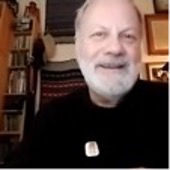
Ken Clavette
-
Ken grew up in the Ottawa Valley in the 1970s, where he learned about apartheid from a high school teacher. In 1979, Ken was working at Uplands Air Base and active with Public Service Alliance of Canada (PSAC) local 611. As a union member, he joined the SACTU Solidarity Committee and helped organize anti-apartheid activities, including a week of action in 1986. By 1983, he was president of the Ottawa Labour Council through the 1980s and a union activist until he retired.
DOUG MILLER 00:00
Hey good morning, Ken Clavette. How are you in Ottawa?
KEN CLAVETTE 00:09
I'm fine, thank you very much.
DOUG MILLER 00:11
I'm Doug Miller, here in Montreal with Jane Armstrong in Toronto. We are undertaking interviews on behalf of SACTU Solidarity Committee and the Canadian Anti-Apartheid Activist History Project, and we've invited you, Ken, to join us today because of your experience. I just wanted to ask you to verbally acknowledge that you have read and signed and agree with the conditions of the consent form, with which talks about the various elements of how we'll use this, this information.
KEN CLAVETTE 00:47
I Ken Clavette, have read and agreed to this process, and the recording, and the distribution of it.
DOUG MILLER 00:53
Thank you very much. Thank you. Well, I am, as I said, the I don't know you very well, so it'd be very interesting if you could just give us a little bit of your personal background, how you came to become aware of apartheid and that kind of thing, and how you got involved there from in anti-apartheid and SACTU Solidarity Committee.
KEN CLAVETTE 01:18
Sure, my obvious little bit of history is, as you know, I'm an Ottawa Valley boy, pretty much grew up in, in, in Ottawa from the age of seven on. I, I growing up in the 70s in high school and starting some university, the anti-apartheid, you know, that we, you know, we would not call Rhodesia, we called it Zimbabwe, even though it was, you know, still, and so we, I had that sort of general interest and understanding of the need for change. The I got involved in the in the labour movement around 1979 at the I was working at National Defence at Uplands Air Base and was involved in my local from I had a huge strike in 1980 with the clerks’ big strike in Canada, single strike at the time
DOUG MILLER 02:17
Sorry to interrupt, what union is that part of?
KEN CLAVETTE 02:20
Public Service Alliance of Canada, and I was in the Union of National Defence Employees component, Local 611 at Uplands Air Base. So, from there I got involved in, in mostly the central labour bodies activities. I was probably a little too left for the Union of National Defence Employees and so my activities there were at the local level, and but then I got involved in the Labour Council as their delegate, and then in 82 I was elected to the executive, and 83 to 88 I was the president of Labour Council, and that's probably where most of my activities with supporting SACTU took place in that period of time, leading the council.
DOUG MILLER 03:06
That's great. That's great. So, so in your understanding, like you say, you called it Zimbabwe, where would you have picked all this up from? Was it in the air in Ottawa?
KEN CLAVETTE 03:18
I think so. People like you, probably, and others, a little older than me, were agitating and stuff. I remember I took an African history course with Dr. Savage, who had been with the executive director for the Association of Professors, and so I obviously had an interest in that was going on, so those are the kind of things, probably, that, that you know, school, and it was, it was, it was a common sort of coming right out of sort of civil rights movement stuff that was happening in Ireland, and then, and then Southern Africa, all just played together with all about human rights and human dignity, and oppression and discrimination.
DOUG MILLER 04:12
Yes, and even the anti-Vietnam War and the Southern US Civil Rights was, was very much talked about. Well, that's interesting, and so within the Labour Council, now the Labour Council, as I understand it, regroups all of the CLC-based, the labour organizations in town, in the region, in a given area. So, you, that's how you met SACTU, is it?
KEN CLAVETTE 04:37
Yeah, I mean, we used to talk about, say, auto, Windsor with an auto town, or Sudbury was steel town. PSAC was the Ottawa, but it never was active in, joined the Labour Council. And I think our local might have been six, so we were not a big player in this, you know, the CLC locally or the District Labour Council, and so I actually, I felt we had a Labour Council president from the letter carriers who was doing a lot of red baiting, and so I ended up running against him and replacing him. I became the first PSAC member in the country to actually head a Labour council, and I was only 28 at the time. When one fellow from the CBRT&GW, from the railway unions, met me once and said, "You can't be a Labour council president. We're in a picket line”. I said, “well, what do you mean?”. Yeah, and he said, “no, no, Labour council presidents are all fat guys with beer bellies and funny looking ties”. I guess that's the way of saying a lot of people are already suspicious of me.
Plus, I wasn't a member of the NDP, and so if I was left and I wasn't an NDPer, who the hell was I, and that sort of dogged me through, so yeah, so it was through that, and I don't remember, like, you know, Jane, you guys were reaching out, I don't know what kind of contact, I don't remember having much contact with SACTU Solidarity Committee, you know, before we got involved, but there were people like Graham Deline, who is the Office and Professional Employees and out of the CUPE staff, and Graham was very well versed in the anti-apartheid movement, and on the executive with me, so there were there was those kind of influences.
And then I remember just basically Zola Zembe coming a couple of times to Ottawa, and coming to meetings, and when you came to Ottawa, and you were SACTU, the CLC doors weren't open to you, right, Jane? Hahaha. So, the Labour Council was the place you went to, you went to the postal workers, and you know, you tried to build some other bridges in the community, and so that's that was, I think, the Labour Council was one of the ways into the Ottawa labour movement for the activists around the solidarity committee.
DOUG MILLER 07:21
I find that quite telling, that the CLC was not receptive, but the local membership and their representatives were much more open.
KEN CLAVETTE 07:31
Yeah, I mean, I think if you go to a labour council, you tend to be more into solidarity, you're moving beyond your own local, your own national union and so I think that kind of, you tended to bring the more activist kind of people, too, right? Too, and the Ottawa Labour Council, probably because we were in Ottawa, had a bit of chip on our shoulders about, you know, the CLC would like to sometimes control us because we were in town, and it had a long history. When Tommy Moore from the Carpenters was the Canadian Labour Congress president, Dominion Trades and Labour Congress president, back in the 20s, he used to come to Labour Council meetings. I mean, you know, national labour leaders at that day weren't jumping on airplanes that didn't exist and flying around the country. He got out of town once a year on a train trip. He would probably be, you know, that would be a big trip for him. So, to stay plugged in, he would come to labour council meetings. So, you'd have a, you know, that Dennis McDermott overcame, only ever came to a labour council once, and when we were saying goodbye to Len Rule, who was our CLC rep, and we had a bit of a party at Labour Council.
So there, there was this, there's always this tension between the local people and the Congress who, who wanted to speak, and in case of South Africa, they saw the ANC and SACTU as communists, and we were in the Cold War, and, and they didn't, you know, they were an international federation of free trade unions, and that Cold War fought out its, its place there. So, in the Ottawa Labour Council, we had people who thumbed our noses at our own national, our own national leadership, both the Congress and our affiliate national, so we like to be, like to be a little different, I think. Hey Jane, yeah.
JANE ARMSTRONG 09:26
Yes, I remember your Pierre Samson, when was he president? Because we have a picture of Zola with him.
KEN CLAVETTE 09:41
Okay, yeah, he would have been right after the CR strike, so I think he would have become president in 82 because he had been a local president in Montreal and went to the component convention after the CR strike, which had just thrown up all kinds of activities, activists, and he, he became president of the employment and immigration component at one year doing that, and then at the convention ran as a sort of protest candidate against the established, and won by six or seven votes, and then only served one term, because Pierre, he was a nice man, but he was so over his head, like he had no leadership development, and, and stuff, but yeah, he was receptive to that, like I remember he was, he was much more open, and partly because he probably hadn't been trained in some.
DOUG MILLER 10:34
Could I ask, what the CR is? I'm sorry,
KEN CLAVETTE 10:38
We're the clerks, we were the biggest unit of the federal government, the bargain unit. We were 60% female. There were somewhere around 60,000 of us, and we, we ended up with about 40,000 on strike in, in, in, in, in the fall of 1980 and so our local walked out early. We had a wildcat for an afternoon. It was, it threw up a lot of activists, people who never went to meetings, suddenly were walking picket lines, and it scared the shit out of the leader.
DOUG MILLER 11:15
Management union.
KEN CLAVETTE 11:18
Oh, yeah and we found out later that most, we were looking for a COLA clause, and they had given it up in bargaining six months before we went on strike, they had taken it off the table, and there's no way they were going to get it back on, but we were in, you know, high inflation rates at that point, where –
DOUG MILLER 11:31
Oh my goodness,
KEN CLAVETTE 11:32
Rates were 20% and stuff, so there was a lot of anger, and so it changed the Public Service Alliance of Canada a lot, gave voice to people like me and others that didn't have it before.
DOUG MILLER 11:46
That that would have been the period of that huge cross Canada demonstration in against where wage freeze and inflation.
KEN CLAVETTE 11:56
There was one earlier, 76 was the big CLC one that was held the day of protest, but yeah, we held another, another one sometime in that period of time.
DOUG MILLER 12:07
I think it was right after Trudeau got reelected, and, and, and broke all his promises right away, and
KEN CLAVETTE 12:14
Yes, he stole all Bob Stanfield's policies. Bob was too honest.
DOUG MILLER 12:24
Okay. Well, sorry. Carry on. Go ahead.
KEN CLAVETTE 12:27
So, I said those two sort of that was the environment. Some of my funny, my funny stories I like to tell is that people were still trying to figure out who I was, so they had SACTU delegates come to the CLC, and they had a big reception one night, and I was working full time, like I was at the air base, I wasn't, you know, I wasn't elected full-time position or anything. Anyway, they invited me to come as a new Labour Council president, and so I knew there was some tension, so I took this little, little pin here.
DOUG MILLER 13:03
I see it.
KEN CLAVETTE 13:05
I looked like that back then, like lovely hair, lovely hair. Yeah, I had hair, and well, I had more hair on top and less below. I had, I did shave my beard off when I was Labour Council President, because I, I felt I had to look respectable at city council and stuff, but yeah, I had that jacket on and I put the pin on, so I went into the CLC, and was very shortly after being in that room that I met every CLC staffer in that room who came over to find out who this guy was, and in the South Africans said hi to me, and then ran away, and then someone came over to me later and said, “we can't talk to you in this room, we're going to have a meeting in the parking lot after, okay, come and talk to us then”, and so I went out to the to the parking lot and they said, "Who the hell are you? And this is a really weird country. What are all the people in? Are all anti-SACTU, and we can't say anything about SACTU, and you know we're, we're SACTU in in the country, and they're us outside the country, and I think I spent more time trying to explain to them why, because they wouldn't have had the benefit of the Janes and Kens of SACTU, to sort of explain who they were meeting and what the tensions were. So, yeah, so they talked about me, I think, for a long time, the idiot that walked into a CLC meeting with a with a SACTU pin on his lapel.
DOUG MILLER 14:43
Would you just mind holding it up to the camera a little bit closer for a minute?
KEN CLAVETTE
It's, I know that there's several of them flying around here, going, being given out. I know, I noticed that part of the collection. This is my only last one, hangs off my lamp, off my desk, but in this one here was the anniversary, the 1955–85 pin, and I was Labour Council president during that time. So I'm going to give it to Jane or Ken, or I don't know, someone had given it to me at some point in time.
So I mean, I was partly just being young and cocky, but also I was the kind of person that just made sure that people knew where I stood. I wasn't going to be hiding it. I opposed apartheid, I thought it was criminal, and I was going to tell people about it and defend that position, and I would let the South Africa. My argument would be, I let South Africans decide who's going to represent South Africans, not us, you know. I wouldn't have probably used the term colonialism, which we throw around so easily now, but they would have been that attitude. It's like they're going to represent themselves, and right now they're having difficulty, even, you know, trying to achieve democracy, but we're going to respect what they have, so, so it tagged me early on with, with the, with the establishment of the CLC, but then you know it carried on.
It carried on with Palestine, you know, and I remember we, we would always be other unions around town, or the auto workers, or someone who would, who would bring, bring a speaker in, and they speak at the Labour Council, and then I remember one nasty letter I got from Shirley Carr, saying, you know, who said you should, you could have this meeting with the South Africa, these Palestinians, you know, and the rest of the executive wanted to get into a big fight, and I said, you know, they're really, the only letter I want to send back is, and say, well, Bob White said we could, but that's just going, that's just going to make her have a hemorrhage and she goes away. Don't get into a pissing match with her, you know. And so we just ignored her letter and carried on things like that. So that tells you a bit of who I am and how I approach things.
I think the other, the other story I tell, and it was a freaky one, and I wish I could, I wish I had kept notes, and you know, wrote things down, but I was in the building I worked in was Hangar Three at Uplands Air Base, and it was part of the Commonwealth Training Plan that was put up at the beginning of the of the Second World War, so they were these are cookie-cutter kind of hangars that were, you know, thrown up across the country, and Ottawa had a training base as well, so they were quite old, and I always felt there was kind of history in the place that James Cagney had made a movie there called “Captains of the Clouds”, and you know, so for someone who likes history, I just walk around these buildings thinking, you know, you know, there were young men here who had walked and drank and partied, and then went off and died. Yeah, they caught it, with all they called them temporary buildings for about 50 years.
Yeah, well, they finally only tore them down after they closed the base with one of the correct channel cuts, and, but, yeah, they had, they were, they were, they had survived a long time. And when, when I was there, they weren't being used any longer with aircraft hangars, they were, we always in a warehouse for supplies, I was in the supply section, and so we had lots of staplers and pencil papers and ribbons for typewriters that we shipped to National Defence headquarters and around the region. One of them was a hockey rink, the other one was a repair and disposal. The auto mechanics was done in another, so these were these were older, smaller hangars, but because they were weird, there was lots of different, strange things happening.
So one day I went to pick up my phone, and my phone was a big old black thing with a dial on it. This would have been around 85 I would think, give or take, and I, my phone was dead, no dial tone, no nothing. So I went next door to the secretary's office, and she was the secretary for the major in charge of the section, the chief warrant officer, the captain, and the phone would have those little lights on the bottoms.
DOUG MILLER 19:16
To connect to.
KEN CLAVETTE 19:17
Push it, so I pushed one of the buttons and picked up the phone, and, and I said, "Oh, excuse me”, because there were voices on there, and then I looked down, and there was no light on the phone, so, like, I wouldn't have picked up a line, and I couldn't have actually cut in if someone was on there. So I'm listening to it, and it's Ken Traynor and Geoff Bickerton from the postal workers, the research director, having this conversation, so I know one of them is down on Metcalfe Street and the other one's in Toronto. Yeah, and I'm getting goosebumps, so I hang up the phone and there's no lights, and I pick up the phone again, same line, and they're still there talking away, and I'm saying, "Hello, guys, hi. Hello, hello, hello”, and they couldn't hear me. Yeah, I was, I was a little freaked out, and went home and called my CLC rep, Donnie McDonald, and explained what had happened, and he said, “you know, we just, I just always worked on, my life that we're always being spied on, so you know, just take it that way, Ken”. And then I called Geoff that night at home and said, "Oh, you and Ken were having a conversation today”, and I told him a little bit about the conversation. He said, "Yes, were you talking to him today?”. And I said, "No, I was listening to you guys. Wow, on my boss's, on my boss's phone, so that was a really weird thing”. Is obviously I was under some kind of surveillance, but they thought maybe I would use another phone rather than my own, so whenever this system went down, I realized now they were monitoring the major's phone, they were monitoring the captain's phone and the chief warrant officer's phone, because I was working for them. It was probably military intelligence, and that was doing it, because they had one of the biggest surveillance of the labour movement.
We found out during the FLQ crisis, and yeah, I felt that for these poor guys, because their personal life, if they were doing anything, someone was listening in to them they didn't expect, but then I, my father-in-law worked for Bell, and I told him that story, and had worked for Bell, he went on to work for a CFRA radio station as a chief engineer in 62 so he said, yeah, he said “there's a room downtown that has limited access to people”, and he said, “but we all know all the lines in the, in the region that are being monitored go through that room, so something happened in that room that crossed your line with Geoff Bickerton's line, and so oddly you picked up on their phone call”, but yeah, so that was a, that was a pretty freaky SACTU moment, you know.
And then you laugh because there's a lot of time and energy put into wasting monitoring people like me, who just want democracy, you know. We were not overthrowing anything, we were trying to win a strike or get better, you know, better benefits for somebody and a group of workers, so they were wasting a lot of precious energy and time. But that's my second SACTU story that they obviously, the federal government and the agencies that spy on people felt that the Janes and Kens of this world were dangerous and the people they were talking to were dangerous, and so that's when you get Mulroney, you know, suddenly being a hero of the anti-apartheid movement, and you're thinking, “yeah, yeah, but you guys were spying”, the same government was spying on us, you know, and terrified that we were, we were going to overthrow the world and create democracy,
DOUG MILLER 23:18
And this is very clearly the Cold War at work.
KEN CLAVETTE 23:21
Yeah, this was the, this was the definitely in the, you know, the in the in the mid 80s. As I said earlier, my, I wasn't a member of the NDP, so if I wasn't a member of the NDP, I had to be some sort of weird communist of some kind, and so while I had really good relationships locally with people like Marion Dewar, who was the mayor for part of the time I was labour company, Marion, and I mean she was born in Buckingham too, so that was like this, Marion was a big, big, a big table person, you know, she would have no trouble having a conservative member of parliament sitting at a table with a trade union activist, or and so she, her, and I worked really well together, and Mike Cassidy, who had been the leader of the NDP provincially, was in town, and him and I got along really well, and we ended up participating with three other PSAC members on a on a charter rights case, and we ended up winning at the Supreme Court to get political rights for public servants.
So, I mean, the kind of stuff I'm doing with SACTU, you know, with also the kind of stuff I was doing locally, it's like public servants should have political rights, you know they don't, they don't have, they're not going to wear their political buttons at work, but they should be able to have a lawn sign or go door to door, and we couldn't, it was, it was a firing offense in those days, so, so those are the kind of, the kind of things, but yeah, for provincially, the Federation of Labour, they saw me as a very dangerous person, but their analysis was actually as stupid as the government. I remember them talking to me about one of the fellows, Peter Larson, who was WCP, Workers Communist Party, Maoist had a PhD in housing from a university in France, but had that whole philosophy of that movement was to go and be with the workers, so he, he went to Le Droit, and he was a typesetter, and with typographical workers, of course, all the co-workers just thought he was crazy, because they wanted their kids to go to university.
DOUG MILLER 25:41
Le Droit is the local French newspaper in a French language newspaper in Ottawa.
DOUG MILLER 25:46
Yes.
KEN CLAVETTE 25:47
Yeah, started by the Oblates. Anyway, he, so you know, Peter actually didn't support me. He thought I he wanted to support the letter carrier guy because he felt he was more working class, so, so the OFL pulls me aside, and, and you know, it's telling me about all the dangers of my labour council, and you know, I've got all these lefties, and they describe Peter, and I say, looking at them, and go, “you realize he's the most right-wing member of my executive, right? He hates the Soviet Union, he thinks the Soviet Union should be nuked, I mean, he's a Maoist, like I don't think you have to worry about him in this”, and the Soviet Union over top of their heads just didn't get it.
DOUG MILLER 26:35
I know it, I mean, it's so laughable when you look at it now, but it was so real, and especially with the presence of the military in Ottawa, they were amongst the most right wing of the gang, I, I know ex-military that joined CUSO and were would contest me on that communist bugaboo about, and about apartheid, you know.
KEN CLAVETTE 26:54
Yeah, they, well, I mean, we was indoctrinated, right, you were, it was just so much part of who we were at the time, and so, but also just very ignorant, like I was analyzing who these other people were around me, you know, what is a WCP, and who is, you know, but I also, I also remember years afterwards we had, when I was with Andy Sensay, we had the Communications Security Establishment, who were, you know, the NSA of Canada, and they, they were, they were mostly young people recruited right out of university and ex-military and signals people who would come in and they were spying on the embassies and so on, but Peter, Peter Cormier, who was eventually a vice president of UNDE, had told me that he was coming to labour council meetings and they were having drinks, we'd have drinks after all the time, and he was listening to this guy talk, and he looked at him and said, "You're Russian, aren't you?”. And the guy said, "Yeah, how do you know that? He said, "You don't use articles”. Peter had been trained to speak Russian, and this guy, and I don't remember the guy, and Peter remembered him, but he used to be an attaché with the Soviet Embassy, who would come to the Labour Council meetings, or had come to a number of Labour Council meetings, and they would go out and have a drink with us. After, he was probably a cultural attaché of some kind, but he was, you know, he was doing his job to suss out what was going on in the common culture of filing reports back, so there was, yeah, we were in the middle of the Cold War at that time.
DOUG MILLER 28:49
Wow.
JANE ARMSTRONG 28:49
It was the Ontario Federation of Labour, somebody coming to tell you about, do you know who you're associating with? Was that the time of Cliff Pilkey and Louis Lenkinski, who were in the leadership?
KEN CLAVETTE 29:06
Yeah, Louis was still there. I have a solidarity, Polish solidarity pin that Louis gave me. We flew together out to the Winnipeg CLC convention, I think it was, or the Vancouver, Vancouver CLC convention. Yeah, so Pilkey was there, the staff people were Alan Pride and Len Rule, and when I said we had a party for our CLC rep, it was Len Rule we had the party for, and that was the only time Dennis and I had ever met personally, and, and you know, we had 40 people at the Labour Council Hall, and, and Len had come in, and again, the same thing, you know, he was, and I just said, “Len, just hang around, you know, and judge us when you”, and I said the same to Donald McDonald, the person who replaced me, and you know, after about a year, Donald said, you know, “all the stuff I heard about you guys, and you guys are just doing the stuff Labour Council should do. You're a great group of people, and I'm really happy to be here with you”.
But we knew this sort of thing from the CLC, you know, and so when we gave our gift to Len Rule, my speech was, you know, the poor guy, he came from Windsor, and a very narrow-minded view, and then he's thrown into Ottawa, and he's trying to figure it all out, and he knows we're lefties, and he doesn't know what colour our flag is, or what we are. So, I think it's about time we tell him, and so I gave him a copy of Mao's Little Red Book of Quotations, and I had told the executive I was going to do this, and they were just totally freaked out. They said “It's going to confirm all their suspicions”, and I said, “no, it's going to make fun of them”.
And Len talked to me about that years after, if I saw him at a convention or something. But yeah, those boys were, you know, you were either NDP or you were you were a communist and they gave me a lot of a particularly Port Forder gave me a lot of a lot of Alan Pride, sorry, gave me a lot of time. I also served one year on the executive at Cliff and so I often, particularly when Cliff passed away, and everyone was going on, and I had some quiet conversations, because I couldn't have them open. I said, you know, like Cliff was really good on women's issues, because there's no way he could take Judy Darcy on, who was a WCP background, on both issues, and so he had to give, he wasn't going to take the women's movement on while he was trying to fight the left, you know, and so, yeah, he was very easy for him to embrace choice and a bunch of other things, because his real fight was with the left, it was with people like me who were going to rock the boat, the young Turks coming in, you know, so I never saw him as progressive as a lot of the sisters in the movement did, because I think he was a very strategic, calculated person, and he certainly was not a not a supporter of the mild left, really. I mean, I remember poor postal workers, Bill Shador, remember Bill?
JANE ARMSTRONG 32:19
Oh, yes, yes,
KEN CLAVETTE 32:21
Bill had this huge, like, a huge stock of white hair and a black beard, a black beard, and we'd be at the convention, and there'd be like four mics, and Bill would be at a con, and Cliff would just be bouncing around, and he'd have the other two mics, each get a double chance, and he wouldn't, he couldn't get, he couldn't get the, couldn't find, couldn't recognize a bill at the, at the mic.
JANE ARMSTRONG 32:49
Do you remember, I think it might have been 1983 Ontario Federation of Labour Convention. You probably would have been there as president of the Labour Council when there was a resolution came to the floor of the Ontario Federation of Labour Convention in support of SACTU, there were, it was a composite resolution, because there were so many that had been submitted, and the committee, under Robert's Rules of Order, had a recommendation of non-concurrence and by that point in time, Bob White had gotten fed up with, you know, this battle, and of course he'd been supporter since 1980 since the get-go.
Do you remember him coming down from the dais at the front to a mic on the floor and giving a barn burner of a speech about why we had to take a stronger stand anti-apartheid and the convention just roared and voted down the recommendation of non-concurrence and that was the end of that? Thereafter, posters, the OFL jointly did a poster with the SACTU Solidarity Committee, and it's on the website, the new website that Ken Traynor has put together. We put that poster up there, but do you remember that convention?
KEN CLAVETTE 34:19
Yeah, that was my first convention too, so I was probably like –
DOUG MILLER 34:29
Sounds like crazy politics, man. Really fun.
KEN CLAVETTE 34:32
It was a strange time, Doug. You know, I mean, I knew I was left and I wasn't aligned with anything, but I just knew what was right and wrong, is what I saw it as, but, but I also knew labour history, so, and I, and I just, one of my passions, and kept it right through, so, but what happened was, you know, things like Labour May Day, the PSC regional council. So the NDP regional council would have May Day events, usually a picnic or something, which is dangerous in Ottawa, and May 1, because you could also have a snowstorm, but they, they weren't allowed to put those posters up at the CLC, they were, they were borrowed communist, it was a communist day, and so by the time I came around, the Labour Council was involved. Now, mostly we just had a dance, you know. We mostly just had a couple of speakers, and we, you know, again, you didn't have big parades in Ottawa until June.
DOUG MILLER 35:42
Montreal, we did.
KEN CLAVETTE 35:44
You did in Montreal. Yeah, you're a harder, harder group. So that was the environment we were in, you know. Even the NDP posters, if they were supporting May Day, couldn't go up at the Congress. This sister Carr never wrote “in solidarity” on her letter, she always wrote fraternally yours, because “in solidarity” was a communist thing, and we all just all laughed at her, because we knew she was saying in brotherly yours, and she was a woman, the first woman to head up the Congress, you know, and it was like you just shook your head, and you know those who wanted to fight would fight.
I just walked away and ignored them and tried to go on and do things, but, but yeah, and I was involved in the, the, the Action Caucus at both the CLC and the OFL, because I was hanging around with the postal workers and people like that who sort of brought me around and introduced me to different people, and it also, when people would find out what I was doing, they'd say that sounds like a really good committee. You mean you find out what's going to happen the next day, and you organize, well, that's really needed. That we need that, we need more of that. They were just PSAC delegates who were trying to figure out what the hell was going on, right?
So that was the, that was a time, it wasn't, it wasn't a fun time at a lot of the time, but it also was a fun time, because you certainly know who was who, I find more recently people will claim to be progressive, and they're really just right wingers, and I often, you know, when the last two presidents of the CLC before, be I would say, give me Shirley Carr back, she did things, and we did things, and she couldn't stop us.
Now we've got leadership that really are just bland, you know, and they don't do anything except talk to politicians and you know, campaign to get on the Senate, both of them campaigned really hard to get on the Senate, and one was successful, and you know that's not where the movement was when I was, when I was involved, I often said to some of the younger people coming up behind me. I said, “you know, I think we should talk to politicians, no problem, but I think you have to let them know there's 10,000 people that are going to be outside their door if you don't listen to them, and if you can't promise that, or even 500 they're not going to listen to you”. You know, you got to be able to mobilize, and that's the work, that's the hard work, is to get those people there, so that the people inside the buildings listen to you, because they know they know you will organize the next election.
DOUG MILLER 38:29
With that, with that idea, that concept. Were you part of the big days of action? What year was that, Jane?
JANE ARMSTRONG 38:40
The Ontario Federation of Labour Days of Action, when we shut down various cities, was –
DOUG MILLER 38:46
No, no, no, I'm talking about the anti-apartheid.
JANE ARMSTRONG 38:49
When apartheid, in 1986 we basically put out a call across the country to all the unions that we had contacts with to have a week of action in March of 86 and do you recall that at all?
KEN CLAVETTE 39:14
No, this is where our memories start to fade. We should have done this interview 20 years ago.
JANE ARMSTRONG 39:20
Yes.
KEN CLAVETTE 39:20
I don't physically remember any action that I spoke at or anything. Again, the thing that was weird with me is I was a full-time worker, right, and I was at the South End of the city at Uplands. A lot of people thought I worked at National Defence headquarters because that's all they thought of. I couldn't go to stuff on the hill. It took me like a half hour to get from the base and I didn't have a car, so someone would drive me to get to get to some function and then get back, even with an hour long lunch, so I missed a lot of stuff just because of where I was. If it took place downtown, I'd usually get another officer of the Labour Council to speak on behalf of the Labour Council of things, so. I don't remember what we did in Ottawa for that.
JANE ARMSTRONG 40:02
Well, there were a number of actions that happened across the country. Postal workers refused to handle any mail to or from South Africa. Airline workers refused to take reservations. Others did demonstrations in front of stores, trying to stop South African products, particularly fruit, tin fruit was a big import, so there were a range of actions across the country, and quite frankly, Ken, the six of us all had to read the frigging newsletters again to tweak our own memories of when things happened. It was just like this fog of 30 plus years ago, and that helped a lot, as well as these oral histories have reminded all of us of, oh yes, I've forgotten about that, and I remember it. Your story that you related the Toronto Workers History Project evening. Oh, yes, I'd forgotten about that event of the hearing.
KEN CLAVETTE 41:16
Ken tried to steal it on me just because he was on the other end of the phone.
DOUG MILLER 41:25
Actually, Ken did an access to information act to the RCMP, I believe it was, and they came back with no record at all. So,
KEN CLAVETTE 41:37
Well, I think it would be DND. I mean, I think that's where that phone call was being monitored. I don't think it was being audited by the RCMP. CSIS was just getting created around that period of time, and they're not supposed to be doing internal, so yeah, this is internal and communication security establishment is external, but, but, yeah, it was DND intelligence that were, that were tapping my phone, they wouldn't have to do anything, it's a DND phone, right? So if Ken wants to go do an access, it's probably somewhere there. And the thing that was interesting about the find that you know, progressive movement, so you know, you said you've kept newsletters, and it's like, oh, wow, great, because most working-class history is thrown out very quickly, and it's very unusual that you can actually go there. The when I first got involved in Ottawa, there was a group called the Ottawa Committee for Labour Action, and these were mostly people who were independent lefties who had actually been Waffle members –
DOUG MILLER 42:45
I remember them.
KEN CLAVETTE 42:47
Geoff Bickerton was part of that group, and a bunch of others, and they had a Labour Focus magazine. So, a couple of years ago, I started, just before COVID, I started trying to reach out to people and say, like, “what's happened? Did you get, did you keep minutes?”. Well, no, they didn't keep minutes, because you know they were a lefty organization, and they're afraid some people would lose their jobs because they were in unions that were more conservative, and so on. But I said, “well, you know, people like me were really influenced in my development by reading those newsletters”, and one of the profs from Carleton, who was, who was involved, said, "I have a whole bunch in the basement, and he ran to the basement”, and then came back and said, "Yeah, I got a whole bunch of two issues, 12 inch pack of the newsletters”, and he thought they were, you know, no, no one kept them. They read them and they threw them out. And so it's really hard to actually to go back and do things.
And as I said, you know, you could go to the archives, because I know that the Labour Council records are in the archives, because at one point in time the National Archives was collecting history from any labour organization in Ottawa, most of the national unions were headquartered here, and someone tapped the Labour Council on the shoulder, and so our records go back to 1900 and then a few years ago they were trying to move it off somewhere else, because, of course, they realized, well, we got too much stuff, and this is this is an Ottawa council. Why is it doing in the National Archives? But they saved most of the union charters from that early period, and I know I helped save the first union in town was 10102 of the typographical workers, and that was from the 1870s and their charter was on the wall, the office cohabited hiding with the Labour Council, and I convinced the business agent there to get it given to the archives, but demanding they give him a full reproduction photocopy, you know, photograph and life-size, and put it on his wall, and a year later there was a fire in the building, or two years later, and. That all the water came down that wall, and he called, called me up, and said, "I'm so glad you convinced us to do that. I can now get it replaced easily”. Jane, I can commend you guys who moved around the country and managed to keep your newsletters and stuff, because there may be a file at the Labour Council, but I don't know.
JANE ARMSTRONG 45:19
We didn't. It's Doug and Vince Greason who kept them in French and English, anyway. They rounded them up, and Ken Traynor has digitized them, and those big orange and black, you know, foolscap size, legal size, and so they're on the website that Ken has put together, and I'll resend you the link to the website, because those two, and Ken Luckhardt, as well, kept bits and pieces of correspondence, because when Peter Mahlangu came, he was the SACTU rep for about a year and a half, and then he moved to be the ANC rep when Yusuf Saloojee left, and we packed up Aaron Pemba, aka Beebe, came and said, “look, SACTU is changing its international relations, and how it's doing things”, and of course things were happening rapidly in 78-88 in South Africa. So we packed up all our boxes with Peter, and because we kept really good records, and all went to the ANC office, and we have no idea what happened after that,
DOUG MILLER 46:44
Can I just return us a little bit more to current framework, the fact that we have Ken with us, and ask Jane if you have any other items that we could ask Ken to focus on about SACTU solidarity?
JANE ARMSTRONG 47:03
Was thinking also about the 1986 CLC convention where Jay Naidoo spoke. Do you recall that at all? He was from, he was the leader of the newly formed COSATU.
KEN CLAVETTE 47:22
Yeah, I do remember that. I think that was, was that a Vancouver or convention of the Toronto convention?
JANE ARMSTRONG 47:30
Ah, good question. Can't remember.
KEN CLAVETTE 47:32
I do remember that kind of kind of breakthrough. And I think the most that you're talking about the office and the work that was done, I mean, the most important thing about the anti-apartheid movement, like any movement, is the grassroots and building, you know, and so what was really important is if you came in, talked to a bunch of trade union people about, you know, we don't have rights and we don't have the vote, they'll be sympathetic, but the solidarity of the workers, you know, of workers talking to workers, I think those are the really strong things that that laid the foundation.
So that eventually people like Mulroney and stuff had, you know, he wasn't inventing this stuff, it was built on the fact that for you know, the better part of a decade we had been active at the grassroots, whether it was students organizations or trade union movement, and you know, we, most of us didn't give a shit about whether or not you know SACTU or Solidarity were part of the ICFTU, that was that was something for people over on Riverside Drive, and you go to meetings, and that's great, but we're talking about the fact that you know, and they taught me some lessons.
I remember talking to one of one of them and saying, you know, “it must be just wonderful, like the energy when you come to union meetings and stuff”, and you go, “we only get people at union meetings when we have a collective agreement to ratify it's the same as you, you know, people don't come to meetings unless they're really upset at something we did”, but, but, yeah, it was, it was an interesting time. I remember Paul Purit. This must have been, it was now in the 90s, I guess, because we had, yes, we had the CLC actually meeting with, you know, South African trade unionists, and I went out to take one of them out to dinner, and we had a great conversation. We were so good, we got up and walked out of the place, and when I walked him back to Paul's, a few blocks away, he said, "Well, thanks for buying my meal, and I went, "Oh, crap, we didn't pay for our meal”, but I remember giving him a couple of audio tapes in little, you know, cassette tapes that I had made from CBC Ideas, and one of them was on the history of May Day, and the other one, I think, was on the Cold War and Canadian labour movement, and I said, you know, “these are things that will explain Canadians to you”, and with what we've been dealing with, and how, and so they went off to the miners’ union, I think it was in South Africa, and I wanted to go else listen to them.
But yeah, it was, it was that laying the groundwork that was really important, that on worker-to-worker relationships then made people not pick up a can of South African peaches, or you know, or would talk to their politicians about, about why it was important to have democracy, and it was really hard, like in Canada, to you know, you'd have to use the Cold War, oh, they're just all communists, they just want to vote, some election coming up, I'm getting the vote, you know, so but that work that the people, the SACTU Solidarity Committee, was really, I think, really important for some douger saving some of that history and putting it out there.
JANE ARMSTRONG 51:19
Well, in the Library and Archives Canada have been most welcoming. Brenda and I put together the application, and thought, well, we'll see. Not only were they interested, they really encouraged us to do these oral histories, and so that's that, and searching for putting together bibliography of any reference whatsoever to support for SACTU and anti-apartheid work within the labour movement, we've narrowed, kept our focus narrow to the labour movement, so they've been very encouraging, so we just –
KEN CLAVETTE 52:00
Who are you dealing with them?
JANE ARMSTRONG 52:02
Dalton Campbell.
KEN CLAVETTE 52:05
Okay. No, I mean, most of the people I know retired, of course. Well, I think they were older. They were older than me. I know one of one of my, one of my students was. Oh, Jesus, when would that been? I'm even going say it. She was Algonquin College placement student with me, and she's now the head of the motion picture and audio archives at the archives.
DOUG MILLER 52:32
Oh, that's tremendous. That's tremendous. Well, I think I think we've covered SACTU for recording purposes. We can have a social chat for sure, but I'm going to turn the recorder off now. So, to do so, I am going to also formally thank you so much, Ken Clavette. What a wonderful storyteller you are, and great stories to boot, and a wonderful analysis, wonderful analysis.
KEN CLAVETTE 52:56
Telling stories. Right, yeah,
DOUG MILLER 52:58
Exactly. So, I'm just going to turn the recorder off, and then we can.
Credits
Interviewers: Doug Miller and Jane Armstrong
Location by video call: Ken Clavette in Ottawa; Doug Miller in Montréal
Bio: Ken grew up in the Ottawa Valley in the 1970s, where he learned about apartheid from a high school teacher. In 1979, Ken was working at Uplands Air Base and active with Public Service Alliance of Canada (PSAC) local 611. As a union member, he joined the SACTU Solidarity Committee and helped organize anti-apartheid activities, including a week of action in 1986. By 1983, he was president of the Ottawa Labour Council through the 1980s and a union activist until he retired.