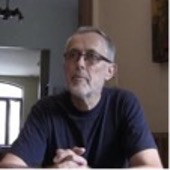
Ole Gjerstad
-
Ole was born in Norway and worked in Canada in logging and mining before studying Anthropology at Simon Fraser University, in Vancouver. While active in protests against the war in Vietnam, he became a co-founder of the Liberation Support Movement in 1970, launching an information centre in support of Southern African liberation movements and providing training and direct material support to the movements in Angola, Mozambique, Guinea-Bissau, Zimbabwe, Namibia and South Africa. Following Mozambique's independence in 1975, Ole relocated and helped establish Radio Maputo, which broadcast essential programming into apartheid South Africa. Ole now lives in Ottawa, where he continues to produce independent films with Inuit in the Canadian North.
Doug Miller 00:00
Wait, I think the first thing I’m going to do is just ask you to repeat that you are consenting to participate in the Canadian anti-apartheid activists.
Ole Gjerstad 00:11
Yes, I confirm that I participate with full consent as to the forms that I have signed.
Doug Miller
That includes using this as historical references can be archived. So that’s why we do, okay. I’m just going to stop for a second. So that’s recorded. But I’m not watching that, you know, he that he needs to be looking. Yeah. So we could just start by introducing yourself your name, a little bit about where you’ve come from and where you now live? Right.
Ole Gjerstad 00:15
So I am Ole Gjerstad, Ole Gjerstad in English. I live here in Montreal now. But we are going to talk about my longtime involvement in the anti-imperialist support and propaganda campaigns for the African liberation movements, also the Vietnam war against the Vietnam War before that, and a political career, which is not really that much over. We’re still here 45, 50 years later.
Doug Miller 00:53
Amazing. Did you remember? You know? What did you, just you? My name is Doug Miller. I’m also an anti-apartheid activist. I live in Montreal, and today is the 16th of July. Monday, there we have and so we’re here in Montreal, at his house in Montreal to talk about his experience. So do you remember fully a moment or incident or an evolution where you first became aware of apartheid and found yourself interested or upset by?
Ole Gjerstad 01:35
I do. What happened? Let’s go back. 1968, 69. I had been in Canada a couple of years.
Doug Miller
How old would you have been by then?
Ole Gjerstad
19, turning 20. Yes. Going on. 21 even. I had moved down to Vancouver. I had been working in the forest. I had been working in a mine bumming around of British Columbia. I went to Simon Fraser University, to try to get a degree. And it was a hotbed of the student movement, the leftist movement.
And among the teachers, there was a person called Don Barnett, he was a, he was a professor there. And he was an American, he has been basically chased out of the United States, unable to get work anymore. Don was an anthropologist, he had written he had been in Kenya. And he wrote the magnificent history from inside the Land and Freedom Army, the so-called Mau Mau, Land and Freedom Army against British colonialism, which was a bloody long term struggle in the 1950s. And Don went to interview Kenyan revolutionaries who had survived, many were executed by the British are killed in fighting. Don put together this really magnificent book, published by Monthly Review called “Mau Mau From Within”.
Now, Don was a Marxist. He was a very charismatic figure. After working in Kenya, he had gone to Dar es Salaam, he was teaching at the University of Dar es Salaam, where he began to hook up with the African liberation movements. We’re talking about the mid 1960s. So he came back to the States, he was at the University of Iowa, and he was being basically blacklisted there. But he had recruited a few people around him. They had gone back to Angola, a few of them and made a film inside the areas that were controlled by the MPLA. Against fighting since 1963, against Portuguese colonialism.
And so when he showed up in Vancouver, he had this idea of something that he could do. And he began recruiting among his students, including me. I was older than the Canadian students by a few years. I was really astounded by their parochialism, they knew nothing. They have experienced nothing. I had grown up in the wake of the Second World War. We had been around, we had lived to history. We have an audio issue, maybe no? And I, you know, I could never I could never identify with student politics, I thought it was really a bunch of petty bourgeois people, not really knowing what they wanted to do.
So, when the university administration clamped down on our faculty and put the whole thing into receivership because of the strength of the student movement, most of the teachers went on strike. But Don didn’t go on strike. He said, “This is bullshit”. You know, this is not where the real fight, this who are we sitting here on Burnaby Mountain striking against? I wanted to get a degree, I wasn’t going to spend my money and my time so that anybody off the street could vote on what would be my course curriculum over the next few years.
Don taught, he taught nothing but Marxism. Man oh man, we, and he was very demanding. So we studied hard, but more than anything, three or four or five hours in those courses. So this is this is the real deal. This is this is what’s going on in the world, you know, life, the world, changes in the world and are not really happening on Burnaby Mountain, or even in Vancouver, what is going to change the system is what is happening in the periphery of the imperialist system. And then maybe if we are successful, changes will also come to North America, to the, what we call the imperialist metropole. And our job is really to work with the people who are really challenging imperialism at this time, and do what we can from our relatively privileged position within the metropole. And that’s how we began in Vancouver. That’s how I became involved.
The first thing we did was to organize a campaign against Gulf Oil, because they had a concession with the Portuguese colonialists exploiting oil in Angola, making Portugal rich. Then we had a campaign against Alcan and their mining of bauxite in Jamaica, which was being refined here in Quebec, in up in Lac-Saint-Jean, and we began campaigns to draw the links between struggles and fights in the what we call the periphery, in our case in Africa, and the economy, and what we were doing here in the metropole.
To the point of, of at one point in Vancouver, it was the beginning of Greenpeace in Vancouver. At the same time people were really upset about the killing of baby seals. At the same time Du Pont was making napalm er at the big plant in Alberta. So we announced we were going to burn a baby seal in a park in Stanley Park, when Prime Minister Trudeau was coming, just to expose Canadian hypocrisy. We tried. We had a little dachshund in a burlap bag. We had a jerrycan that said napalm with skull and crossbones. It was water. And before we could do anything, the fire brigade attacked us. And most of the comrades were pulled in by police. And people. People were they thought we were crazy. We had a lot of fun.
Doug Miller 09:00
Do you think you got your message across?
Ole Gjerstad 09:03
I don’t think we had really prepared the masses for that kind of a message. We should have got a lot of headlines. We still got a lot of play on radio talk shows. But you know, I don’t know that. Too many people went to the, went to the extent of trying to figure out what this was about. But that that was the beginning.
Doug Miller 09:28
And this evolved into the Liberation Support Movement.
Ole Gjerstad 09:34
Yeah. I think we took that name or shortly after I became active in 69. We really congealed as a group several people came up from the States to join us in Vancouver. We started a print shop. And we began by distributing the literature of the various liberation movements, and doing local actions, we had made a little film and a slideshow about Angola. And we were preparing for bigger things.
And I think the next big step was I had gone to Sweden to finish my graduate work, which I never finished. But we pulled together and I was working with political organizations in Scandinavia. And in 1972, a bunch of us went first to Dar es Salaam. And Don had prepared this visit very well.
We brought a print shop, a whole print shop, sent by boat, which we set up for SWAPO in Dar es Salaam, this was before security and the airports and so on. So the two printers who came from the San Francisco Bay area, they carried print shop cylinders and stuff inside their winter coats. This is, this is their coats weighed 200 pounds. When you say SWAPO, who you’re talking about, so this was South West Africa People’s Organization, which was early 72, had just begun to fight the South African apartheid government, which had occupied virtually Namibia. So SWAPO was one of the liberation movements that we’ve supported, along with the thank you along with ZAPU, MPLA, Frelimo, the PAIGC in Guinea-Bissau. And we had some more marginal involvement in the ANC, of course, but we really focused on Southern Africa and, and the Portuguese colony of Guinea-Bissau.
So when we went to, when we went to Dar in, in 1972, it was illicit for four months. And we made direct contact with the various movements, they had offices in Dar es Salaam at the time, and we made arrangements to begin recording some of the interviews and the publications that they have many of them here, live histories, and we really laid the groundwork for the next what, 72, for the next 10 years of very intensive work that took us from – Well, I went on that trip, I went to Lusaka, together with one of the others.
I recorded this book, a life history of Dumiso Dabengwa, who was a very prominent, powerful guerrilla from Zimbabwe. My friend wrote a book called “Breaking Contracts” from Namibia, it’s in this book, which I would like, I have maybe, I don’t know, 50, 60 different publications that we did over the years here. But anyway, um, this really got us going.
And by the time we got back with all this material, we built the biggest print shop in Vancouver. And we began to use all the audiovisual material that we were accumulating to organize tours. So what you have here, for example, we set up by this time, it was becoming full time, you know, we moved into houses together, for those of us who didn’t have other sources of income go 200 bucks a month. And like my wife, Chantal, and she became a graphic artist running. We set up a big print shop.
And then we began offering these programs that took us around North America. We developed the mailing list, this is early end of the 60s, early 70s. And African Studies, Black Studies, progressive people, especially in universities, and much more in the United States had some money. So what we will do is we have three or four films or odd slideshows at the time was very popular. We had our books and publications, we had some old bands and we hit the road. And a few times, Chantal and I were gone for two, three months from, you know, from state of Maine to Texas, we did maybe 40, 50 programs. Oh boy, we sold a lot of literature. And we, we use the money to, basically we had a program with American ex-GIs, ex-soldiers, soldiers, mainly black people who had been in communications, when, who had been in the medical units, and we would collect huge quantities of communications radio equipment, as army surplus US Army surplus that we would send to MPLA or to Frelimo. And we would collect medical supplies that had some equipment, but also supplies that had some lifespan left in them. And it all went in containers to Dar es Salaam, where it was used by the movements. And later on when we had moved to the San Francisco Bay area or…
…have, we brought SWAPO people over to the United States and trained them in running a much more sophisticated print shop that we had assembled. And they spent two years in the Bay Area, and returned with a print shop in two containers. And I think it was brought over to Namibia, after Namibia became independent in 89.
Doug Miller
Amazing.
Ole Gjerstad 00:27
So we collected a lot of money, we collected a lot of stuff. And we did a lot of propaganda. So this this became a very well structured organization very, very driven with motives and commitments.
Doug Miller
And can you talk a little bit about how the organization functions and how people related to each other?
Doug Miller
How things worked as a decision-making entity?
Doug Miller
Well, we’re going to take a break. Yeah. Why does it say that?
Doug Miller
What is it?
Ole Gjerstad
It looks like it says off, but it’s on …
Doug Miller 00:03
So just to repeat the question, clearly LSM was an organization with a good structure a strong organization committed people the ability to support folks who didn’t work otherwise. How did it function? What was the, was it hierarchical? Was it just describe the organization a little bit more.
Ole Gjerstad 00:26
Okay. Well, let’s see here in this box here is Liberation Support Movement, our unity and practice. Alright, so we hear here is essentially how it was, we were never trying to become a big organization, we wanted to be a group of people who were committed full time to this work.
And around us, we would try to make affiliations and have supporters who had a lower level of commitment, who would do a lot of work. Sometimes it could be very specialized, like the people who were finding some of the equipment that we were, that we were shipping off to Africa. Other times, it would be people who came in and worked in our print shop, who helped coordinate these books put together, you know, the stuff, but really, our view was that we are, this is part of a bigger revolutionary movement. Right now, we are supporting the vanguard, if you want of this movement. But this is not the end of apartheid in South Africa and the national independence of Angola and Mozambique in the other places is not the end of our fight, that moves the fight to another part closer to us of the imperialist system, and we better be prepared.
So only the people who are really connected fully into this organization. So we had it was quite hierarchical. Don was a very, Don Barnett, founder was a very strong willed, charismatic type. He died early, he died already of a heart attack in 1975. When I was in Guinea-Bissau, Chantal and I were in Guinea-Bissau working when he died. So what it went on, on we had like a central committee, we had various departments, we had regular meetings, we engaged like the, like the Chinese and criticism and self-criticism, we had to purge ourselves of our petty bourgeois influences and instincts and be able to put our personal or personal welfare aside in the, for the betterment of the genuine struggle.
So this, this wasn’t easy. And a lot of people tried and some left completely, others said, you know, it’s too much for me, but I’ll continue to help out and so on. I don’t think we were ever more than maybe 25 people who actually worked at the heart of the organization.
We moved in 1976. I had been in Africa for a year. And I came back to Vancouver. And we decided that since most of our support was from the United States, we really should move out of Canada and move to the United States. So what we did was since a few of our people said six, seven maybe were American citizens living in in Vancouver, all we got three big Ryder rental trucks. We put a couple of print shops, books, all this stuff, all our inventory into the front of these trucks, then we put furniture and personal belongings in the back. Then the American citizens drove the trucks across the border saying they were moving back to the United States. And also those who were not American citizens, you know, just went on a day trip down to Seattle. We’re all the way, we handed over the trucks and the stuff, and those of us who were moving, headed down Interstate 5 to East Oakland, where we had contact with the Black Panthers.
And some of us went to work in the Black Panther community programs, the breakfast programs, the school, the daycare, that kind of community level organization in East Oakland, where we were living, and others set up the print shop and off, we went at a higher pace than ever. And we found a way to get some marginal income when we need. We had a, we had an old army truck. And some of us would do, you know, yard cleaning or move people. And that way, we didn’t have to take money from the organization. Chantal worked at the Oakland Post, as the layout artist and graphic artist at the Oakland Post. But at some point, my family, Chantal and I, we had two babies, by that time, we had, we had to leave the States for immigration reasons. And that’s when we moved to Mozambique. In 1980. With a small stay in Montreal on winter, actually, we were in Montreal waiting for everything to get ready for close to a year.
Doug Miller 06:24
So that’s a pretty intense experience. Was there a particular key moment or, in your case, a couple of experiences that really, really cemented your role as a movement and your commitment to it.
Ole Gjerstad 06:43
Well, I think, you know, obviously the trip, I think, in 1972, when we went to Dar es Salaam, it was until then I had, you know, I had worked in Canada, in the forest and mines. We were all immigrants, everybody there was immigrant. I had come, I had been a student in Norway. I paid on the ship by sailed on a freighter. I began working, but they really, until I met until, when the Vietnam the anti-war movement was going on. And even when I was, you know, up in on Vancouver Island, and the camps and so on, I began to pick up ideas. But I think it’s, I’m working with Don first as his student, with Don Barnett, first as his student in the university, I began to see things.
But it only became really personal once I went to Africa. And I got to hang out and talk to these guerrilla cadre and leaders who were in Dar es Salaam at the time. And you know, this was serious people. And I realize they are taking us seriously. You know, they, they, they’re not writing us off as a bunch of students. So people who are there for their own interest they, because we had prepared this visit very well. And we had concrete things to offer. You know, we said, I was an anthropologist by that time, Don, there were two others like me, two other students, Denis, Dennis Mercer and Rick Sterling. “We have these skills, we have these interests here is what we propose to do. We want to get not only your newsletters and your publications out, we want to give a global audience insight into what your struggles are all about, what colonialism has meant to the peasants and urban populations of these colonies. And here is what we propose. How this is how we propose to do it”.
And, and, you know, SWAPO, ZAPU, Frelimo, ANC, they, you know, they said, “Okay, let’s give it a whirl”. And that’s when we began and when they realized six months after we returned, books began to, you know, books began to materialize and things began to happen and print shops began arriving. You know, I think you know, enough people said, “oh, you know, yeah, okay, serious. Yeah, these people, you know, these people are serious”.
Doug Miller 09:51
Let me go back to my question after the incident with napalm burning the baby seal by this point, Do you feel you’re reaching the community, that you were making a difference? Your materials in North America were making a difference in Canada and the States?
Ole Gjerstad 10:08
And, um, you know, when, when, when we looked around Canada at that time, I think most of us felt yes, there are the right things, you know, the right things happening here. But it’s very, it’s very peripheral. A lot of it was tied up in a nationalist, anti-American, you know, left, a lot of the Anglo left was centred on distinguishing ourselves, the Canadian left from the United States, which was the principal imperialist power.
In Quebec, of course, you know, Quebec was in the summit of the independence movement than the nationalist movement here. So Quebec had other concerns.
And I think we found that we work on strikes, we work with the Postal Workers Union. In Vancouver, the Trotskyist organizations were quite, were quite strong. But we never really hooked in big to what you might call leftist movements in the States, we said we can, most of our work is, is working with the Liberation Support Movement and trying to demonstrate the connections to how we live and work here in this country. Now, sometimes that really put us at odds with, you know, other leftist groups on and sometimes within the liberation movements, you know, there were, there were different tendencies.
In the case of the ANC, you know, the people who were really part of the South African Communist Party, for the most part, we were very suspicious about, you know, because we were not part of the, the Soviet linked communist parties. In fact, we were quite critical, but we never made a big issue of that, that was not our business, we are not out to alienate anybody, we are just out to have our priorities straight here. You know, so I remember we had, you know, when, when the publication, the South African Communist published an article saying, “These people are not our friends”, we had to have a real discussion with them, you know.
And inside the ANC, there were many talents, and some of them were very friendly, and gave us a lot of openings and others were very much, you know, standing for, preferring to, to stand apart. But, you know, we had our, we had our priorities, I think our strength is to try to keep our politics separate from that of the liberation movements in the sense that this is what they are doing, they must have our support, but our support this is also in the, in a wider anti-imperialist interest. It doesn’t stop with national independence. It’s a first phase in the destruction of imperialism.
Doug Miller 13:46
In that vein in what did you have any connections, for instance, with Canadian indigenous movements or environmental or gender or labour?
Ole Gjerstad 13:55
Yeah, we began, you know, when I was here, so one of the first books we published, “Bobbi Lee, Indian Rebel”, and one, Bobbi Lee is now called, Bobbi Lee was what she preferred to use in the book. Her name today is Lee Maracle. She was one of the First Nations activists in the States. At Simon Fraser, there was something called the Indian study group. And so, you know, we went to some meetings, we got together with them. Some of them took us on the tour up to the place of Canyon.
And I was really into to give you an example, I was studying labour history. You know, I was really interested in labour history, and including the strikes the Chinese labour situation, the strikes, they had battles they had fought up in the Fraser Canyon when they were building the railroad, and then Henry Jack, who was one of the Stó:lō First Nation members from the Fraser Canyon said, “Well, you know, these, these guys who were striking, they also, they also fought Indian wars. And they killed a lot of our people”. And I said, “Holy shit, I really didn’t. I never, never even thought of that”. This is, you know, 1971 you know? Yeah. So, so it was a real eye opener, you know, but we never, in the years that we, that we had LSM we never had a major involvement in the indigenous movement as it was at that time.
And as far as the labour movements we worked with, we worked in campaigns, you know, not on long term issues. We worked in support of strikes, we work where they were, for example, longshoreman strikes, for example, in Vancouver, it was, it was a big deal. Not nearly as big as in the Bay Area minute, but there were boycotts that were progressive actions against cargoes and we would get them…
Gwen Schulman 00:08
Okay, so they I had a question. It’s sort of a question about moving forward. So everything you’ve described today talks about honing these incredible skills, working in very tight solidarity with liberation movements, that whole notion of, as moving print shops to Dar and providing tools for people to carry their movement forward. What’s the legacy of that today, the world has changed a lot? We are in a neocolonial situation, imperialism is as strong as ever. But there aren’t really liberation movements, for the most part. So what’s the lesson for activists today?
Ole Gjerstad 01:04
Close the door, because I think it’s going to get louder. Yeah. Um, you know, it’s, it’s a very, it’s a very good question. And it’s also, it could be a dispiriting, you know, turn in our discussion here.
What helps me is after, after leaving the Bay Area, and then going to work in Mozambique, I worked for the Mozambican government for about five, four years, setting up radio stations in the media communicating what Mozambique and Frelimo government was doing in English to the neighbouring countries. And I was inside a government which was under siege, which had enormous problems, which was pulled in all kinds of directions.
First of all, it was under attack, literally physical, military attack from the first from the Rhodesian government until that was over. And then from the apartheid government through launching a war, incredible economic problems, and then trying to lift up a nation, which is 87%, illiterate. And, you know, we were broadcasting at Radio Mozambique, we were broadcasting in 11 different languages, and you’re trying to put this together.
So I became familiar with the need for compromises for difficult decisions that have to be made, sometimes very painful ones. That would sort of say, you’d say, you know, you have to sign the pact with South Africa, because to prevent ANC from getting in, you know, the, the infamous Nkomati Accord in 1984. This is a betrayal of the revolution. But what are you going to do? Because you know, that if you don’t do this, you know, the entire nation might go up in flames, and it would be irrelevant. What do you think you were trying to do? So you live with these things.
And then you say it’s, maybe it’s a bit harder than we thought. Capitalism in its various varieties is stronger than we thought. The military capacities for imperialist nations and the links through the IMF and the World Bank and the capitalist network that after all, new the liberation movements, newly liberated countries, live within is very strong. So you accept that now, more, more recently, you know, we have seen that it goes from making compromises towards corruption towards a more deeper sense of betrayal of what often struggles we run about.
It happened very early in Angola. You know, where, where the situation was extremely difficult because of the war against UNITA and the South African continue aggression, their dependence on Cuban troops and so on. But that in the end, you know that It’s not an excuse for the kind of regime that the second generation of MPLA leaders engaged in, there is no, there is no excuse for that. Mozambique has followed suit, it took much longer took the death of Samora Machel in 1986 for the second one of the leaders to begin to give in to temptations and so on. I looked upon that Guinea-Bissau, you know, actually became a failed state, the social structure, the conditions was so, was so difficult, the cohesion was so weak, the liberation movement pretty much disintegrated soon after independence. And it was taken over the state was on captured by narcos and, and criminal elements, it became a route for drugs between South America and Europe.
Anyway, all this to say that, you know, it is a dismal, it is a dismal scene. So did we do the wrong thing that we did we, you know, help on people who would movements that would turn out to be turned out to be something that revolts or dismays us, to say the least? Well, I am very, I don’t want to pass too much judgment. What I can say is, I think we did the right thing, in terms of what had to happen, colonialism, apartheid, were to whatever what’s going to happen. We didn’t know, they didn’t know. But it was a face of history that had to come to an end. Never mind what we’ve thought about it, and hoped it could be.
The other thing I will say is that my political trajectory and that of my comrades in the LSM, you know, it was basically sound we, you know, our goal was not simply national independence for these countries, our goal was to foster an anti-imperialist revolution, or a dramatic social change that would take in the entire system. That has not happened. That doesn’t mean it’s all over. But what has happened is that the movement of social change has is exact, has moved away, or Angola, Mozambique, Guinea-Bissau are not in the vanguard of changing or challenging the global capitalist system. Now, South Africa is in the, it’s in the midst of intense struggles over the or the direction that that country will go. And, you know, it’s very tense, it’s extremely difficult for progressive forces to prevail in that country. So we don’t know many things here.
You know, young people here, struggles in Canada now, revolve around different issues. They are very interesting. They are very encouraging, in many ways, whether it’s the movements around environmental issues, whether it’s the fight for indigenous rights, these are very important. political, social, and human rights issues. That gives us plenty of space for those, those of us who want to do something, there was absolutely no lack of room to move and issues to get involved with. And I have to say I am as, what should I say I am as committed working with the Inuit and other indigenous people I was working with Frelimo and MPLA and PAIGC. And I’m just very happy that you know, I get to do this and find myself there in a way. The links between the two chapters of this are of my life may not be evident, but you know, I, see them in here. For me it’s pretty clear.
Doug Miller 10:11
Amazing. Wow. Listen, it would be very interesting.
Now this box is a magic box. It’s if we could just sort of, well, why don’t we start by clearing the table and then bring up the new stuff? Yeah. You’ve got you’ve got some posters here first. You’ve already explained the, yeah, the, tell me when. Yeah.
Ole Gjerstad 10:41
So no, but here. So see. So this poster here I think this is the first poster we ever printed back in 69.
Doug Miller 10:54
And it was iconic as you say,
Ole Gjerstad 10:56
Yeah, yeah. Yeah, it was a photo that one of our members took on that first trip into in 68, into the liberated areas of Angola. And we turned it into a poster. I think it was the first Angola poster to make its way in, in North America. And here it says what does it say? “Liberation Support Movement Information Center, box 94338, Richmond, BC, Canada”. I sure remember that.
So here, more on Angolan women. Same postal address, but a later product. I forget the most, a day of Angolan women. And we always did. We always did something on occasion of that day, a film showing meeting some kind of campaign. So that is, this is a good example of Selma Waldman’s work, you know, and she did posters, she worked in our books, and all of that.
Let’s see, this is some, so here is SWAPO And now, by this time we are in. We’re in Berkeley, or in Oakland, in the Bay Area. Maybe this was the first SWAPO poster we did. So it’s from 1976, I think, probably. And, you know, these posters, we sold, we sold them distributed a lot of them. You know, by this time, it says Liberation Support Movement, Box 2077, Oakland, California 94604. Another address engraved in my little head. This one really got around. It was an artist, a Latin artist, I’m looking for his name. He had produced this image of Mandela. And he, he agreed to give us the right to donate that artwork. And you know, this poster, I’ve seen it in so many places. It was in my son’s room when he was growing up. Wow, that very one.
I think the name is on this side of the corner. Right, it should be. Right beside his chin, right beside his signature. Yes. Rupert García, ’81. And then see on the back, there is basically a list of all organizations working on in the anti-apartheid movement. Not all maybe there’s a hole. It’s like a whole brochure on the back of the of the poster. And it says it’s about who is Nelson Mandela, the defiance campaign, underground, prison, the campaign to free him and then solidarity organizations in a whole bunch of countries.
These are some, we did a lot of we did a lot of posters. We also did, man. We did calendars. See African liberation calendar 70, 76 77 or 78. and I am trying to remember I think we sold maybe between, you know, four and 5000 of these all over North America, but also in Europe. I remember going around London, you know, with, with big, big cases on the London Underground to bookstores and places, walking calendars and books and posters and all kinds of stuff on and then we’d like more stuff here. I mean this, this is a challenge here, because these are all campaign buttons. We did this. I remember that.
And I was in Angola during late 75 and early 76. When they declared independence and were invaded by South Africa and the Cubans came and when I came back, we this symbol this design was all over Angola. So we, we took it and it really moved. Here is another one. OMA, the organization of Angolan women, organizer sound familiar to some colour…
Ole Gjerstad 00:00
… issue by issue basis.
Doug Miller 00:04
And what about gender in the group in terms of relations and also in terms of selling a message or sending singing a song about gender and gender relations?
Ole Gjerstad 00:17
I think we were certainly not ahead of the times, I think, you know, Don was a very strong leader for as long as he was in charge. More than half of our core members were women. You know, and in the way we work. It was, it was, well, I would say there wasn’t an issue, but I don’t know that all the women would agree that it wasn’t an issue. You know, some of us were had some heavy, I think baggage from our student lives.
And the way we were used to functioning, when it really changed is when we moved to the Bay Area at the end of 76. Because the San Francisco Bay Area was at the cusp of all these movements, including I remember, you know, if, if you weren’t gay, it could be a problem. You had a credibility problem, if you were a straight white male. And, and never mind what work you were doing.
And I began to do radio. When we lived in the Bay Area, there was a listener sponsored radio KPFA out of Berkeley, and they were part of what was called the Pacifica chain. This is before and they had five stations. Bay Area, Houston, Washington and New York. And, and, you know, I KPFA it. Man, oh, man, you know, to be a white straight male was not that easy, in 1976, 77, 78. But I don’t think it ever, you know, we never had a serious look at this as an issue. And we were we were very busy with what we were doing.
Doug Miller 02:27
And I’m also noticing a change in your own personal role. Now before you’re talking anthropologically, and gathering life histories. Now you’re starting to talk more journalistically about yours. Were you involved in that way? Or is that?
Ole Gjerstad 02:42
Well, yes, I, you know, I realized I was very serious about my studies when I began. And I thought maybe, maybe I’ll be an academic. But then, I realized very quickly with all the bullshit going on at the university and looking at these miserable people, who were well professors, and just walked away from us, abandon us, for all kinds of shit infantile reasons, I said, “I’m not going spend my life doing this crap and write papers that may be, you know, 35 people will read in the whole wide world”. I got a job offer when I was doing my PhD, I got a job offer as an anthropologist to go to Indonesia, and work for Phillips Oil to figure out how to move Indigenous people away from their concessions. And I said, okay, yeah, no, that’s, that’s what that and my supervisor said, you know, this could be very interesting. And I looked at this and I said, “Holy shit, go on, get out of here”. So I took my research money to write my thesis. And I went to Guinea-Bissau, and wrote “Sowing the First Harvest” and Chantal collected a bunch of …
Doug Miller 04:14
Just hold the cover down. Yeah, yeah. Beautiful graphic. Did Chantal do it?
Ole Gjerstad 04:15
No, we had a very good artist, Selma, Selma, who did she, live in Seattle? She did virtually all our, you know, all our, like this. This is Selma, Selma Waldman. She always, she worked hard. She never wanted a cent, you know, she did a lot of our illustration. She was really something.
Doug Miller 04:51
What I’m going to suggest is we’ll go through almost everything individually at the end of this, because it’s all interesting, all fascinating.
Ole Gjerstad 04:58
But just to finish the questions. So look, I said, you know, you want to be effective here, you forget about, forget about. Forget about the university. So I came back, I had spent the money, I said, “I’m dropping out. Sorry, supervisor. So this isn’t for me. Thank you very much for your time”. And I began to work full time for LSM. Yeah, finding, finding a way to do it. And that’s when I began to get serious about my writing. And so, you know, I, I began to write for local publications on when I went to work for KPFA radio, you know, I really, and I enjoyed it. I really, I really enjoyed it, you know, and slowly, you know, I got the better story sense. And in the end, many of our books, you know, here, “Battlefront Namibia”. You know, this was published in the end, and I don’t know, 11 languages, all over the world? And I spent two months recording this with John Ya-Otto, in Lusaka. And then two other comrades back in Oakland, transcribed hundreds of pages. And then Heinemann, we sent chapter two. Heinemann. And they said, Heinemann Educational Books. They had their African writers series. And they said, great, you know, that’s it. And off, it went. Hot stuff. This works. This is what we do. This works. This works.
Doug Miller 06:48
I know, you’ve talked a little bit about the differences. And so I’m particularly related to the liberation movements. But I wonder within the anti-apartheid movements that were present in Canada, to a lesser extent, the states were interested in Canada. Did you have any problems with relations between other groups?
Ole Gjerstad 07:13
Um, they were they were all the groups that were very different from us. We, we will always try and we never, we never looked for problems. I don’t think we, you know, there were church groups, or there were church groups, there were union groups. All we had in Vancouver, we had a lot of common actions and campaigns with those. We, we were different.
We never, we never would never criticize anything that anybody else was doing, even though they were, you know, in, they would the politics may have been very different from our own. No, we were not. We were not looking for arguments or schisms or even debates. In fact, I think we thought sometimes. political debates here over small issues are not very important. They are not. They’re basically a waste of time. You know, let’s, let’s, let’s do what we can let’s work with everybody we can work with. But then let’s, you know, let’s get on with it. You know, and do that sounds, may sound a bit elitist. But I think probably it was, I hope it wasn’t elitist. And to this day, I think it was the right thing to do.
Doug Miller 08:50
I couldn’t agree more. Anyway, in terms of the other thing I asked about reaching out in terms of an impact on the public and so on. What about the effect of the anti-apartheid movement on Canadian government and policy and moving the case forward a that level? Did you see anything change in your period, earlier in the lifespan, in the enterprise?
Ole Gjerstad 09:17
Yeah, that’s a good question. I really have to think back to our, I mean, what did Canada do under Trudeau? Who covered – let’s close the door for audio reasons? Sorry, guys. The monitor’s loud. I have to think back because what much of the period we talking about was the Liberal government of Trudeau you know, which was vaguely progressive in some areas, links with Cuba being one and so on, but was quite inconsequential in other things, I think the first real difference that I saw came much later when it was time for independence in Zimbabwe. And the Progressive Conservative government of Joe Clark and Flora MacDonald, being the foreign minister really got involved in the Lancaster House agreement, negotiations that led the Zimbabwean independence and played a very activist progressive role in, you know, in keeping back the British imperial influence and actually moving and neutralizing reactionary, you know, elements promoted by the British, I mean, it was really touch and go there for a long time. By that time we were in Montreal, and what did you say?
Doug Miller 10:57
Interesting, that was a very short-lived government. And yet, you’re giving them a lot of credit.
Ole Gjerstad 11:01
Yeah, that’s the first time I, that 79. So being away, I’d been in Africa and in the States for a while, but I came back here, and, you know, they were doing, they were doing good.
Doug Miller 11:21
How do you think you were impacted in the long term, by your participation in the anti-apartheid movement?
Ole Gjerstad 11:30
How I was impacted?
Doug Miller
Yeah.
Ole Gjerstad
Well, I think I really, I really felt that I belong to something that is much larger than the place that where I happen to find myself and someone, you know, when I look at my life, you know, I have more. I have many home countries, you know, one, I spent my first 19 years in Norway, then I came to Canada, then for short, while I was in Sweden, so that doesn’t count. I moved to the States, and then we lived in Mozambique for quite a long time. And even within Canada, you know, I lived in BC, but I’m very happy in Quebec. So I really look upon myself, as you know, somebody who is a part of these places, and what has been going on there.
And when I look at my life, and even what I am doing today, you know, I think it really, it really has to do with I see myself, wherever I am, in the small and modest ways that I can do something because I also have to make a living and, and, you know, raise a family, but do things that are interesting, that worthwhile. And that play some kind of a part in moving things ahead. Whatever domain, whatever particular struggle we’re talking about, that even goes to work in, for CBC or you know, the difference, or the places I’ve worked.
Doug Miller 13:21
I think you’re also being very modest about your impact as a filmmaker. Part of it comes out of this as well, and you can see it with your work in the north and support you get for it.
Ole Gjerstad
Well, I’m very lucky. You know, I’ve been very privileged. I’ve been able to do, I’ve been able to do things that I like to do and that I feel makes a difference, and also be able to pay my bills while doing it. And you know, not that many people can do that.
Doug Miller
It’s a hard combination.
Ole Gjerstad
No, it’s yeah, it’s luck. Some of it is self-made luck, but a lot of it is just things have fallen into place. And you know, it’s I don’t take it for granted. You know, I’m on, I’m just lucky. I’m happy with what I’ve been able to, to do and get away with it.
Doug Miller 14:22
Okay, I think we’ll take a brief musical pause now. Yeah …
Doug Miller 00:03
And in this place that you have got slapped on various SWAPO buttons?
Ole Gjerstad 00:03
Yes. And I can’t, I can’t tell you how many people how many times people have asked me what SWAPO, what SWAPO? Nobody had heard. Yeah. Now they are showing me, somebody called them here. This is a big one. This is “FRELIMO vencerá”. This was I think, our first FRELIMO button. Anyway, you know, they’re this, this is, that’s huge.
Doug Miller 00:48
What a huge impact all of those, are you guys were around.
Ole Gjerstad 00:55
Yeah. I mean, we could, we could look and look, and look, here’s a bigger, this is same, this is a Dutch version of the same. I remember, we worked a lot with Dutch organizations
Gwen Schulman
Also speak to the role of artists in the movement, what you’re showing us is very beautiful. You know, a lot of political stuff is not beautiful, it’s important, but it’s not aesthetically, all that exciting. But the material, you’re showing us the covers of the books, the calendars, the buttons, it’s really, the role of the artist in the movement was very important.
Ole Gjerstad 01:36
I agree. And, you know, I have to credit, I have to credit Selma and Don and Chantal and other people who I remember putting together this cover here, which is just a rendition of the photograph that I took in Angola sometime in late 75. And, you know, it’s, it’s very clear, and this book came out in many, many editions. Here is the book about Bobbi Lee, aka Lee Maracle. And you know, that was, that was already 1972 that we made that. There is a story from South Africa, one of the ANC cadre, “From Shantytown to Forest”. And the book is called Norman Duka. I don’t recall what his real name is, you know, in cases like this Zimbabwe, South Africa, we could not use the real name of the people who came out and told us their life history.
Let us see. We continue to do stuff from Kenya, because our founder, Don Barnett had done so much work. And so he dug into his material. And he published two or three more stories that didn’t make it into his first book. And this is all from the Land and Freedom Army. And you know, this is one of the most or distorted, vilified, anti-colonial uprisings that have ever happened, where the Kenyan Land and Freedom Army was depicted right across the Western world and even inside Kenya, you know, as a bunch of bloodthirsty primitive cannibals, bandits and barbarians when in fact it was, it was a genuine uprising against the robbery and theft of land and oppression of other people.
And even today, you know, the first president of Kenya Jomo Kenyatta. He was never Mau Mau, he did everything he could to sideline them after independence. And Kenya has, Kenya has done you know, a sad story of imperialist influence. This is the first interview we did with SWAPO, Andreas Shipanga was their information secretary. This, I remember doing this soon after we got through Dar es Salaam in 72. Maybe it was the first interview we did with Andreas Shipanga. Would anybody from SWAPO, here was another book from Guinea-Bissau. This is simply a reprint of the speeches of Amilcar Cabral and other documents of the PAIGC, meaning it’s not, we simply put together their, what they had to say and translated it from Portuguese to English and got it out, you know? Nobody knew about, nobody knew about Guinea-Bissau and yeah, man oh man here, here is more Kenya. What do we have here? Zimbabwe, the organizer.
Doug Miller 05:33
This is Temba Moyo, who’s the late Dumiso Dabengwa, who was the chief of intelligence.
Ole Gjerstad 05:45
Exactly. There’s so much stuff. Angola, Angola. Here is that famous photo again:
Doug Miller 06:01
“People’s War in Africa, an introduction to our comrades fighting imperialism in Angola, Mozambique and Guinea: Bay Area Liberation Support”. So the name evolved as you move that personnel
Ole Gjerstad 06:13
That was a much bigger or group, a coalition of many groups. See, we I talked to you about us collecting medical equipment for the MPLA, equipment and supplies, that it was service ,so we produced this. Here is George Silundika, an interview with … of ZAPU. Here is Angola, an interview with one of the commanders, Seta Likambuila. Here is Marcelino dos Santos of Frelimo. He was, you know, maybe the primary intellectual. Here is another story from Kenya, the one of the Mau Mau fighters.
Doug Miller 07:03
“The Hardcore: Story of Karigo Muchai”.
Ole Gjerstad 07:05
And then we had our own magazine where we did liberation movement stuff, we also did theoretical things.
Ole Gjerstad 07:17
Oh, is that when Don passed away?
Doug Miller
Yes. Homage to Don. Okay,
Ole Gjerstad 07:22
Okay, so it’s an homage to Don, here is, yeah, but Cuban artists
Doug Miller 07:31
I noticed “An Artists’ Glimpse of Revolutionary Cuba”, also “Zimbabwe: Untangling The Web”. That was summer of 76.
Ole Gjerstad 07:37
Here we are. We’re back from Africa.
Doug Miller 07:41
“Proletarian Internationalism: LSM in Africa”.
Ole Gjerstad 07:45
Here we have a grim looking pamphlet, but it is about who we are.
Doug Miller 07:50
Don Barnett, “Toward an International Strategy”.
Ole Gjerstad 07:54
Here we are. This is a this is a pamphlet when it looked like in Zimbabwe, ZAPU, ZANU-PF and some other newer hybrid movement could get it together. And we said let us, let us work in the course of unity and see what they have to say. Of course, it didn’t. It didn’t work. There is more from Angola, wrote –
Doug Miller 08:27
Deliberation, MPLA documents on the founding of the People’s Republic of Angola.
Ole Gjerstad 08:34
Here is.
Doug Miller 08:36
“Interview on Angola, Spartacus Monimambo, Commander and Member of MPLA Committee Director”.
Ole Gjerstad 08:46
Here is a life history, Rui Pinto from Angola, one of the military commanders that we met along the way, a press speech by President Agostinho Neto of the MPLA. This is a reprint of a FRELIMO publication, speeches by Samora Machel. [Doug: Holy smokes, you guys were producing!] See here, this must have been “Who Will Rule Rhodesia Next Year?”
Doug Miller 09:21
That must have been a conference in 76.
Ole Gjerstad 09:27
Yeah, here “Hurricane in the Horn: Eritrea, Ethiopia, Somalia”. This was about this was a difficult time because this is when Somalia had gone to war against Ethiopia. It was, Haile Selassie had been deposed and Somalia said “we’re going get back, what is the Somali part of Ethiopia”. And then, and then the Soviet Union told the Cubans to go in and help the Derg, the Ethiopian military regime so the Cuban, the Cuban army intervened and saved, save the skin, save the ass of the Ethiopian military junta. And I remember this. We were in the Bay Area. This was all boy, this was a big struggle, we because the Bay Area was full of Ethiopians was full of Eritreans. And you know, it really, it really came down hard, but this is why I remember this. And of course, now I’m married to Somali and an Eritrean. She is actually and we’ll never get past this one. No, no, no.
Ole Gjerstad 10:52
So here I see lots, lots, lots. Notebooks. I don’t know. This must have been very early 68.
Doug Miller 11:08
“People’s War in Angola” by Roy Harvey, report on the first Eastern Regional Conference of The MPLA
Ole Gjerstad
Yeah. 68. Well, I’m here is one another piece by Don, theory, “Peasant Types and Revolutionary Potential”. It’s anthropology but it’s here, look, this. I just I sent this back from Angola.
Ole Gjerstad 11:36
I remember this one very well. Yeah. 75, 76. Yeah, we had just moved to Lusaka ourselves.
Ole Gjerstad 11:43
Okay. And I sent this back from so they could print it. Okay, folks, this stuff here, books, LSM programs, we will tell you what’s happening. Who is winning the war in Namibia? Book a film, book a campaign, book a discussion. We’ll be there.
Doug Miller 12:11
Yes, an amazing life amazing experience and amazing contribution?
Ole Gjerstad 12:16
Well, it’s, it was no sacrifice. It was a lot of fun.
Doug Miller 12:25
Now, we’ve talked about a lot of things. But is there anything you think we should add that we didn’t cover? Or that would be interesting to folks who are interested in how the anti-apartheid struggle moved evolved?
Ole Gjerstad 12:42
I think it’s important that people should not be too dispirited and demobilized by the post-independence struggles and things that have happened in you know, we, we have these discussions from time to time saying, “Oh, man or man, we, you know, we did a lot of work and look, now, it’s one regime is as corrupt as another one group of, you know, leaders who were even there during the armed struggle, they have usurped the power and they are turning the countries into dynasties”. Well, yes, yes, they are. This is, it’s a long struggle. You know, it’s a long struggle with many ups and downs. I think it’s important for people to have to develop on, advance their ideas as with Gwen’s question, you know, how do we look at the changes in the capitalist system and the strength and weaknesses of global capitalism as it stands today, and the many changes, and there will always be opportunities to do the right thing. Never mind where you are, or who you are, or what time it is.
Don’t let yourself sit back and say “it was for nothing. Fuck this. You know, I wasted my time”. No, no, no, you know, we, we just look out there on Clark Street, or to Nunavut, or Oka, Kahnawake. And there’s lots of stuff to do.
Doug Miller 14:31
Thank you so much.
Ole Gjerstad 14:32
Thank you, Doug. Gwen, thank you very much for your interest.
Credits
Bio: Ole was born in Norway and worked in Canada in logging and mining before studying Anthropology at Simon Fraser University, in Vancouver. While active in protests against the war in Vietnam, he became a co-founder of the Liberation Support Movement in 1970, launching an information centre in support of Southern African liberation movements and providing training and direct material support to the movements in Angola, Mozambique, Guinea-Bissau, Zimbabwe, Namibia and South Africa. Following Mozambique's independence in 1975, Ole relocated and helped establish Radio Maputo, which broadcast essential programming into apartheid South Africa. Ole now lives in Ottawa, where he continues to produce independent films with Inuit in the Canadian North.