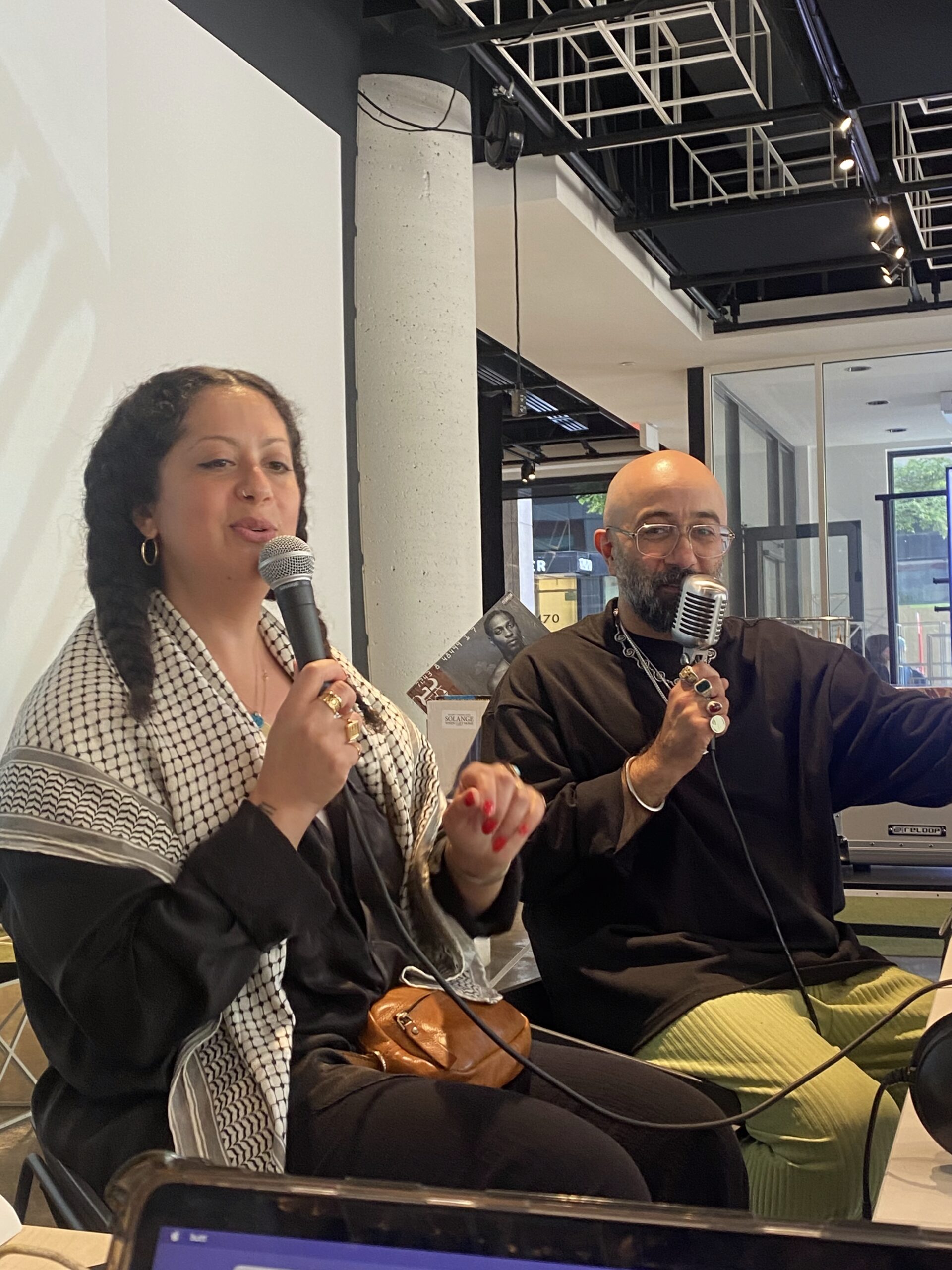
An Interview with Burs
On October 15, I sat down for a chat with Burs, the fantastic indie-folk-rock quartet from Toronto/Hamilton. We talked about the making of their new album, Significance, Otherness, which was JUST released on November 21.
I had many burning questions, and though I couldn’t fit our full hour-long conversation here, I saved the best tidbits—a word they collectively love—so you can catch a sparkly glimpse into the beautiful world of Burs.
Your new single and music video for “IHAL” just came out. I understand this to be a big band recording of the closer track off of Holding Patterns. What inspired you to rework this track for Significance, Otherness?
Ray Goudy: We had been playing it as a live tune. The Holding Patterns version is a voice memo of Lauren, basically writing it on the spot, and it just kept developing in the rehearsal room. Then we turned it into a full band thing for our live show. It had just been one of the tunes in our repertoire at the time when we were making our record, and we were pretty sure it was going to be a record song. There’s a feeling that this was going to be something that would kind of help guide the listener across the albums, or at least hint at a lineage between them.
Devon Savas: We also tried a couple of different versions before Holding Patterns came out, and there was just something really special about that voice memo that Lauren got. I think we always had it in the back of our minds that we would give a little bit of room to develop it for a future recording.
Lauren Dillen: Through playing it live, the band arrangement became so strong that it was a surefire track to record.
Do you feel like it means something different to you now that it’s become greater and integrated with the rest of the band?
LD: I think it only fulfilled its prophecy. “I have a light, and soon it grows bigger,” … it’s just a metaphor for my own personhood, and then my relationship with music and Burs as a whole.
Walk me through how you chose “Soil” and “Blackflies” to come out first. Was it clear early on that those tracks were going to be the double single?
Aidan McConnell: That was a nice little compromise between us and the label we’re working with, Birthday Cake. We figured releasing a double single a good amount of time before the record would do a reset in the listening spaces at home, and not just at shows, to show that we have new things happening. Picking those two songs specifically just felt like a really good pairing to introduce people to the various sounds on the album. Between the two of them, there are some folky and earthy sounds, some electronic, and more experimental sounds. A part of “Blackflies” gets kind of rocking with the distorted guitars and bass solo.
LD: They kind of felt like sibling songs already before that pairing. Ray had written “Blackflies”, and I had written “Soil” around the same time. So they moved together for so long, and that was part of that choice, too.
AM: They’re also beside each other on the actual record, but in a different order than they are on the double single. “Blackflies” ends with the glitchy drum machine moment, and then “Soil” starts with that drum fill.
LD: “Soil” is the beginning of side B on the actual vinyl. So you hear the first note as BAH BAH BAH.
What inspired the sequencing?
DS: A lot of conversation… we ended up arriving for the most part with these pairings of three, which work really nice. “All the Stops” is just setting the record template, just a concise intro, and then it’s “Little Heart,” “Is There Anybody Up There,” “Country Song,” which feels like a movement to me. And then there are these little reset moments where there are two or three tracks that are synchronous for keys, but they’re in different spaces for energy. Being able to shine a light on everything appropriately is ultimately what informed it.
AM: Lauren has a visceral, emotional, deep feeling experience of sequencing; it just feels right or wrong, and she’s very in tune with that. Devon has this really wild ability with key sequences. We’ll just be talking about songs, and it’s evident that he is hearing the first and last chord of every song and how those are linking up. I think the final sequence has all of these skills present in it.
RG: You could also say that side A and side B are their own little worlds, which is the nice thing about making our record into vinyl. This was the first time we were thinking about where side A will end and where side B will start.
LD: And we should also make known that side A is Significance and side B is Otherness.
Clever.
RG: Oldest trick in the book, actually.
DS: I think one fun party trick we picked up on is starting a track with a cool little reset moment. That really benefited our sequencing. At the beginning of “Little Heart,” there’s that spring tank. Sounds like somebody’s dropping an amplifier. I think that’s something we should lean more into in our future tracks; it opens up a lot of possibilities.
Lauren talked in an Instagram post about how “Little Heart” is five years old. How long have these tracks been around? Who did they start with? How much collaboration was there between each of the tracks?
LD: “Little Heart” started as kind of a personal relationship story, and I wrote it on an acoustic guitar about five years ago. And then I brought it to the band because I felt it needed to feel a lot more urgent and explosive than the way I was able to play it by myself. And I think generally all of our songs thus far have started with an individual writing the song. So far, everyone but Aidan has contributed a song to the band, but that will surely change.
AM: Hehehe.
LD: We bring our song, we arrange it all together, and it becomes the Burs version of the song.
DS: I think Lauren’s songs have generally been kicking around a little bit longer. Lauren, Ray, and I kind of worked on “All The Stops” when we were going through a bit of a lineup transition in early 2023. That was really exciting because I think that was the first time after going through that change-up that I had a realization that we had some of our best music ahead of us. “Hourglass”, “Is There Anybody Up There”, and “Sorrows” were the only ones that we didn’t play live before recording. They came to the studio as fairly fresh ideas, but everything else was very informed by live performances.
RG: From 5 years to like right before the day of recording, there’s like a variety of ages of songs. I’m always curious to know if that’s obvious. Where I feel like “IHAL” we had worked on it for so long and it came together so fast, when we recorded it speaks a little to how long we’d have been playing it up until that time.
AM: I think from my experience, “IHAL” is a song that is so natural and obvious to me, how I want to play that song, and it really plays to my strengths as a drummer. I think as we continue writing more and more together, which is something we’ve talked about, we’ll be writing more and more to each other’s strengths. So I don’t think it was just that “IHAL” had been played more than other ones, but I think it was coincidentally on a performance level that speaks to our abilities.
RG: We love a big slow three.
AM: We love a big slow three, and that is the truth! And you can certainly expect a couple more of those through the years.
Lauren, you already touched on this a little bit. What makes the Burs sound? You said turning the acoustic more urgent and explosive. Is there anything else that marks what the Burs sound is?
LD: We have said in the past that Burs is cleverly disguised folk music. So at its core, it’s like the transition from folk to something else, and then the something else lives in different scenes or worlds. We have urgency, we have explosiveness, and we also have a lot of thoughtfulness and harmony.
AM: I think in lyrics and vocal performance, it’s very heart out on the sleeve. It’s very honest and big in feeling.
DS: To go back to what separates Burs from these solo pieces, I think everything we do when we’re trying to fill space, if we’re playing with ambience, even when we’re harmonizing, it always feels like a response to what somebody else is doing. Just more like a moving organism, as opposed to playing a song as it needs to.
AM: I think Devon and I get to take up a lot more space as drummer and bass player in this band than you normally can in most bands. I will do like out-of-time drum solos, and Devon will be in like spaceship motherboard pedal-land, creating wild atmospheres. We get to do some wild things.
DS: Aidan’s also done that with a contact mic and some delays before, too. It’s nice to think about occupying different frequencies or throwing different colours of paint at the wall that would match the energy. Sometimes that goes beyond just laying down a big juicy groove, even though we love to do that too.
LD: I feel like every single sound is a voice of its own – as equal to the human voice. That’s also a core part of the group playing vibe.
Are there any new sounds, new techniques, new instruments that you’re playing with for this project? What are some Easter eggs I can listen out for?
DS: This record was cool because we all sort of had a secondary major that got to take a little more spotlight. Ray picked up pedal steel, and that kind of became a character, a pretty important one that you see across a few of the songs. Lauren does a lot of ambient vocals, and we used this Orban [spring reverb], which kind of replicated this live trick she does. It felt like the human voice, and then there’s this voice from another dimension calling out — a lot of that on “IHAL.”
RG: It’s basically a spring tank like one in a guitar amplifier, but that we would just send a lot of not-guitar sounds to. It’s not too much of a digital computery sound — it’s actually like a lot of different noises just being pushed through a spring.
DS: I think that actually my favorite thing about “IHAL” is that it’s so minimal with its layers. Everybody has a mirrored character with Lauren. It’s the two different vocal styles, the glitched-out versus the natural guitar. Percussion’s a big part of why we were excited to get Aidan on board. He’s world-class with every rhythmic instrument, and we found a lot of creative moments.
AM: I think my two drum secrets to share that are fun for me are in “Country Song.” There are two parallel drum performances: one where I’m playing with drumsticks, and the other where I’m playing with brushes. They’re kind of just like co-inhabiting the drum role. And then there’s another song, “Is There Anybody Up There,” I’m kind of just doing like a free jazz brush solo, and I wasn’t listening to the recording while doing it, and it ended up being exactly the length of the recording of the song. Then that’s gone through like various reverb and other processing.
DS: We split the drum takes left and right, and then we ran it through this really heavy compressor in a reverb unit, and a rainbow machine. We took it to flavour town and put it down the middle.
AM: It doesn’t really sound like drums, but it’s this cacophonous rumbling of sound in the background, and it’s just me doing like a solo that builds throughout the song.
DS: Sounds like you’re falling down the stairs with your drums at parts.
RG: I’ll add that, like on the grander scheme of the record, we recorded it in the annexe building of a church. We captured a different part of the room with its own designated room microphone for all of the band takes we were doing. There are some things that get a little bit of extra added reflection or snap to them, especially the drums—I think they sound great for the room we’re playing in.
How did the room that you were recording in influence your sound?
DS: We went into it wanting the room to be its own instrument. We wanted the natural reverb of recording in a church as opposed to processing too much.
AM: I thought that the room would have the biggest influence because of its sound, but I think that, really, the feeling of the room mattered much more in the end. Because it was at a church, sometimes we would be crossing in and out at the same time as a baby choir, or some other event in the basement. There’s this one room, and we were just watching some Super 8 footage of it for our music video for “All The Stops”, and the label for this little room is “friendship room”. Eli, the person who runs the studio, has it set up quite beautifully.
The music video for “IHAL” came out today, which takes place in a cave in Lion’s Head. And in Summer 2023, you did the Black Star cover in the chapel in Lion’s Head. Do you imagine the album taking place in nature, or is it more of a city album?
LD: Personally, I don’t feel it taking place in any physical location, but kind of the silence of thoughts, and thinking about relationships, and experiencing relationships. There are also themes of God and the divine, which are also placeless.
AM: I think being in nature is a commonality between all of us in different ways. To me, it is a place of stillness, silence, thinking, contemplation. That physical place lines up to me with what Lauren is saying. We always feel really good as a group when we are in nature.
LD: A tidbit about the Lion’s Head Cave: I met a friend named Emily when I was tattooing her a couple of years ago. She was telling me about Lion’s Head, and I don’t think any of us had been there yet. She was like, “I have this little venue with some friends, and if you guys want to come up and play, I’ll let you stay at my cabin”. And so we did that – it was a really beautiful weekend, that’s when we recorded that Black Star video. We met some friends [named Sarah and Ryan], who also co-owned this venue. Fast forward to a couple of months ago, we put out a feeler on the internet looking for a cave, and Sarah was like, “I know a cave. Do you guys want to come back up to Lion’s Head?” That was an easy yes for us. The cave was pretty perfect; it was huge and magical. Sarah and Ryan were super generous. Ryan helped out a ton with the lighting and the fog machine, and we didn’t even ask him to help; he just showed up and worked hard for us for a long time.
That reminds me of how beautiful and cohesive your visuals are and your aesthetics are for the entire band, but specifically this album. Who is to credit for shaping this aesthetic and creating it?
LD: Paige Patton.
DS: She’s like our fifth Beatle. She works very multi-dimensionally and does a lot of analog practice, and she’s been very close with the band for a long time. So without even going through much direction, I feel like she’s able to translate what we do musically into a medium that goes beyond the physical realm… or Hamilton or Toronto. It’s nice to finally have a record that we can hold with an entire layout of her practice. We’re very lucky to work with her.
RG: For this record cycle, she will have done the album art, the design and layout, and shot three different band shoots. Three different band photo shoots for all of our promo material. Shot the Super 8 footage for our music video that’s going to come out on album day, will have also done some posters for us and will be performing under her solo musical project for our Toronto release show, which is to be announced.
Did she also do the embroidery for the tracklist? That’s such a beautiful detail.
AM: She’s awesome and very skilled at many things. Another big, important shout-out is Laury-D right here. She’s a very talented tattoo artist and graphic artist, and drawer. The majority of the things that you will see us post that look beautiful that aren’t by Paige are by Lauren. Whether those are also posters, merch designs, or even just kind of like nicely and beautifully lining up some words on an image. Ray’s been doing a lot of editing of some music video stuff for us, and Devon has compiled a bunch of footage for like a little doc. Lots of fingers in many places.
LD: Sam Tudor shot and edited the music video “IHAL”, and we’ll definitely work with him again.
AM: So gracious with his time and energy. You can only do a video like that with someone with whom you are friends with, or will quickly become friends with, because you’re in such tight quarters with each other, so you’re having fun… or it becomes miserable. But we were having fun, so!
RG: Just one more thank you and we love you, Paige Patton. She’s a superstar for real. She’s the GOAT.
LD: Yeah, she’s beautiful, too. Physically!
AM: She’s actually in the other room, right now!
Speaking on the importance of friends, it seems like you have collaborators in every Canadian city. What’s it like building a music community and network?
DS: It’s inspiring, and it’s what’s necessary to make something so funny and crazy like this work. It’s just having places away or people away from home to link up with, being able to crash on the floors or the couches. We’ve talked a lot about [the] things that inform Burs: it’s having the time and freedom to connect with other creative projects, whether that’s through performance or going on tours. I always like to think of Burs as just this home base that we all learn a lot through other people, and we get to bring it home to Burs. With that, it’s also just building this spiderweb of friends and creative collaborators that we will always trade favors and good times with. It’s really, really special and I couldn’t imagine this being as sustainable or as heartfilling if we didn’t have a community to lean on.
LD: Just like how the “IHAL” video worked out. I think the existence of Burs would not be what it is without our community.
AM: Genuinely making friends, and going to shows, and just being stoked on hearing music, has incidentally meant that we have gotten to meet a bunch of great people. Sometimes you’ll be chatting with someone who you look up to musically, and you don’t realize that they’re this person yet—you’re just hanging out, and then you’re like, “Oh, wait. This person made all these records I love!” It also helps that we all play in a bunch of other people’s bands, and Ray also works as a sound tech, so we’ve gotten shows booked for us in other provinces that were people that Ray met doing sound for them at a venue in Toronto.
RG: I feel like we’ve built up this muscle for being kind of like a two-city band. We live in Toronto and Hamilton separately. I feel like, for how much we move around just to get to each other in the first place means that traveling is becoming less and less of an obstacle as time goes on because we’re just a band that likes to move around. Touring is obviously a dream for that reason, it’s really just a matter of resources getting to do that thing.
LD: We need a sugar daddy.
I’ll put out a call for you! When you were making Significance, Otherness, what were you listening to personally? What was in your ears?
LD: Aldous Harding is my first answer. I think it’s just a soft impression and a feeling-based thing. “Free Being”, I feel, is my Aldous track.
RG: I was thinking a lot about the band Another Michael when I was in the actual time of recording. I would go to start a take, and then I would just think, “how would Michael do this?” Those records are so beautiful, but so truly effortless in their beauty, and I think I was listening for that in my parts.
DS: I think my go-to for a lot of that year and that time of recording was Daniel Rossen’s solo record. He did a lot of upright bass on that record, but anytime a fundamental needed a bit more low information, he would double it up with a subsynth. If we wanted the floor to shake a little bit more, I think it was a Juno or a Korg synth that they had in the studio.
RG: I will also add that we were listening quite a bit to Buck Meek and Youbet, both of whom share Adam Brisbane, who ended up mixing our record.
AM: At that time, I remember every day before going into the studio, I was really into this collection of Hugo Wolf that was digitized from a wax cylinder. I was listening to that every day on my way to recording. I think it was something about it being such an artifact – you hear all of these like pops and distortions that make you think of the object of the recording. It’s so far removed from anything that we made that I think it was this kind of refreshing palette cleanser for me, going into every day totally fresh-eared. I think that year I was listening a lot to the album Cruisin’ by Bernice, which had come out the spring before we were recording. There’s something special about being inspired by local musicians because you get a window into what they’re doing that you can’t with people somewhere further away. I don’t think that had a big influence on any of my recordings with this album, but that was definitely just on rotation for me.
When you play tonight in Hamilton, what will your setlist be like?
DS: Mostly new, mostly album tracks. It’s really fun to exercise these things because I feel like by the time the record comes out, a lot of these tracks, they’re going to feel like a different organism in so many ways.
AM: One of the songs on the album we’ve played a couple of times live, and at this point already have a new live arrangement for it that is very different from the album. And that song isn’t even out yet. We are moving with the music and evolving at a rate that is faster than our album cycle is.
And do you have more shows coming up?
RG: Yeah. Maybe by the time this interview is live, it will be announced.
And indeed, the shows are announced by the time this interview came out.
Catch Burs on tour:
Dec 6 — Winnipeg
Dec 12 — St. Catharines
Dec 13 — Sudbury
Jan 15 — Montreal
Jan 16 — Ottawa
Jan 24 — Toronto
Significance, Otherness is out now, via Birthday Cake Records. Keep your eyes and ears on Burs!
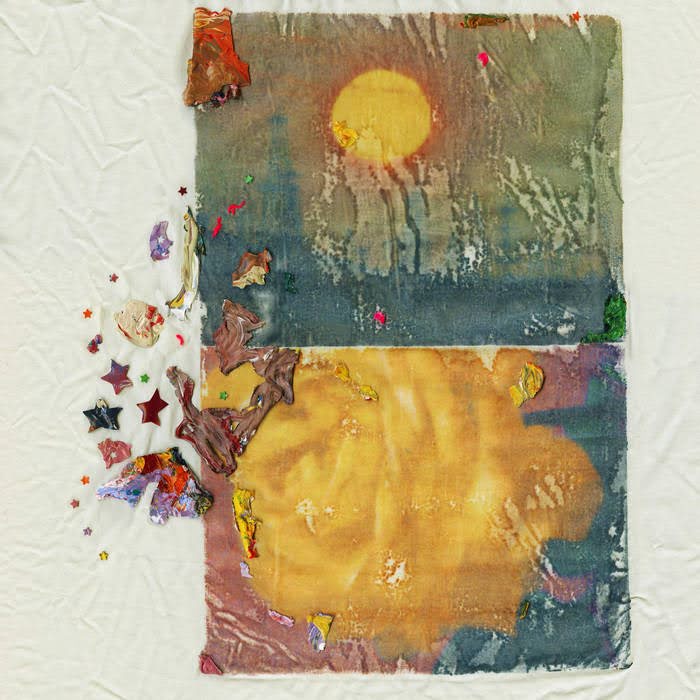
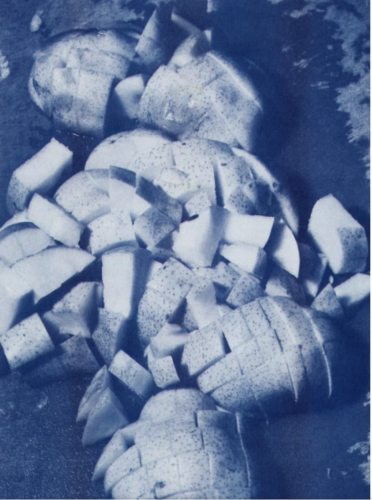
Significance, Otherness album art by Paige Patton
Interview by Charlotte Alarie