Interview: Time Travel Has Always Been Possible – HTMlles
Ada X is a feminist, bilingual artistic space based in Montreal, that is centered around the teaching, creation, and reflection in the arts and digital media. Every two years, Ada X hosts HTMIles which is an interdisciplinary feminist art festival that highlights the work of different artists, scholars and activists. I had the opportunity to sit down with Ray, an artist at Ada X, to talk about their project for the festival.
Artist Spotlight: Ray on technological literacy, human connection and AI in the arts
Ray’s work is very community led, focusing on using art as a form of communication mainly working on locally engaged projects through tech. I got to get a first peak at their project for the festival; an archival keyboard that acts as an interactive tool to flip through Ada X’s archival footage. Ray and I chatted about their work; branching into topics of human connection through technology, digital literacy, and the use of AI in the art world. Enjoy!
Ray: It’s actually really cool, [Ada x has] worked really hard for a really long time to record and video and catalog like lots of video and footage from stuff for like 30 years of feminist media art. So it’s just, yeah, lots of things to like go through and put together.
Alyssa Chalmers: Cool, what first kind of got you into the art scene? Were you always artistic growing up or what drew you into this medium specifically?
Ray: So the medium I’ve been making art professionally for like since I graduated university, maybe since before, but I kind of just didn’t vibe with illustration and workshops anymore. It was like really draining and then I got really burnt out and I started working with code to make from my bed. I also worked in a library teaching people to code and stuff so it just felt like the next thing I wanted to work with.
AC: Did you start with illustration and then move to this then? Was illustration like your first thing?
Ray: Yeah, illustration and then it was like social practice, knowledge keeping, like finding ways to have people talk about [what] they think about the world, whether it’s about housing or food, through like drawings and conversations and like translating drawings. Yeah, so it’s just been trying to bring it all together I think with the circuits and code and stuff now.
AC: That’s super cool. You said you just moved here two years ago. How have you found Montreal as an artistic space?
Ray: I feel like I spend the first two years just surviving a little bit so that’s been like really tricky and so I haven’t really explored a lot of the art scene I think because so much of me coming here after graduating and like working in the arts during the pandemic I feel like I still don’t have a lot of the social skills or like understanding of like how to be in a physical space with people, so it’s definitely a process. I’m just so much more used to like working at a show than like being and hanging out. And I think Montreal really enjoys that process and really encourages that. So yeah, just finding, finding a moment to just settle into it and connect, I think is where I’m at.
AC: I feel like what you do is really interesting because I feel like I’ve seen a kind of resurgence, I guess, of like tech and art in online spaces recently. For example, people are making their own sort of technical gadgets or things to display videos and learning how to code. I think that’s really cool.
Ray: Yeah, me too, I love the cyberdecks! I’m both insanely impressed and insanely jealous every time I see them because I’m like, ohhhh like the one person who made the photos with the one rotary and then they covered it in moss?
AC: Yes! That’s the video I’m talking about!
Ray: Yeah, I was like, that’s so smart! Why am I building a keyboard with 32 inputs? There’s no reason. This could have been a rotary encoder. I’m very impressed and it’s very inspiring and it also makes me wonder, what is the difference between like computation and hardware as art, as container or whatever, versus like a cyberdeck, which is personal use?
Because I feel like both are art in different ways. And yeah, it makes me really wonder, like, how do we grow?
AC: Yeah like a where do we go from here?
Ray: Yeah.
AC: Okay just because I don’t know much about tech, how would you explain the difference between the two of them?
Ray: I think the big difference is that this has a very specific use (referring to the keyboard). So it holds this like poetic line that says, ‘Time Travel Will Always Be Possible”, and then you can pull up the reference for whatever video comes up and you can like play with the speed of the video and that kind of thing. So this is very specifically for audio visual and it only holds the archives from Ada X. So it’s kind of like a glorified media player.
AC: How do you play the archives? Do you have it on like a disc? Or how do you access it?
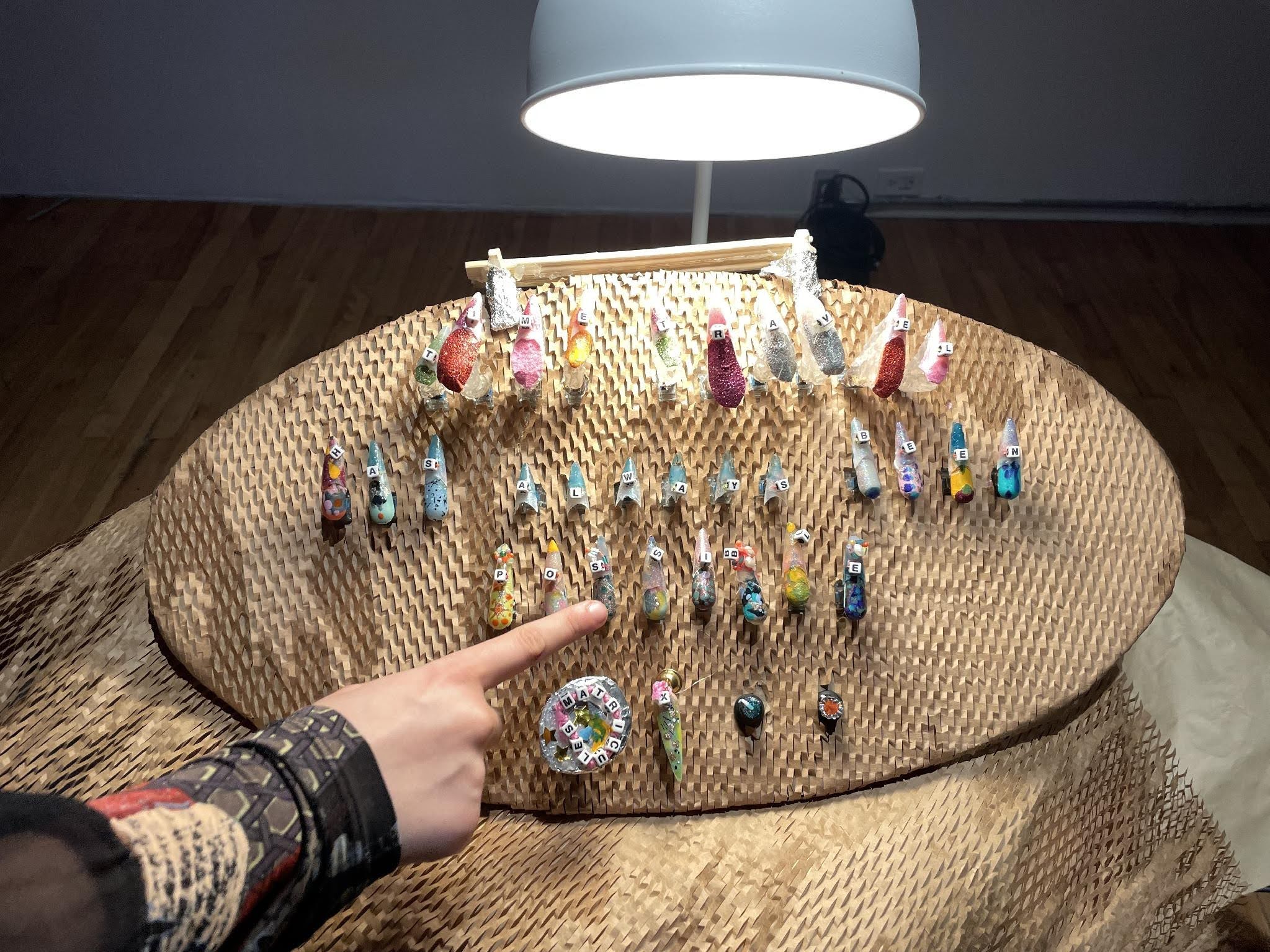
Ray: Yeah, this is the second full keyboard. So, I haven’t finished wiring it yet, but essentially whenever you press a key, a different clip comes up and it plays at a different point in it. So it’s kind of like you’re flipping through TV channels a little bit. So yeah, just being able to watch and be a voyeur be like a fly on the wall. A lot of the times the people who are taking the video are not professionals or they’ve just been handed a camera and they don’t really know what’s going on either. So it’s really fun and they have this beautiful homemade quality and I think that’s really, really awesome.
AC: Compared to what would you call it? A cyberdeck?
Ray: A cyberdeck, yeah. A cyberdeck is so beautiful. It’s like personal computing but scaled down to like whatever the person needs. I think media players are a great place to start if you’re using a Raspberry Pi, especially with the way like, HBO and stuff, like they’ve erased a bunch of media things that people have worked on for years.
AC: HBO, like the TV company?
Ray: Yeah, a couple years ago they erased a bunch of shit. And so just like being able to download stuff instead of going on Netflix, and being able to have all of your things on drives is like really cool. I think that would be a great use case for something like that but also just like as a cute little laptop because my laptop does not fit in my tiny bag and it would be really nice to have [something you can] fit it in your pocket if you need to. I’ve really been wanting to make one out of fabric like a quilt one, I think that’d be really cool. There’s just so many materials and I also think it’s really inspiring to see people reusing objects because I am too chicken to do that and I use like all new components because they’re just simpler in my head but with scavenged parts you kind of have to test and experiment a lot more, but yeah, I think technological sovereignty is really important.
AC: Especially today in this age, for sure. That’s super interesting. It’s really interesting to have your own physical media, but also being knowledgeable on how to use it and how to make your own computers or like projects or projectors or different technological things for yourself. I think we are in like 2026 we’re very reliant on like the ‘cloud’ and storage where media can be very transient and you also don’t have it physically all the time. For example, like you’re saying about HBO, I think it is so important especially today to know how to do these things, as well as be able to use it for art too!
Ray: I think it’s like a different entry point, you know, because sometimes when I’m just like, oh, I should build this for myself. I always run into the issue of but why? And also like, do I have the time and the money and the energy? And I think art allows for it to also be greater than myself. Because I don’t necessarily want to use my own content for this. I really prefer non-personal content. I don’t know I feel like I’ve been really obsessed with just like the form of it because making this physical object there’s so many more choices than there is on like a mood board or something there’s like wiring you have to think about and stuff.
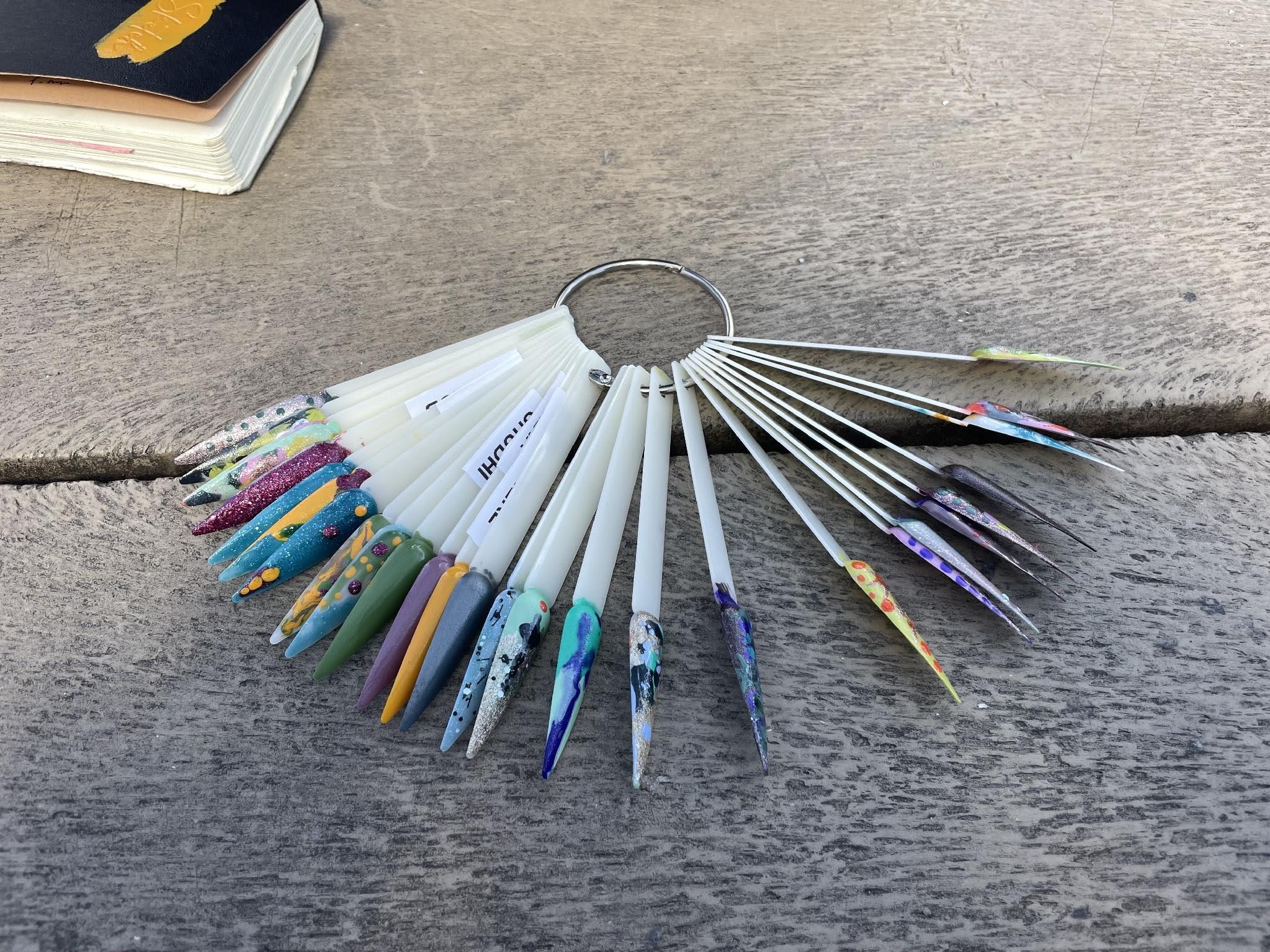
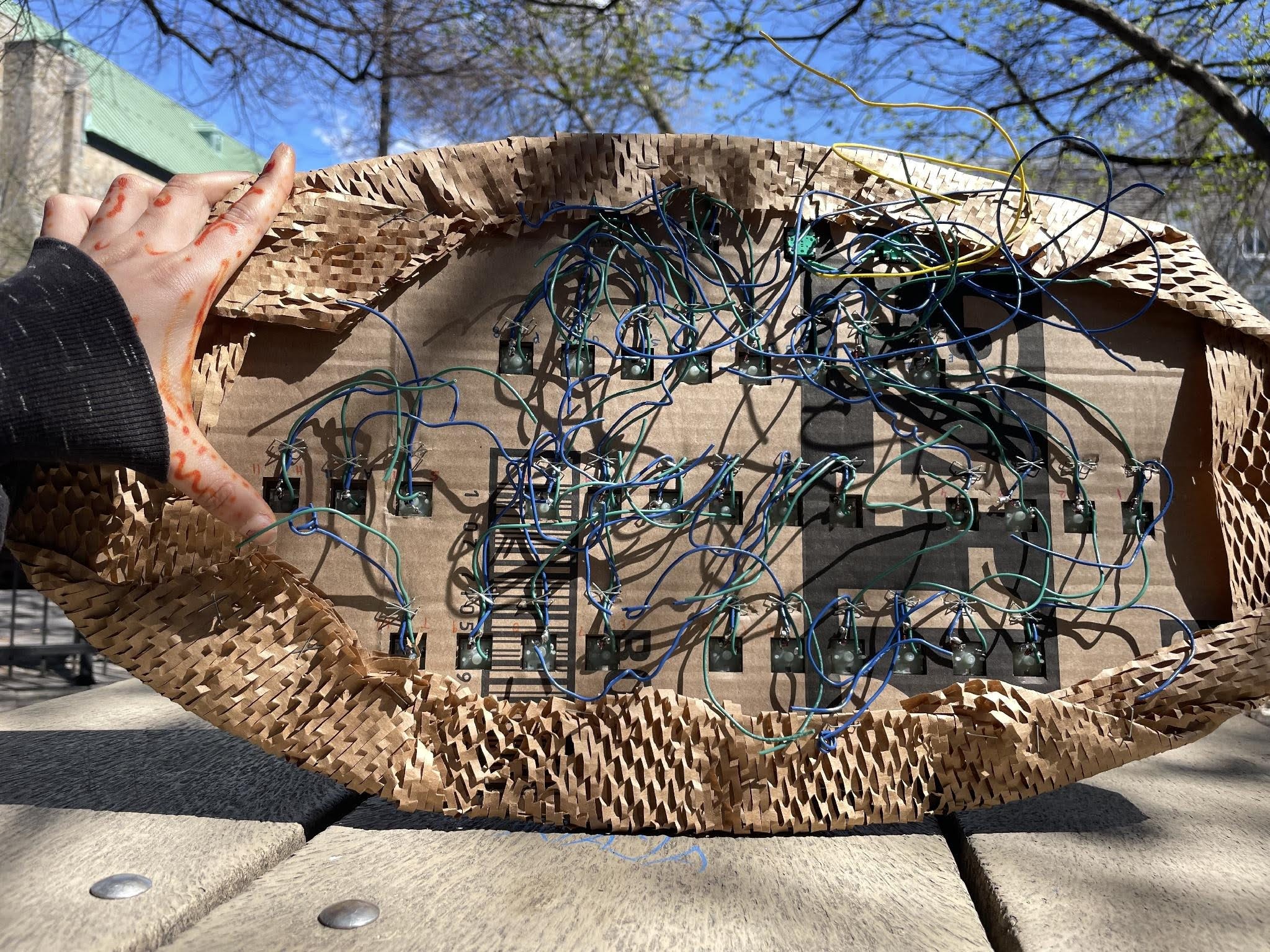
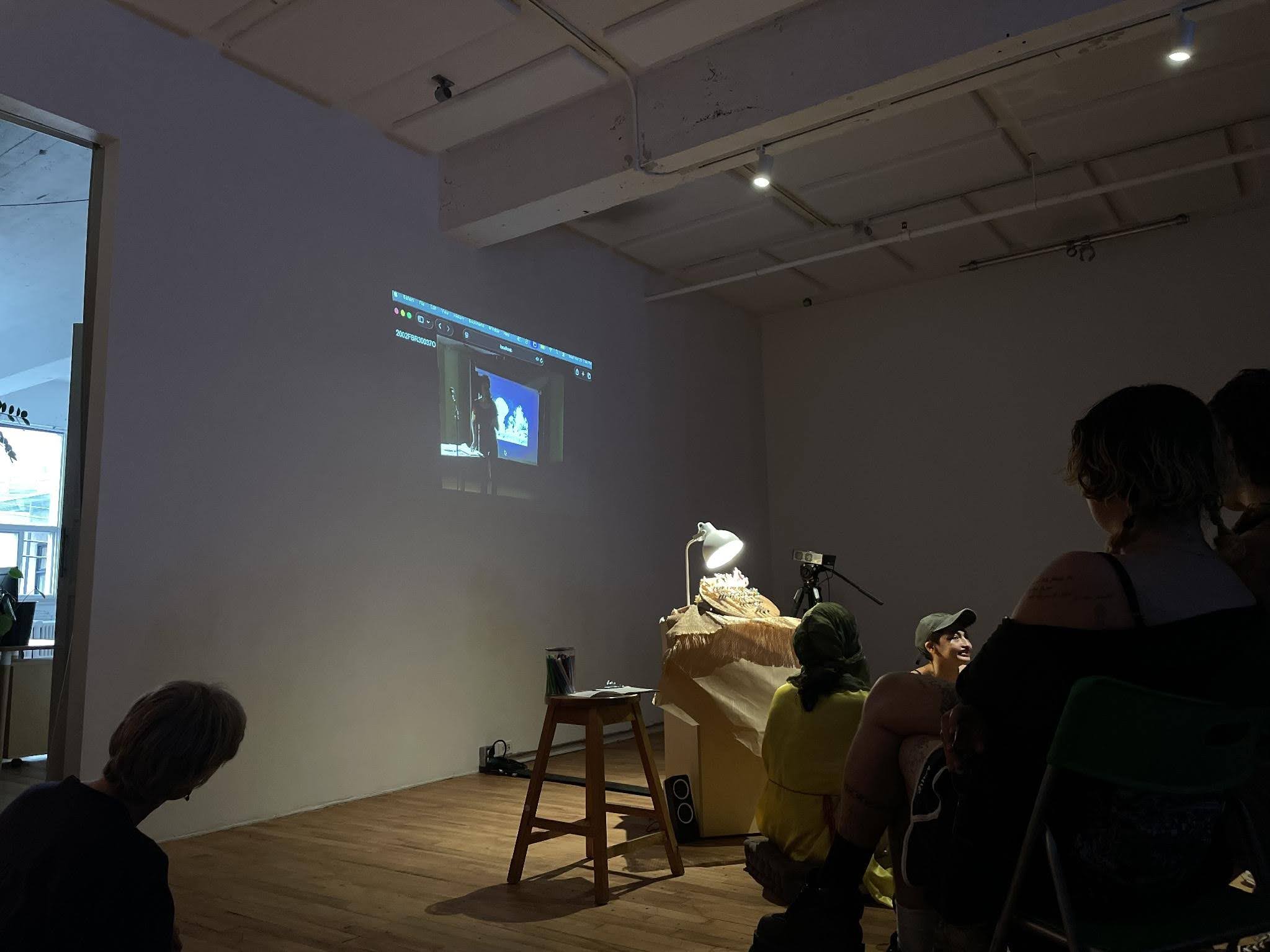
Ray’s keyboard is adorned with fake nails of different shapes and sizes. Each crafted from different materials such as foam sheets, craft paper or plastic acrylics. The main board is made from the packaging material the components came in, both resourceful and environmentally friendly, with various wires held in place by staples. The keyboard is a feat of engineering in my opinion.
Ray: I think the last couple of years I’ve seen so much content where people who work in like the Global South, where I’m from, they’re making these objects like tennis balls or I don’t know, circuits or gloves, without a lot of PPE, etc. and people in the comments, there’s both stereotypes and fear and also just like, oh, this is how it’s made.
How do you make things without resources or without safety and without etc, etc.? And I think also just with the intense, really weird racism that goes on in terms of like who is out there picking up scrap and building things are who is out there mining all of the minerals that go into electronic components. So yeah, I think about that a lot.
AC: Yeah. I mean, I feel people are so disconnected from where their tech comes from. So seeing people sort of either make their own out of like scraps when they don’t have the kind of like polished resources to make per se. can be maybe jarring when we don’t even know ourselves. I guess if you understand how the world works a bit and you know where lithium comes from, you know where cobalt comes from, you know how these industries are also perpetuating racism as well, but you also feel so disconnected from it because you buy your smartphone from the Apple Store in a like a sleek little box and you have no idea where all these parts came from.
Ray: Yeah and just the right to repair, right? The EU passed a thing recently where all MacBooks have to have the USB C charger and the parts must be repairable which is so hot like that’s so sick!
AC: It’s true! When they’re switching out the chargers every year it’s like oh my god. First of all, it’s so inaccessible, but it’s also so capitalistic, obviously. You have to buy an adapter. You have to buy a whole new charger. Everything should have the same charger, hot take! I don’t know why I have to buy five different chargers for my five different devices. That’s not fair.
Ray: It’s really not. And I feel like… people are waking up to it, I think more and more.
[I’m] not going lie, I vibe coded* all the time. I vibe coded all the time, even with this project, because I just don’t know enough. I think AI can be important, but it’s also really irked people to really go into the systems of technology that make things like this possible and like infrastructure. […] I don’t know, I find it really interesting. Somebody was telling me they made some code that was using AI to do part of the computation, and people got really up in arms about it because [they were] using AI that’s unethical. But it’s also like, what is ethical when you need accessibility or you need speed? And what is ethical when it’s a physical material? Yeah, I find the boundaries of that very interesting.
*Vibe coding is when you get an AI to produce one of your ideas, instead of having to write out all the code for a project. For example, you can describe your idea for an app, and then the AI can create this app for you.
AC: Like AI?
Ray: I think both AI, because it’s like connected, I think. Because like, I think people are mad about AI’s impact on the environment and surveillance, in terms of water, et cetera. And I think that ties back to like before, maybe people didn’t care as much because it wasn’t coming out of their backyard. But, you know, like we’re not mining for cobalt in Quebec, maybe. I don’t know. I haven’t looked into it. But now that people want to set up AI data centres, it feels much more important for them to like really unpack technology and the infrastructure behind it.
AC: Yeah. It’s interesting, I think. I mean, AI can be a tool. It also can be, there’s so many uses. I think maybe what you’re touching on, or how I can understand the benefit of AI, I guess, is like looking at how to use AI not as a human, but using it for human things? It’s like not humanizing it, but using it to as a tool, but not as like the product, I guess. I think in our day and age, that AI isn’t really going anywhere. I guess is about adapting and also maybe AI education, teaching people how to use it, not as a replacement for a person, but as a tool for our own learning.
Ray: Yeah. And data entry and stuff like that. Yeah, I absolutely agree. I think it’s just a tool. But yeah, I feel like it all goes back to like resources and legislation.
Like even just Europe is so much more ahead in terms of the protocols they have around some of these things, and it drives me nuts that we don’t have that in Canada. I don’t know I’m just like we needed this five years ago and we’re still dragging our feet which is crazy I know.
AC: It’s hard and it’s scary, there needs to be rules and regulations around its use but I think when talking about AI and looking at the environmental consequences, I haven’t seen really anything that doesn’t say that AI is completing environmentally degrading. So I don’t know how to work around that. What do you do with that then?
Ray: Yeah. I think that’s the fight in a way, or that’s a tension between like human, computer and planetary interaction.
Cause the last project that I did, which was my first ever with circuits, […] it would take data from the environment, like moisture and stuff, and turn it into synth notes. And that was really fun, but it’s like, there’s so many. I don’t know how to say it, basically, I find hardware and software really interesting because it’s kind of like an interface to connect multiple systems of understanding the world. Whether it’s like plants and data or people or media. It’s a whole ecosystem. It doesn’t do it justice to just be like, this is a machine. But it’s like, the wires and everything, it’s like building a body. It’s like my Frankenstein! Where it’s like this tree that has roots growing in, there’s mycelium in the soil connecting it to everything else. So I find that it’s kind of a terrarium in a way. Because it has to sustain itself in order for it to work and I [also] think a lot about the limitations of my body as a technology. A lot of the reason why I make these or this really is to process burnout and also like navigating [how to make] artwork when you know that your process for making it is gonna maybe be a lot for your body. So yeah, half the work isn’t even making the thing. Half the work is just like sitting there with imposter syndrome or like whatever, and anxiety and being like, Ah! Yeah. And like making sure to do the thing. So I find the process very enlightening.
AC: That’s super cool. I think I kind of asked you before, but was there something specific that made you want to use technology for art?
Ray: I think my experience with the library. Actually, my favorite program to run was this family program every other Saturday called Craft and Code. And I would make the parents come with the kids. And we would all just use Makey Makeys or like paper circuits, which is like copper tape and stickers to make circuits or think about computation and sequencing. I’d always start with [picking] a random book on insects or animals and we’d start with picking a random insect or animal and then kind of making our bodies the insect and trying to move like them. So really trying to understand I think the movement of energy.
But also yeah, craft, accessible materials, things around the house. I think that whole experience made me understand because I was like learning the technology as I was teaching it. Like how cool and magical this is. Like it’s wizardry. What do you mean you press a button and all of these lights go on?
That’s crazy too. Like what do you mean that if I rotate this one thing this other thing will do something like that’s a magic trick! Straight up! Like Wi-Fi radio signals, like Bluetooth, Bluetooth is insane! [It’s] insane and sometimes it doesn’t work which is crazy. […] They’re both unreliable and deeply important to contemporary life yeah.
AC: We’re so connected these days in so many ways. Like everything is at the touch of our fingers. Right now, you could call someone in Southern Spain right now or in like Japan. It’s so simple and it happens at the speed of light. If you have Wi-Fi, you’re able to do that, which is so crazy.
Ray: It is so crazy. What’s even more insane to me is that sometimes I wish we had teleportation. I have a hard time leaving my house and I’m like, I wish for teleportation. But what’s really interesting to me, I think especially, [is that] you can call someone in southern SSain, but you might not know what it smells like right now in Southern Spain. Stuff like that where I’m just like woahh, there’s still a limitation to technology that is so beautiful and poetic because you can connect with someone and still not know their whole experience.
AC: Yeah totally I saw something really interesting that other day, I saw a YouTube video of this girl going around and asking people if they think they can really know someone if you’ve never met them. And I think that kind of speaks to that, where you can meet people online and feel like you know them very well, but you don’t know everything about them in a very similar way.
It’s like they show themselves to you, for the most part, as this pristine image. You can very much edit yourself or like, not edit necessarily, but like, I don’t know, put yourself out there the way you want to be perceived. The person you’re talking to doesn’t need to know if you’re in stressful situation, etc. You only get a little bit of it, which is what technology does. I think when you’re talking about limitations, it’s really interesting. The way we can hear the wind on the other end of the phone, but we don’t know what that smells like, we don’t know what that feels like on our skin. It’s interesting. [Technology] picks a couple senses that’s possible to transmit via phone call per se. But we don’t get the ones that make us very very human, such as touch and smell and things like that.
Ray: Yeah, there’s been a couple of times where I’ve like had a really good vibe with somebody online and then we meet in person and it’s really hard for us. So now I don’t fully trust it when I’ve only talked with somebody online because there’s a pacing to it […]. You see, this is the thing. Like it goes back to the thing about being in art and having to chill out and learn to chill out. Because when you’re online in a way, you kind of have a goal in mind sometimes. Or maybe there’s a purpose you’ve met somebody around. But when you’re in the physical world together, I don’t know. Sometimes somebody might be dysregulated and the way that they communicate might not be something you fully understand.
AC: Or are compatible with?
Ray: Yeah, totally. And I think that makes it really tricky because then it’s like, oh, I thought I knew you, but there’s parts of you that maybe we didn’t anticipate because now we have to think about our bodies in sharing the same space and maybe different bodies, having different needs. Like different minds having different needs, different communication styles.
AC: It’s actually so interesting when you think of art too and technological art, but just art in general; I guess the way there’s a limit to the connection you can have. There’s always some sort of limit. Like if you don’t know, art can make you feel things art and can connect people in so many things. Or like you’re saying with technological art, there’s limitations that are kind of beautiful because it’s not human, but art is so connecting. People bond over art in so many ways, but it never really can fully mimic real human interaction.
Ray: Yeah, I kind of want to make these circuits that just look like bodies, not real bodies, but [it would be] so fun to just like make them a little freaky.
Also not all interactive art has to be technological. I used to do these fill in the blank phrases and people would just come fill them out, but now it’s different because it’s like when you make something that has circuits and shit, you have to like make sure that this won’t scare them. Like they won’t be scared that it’s gonna fall off [or break], so yeah there’s a lot more work that goes into making this versus something on paper. Just the considerations of each medium is so different, I feel like and I don’t know what to do with that.
AC: Do you think that could also come from the way that people are kind of maybe alienated from technology or don’t fully understand it as well as they understand physical mediums like paper?
Ray: Yeah, I think it’s a question of trust. Like, how do we trust a physical object? How do we trust that when we interact with the physical object, it’ll be kind to us maybe? Or like the connection will sustain into something that we can understand. Which is a gamble, right? Any connection is a gamble and that’s the other fun thing. […] Connection is fragile and I think electricity, sculpting electricity, right? When you’re soldering something and connecting all the components. Just like sculpting electricity is its own kind of medium, or its own kind of fragility. And all connection is fragile, right? Humans are made of blood and bones, and so disability is going to come for all of us and there’s going to be a time when we maybe don’t understand the rest of the world or whatever. So yeah, it’s really interesting to build a whole entire system and it teaches me a lot.
AC: I guess just to wrap this up, what drew you to HTMIles?
Ray: HTMIles! When I moved to Montreal, I got laid off from my gig that was like this queer ecology research. Funding got pulled and I pivoted to web design. But there were like contracts, and then Ada, very kindly, they got an extra round of funding for their web and archive internship. I had applied like a couple of months before and they called me and they were like, do you want a job? I was like, yes, yes, I do want a job. Where? How? Yeah. So I worked here last year, last winter, like February to June, July. And my main job was archiving the DB minis. And I actually really wanted to work on an archival container like this. So I just started prototyping and pitching it because I had a similar prototype ready that I was already playing with, with code, like just on online. But I really wanted to make a physical object so I just kind of talked and they were very kind and we got funding. So I’m here with the DEM Arts grant from the city of Montreal and now I’m building this and hopefully I can build more stuff like this. And I’m just so excited to attend the festival. There’s [so much beautiful art about] archives and technology and multisensorial storytelling that I think is really, really important. I think the more we have access to technology and the more we are used to documentation for like social media or for our own selves, the more important it is for us to apply those skills on a larger scale. Especially as we, you know, think about gentrification or changing landscapes. So, it’s just fun to contribute to it or work with it.
Interview by Alyssa Chalmers