Review: Recomposée
"Recomposée" confronts the complexities of biracial identity and how the Self can be found by accepting, but more importantly, confronting the past.
Montreal Cinéma Sous Les Étoiles by Funambules Médias
July 22, 2026
Director Nadia Louis-Desmarchais tells the story of her life as a biracial woman growing up with white adoptive parents in Montreal. With archival footage, interviews, and testimonies, she dissects her black and white character, internalized racism, and familyhood. Recomposée confronts the complexities of biracial identity and how the Self can be found by accepting, but more importantly, confronting the past.
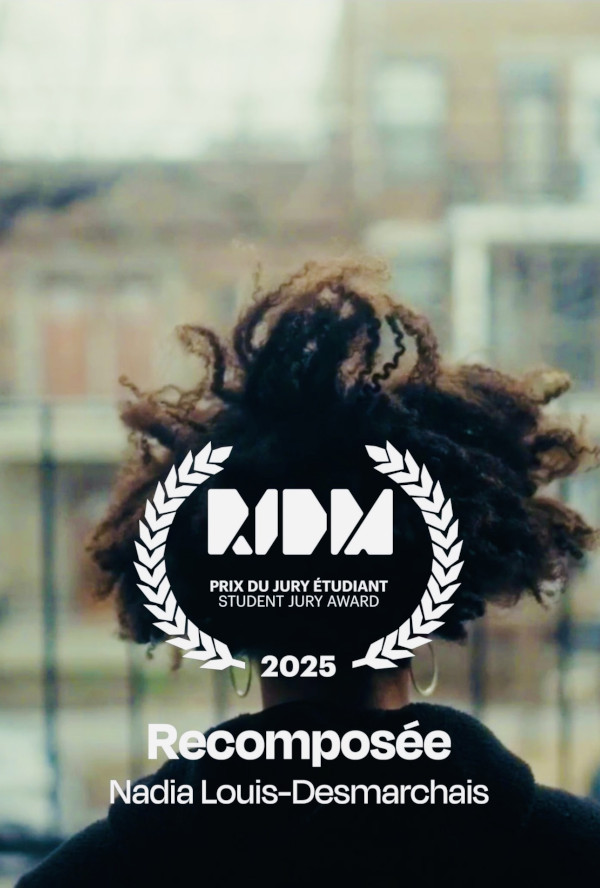
Film Poster. Source: Réalisatrices Équitables.
“For So Long, I Denied A Part of Me”
Born to a Haitian mother and Italian-Quebecois father, Nadia Louis-Desmarchais recounts her childhood and family ties while trying to discover her sense of identity as black woman who grew up around white people. From discussions of “kinky hair” and colonial beauty standards to mostly dating white boys in her teenagehood, the narrator explores the uncomfortable realities of her past to make sense of who she is.
Recomposée focuses on how Louis-Desmarchais tries to seek her identity by utilizing archival home videos of her family and her relationship with her biological parents. At a young age, Nadia and her biological sister were taken away to social services in Montreal. To this day, she still doesn’t fully know why they were taken away. She states how mental health could have played a role, but the reason will remain unknown. The narrative highlights how the pain of mental health is frequently overlooked, especially from women of colour. Had things worked out differently, maybe her mother could have had a chance at redemption. In a moving testimony, she explains how she saw her biological mother at age 14 for the first time since being taken away in court in order to fully be adopted by her foster family. She recounts how her mother insulted her and yelled at her, erasing her Blackness to adapt to her new surroundings. Yet, the erasure goes beyond a single blood relative. She explains how her adopted family inadvertently fuelled her struggles with internalized racism.
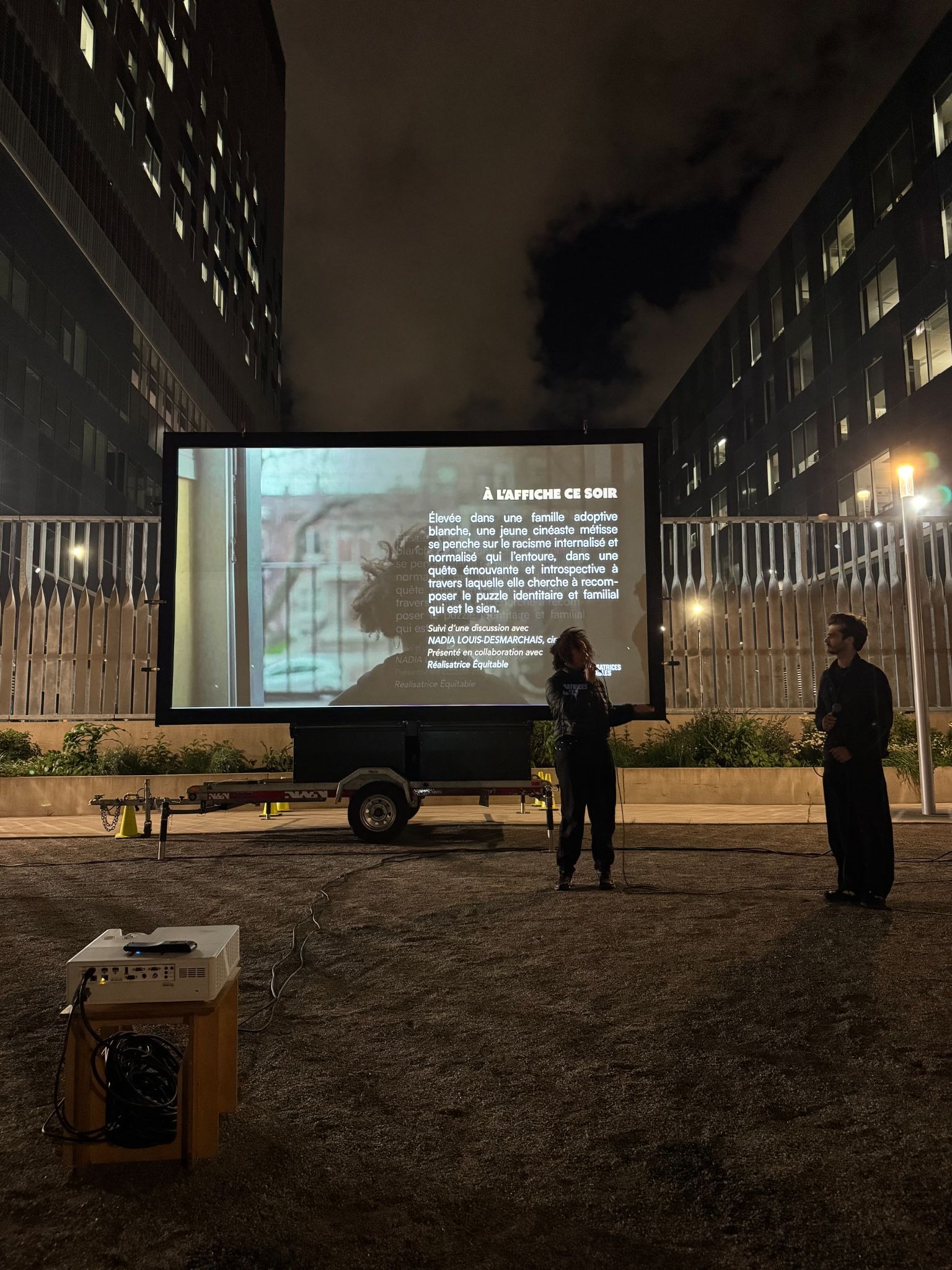
Screening at Place des Montréalaises, Montréal with Nadia Louis-Desmarchais.
As a final step to her journey toward self-discovery, Nadia confronts her white adoptive parents. In an emotional discussion, she begins the interview with her mom. Her mother states that she never saw the colour of her skin and that she was always equal to her other half siblings. Blinded by love, this does more harm than good because it overlooks the systematic and personal struggles Black girls experience growing up alongside white peers. She responds that she did the best she could with what she had. As the interview ends, Nadia’s mother apologizes to her, admitting that she never wanted to cause her such pain. She tells her that she always supported her decision to search for her biological mother, understanding how crucial it was in discovering who she truly is. As viewers, the main takeaway from this scene is that passive acceptance is insufficient when it comes to inclusion. To support minorities means moving beyond basic tolerance and acknowledging that our struggles are not all the same.
In her final interview, she confronts her adopted father where she revisits a defining moment captured in her archival footage. It is a home video where he makes a remark about her afro hair and calls her “Boule Noir” referencing the artist with that same hairstyle. She confronts him and tells her that while he had no ill intentions, the comment hurt her. Her father responds that it is just who he is, using humour as his defence. However, the historical weight behind his words ultimately outweighs his levity. Prioritizing his daughter’s wellbeing over his pride, he apologizes, and they embrace.
By reconnecting with her biological mother and aunt, her half siblings, and by confronting her adopted family while accepting her uncertainties about her identity, Recomposée gave Nadia the opportunity to truly become who she is… motivating her to bring this film to life.
During the Q&A post screening, Nadia shared her family’s initial reaction when she decided to start this project. The most notable reaction was from her sister who questioned why Nadia would choose to broadcast and relive her childhood traumas on camera. As the audience laughed, she explained that discovering her true identity could only work if she was willing to be vulnerable to an audience and above all, to herself.
When we embrace every piece of our identities, we create the space to discover our true Self. The film transforms our confusion, sadness, and anger into personal growth – a powerful force for reshaping who we are when we need it most.
Review by Kimberly Sahagun – 07/22/2026