Review: The Fight for Haiti
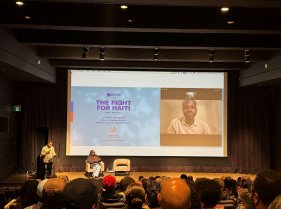
On Friday May 29, 2026, we had the pleasure to screen Etant Dupain’s film The Fight For Haiti - a documentary that emphasizes on the country’s corruption, PetroCaribe, and tainted politicians alongside stories of inescapable crime amongst the community.

Etant Duapin’s The Fight for Haiti – When Will It Stop?
In this special screening, audiences had the pleasure to learn about Haiti’s fight for freedom through the eyes of journalist and filmmaker Etant Dupain. He explores PetroCaribe: an oil agreement between Haiti and Venezuela. The agreement was initially created to allow Haiti to buy petroleum products in order to advance their society’s healthcare and overall economic development. However, testimonies in this documentary prove otherwise.
PetroCaribe raises the main question: Where did the PetroCaribe money go? This starts a massive political movement in Haiti where we are told the raw stories of the people and the consequences they suffered due to their corrupt leaders’ agendas. The film explores the effects and controversy it causes towards Haitians – lighting up decades of anger. The impact forces them to change their society’s way of life politically, socially, and economically against the civic influences who are supposed to protect them.
Following the earthquake that shattered the country, stats show that the Red Cross raised nearly $500 millions for Haiti, but only 6 homes were built and recorded. How does this happen? Many interviewees in the film blame the political leaders who have pocketed the majority of what was raised and created shell companies to hide their involvement in their embezzlement activities – a cover up solely for their selfish needs.
As we continue to learn about the clear corruption in Haiti, we are introduced to activist Stephanie Boucher. She touches upon the story of her mother and how the little resources in their economy led to her death. She implies that since money is pocketed for personal gain, there is no solid capital to support hospital resources and healthcare for Haitian society. She recounts that her mother wasn’t even really sick to begin with, therefore, all she needed was a little assistance and they couldn’t even give her that. The wealthy continue to prioritize their own interests, while many people are left to endure significant hardship, suffering, and, in some cases, loss of life.
As the political movement continues to intensify, we learn that gang members are being led by the elite politicians to massacre the anti-corrupt movement. This expands an inescapable cycle where poverty, violence, and instability are the main sources to how political hierarchy stay where they are. Innocent people are killed including children of advocates to instil silence and fear. One man describes the time he slept while his child was outside playing until suddenly he heard loud screams in the streets. He immediately recognized his young son’s voice and ultimately accepted that his child had died at that very moment.
The Fight for Haiti is just the beginning – it is the beginning for Haiti’s fight for change. Haitians are not allowing themselves to be victims. Instead, they transform into activists, feminists, fighters, lawyers, and are the new direction for Haitian people. They are actively protesting against their leaders through protest, storytelling, and chaos. Their resistance extends beyond Haiti – reaching communities like Montreal where many Haitians reside and continue to tell their stories in order to create institutional change in their homeland.
Review by Kimberly Sahagun – 06/01/2026