Film Review: “Plastic People: The Hidden Crisis of Microplastics”
Our evolving world continues to discover new scientific ways on how to better the lifestyles of our human kind. However, there is one versatile material that can be the end of what we know as our Earth. With continuous hazard waste, environmental crisis, and pollution, microplastics are slowly inhabiting our bodies. Director Ben Addelman and co-director and science journalist Ziya Tong’s "Plastic People: The Hidden Crisis of Microplastics" emphasizes the current evolution of microplastics slowly taking over our society, and terrifyingly enough, the very bodies we inhabit.
CKUT, Montreal Cinéma Sous Les Étoiles by Funambules Médias
August 5, 2026
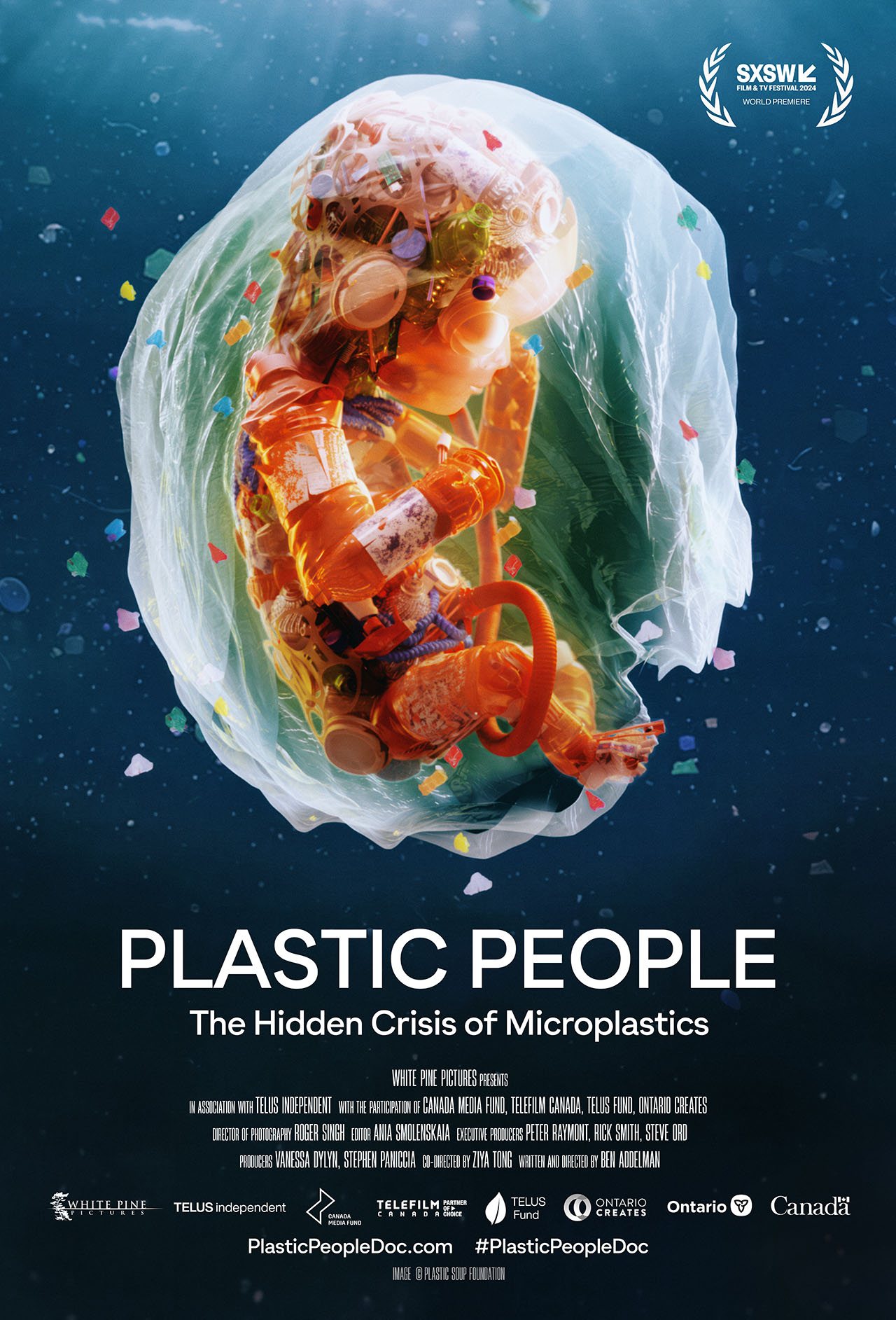
Film Poster. Source: plasticpeopledoc.com
Plastic, Are We People?
In this documentary, researchers and scientists discuss how microplastics are constantly being found around and inside us. Single-use products are one of the factors that influence how we are finding plastics in human cells. Research journalist Ziya Tong travels around different countries to explore how microplastics are affecting the population. For instance, in Turkey, agricultural lands are being highly contaminated by microplastics because crops and vegetables are being handled around plastic. Thus, we naturally find plastics in our bodies once we consume crops and produce. Environmental researchers also highlight how “waste colonialism” exists, highlighting on how affluent countries like the United States and Canada transfer their waste to lower-income regions like Indonesia and India. How does this happen? By consuming disposable products, items drift across global ocean currents, fuelling an endless pollution crisis to third world countries.
To further her research, Tong participates in scientific tests to prove her theory. Blood tests confirmed that microplastics have been clinically found in her bloodstream. The hypothesis links microplastics to tiny particles in our clothes and our food. A gradual accumulation unfolds, raising risks for cancer, birth defects, and chronic disease. Tong also points out an alarming milestone: plastics are present in postpartum women, specifically in their placenta, furthering her concern on internal plastic accumulation and human defect.
Even in seemingly unspoiled lands, microplastics are present because of the relentless manufacturing of plastic goods. Tong travels to Palawan, one of the most beautiful beaches in the Philippines. Alongside a fellow researcher, they test the blue lagoon like water. The water looks completely clear to the naked eye, yet their tests reveal persistent microplastics contamination. The presence of toxic elements is somehow invading every corner of modern life, creating a dangerous problem to solve beyond human control.
The question now is: how can we, as a society, prevent this? Sure, we can cut down our consumption of plastic straws, use reusable bags for our groceries, and adapt to a reusable water bottle. But how does this create a worldwide change? Systematic transformation starts with the multi billion-dollar companies with mass productions. They market effortless convenience consumption to maximize profit. However, environmental safety requires empathic human effort. Endless manufacturing of single-use products accelerates the microplastics crisis, making the Earth an increasingly scary place to live in, but also to human biology itself.

Screening at Westmount Park, Montreal.
The documentary provides a crucial perspective to viewers. While it offers tips on how to effectively consume less plastics, there is a larger issue: individual efforts can only go so far when the problem is beyond our capabilities. Yes, there are individual behaviours we can assimilate to reduce waste such as consuming non-toxic material clothes, growing our own vegetables, and boycotting large businesses. But how far can this truly lead to environmental reform? While the answer remains complex, the first step as humans is recognizing that this is indeed an issue we are experiencing. Society does have a toxic relationship with microplastics. We are trapped in a continuous cycle driven by our own mindless everyday routines.
While there are still many unknowns on how to clear out microplastics altogether, one thing is for sure: Our world is single-use only. We cannot destroy our Earth and have another home. We have to protect it.
Review by Kimberly Sahagun – 08/08/2026