Review: “Chronique d’une ville”
Canadian filmmaker Nadine Gomez explores the psychological impact of metropolitan and urbanization cinema by painting portraits of the city life that most of us know. "Chronique d'une ville" is a poetic visual that highlights our human experiences by utilizing rich photography, inviting viewers to an immersive experience of ordinary city life.
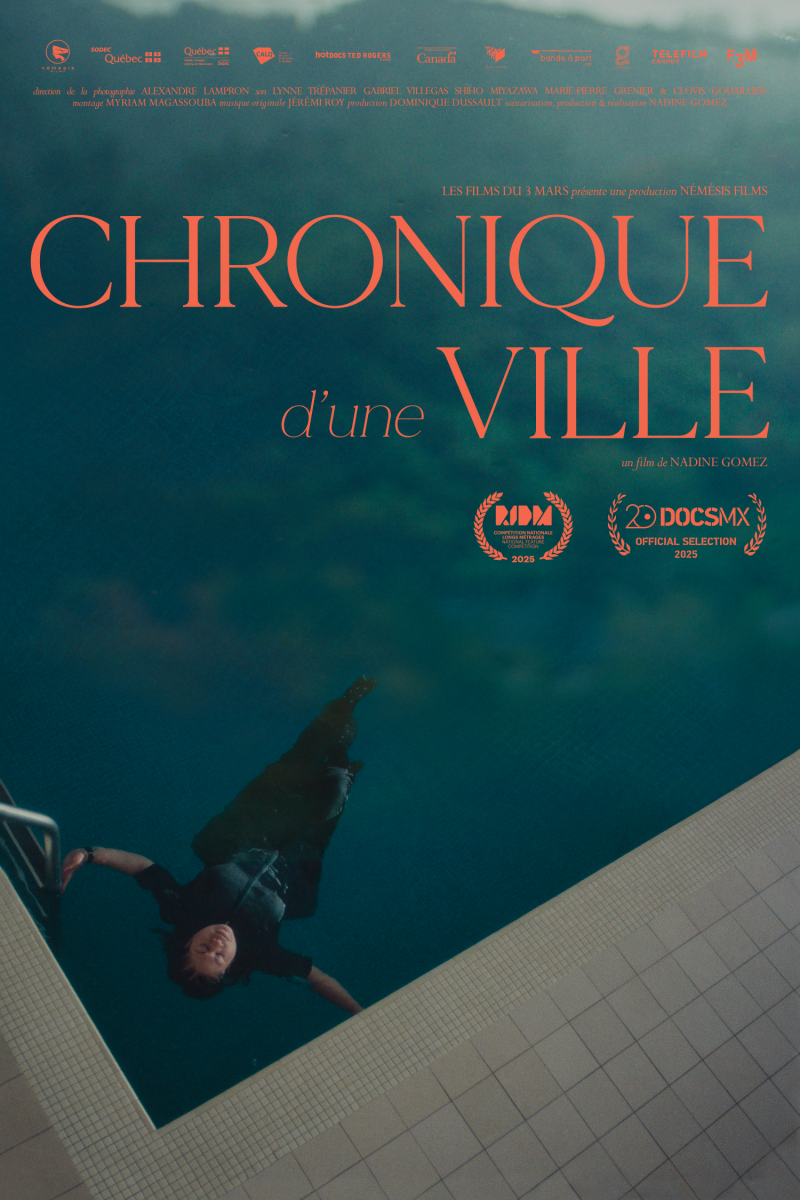
Film Poster. Source: Les Films du 3 Mars.
Why do I feel so alone in a city full of people?
In her documentary, director Nadine Gomez shows how cities are viewed through the eyes of ordinary people living in big cities. Shot in several cityscapes including Japan, Mexico, and Montreal, the movie follows a diverse cast of characters, capturing different types of lifestyles. She illustrates the paradox of urban experience: How are we able to live in big cities full of people, yet still feel completely isolated? How does a deeply personal emotion resonate with so many strangers? Maybe it is because even in a society full of living people, we are still consumed with our own anxiety.
Moreover, the film explores a fascinating mix of lives: a local Mexican cleaner whose job is decontaminating city waters, a full time farmer taking care of crops and vegetables, and an eccentric group of Latina women chanting witchcraft. With all these different types of people in the world, we truly don’t know what other people are doing. The film exposes the limit of our perspective: no matter how much we try to convince ourselves we know the rest of the world, we don’t because each of us lives an entirely unique reality.
Beyond Gomez’s essay-style narrative, Chronique d’une ville immerses the viewer, transforming the screen to a reflection of urban life. Through its’ layered sound design, the film invites us on a poetic journey. Familiar sounds like car traffic, ambient voices, and mundane routines remind us what it actually feels like to be alive. It is the overlooked moments that we tend to brush off that should mean the most to us. All we have to do is romanticize (within reason) our lives a little more in order to truly appreciate it. By finding beauty in our everyday attitudes, we might be inclined to hope for a little longer.
I can’t write this review without mentioning an experience that I encountered before the screening. While walking downtown after work, I saw a similar face at the cross light on Cotes-des-Neiges and Sherbrooke street. It was an old friend that I had lost touch with. We were best friends for two decades until a couple years ago and I honestly doubt either of us truly understands why. I thought to myself, how ironic – that same day I saw a film about how a city can shape a person’s life. The exact city, Montreal, where I once met my childhood best friend has now become a stranger. Years of shared conversations and so many memories between two people no longer exist because neither of us had the guts to apologize. Could this be a sign? Maybe. Our polite conversation made me realize how important it is to let go and to be thankful for what we shared. Writing this brings me a quiet sadness, but she played a huge role in shaping who I am today. Our connection belongs only to us even if we are no longer friends. For that, I am grateful.
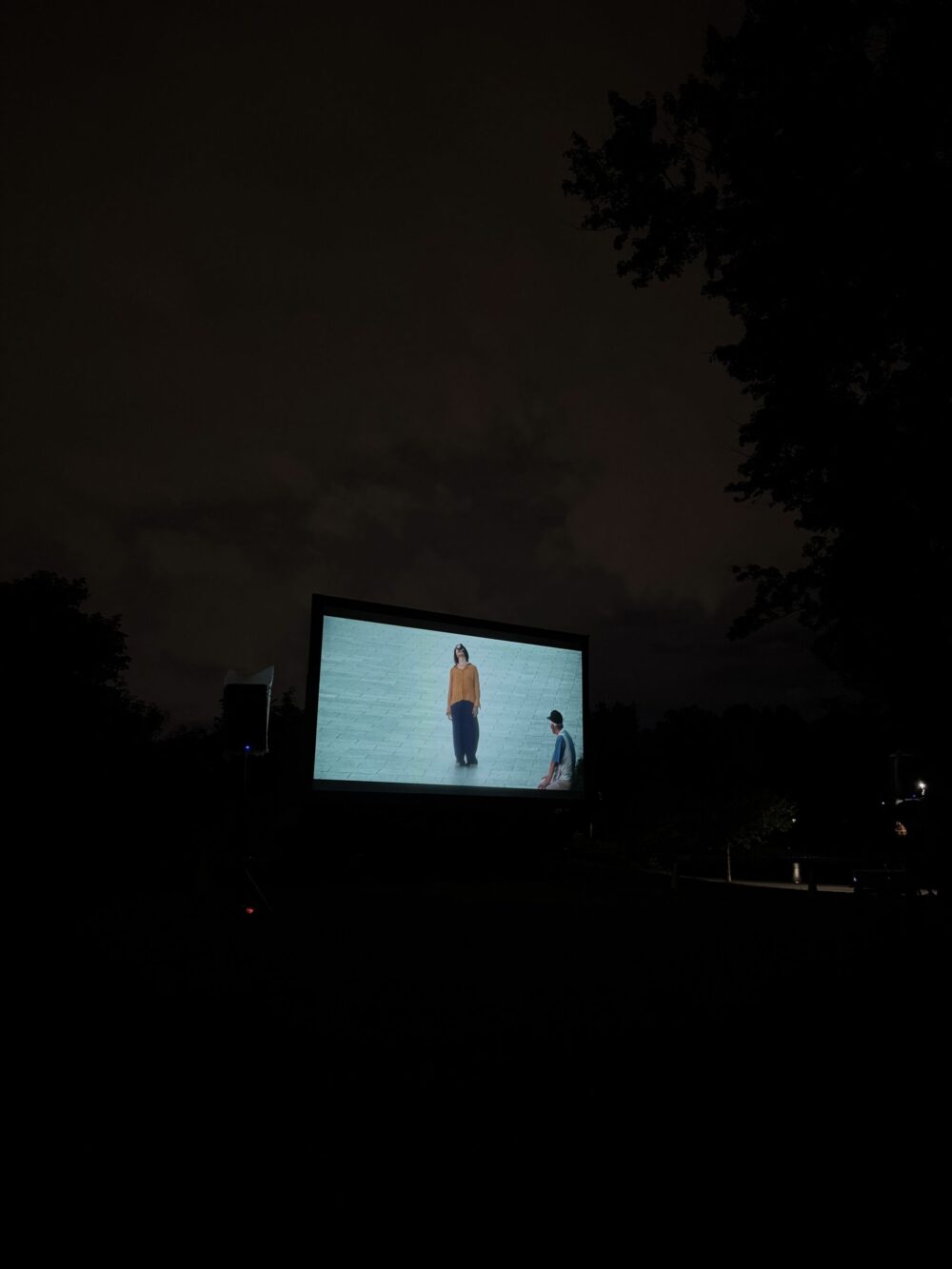
Screening at Beaverlake park, Montreal.
During her Q&A post screening, Nadine Gomez stated that it is not the big industries or million dollar corporations that create cities. Cities are defined by the collective spirits of the ordinary people who live in them. A city’s beauty comes alive when people are present to experience it. The film’s poetic dialogue spotlights the ordinary moments of people and reminds us to value our lives, no matter how insignificant they might feel.
Maybe this film was trying to tell me something. Montreal, a city where I lost a lot, might be the same place where I can find again.
Cinéma Sous Les Étoiles by Funambules Médias
August 11, 2026
Review by Kimberly Sahagun – 08/19/2026