Film Review: The Eyes of Ghana
The 22nd edition of the Montreal International Black Film Festival opened with Ben Proudfoot’s documentary, "The Eyes of Ghana," which spotlights Chris Tsui Hesse, the personal cameraman of Kwame Nkrumah, the first president of Ghana and a revolutionary icon in African history. Seen through the perspective of Chris Hesse, the film captures the power of cinema as a medium that can help shape our history and future generations.
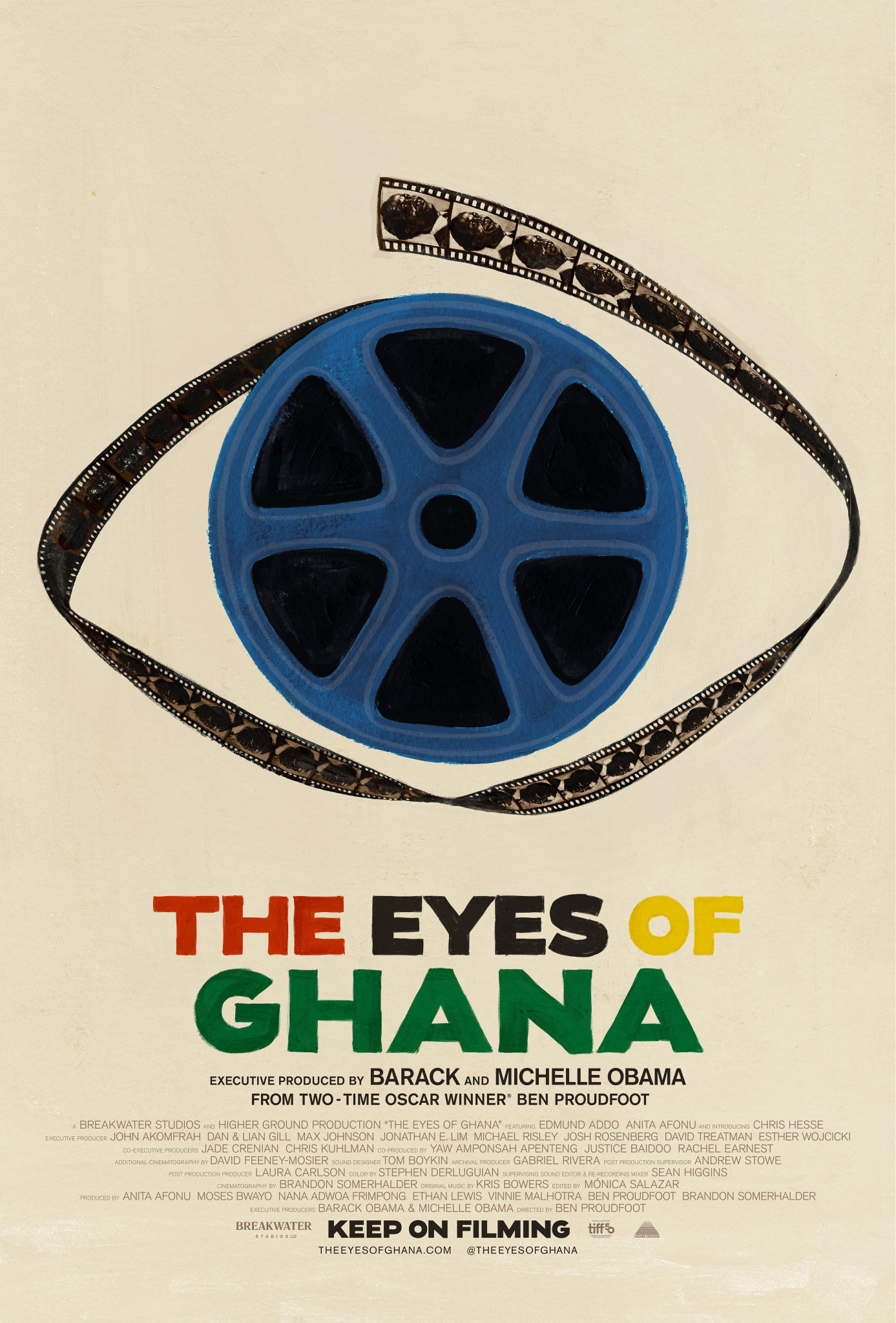 Film Poster. Souce: IMDb
“To Be a Filmmaker, That is the Dream” – Chris Tsui Hesse
In powerful testimonies, Hesse shares his journey and his intimate understanding of Kwame Nkrumah, a political visionary he deeply respected. Relying on conversations, archival footage and eyewitness accounts, Hesse reminisces on his evolution as filmmaker while confronting Africa under Nkrumah’s presidency. We learn about Kwame’s political beliefs including socialism, anti-colonialism, and national unity alongside key historic milestones like leading the Gold Coast to become Ghana in 1957. He details landmark moments of his presidency, among them the independence of Ghana from the United Kingdom, his relationship with US leaders such as John F. Kennedy and his alliance with the royal family, prominently the late Queen Elizabeth II. However, he was widely criticized in later years due to economic collapse and allegedly led an authoritarian state. Driven by these factors, the US CIA and military vowed to strip him of his power. This opportunity arose when Kwame was in Asia and a coup d’etat was orchestrated in 1966. Left in exile, he never returned to his homeland. Proudfoot’s documentary offers a glimpse of Ghanaian history through cinematic archives without excessive details, choosing to focus on how cinema constructs and defines historical memory seen through Hesse’s eyes.
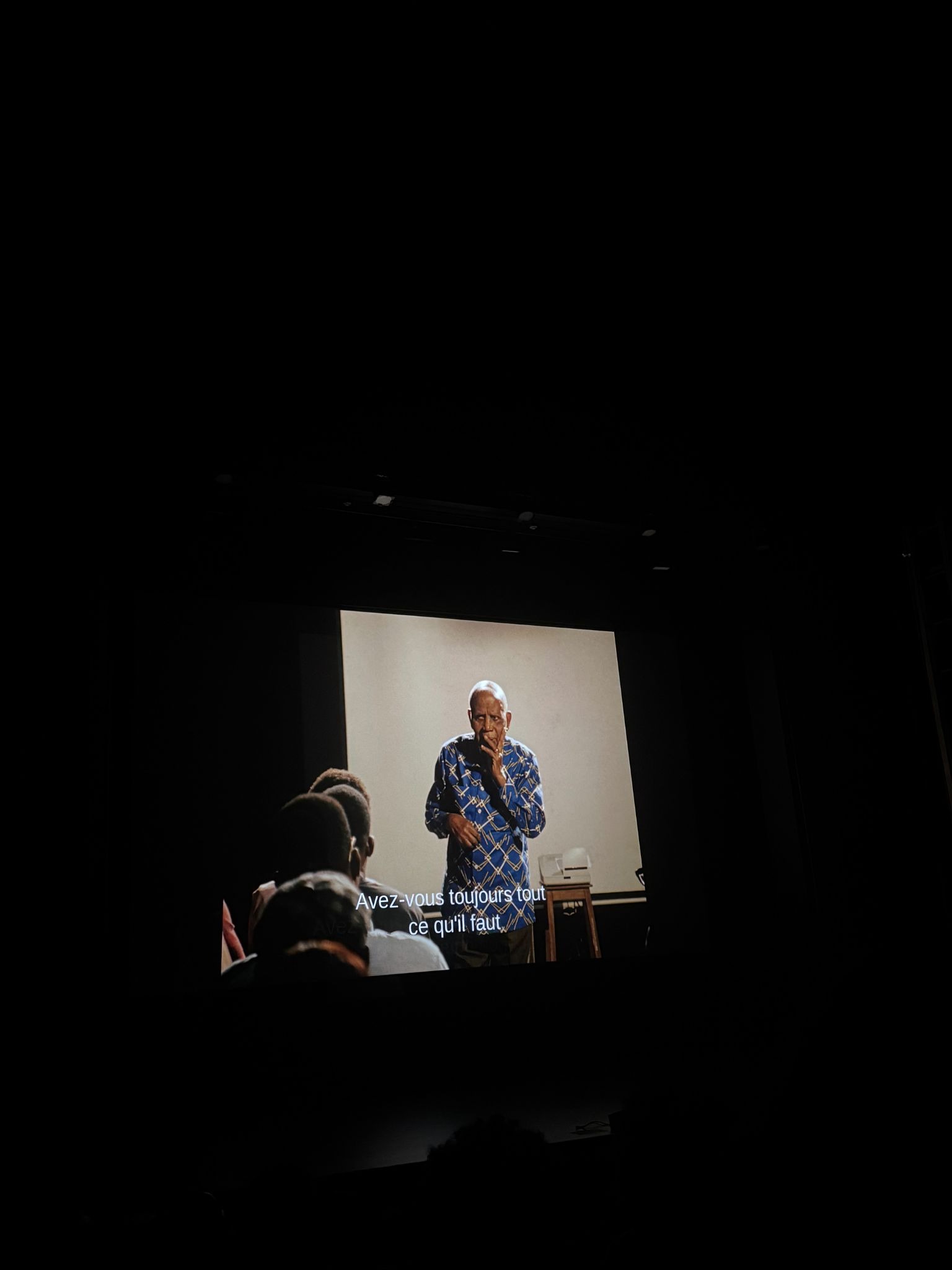 Screening at Outremont Theater.
Furthermore, the documentary centers on Chris Hesse in the present day with his protégé, Anita, as they seek to find thousands of lost film footage in London. In Accra, Ghana, they commit to restore the Rex Cinema alongside their friend Edmund, aiming to screen unseen footage to the public eye. The film dives into different footage worked on by Chris Hesse as a cinematographer, including The Freedom of Ghana (1957). The revival of the Rex Cinema acts as a thematic pillar and rightfully so, as it remains a sacred medium to showcase Ghana’s history.
Chis Hesse – storyteller, filmmaker, plus professor in film studies emphasizes the profound value of cinema. In doing so, his search for lost footage is a fight to articulate the liberation of the African continent and restore national memory. He articulates the weight of film and visual documentation to underscore the imperative resistance. Without the footage filmed by Chris Hesse of Kwame and his political alliances, we would have never seen the impact and cultural shift come to life for his people as well as the destabilization the US government enforced. While the documentary refrains from fully examining the political context behind Kwame’s decline, the archival footage illuminates the importance of having historical evidence for reclaiming narrative authority for a country that is constantly pursuing positive change. Ghana is able to confront its past thanks to artistic pioneers like Hesse and Anita. Their tireless pursuit in finding lost footage exposing colonialism and exploitation in their country can genuinely instil change for the future of Ghana.
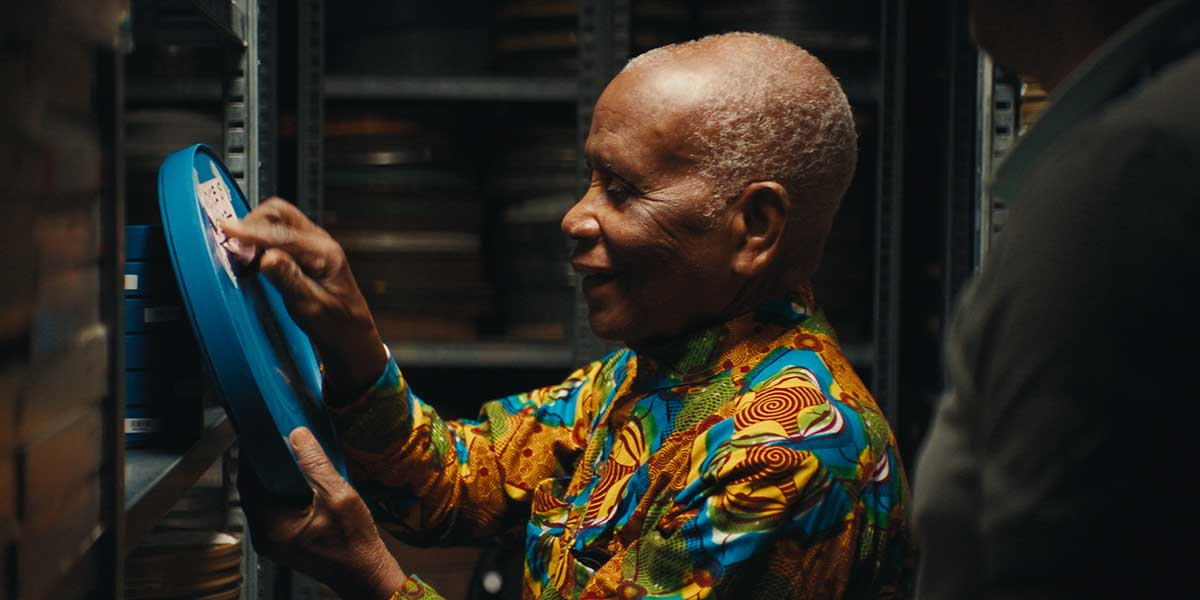
Still. Source: tiff.net
Through its immersive soundtrack and visual composition, the film leads spectators to recognize the profound significance of cinema rather than contextualized history. Chris Hesse’s impact on cinema and filmmaking inspires artists to continue to create. His speeches in the documentary detailing his personal experiences within the civic industry enforce profound empathy to the viewers while also forcing us to to understand the impact media can have in politics. From articulating individualistic thoughts in front of a camera or simply putting forth an idea to a microphone, the power of cinema in The Eyes of Ghana influences us. It provokes us to confront and refine our own beliefs.
The film concludes with Chris, Anita, Edmund together with the residents of Accra to inaugurate the restored Rex Cinema with a screening of the recovered footage. Their deeply moved reactions reflect the people with justification. A post-credit note reveals that only 15 minutes of found footage was screened in the documentary. Imagine what undiscovered stories are waiting to leave the dark?
Cinema is a powerful catalyst that can change the world. By virtue of this medium, we are able to unleash history, change it, and forge a more just society. In Chris Hesse’s own words, a powerful reminder to us artists striving to tell our stories: “Don’t be afraid, keep filming.”
Review Written by Kimberly Sahagun – 09/27/2026