Film Review: Filipiñana
What is the meaning of Filipiñana? Traditionally, it translates directly to Filipino culture in regards to its history and folklore such as music, literature, and identity. In Rafael Manuel’s "Filipiñana," the film explores these themes while simultaneously breaking down the representation of class disparity in modern Filipino society.
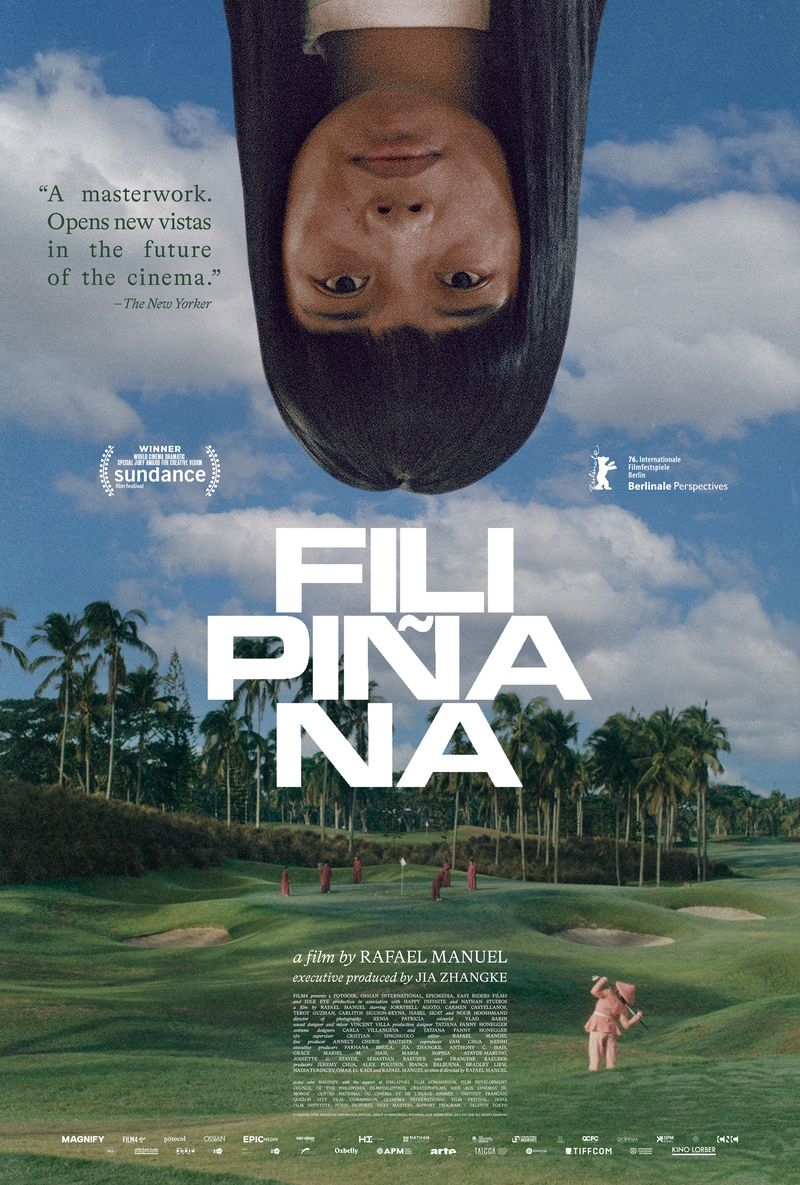
Film Poster. Source: Kino Lorber.
Kataltalaw Ko Paylaang nga Kaad-Adut itik
The film’s main plot focuses on the protagonist, Isabel (portrayed by Jorrybell Agoto) working at an exclusive golf club as a tee girl. Her daily routine consists of manually putting golf balls on the tee so that the wealthy players do not need to bend down. This inequality is strikingly demonstrated by the living conditions in the Philippines: while the wealthy enjoy air-conditioned spaces, the working class are left crowded in a room with only electric fans.
While working as a tee girl, Isabel meets Dr. Palanca, the head of the golf club. She quickly becomes enamoured once she realizes they share Ilocano roots, even speaking the dialect together in one scene. Meanwhile, Clara, an expat from New York is offered a job by her uncle where he argues that staying in the Philippines will mitigate “brain drain”. What does this mean? Think of it this way: Clara was born in the Philippines and had the resources to pursue her education in New York. Thus, the Philippines was deprived of having a talented individual. The contrast in social class showcases how Clara has global mobility to pursue any ambition she desires whereas Isabel is economically tethered to the Philippines to secure basic livelihood. The slow pace and use of long-takes compel viewers to independently notice these subtle visual cues of inequality. Here, colourism mirrors the reality of manual labourers. Isabel’s darker complexion reflects the physical outdoor labor whereas Clara’s lighter skin highlights a life of ease and economic security. The explicit avoidance of narrative forces viewers to formulate the characters’ fate on their own.
As the film’s rising action unfolds, the elite begin to be exposed when Clara uncovers the body of a missing girl with a dragonfly hairpin. To prevent scandal and “chismis”, Clara’s uncle promises a discrete solution. It is implied the body was thrown in the pond. In the moments leading up to the climax, Isabel’s fascination with Dr. Palanca fades rapidly once she realizes he orchestrated her family’s eviction in Ilocos. She attempts to strike him with his own golf club… before pulling herself back. Framed by a subverted credit sequence, the film ends with Isabel plunging in the water to search for the deceased girl’s body only for her to never resurface. Complicit, though completely ignorant of the truth, the privileged strata resume their routine without a worry in the world. Once again, the audience is left to draw their own conclusions about the divide between the wealthy and the marginalized. Perhaps, the film’s process is intentionally complex. Without traditional character development, the movie relies on stunning cinematography to let us decipher its’ message, putting the responsibility of interpretation directly on our hands.
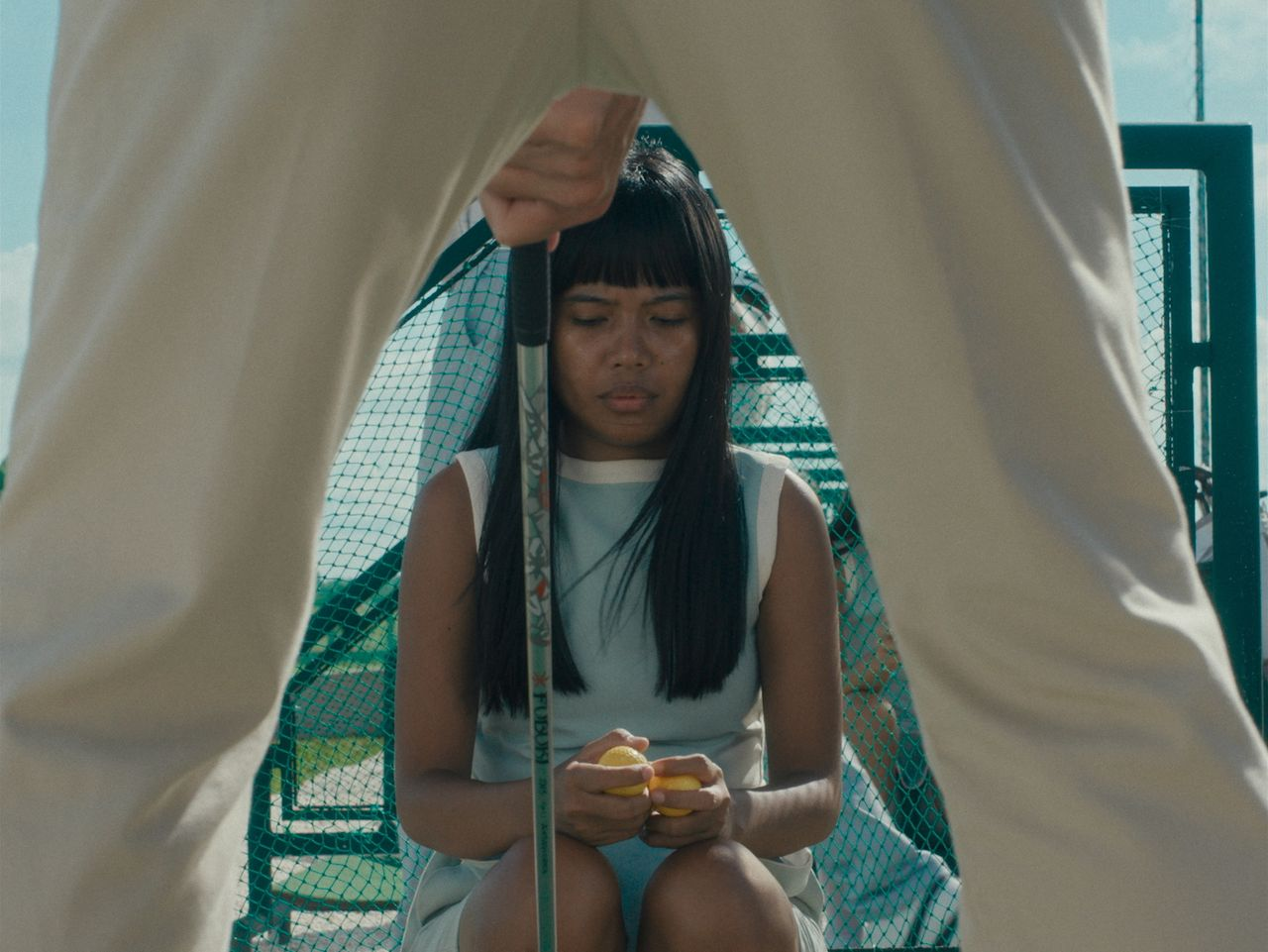 Still. Source: Kino Lorber.
The film paints a hauntingly dystopian landscape with stunning photography of the Philippines, yet its minimal dialogue prompts viewers to ask themselves: who is this movie for? The film constructs a visual aesthetic to expose class inequality through a lack of narrative intimacy with the characters it asks us to empathize with. Maybe this stems from Filipinos who continue to believe that change is impossible therefore, a manifestation of class divide and profound distance amongst the characters are created. While the film thoughtfully aims to explore a range of ideas, its purposeful pacing and sparse dialogue keep the viewers’ sympathy limited even as class struggle remains the film’s primary intent.
However, the narrative highlights a profound realization. The Philippines can only be truly enjoyed through the lens of a returning native, by the ones who escaped its’ pervasive hardship, lived abroad, and re-entered the country for a limited period of time as a privileged, transient visitor. Are you Isabel or are you Clara?
What does Filipiñana mean? In the context of Rafael Manuel’s film, it masks the layers of poverty, social class, and exploitation of the working people to manufacture a facade of an idyllic paradise where those with infinite resources can do whatever they want while disregarding the hurt they inflict on others. It exposes the legacy of colonial influence in the Philippines, using private clubs to exploit our native land as a private playground for the elite rather than systemic attempts to better the country as whole. Who do we hold accountable? This is the uncomfortable truth Filipinos must brace themselves for, because once the gate of the conversation opens, real radical change will start, beginning with the political figures we blindly elevate today. More importantly, we should examine a leadership that dismisses accountability for the nation’s socioeconomic concerns regarding their unresolved wealth and tax disputes. Far from helping the people with basic human rights, political elites continue to accumulate untraceable wealth while simultaneously failing to deliver long-term sustainable remedies for poverty and inequality.
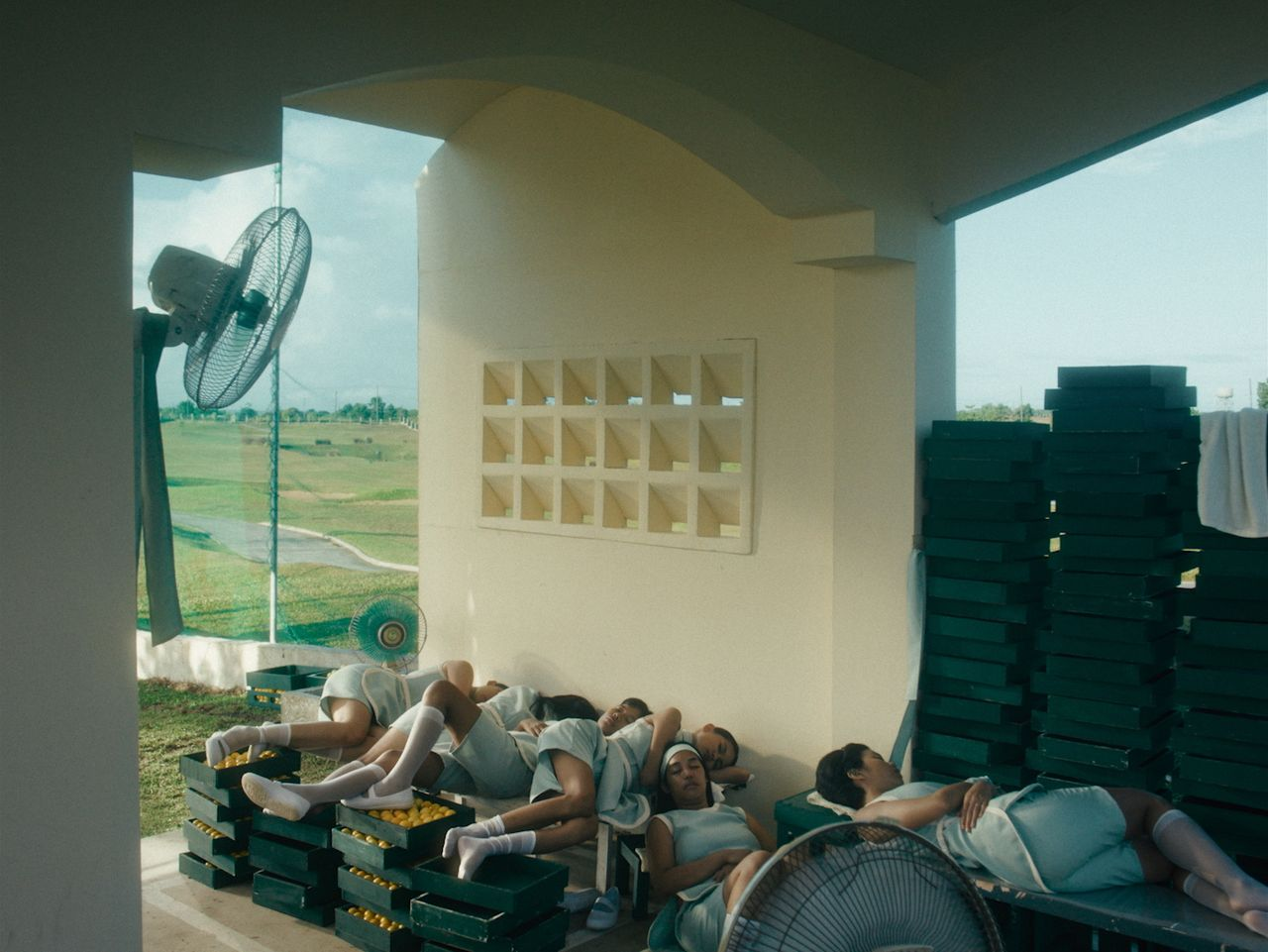 Still. Source: Kino Lorber.
The film reveals that even from an outside perspective, the Philippines remains locked in enduring structural friction surrounding its political movement, leaders, and economy. From popular urban centers like Manila to provincial regions such as Ilocos Norte, ordinary citizens continue to stay trapped in ongoing hardship because no real changes are being implemented. How do we fix this and who do we blame?
Filipiñana dissects how institutional corruption is being purely weaponized against the vulnerable. The satirical black comedy critique is achieved by creating mundane, but quietly agonizing experiences of the working-class directly opposing their hardship to the uninterrupted ease the rich live with. As Filipinos, are we really ready to accept this as our forever reality?
Review Written by Kimberly Sahagun – 09/13/2026
)